Bubble Eye Goldfish Care: 7 Things to Know Before You Buy
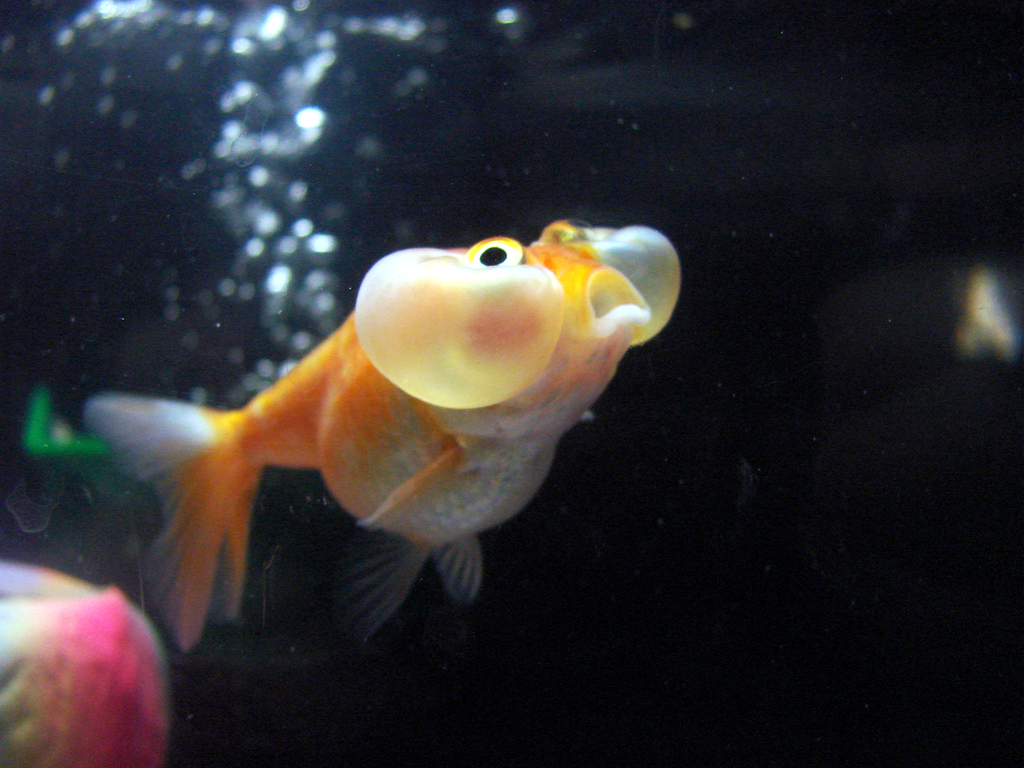
A bubble eye goldfish is a fancy goldfish that carries two fluid-filled sacs under its eyes, and those sacs decide almost everything about how the fish has to be kept. They are not eyes, not tumors, and not something the fish inflates on purpose. They are loose pouches of skin filled with lymph fluid, they keep growing with age, and they tear on anything sharp.
Most bubble eyes that die young do not die of bad water. They die of a sac that snagged on a plastic plant, deflated, and turned septic while the fish could no longer compete for food.
Bubble eye goldfish are fancy goldfish with two fluid-filled sacs beneath upward-pointing eyes. They reach 3 to 5 in (8 to 13 cm), live 10 to 15 years in good care, and sell for $8 to $40. They need a smooth-bottom tank, gentle filtration, and no sharp decor, because a torn sac can become infected.
| Quick fact | Detail |
|---|---|
| Scientific name | Carassius auratus |
| Adult size | 3 to 5 in (8 to 13 cm) |
| Lifespan | 10 to 15 years, up to 20 in ideal care |
| Minimum tank | 20 gallons (75 L) for one, plus 10 gallons (38 L) per extra fish |
| Water temperature | 65 to 72 F (18 to 22 C) |
| Typical price | $8 to $40, show grade $75 and up |
| Care level | Advanced, because of the eye sacs |
Why Do Bubble Eye Goldfish Exist?
Chinese breeders developed the bubble eye in the early 1900s from the celestial goldfish, a variety already selected for eyes that rotate upward. Breeding for the small fluid pockets beside those upturned eyes produced the sacs seen today. No wild fish carries anything like them.
The bubble eye is the same species as every other goldfish in the hobby, the hooded oranda included: Carassius auratus. Body shape and eye form differ between varieties, the species does not. Shade range is covered in goldfish colors.
Are Bubble Eye Goldfish Hard to Keep?
Yes. A bubble eye is one of the more demanding fancy goldfish, not because it is delicate about water chemistry, but because its eyes point at the ceiling and its sacs block the view forward and down. The fish swims slowly, locates food by bumping into it, and loses every race against a tankmate that swims in a straight line.
Start with a 20 gallon (75 L) tank for one fish and add 10 gallons (38 L) per extra fish. Use bare glass or smooth sand, never sharp gravel, plastic plants, jagged driftwood, or a filter intake with slots wide enough to catch a sac. Keep flow low; a sponge filter is safest. Choose slow tankmates, which is why a black moor pairs well and a fast shubunkin does not.
Are Bubble Eye Goldfish Healthy? What Happens If a Sac Pops
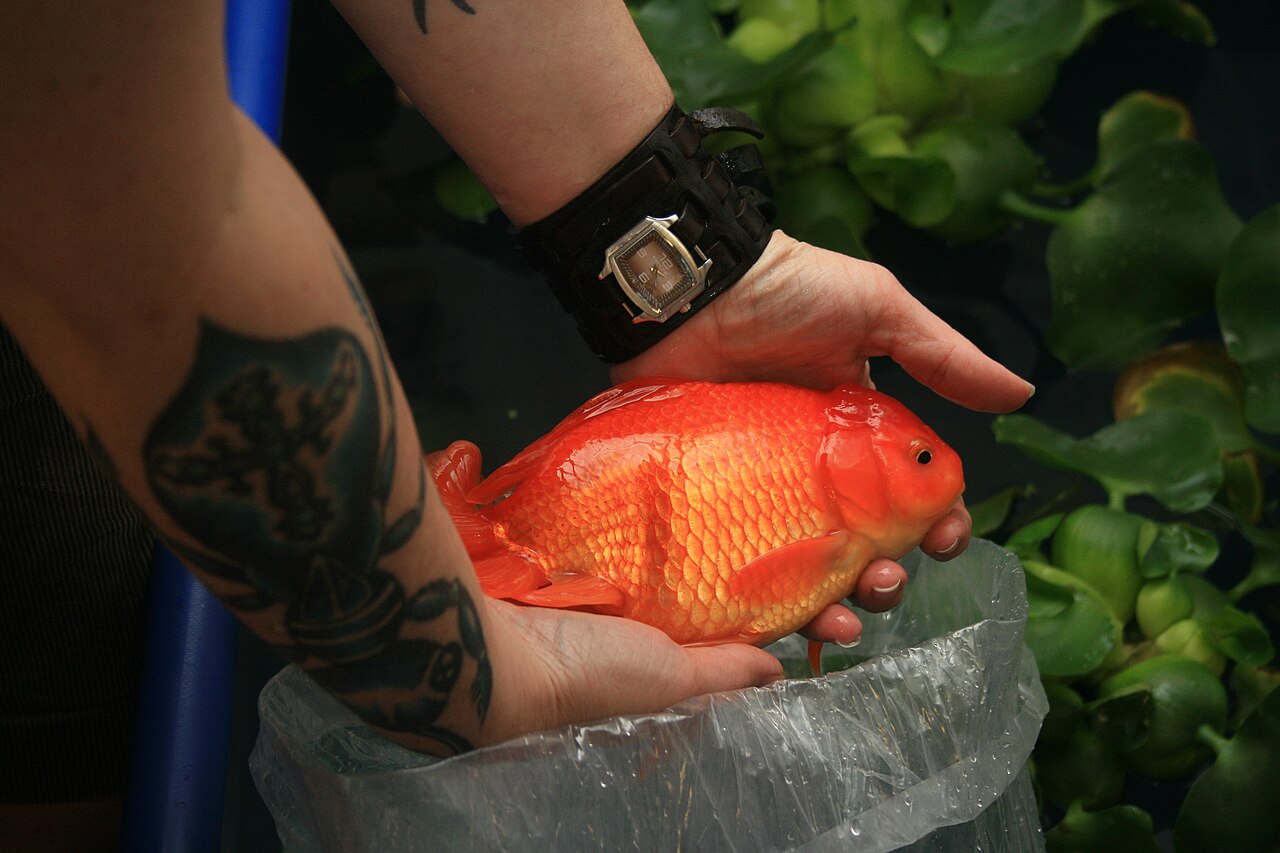
The sacs are not a disease, but the breed was selected for a trait that keeps failing. A popped sac is the single most common emergency, and it usually happens on decor, during netting, or against a filter intake.
A ruptured sac drains, shrinks to a flap of loose skin, and often regrows over four to eight weeks, though rarely to the original size and rarely matching the other side. The real danger is the open wound. Columnaris and other opportunistic bacteria settle in fast in warm, dirty water, and a fish that cannot see well will not eat enough to fight them off.
What Do Bubble Eye Goldfish Eat?
Sinking pellets built for fancy goldfish, plus blanched peas, spinach, and the occasional frozen bloodworm. Soak dry pellets for a minute before dropping them so they do not swell inside the gut, a common cause of buoyancy trouble in round-bodied varieties.
Technique matters more than brand. Drop food in the same corner each time so the fish learns where to search, and give it two or three minutes without competition. More in what goldfish eat.
How Do I Treat Bubble Eyes in Goldfish?
Treat the water first, not the fish. Do a 30 percent water change, keep ammonia and nitrite at zero, hold the temperature near 68 F (20 C), and remove whatever the fish tore the sac on. Aquarium salt at 1 tablespoon per 5 gallons (19 L) supports healing and reduces stress on the open tissue.
Add an antibacterial only if the wound clouds, reddens at the rim, or grows a white fringe, and ask an aquatic veterinarian before medicating a fish you plan to keep for a decade. Never drain or lance a sac yourself; the fluid refills and the puncture is a second wound. Size and biology data for Carassius auratus are held at FishBase.
How Much Do Bubble Eye Goldfish Cost?
Expect $8 to $20 for a young pet-store fish and $25 to $40 for a well-matched adult from a fancy goldfish seller. Show-grade stock with even sacs runs $75 to $200. The fish is the cheap part: a properly equipped 20 gallon (75 L) setup costs $120 to $250.
Frequently Asked Questions
How long do bubble eye goldfish live?
Ten to 15 years is normal in a well-kept tank, and 20 years happens with experienced keepers. Fish kept in bowls or with sharp decor often die inside two years, almost always after a sac injury leads to infection rather than from old age.
Are bubble eye goldfish cruel to breed?
Opinions split honestly here. The sacs impair vision, restrict swimming, and rupture easily, which several welfare groups call a breed defect. Other keepers argue a bubble eye in a properly built tank lives a full, low-stress life. The fish’s welfare depends far more on the tank than on the trait.
Are bubble eye goldfish natural?
No. The sacs exist only through selective breeding and appear in no wild population. Wild goldfish and their crucian carp ancestors have flat, forward-facing eyes, and feral goldfish descended from released pets revert toward that plain shape within a few generations.
Do bubble eye sacs grow back after they pop?
Usually, at least partly. Regrowth takes four to eight weeks in clean water and often leaves the two sides uneven. The fish itself is unbothered by the asymmetry; only the infection risk during healing matters, so keep the tank spotless until the skin closes.
Can bubble eye goldfish live with other fish?
Only with equally slow fancy goldfish such as celestials, lionheads, or ranchus. Fast single-tail goldfish and any fin-nipping species outcompete a bubble eye for food and pick at the sacs. Tropical fish are a poor match anyway because goldfish need cooler water.
What is the rarest breed of goldfish?
The Tosakin, a Japanese variety with an undivided fan tail meant to be viewed from above, is widely considered the rarest. Tamasaba, Izumo Nankin, and the original celestial eye are also scarce outside Japan. Juvenile fancy varieties are covered in baby goldfish.