Koi Betta Fish: Cost, Size, and Care of the Marble Betta
A koi betta fish is a marble patterned Betta splendens, usually in the short finned plakat form, whose blotches of red, orange, black and white shift and spread for as long as the fish lives. The name comes from the resemblance to koi carp, not from any relation to them. Nothing about the fish is a separate species or a hybrid: it is the same Siamese fighting fish sold in every pet store, carrying one particular color gene.
That gene is what buyers are really paying for. A mostly white fish with two red patches can look like a different animal six months later, and Thai breeders have pushed the pattern into named lines such as galaxy koi and nemo koi. The care is identical to any other betta fish.
Koi bettas are marble patterned Betta splendens, most often plakats, that reach about 2.5 to 3 in (6 to 7.5 cm) and live 2 to 4 years. They cost roughly 15 to 40 USD in stores and 50 to 150 USD for imported show lines. Their pattern keeps changing throughout life because of an unstable marble gene.
| Trait | Koi Betta |
|---|---|
| Species | Betta splendens, marble pattern |
| Adult size | 2.5 to 3 in (6 to 7.5 cm) body |
| Lifespan | 2 to 4 years, up to 5 with good care |
| Typical price | 15 to 40 USD, imports 50 to 150 USD |
| Minimum tank | 5 gal (19 L), heated and filtered |
| Water | 78 to 80 F (25.5 to 26.5 C), pH 6.5 to 7.5 |
| Temperament | Same as any betta, males never housed together |
What Is the Difference Between a Betta Fish and a Koi Betta Fish?
There is no biological difference at all. A koi betta is a color and pattern variety of Betta splendens, exactly as a red betta or a halfmoon betta is. Breeders group them by pattern, finnage and color, and koi describes the pattern only.
What makes the koi look distinct is the marble gene, a transposable element that can switch pigment cells on and off in patches of skin. Marble bettas appeared in American hobbyist stock in the 1970s and have been selectively bred ever since toward the clean red and black on white blotching that reads as koi.
Most koi bettas sold in the United States are plakats, meaning short finned fish with rounded caudal fins. Long finned versions exist, but the pattern shows better on a compact body.
Is a Koi Betta Fish Rare?
Koi bettas are not rare in any meaningful sense. Most chain pet stores stock them alongside standard bettas, and dedicated importers list dozens every week. What is genuinely scarce is a specific look: a symmetrical galaxy koi with even blue speckling, or a nemo with sharp orange and black separation, sells out within hours of listing.
Because the pattern moves, rarity is temporary for any individual fish. The striking juvenile in the cup may marble into a mostly black adult, so serious buyers pay for the parents’ line.
How Much Does a Koi Betta Cost?
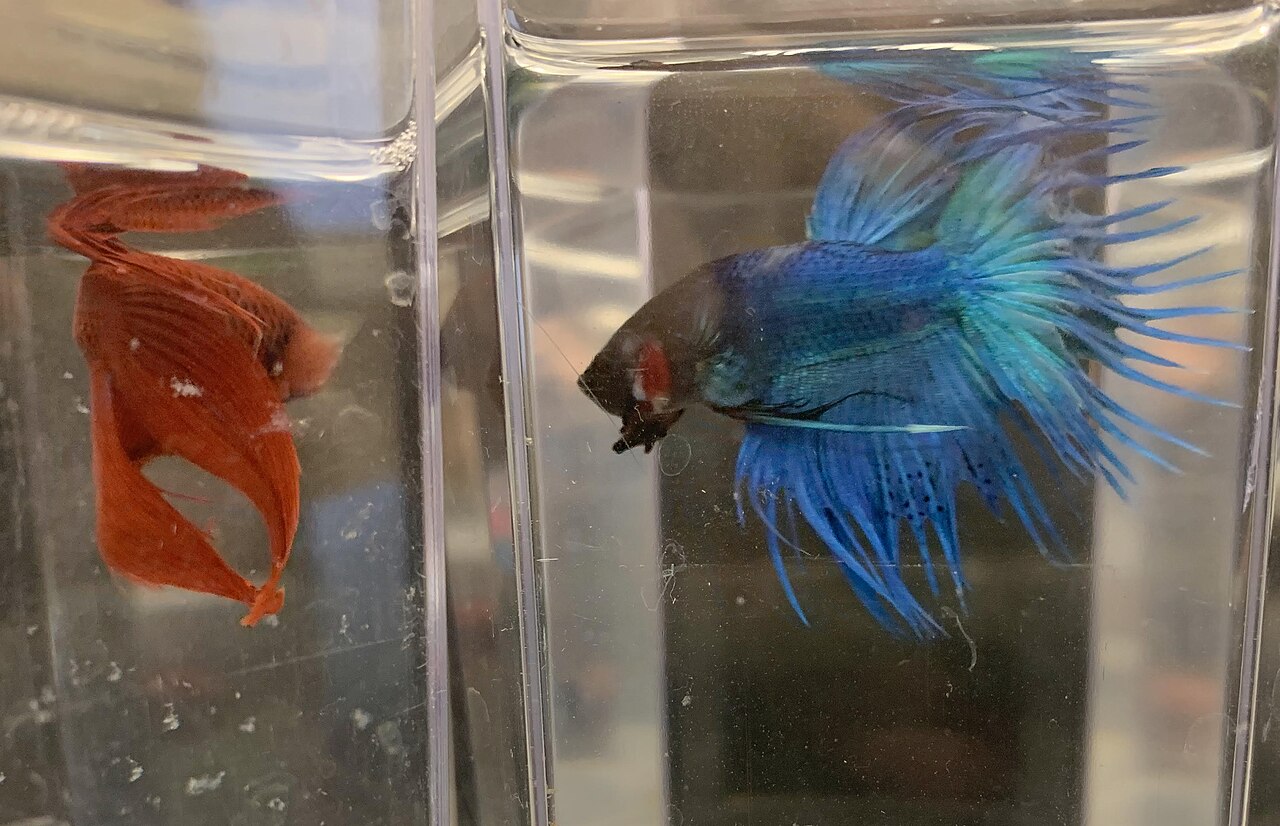
Expect 15 to 40 USD for a koi betta at a US pet store or local fish shop, which is roughly double the price of a plain veiltail. Imported show grade fish from Thai breeders run 50 to 150 USD before shipping, and auction fish from named spawns have cleared 300 USD.
The fish is the cheap part. A heated, filtered and planted 5 gal (19 L) setup costs 80 to 150 USD. Skipping the heater is the most common way owners lose a fish they paid a premium for: a betta held below 74 F (23 C) stops eating and gets fin rot.
Do Koi Betta Fish Get Big?
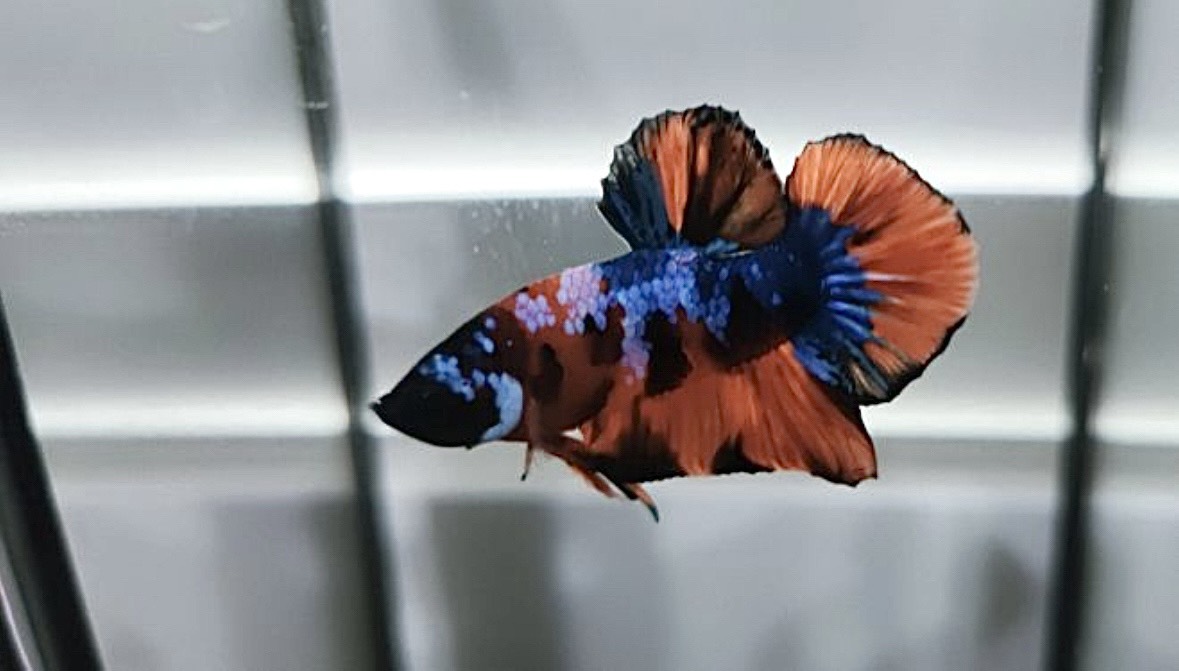
No. A koi betta reaches about 2.5 to 3 in (6 to 7.5 cm) from snout to tail base, the same as any other Betta splendens, and weighs only a few grams. Fish sold as giant koi bettas come from selectively bred giant lines and top out near 4 in (10 cm).
Size does not scale with tank volume in this species, so a larger aquarium produces a better fish rather than a bigger one. It buys stable temperature, diluted waste and room for the fish to patrol, all of which extend how long betta fish live more reliably than any food does.
Koi Betta Care: Tank, Temperature and Diet
Give a single koi betta at least 5 gal (19 L), heated to a steady 78 to 80 F (25.5 to 26.5 C) and gently filtered. Bettas come from shallow, slow moving water in Thailand, so a strong outflow exhausts them; a sponge filter or a baffled intake solves that. Keep betta fish water temperature within two degrees day and night, because swings do more damage than a slightly wrong average.
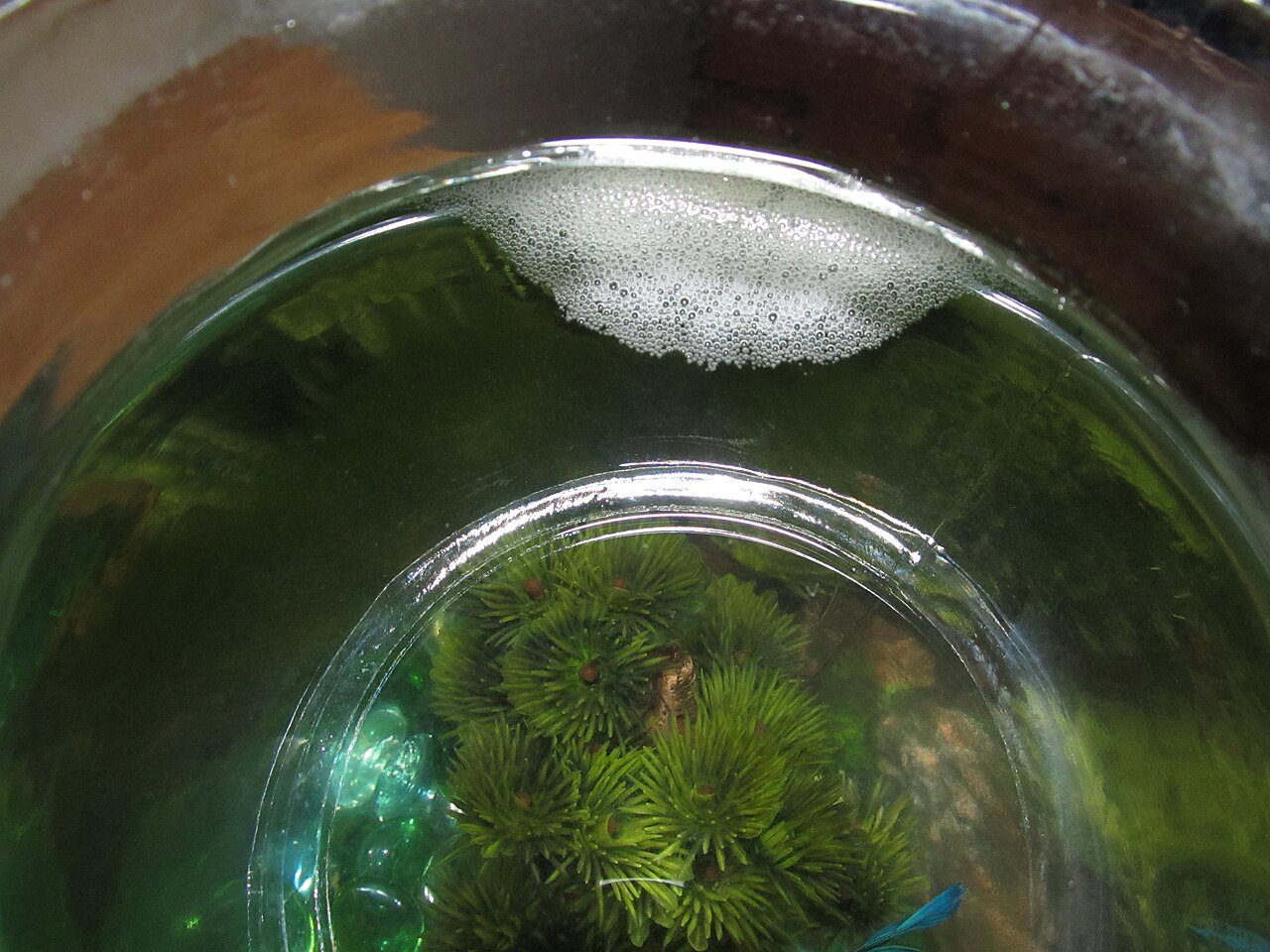
Plant heavily with broad leaved species such as Anubias barteri and java fern. Leaves near the surface give the fish a resting place and encourage bubble nest building, the clearest sign that a male is comfortable.
Feed a betta specific pellet with fish or shrimp meal first on the label, three to four pellets twice a day, plus frozen bloodworms two days a week, and skip one day entirely. Overfeeding causes bloat and the fouled water behind most fin problems. Species details for Betta splendens are catalogued at FishBase.
Frequently Asked Questions
Are koi betta more aggressive?
No. Aggression in Betta splendens tracks the individual fish and the finnage, not the color pattern. Plakats, the form most koi bettas take, are often described as feistier than long finned bettas simply because they swim faster. Two males still cannot share a tank, and a female betta fish sorority needs planning and space.
What is the rarest color of betta?
True solid purple or violet is the rarest betta color, and most fish sold as purple are blue with red wash that shifts in different light. Genuine pastel and albino bettas are also scarce and often fragile. Solid black females are uncommon because the black lethal gene reduces fertility in that line.
Can betta fish recognize their owners?
Bettas learn to associate a person with feeding and will move to the front glass when that person approaches. Whether that counts as recognition is debated, but the behavior is reliable and appears within a few weeks. Bettas can also be trained to follow a finger or swim through a hoop for food.
What is the lifespan of a betta fish?
Most bettas live 2 to 4 years, and 5 years is achievable in a heated, filtered, well planted tank. Store fish are usually 6 to 12 months old at purchase, so the clock has already started. Unheated bowls are the main reason so many pet bettas die within a year.