Fantail Goldfish Care: Size, Tank Size, and Tank Mates
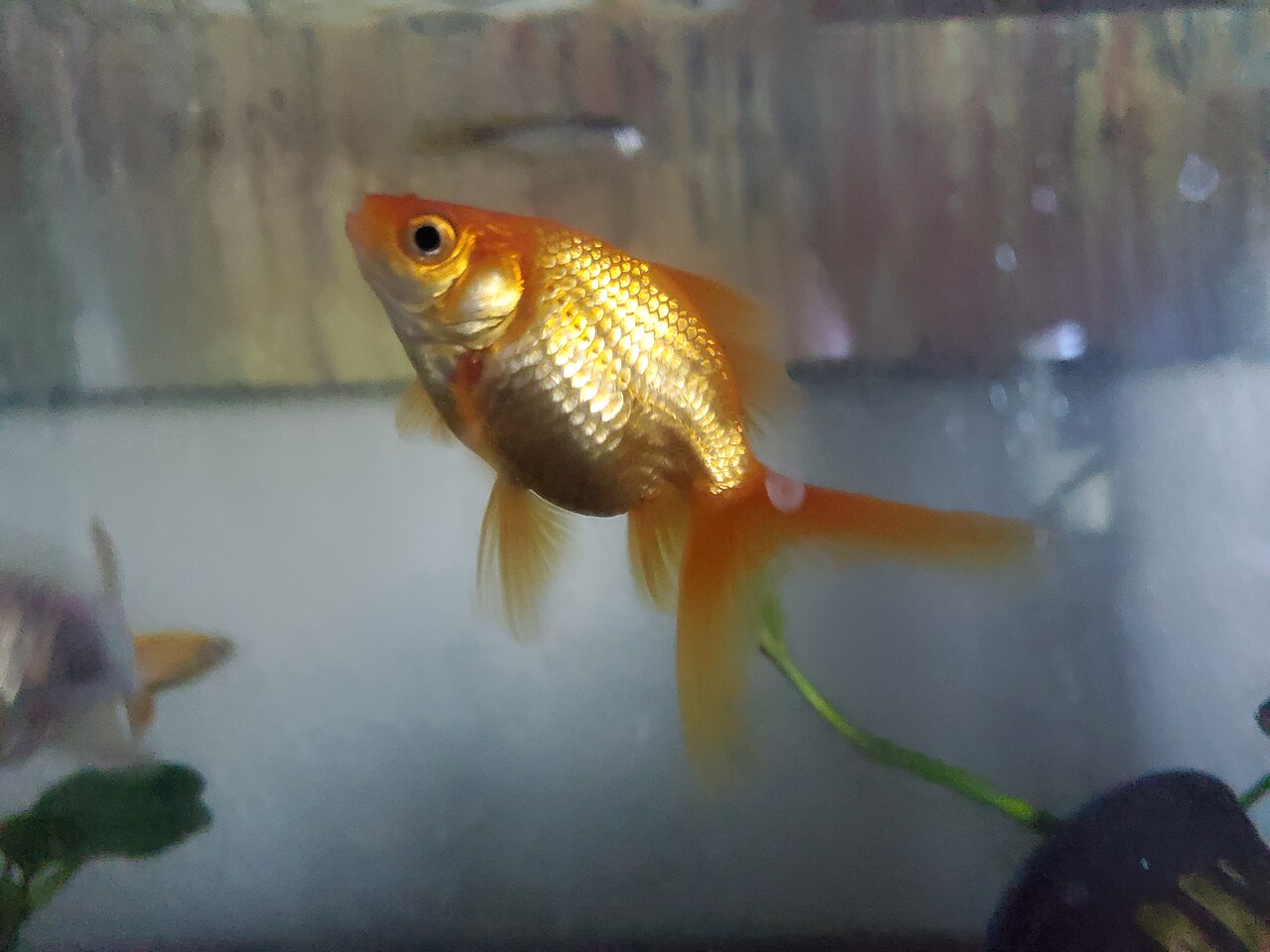
The fantail goldfish is the most forgiving of the fancy goldfish varieties, an egg shaped Carassius auratus with a paired, split tail that tolerates beginner mistakes better than any other double tailed form. It reaches 6 to 8 in (15 to 20 cm) including the tail, lives 10 to 15 years, and needs cool, clean, well filtered water rather than a heater.
Where fantails go wrong is space and food. Their compressed body pushes the swim bladder into a tight curve, so floating pellets and a crowded tank turn into buoyancy trouble. Get those two right and a fantail goldfish is close to unkillable.
Fantail goldfish grow to 6 to 8 in (15 to 20 cm), live 10 to 15 years, and need 20 gal (75 L) for the first fish plus 10 gal (38 L) for each additional one. They are coldwater fish that do best at 65 to 75 F (18 to 24 C) with strong filtration, no heater, and sinking food to protect the swim bladder.
| Care Factor | Fantail Goldfish |
|---|---|
| Adult size | 6 to 8 in (15 to 20 cm) with tail |
| Lifespan | 10 to 15 years, up to 20 in ponds |
| Tank size | 20 gal (75 L) first fish, plus 10 gal (38 L) each |
| Temperature | 65 to 75 F (18 to 24 C), no heater |
| Group size | Two or more |
| Food | Sinking pellets, soaked, plus blanched greens |
Are Fantail Goldfish Hard to Keep?
Fantail goldfish are easy by fancy goldfish standards and hard by the standards of the bowl they are usually sold for. They handle a wider temperature range than an oranda goldfish and carry no delicate head growth or fluid sacs, so the only real demands are volume and filtration.
A goldfish produces far more waste than a tropical fish of the same length, and ammonia kills most of them. Run a filter rated for twice the tank volume, change 30 percent of the water weekly, and cycle the tank first.
How Big Will My Fantail Goldfish Get?
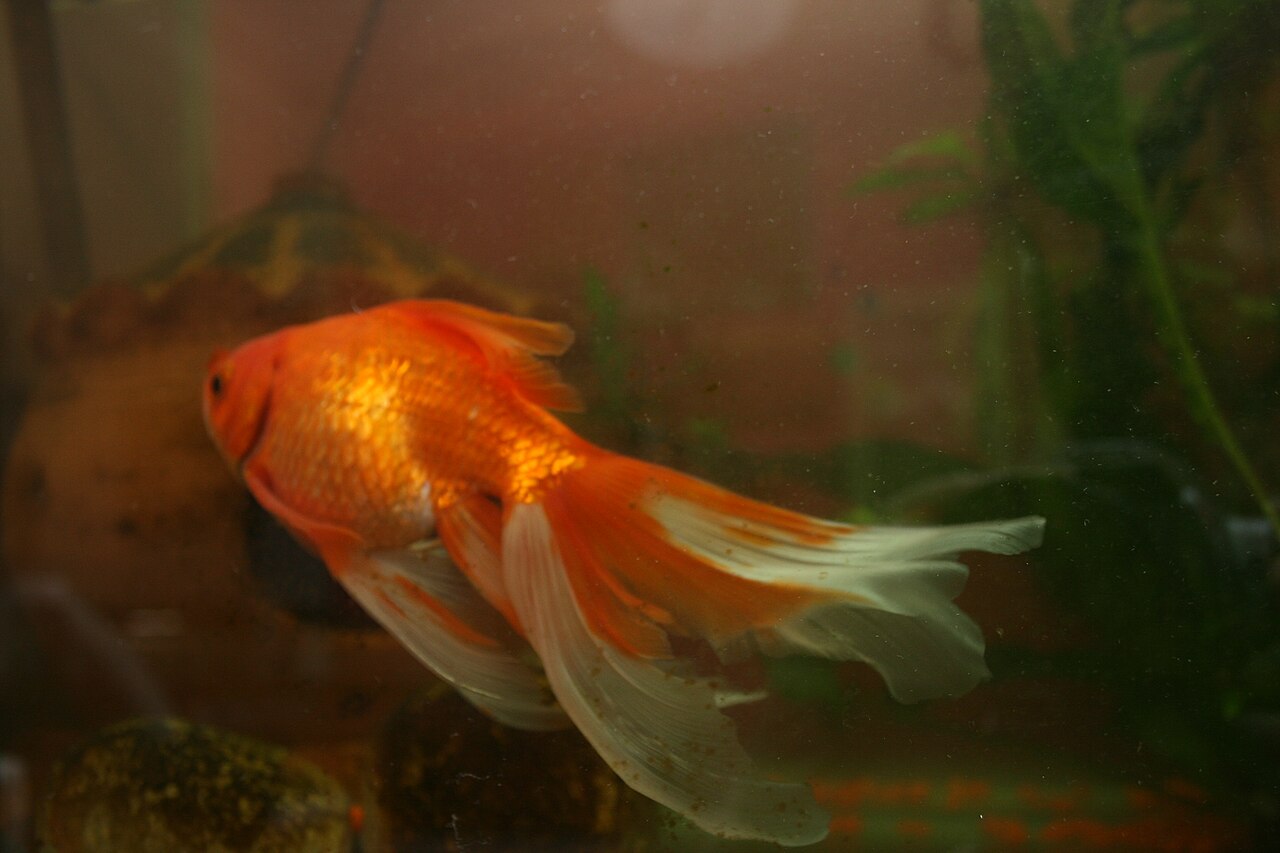
A healthy fantail reaches 6 to 8 in (15 to 20 cm) total length in three to four years, with the body making up roughly half of that. Pond raised fish commonly pass 8 in (20 cm), and body mass keeps increasing after length stalls.
Small tanks do not keep goldfish small in any healthy way. Growth slows because accumulated waste suppresses it while the internal organs keep developing, which is why stunted fish die young. The same genetics that produce a stocky ryukin goldfish body apply here, just without the shoulder hump.
How Many Fantail Goldfish Should Be Kept Together?
Keep at least two. Goldfish are social and forage more confidently in company, and a lone fantail often spends its day motionless in a corner. Two fish in 30 gal (114 L) is a comfortable starting point, three in 40 gal (150 L).
Count capacity by filtration, not by the old inch per gallon rule. If the tank cannot hold nitrate below 40 ppm with a weekly water change, it holds one fish too many.
What Fish Can Live With Fantail Goldfish?
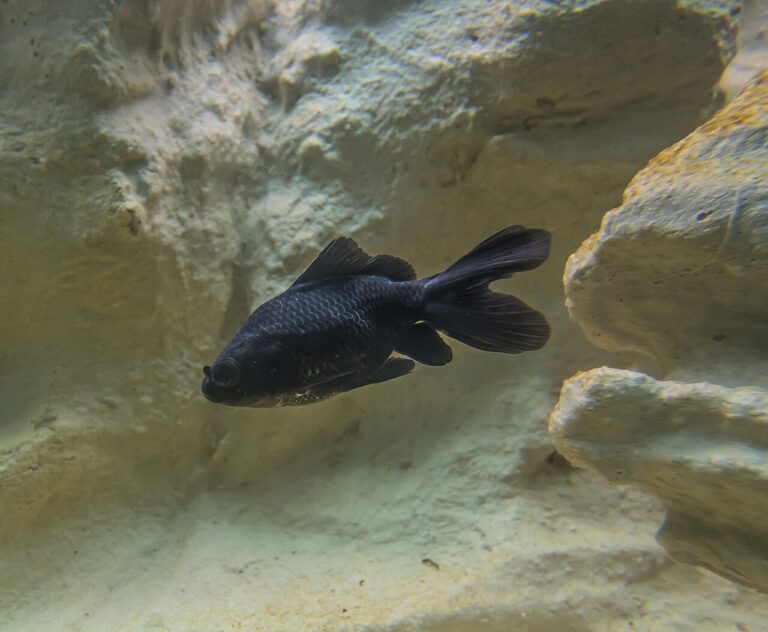
Other fancy goldfish with the same slow, rounded build are the safe answer: black moor goldfish, ryukins, orandas and telescope goldfish. They compete fairly for food and share the same cool water requirement.
Avoid the slim bodied varieties. A comet goldfish or shubunkin strips the food before a fantail has finished turning around, and both outgrow the tank. Outside the goldfish group, weather loaches and white cloud mountain minnows are the dependable choices. The American Veterinary Medical Association publishes aquarium husbandry guidance at avma.org.
Frequently Asked Questions
Do fantail goldfish do well in a pond?
Fantails do well in ponds down to about 50 F (10 C), better than most fancy varieties, but they are poor at overwintering under ice because their body shape makes them slow to reach food and oxygen. In climates with hard freezes, bring them indoors. Choose goldfish food formulated for cooler water in autumn.
How long does it take for a fantail goldfish to reach full size?
Most fantails reach adult length in three to four years, with the fastest growth in the first 12 months. A fish still under 3 in (7.5 cm) at one year is usually short on space, food quality or water changes rather than genetically small. Growth continues slowly for life.
Should I have 1 or 2 goldfish?
Two, if the tank allows it. Goldfish are shoaling fish and a single one is measurably less active and slower to feed. A second fish roughly doubles the waste load, so the honest version of this answer is two fish in 30 gal (114 L) rather than two in 20 gal (75 L).
What are the most common causes of goldfish death?
Ammonia poisoning in an uncycled tank leads by a wide margin, followed by long term stunting in undersized tanks, swim bladder problems from dry floating food, and ich after a temperature crash. All four are husbandry failures rather than diseases the fish caught.