Betta Fish Types: 12 Tail Shapes and Colors, Identified
Betta fish types are sorted by two things: the shape of the tail and the color pattern on the body. Learn those two axes and you can name almost any fish in a store cup, because every trade label from Halfmoon to Koi is a combination of the two. Nearly all of them are one species, Betta splendens, plus a small group of true wild bettas sold under scientific names.
Below are the tail shapes you will actually meet in US stores, the color patterns that sit on top of them, and which varieties are hardest to keep alive.
Betta fish types fall into three groups: tail shapes such as Veiltail, Halfmoon, Crowntail, Double Tail and Plakat; color patterns such as Solid, Butterfly, Marble, Koi and Dragon Scale; and wild species such as Betta imbellis. Tail shape drives care difficulty, color does not.
How Do I Tell What Type of Betta Fish I Have?
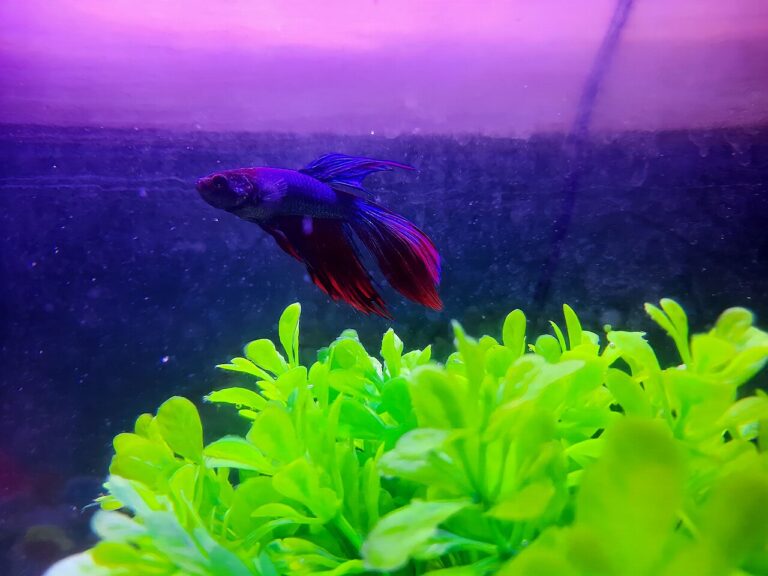
Look at the tail first, from the side, while the fish is flaring. A fan that opens to a full 180 degrees is a Halfmoon, a narrower triangle is a Delta or Super Delta, and a long droopy fan that falls to one side is a Veiltail, still the most common fish in US chain stores. Spiky tails with the webbing cut back between the rays are Crowntails.
Then read the color. A single even color is Solid, a pale body with dark fins is Butterfly, and a fish whose pattern shifts month to month is a Marble. Short fins on a tight bullet-shaped body mean a Plakat, not a sick longfin. For the basics of the species, see our guide to the betta fish.
| Type | Tail look | Care level |
|---|---|---|
| Veiltail | Long single fan, droops to one side | Easiest |
| Halfmoon | Full 180 degree D-shaped spread | Moderate, fins tear |
| Crowntail | Spiky, webbing reduced between rays | Moderate |
| Plakat | Short, rounded, wild-type fins | Easy, most aggressive |
| Double Tail | Two distinct caudal lobes | Moderate, shorter body |
| Rosetail | Excess branching, ruffled edges | Hardest, avoid |
| Wild species | Short fins, muted colors | Specialist |
Betta Tail Types, From Veiltail to Plakat
Seven tail shapes cover almost everything on sale. Veiltail is the default and the hardiest. Delta and Super Delta are triangular halves of a Halfmoon, and the Halfmoon betta is the show standard, with a caudal fin that spreads to a clean semicircle. Over-Halfmoon exceeds 180 degrees and tends to curl.
Crowntail reduces the webbing so the rays stand out like spines, and Double Tail splits the caudal into two lobes over a shortened body. Plakat is the short-finned original, closest to the fish bred for fighting. Rosetail and Feathertail carry so much extra branching that the fins collapse under their own weight, which is why experienced keepers skip them.
Betta Colors and Patterns
Color sits on four pigment layers, so one tail shape appears in dozens of finishes. Solid, Bi-color and Cambodian are the simple ones. Butterfly puts a hard band of pale color at the fin edge, Marble drifts and repatterns over the fish’s life, and Koi bettas are Marbles selected for orange, black and white blotching. Dragon Scale adds thick metallic scaling that can creep over the eyes.
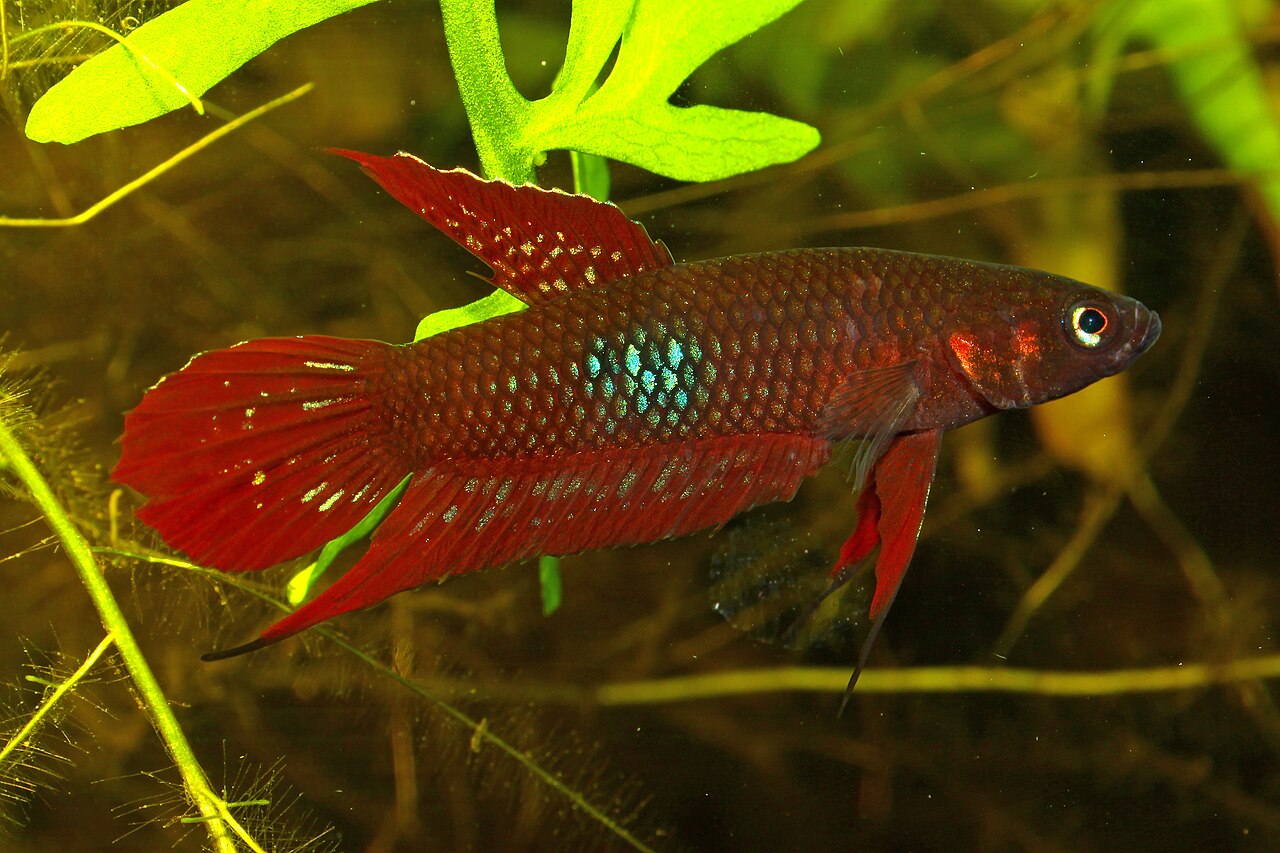
Mustard Gas, Copper, Pastel and Full Mask are color labels rather than varieties, and none of them changes what the fish needs. Our page on red bettas shows what the pigment looks like in a home tank rather than under store lighting.
Which Type of Betta Is Most Aggressive?
Plakats are the most aggressive betta type, which is no accident: they are the closest thing in the hobby to the short-finned fish selected for fighting in Thailand. They are faster, less hampered by fin drag, and quicker to chase tankmates.
Longfinned varieties are not gentle, only slower. Two males will fight in any tank size, and a male flares at his own reflection for hours. Females are kept together only in a planned sorority of five or more, and even then it often fails.
What Is the Easiest Betta to Take Care Of?
The Veiltail is the easiest betta to take care of and the calmest betta in most tanks. Its fins stay clear of decor, it is bred in huge numbers so the stock is genetically broad, and it costs a fraction of a show Halfmoon. Every type needs the same setup: a heated tank of at least 5 gallons, gentle filtration, water in the low 80s Fahrenheit.
Skip Rosetails and heavy Over-Halfmoons for a first betta. Those are the fish that arrive with split fins and end up with swim bladder trouble. Set the tank up first: see betta water temperature and whether bettas need a filter.
What About the Wild Betta Species?
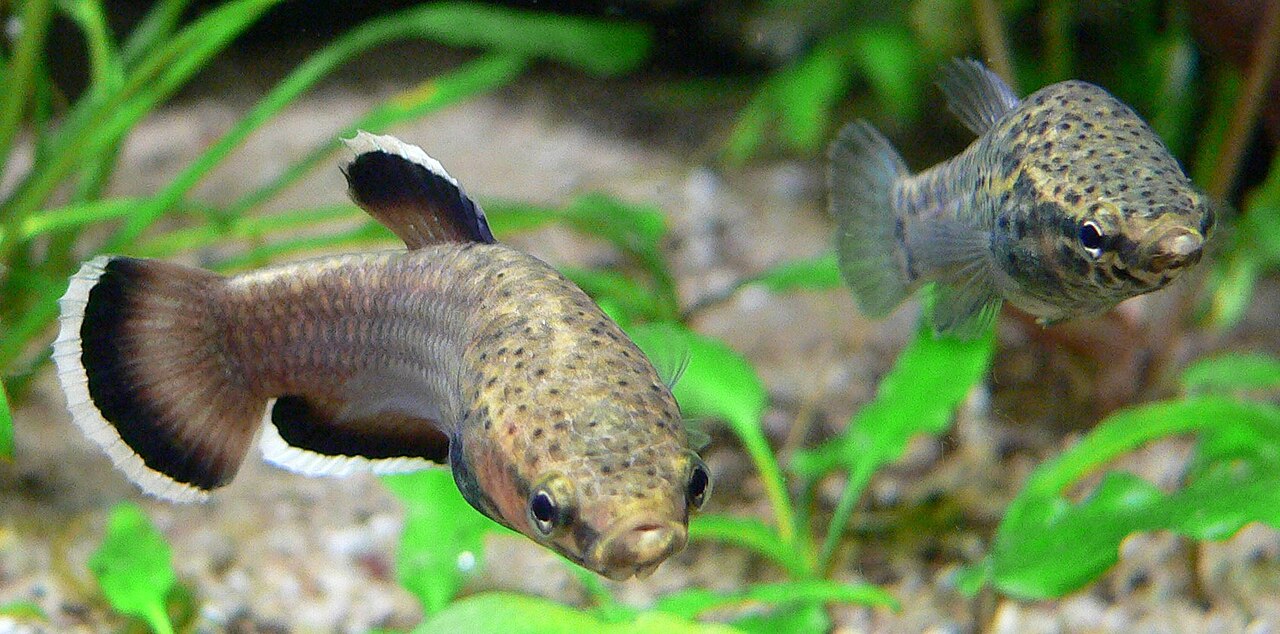
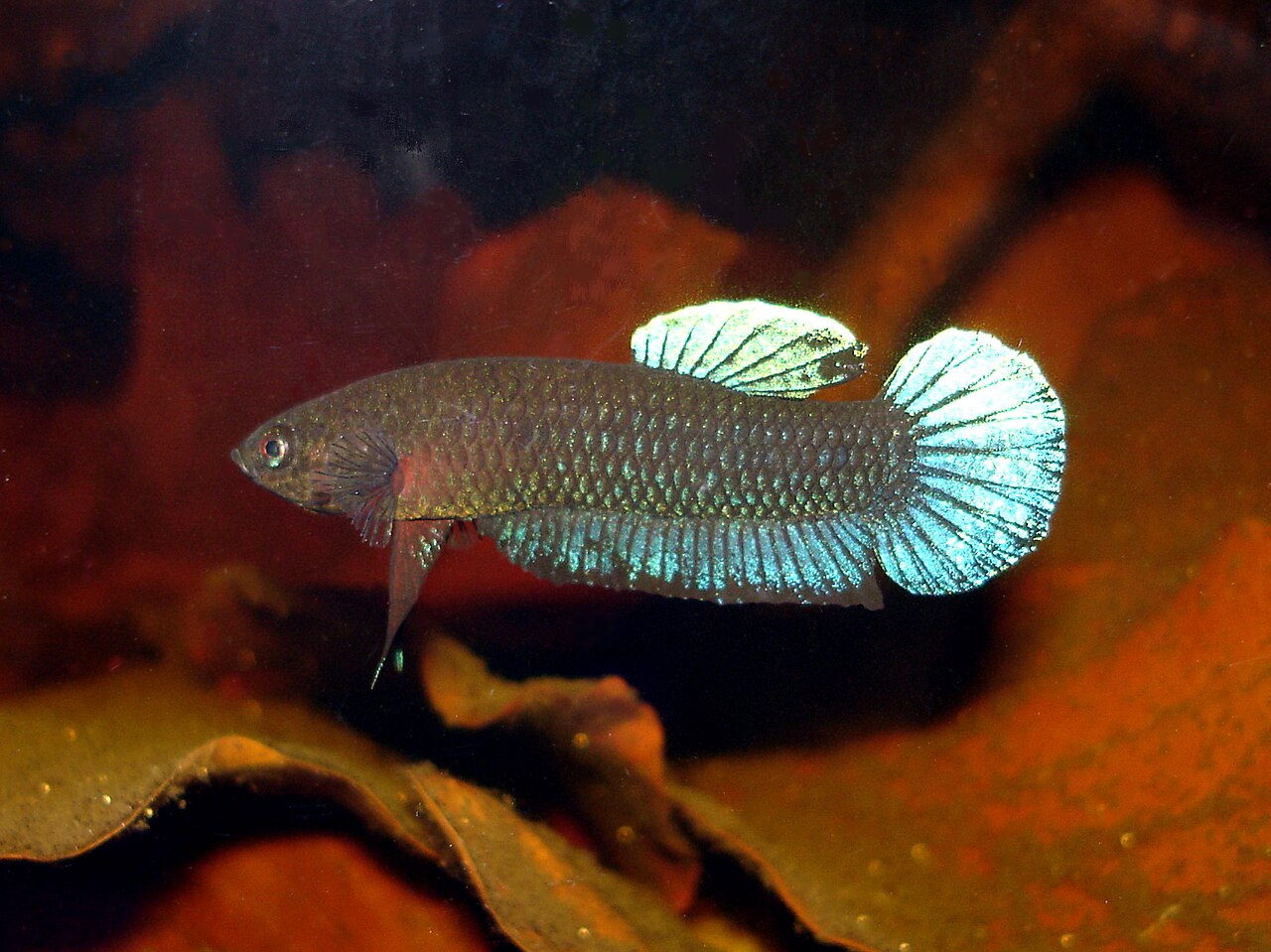
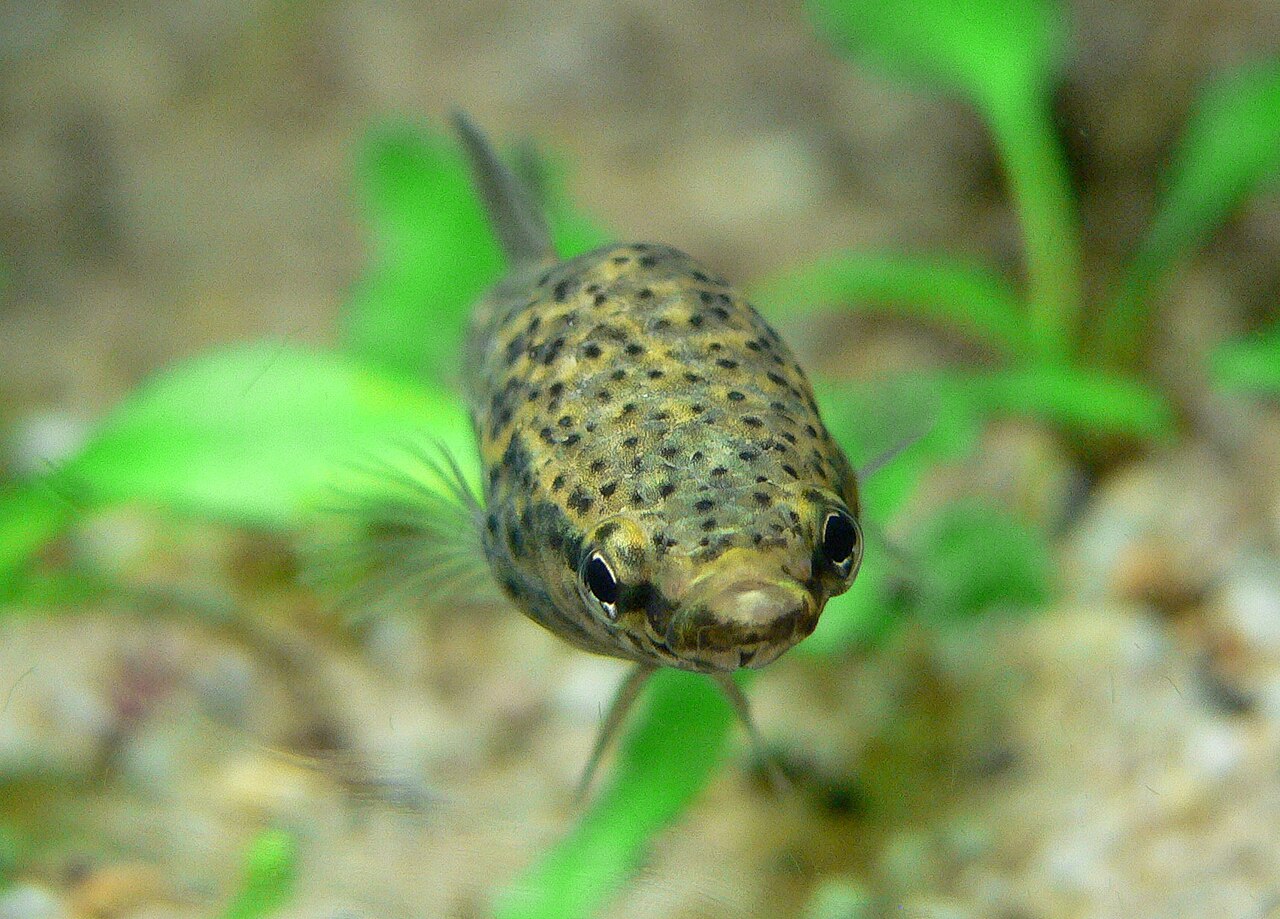
Over 70 species sit in the genus Betta and only one became the pet store fish. Many are mouthbrooders rather than bubble nesters: Betta albimarginata and Betta channoides from Borneo hold eggs in the male’s mouth, and Betta macrostoma, the Brunei beauty, is protected and hard to obtain. Betta imbellis is sold as the peaceful betta and is the usual first step past splendens. Wild types want soft, acidic, tannin-stained water and a tight lid, because they jump. Escaped domestic bettas are logged as a nonnative species in Florida waters by the USGS, which is one reason releasing one is never an option. Our page on wild betta fish covers keeping them.
Frequently Asked Questions
Why can’t you touch betta fish?
A betta is covered in a slime coat that blocks bacteria, fungus and parasites. Human hands carry oils, soap residue and salt, and one touch can wipe a patch of that coating away, opening the skin to infection. Handle a betta only inside a cup of its own water.
Will my betta survive in tap water?
Only after treatment. US tap water carries chlorine or chloramine, both of which burn gill tissue, so it needs a dechlorinator first. Treated tap water is otherwise better than distilled or reverse osmosis water, which strips out the minerals a betta needs.
Do betta fish get attached to their owners?
They learn you, which is not the same thing. Bettas recognize the shape and movement that precedes feeding, come to the glass for a specific person, and can be trained to follow a finger or swim through a hoop. Calling that attachment overstates it, but the recognition is real.
What is the most beautiful betta?
In shows the Halfmoon takes the most awards, because a perfect 180 degree spread with even ray branching is the hardest shape to breed. Among color patterns, Koi and Galaxy Dragon Scale draw the most attention. Beauty here is a breeding standard, not a health standard.