Owl Sounds at Night: 6 Calls and the Owl Behind Each One
Most owl sounds at night come from just four birds in the United States: the Barred Owl, the Great Horned Owl, the Eastern Screech-Owl, and the Barn Owl. If you heard a rhythmic hoot, it was almost certainly one of the first two. If you heard a scream, a trill, or a whinny, the other two are the likely source, and no hooting is involved at all.
Owls call most heavily at dusk, again before dawn, and far more in late fall and winter than in summer, because that is when pairs claim territory and court. The notes below are grouped the way you actually hear them, by sound first and species second, with the common mix-ups named so you can rule them out in the dark.
Owl sounds at night fall into four groups: territorial hoots (Barred and Great Horned Owl), trills and whinnies (screech-owls), shrieks and raspy screams (Barn Owl and begging juveniles), and alarm barks, hisses, and bill snaps. Hooting peaks from October to February, when owls pair up and defend territory.
| Sound you heard | Most likely owl | How it reads | Peak season |
|---|---|---|---|
| 8 or 9 rhythmic hoots, rising at the end | Barred Owl | “Who cooks for you, who cooks for you all” | February to April |
| 4 or 5 deep, slow hoots | Great Horned Owl | “hoo h’HOO hoo hoo”, felt in the chest | November to February |
| Descending horse-like whinny | Eastern Screech-Owl | A wavering whistle sliding downward | Year round |
| Even, bouncing trill on one pitch | Eastern Screech-Owl | A soft purr, 3 to 6 seconds long | Year round |
| Harsh scream, 2 seconds, no tune | Barn Owl | Tearing cloth, or a woman screaming | Year round |
| Repeated raspy “kssssh” every 10 seconds | Juvenile Great Horned Owl | A squeaky gate begging for food | June to August |
What Sounds Do Owls Make at Night?
Owls make four functional sounds, and every call you hear at night is one of them: a territorial song, an alarm or scolding call, a courtship call, and a juvenile begging call. The territorial song travels farthest and is the one most people notice from inside the house.
Species matter less than you would think for the first identification. Rhythm and pitch carry the information. Count the notes, judge whether the pitch is deep enough to feel or high enough to whistle, and you have narrowed 19 North American owls down to two or three.
The Territorial Hoot: The Classic Nighttime Call
A true hoot is a low, breathy whoo with a clear rhythm, repeated every 10 to 30 seconds from a fixed perch. It means an owl is announcing a claim, usually from the edge of its territory, and a neighbor often answers from a few hundred yards away.
Hooting is seasonal. It climbs from October, peaks in the weeks around pair formation, and drops sharply once the female is on eggs. If your neighborhood went quiet in April, nothing left; the pair is simply busy feeding young. Our broader guide to owl calls by species covers the daytime versions of the same songs.
Barred Owl: “Who Cooks for You?”
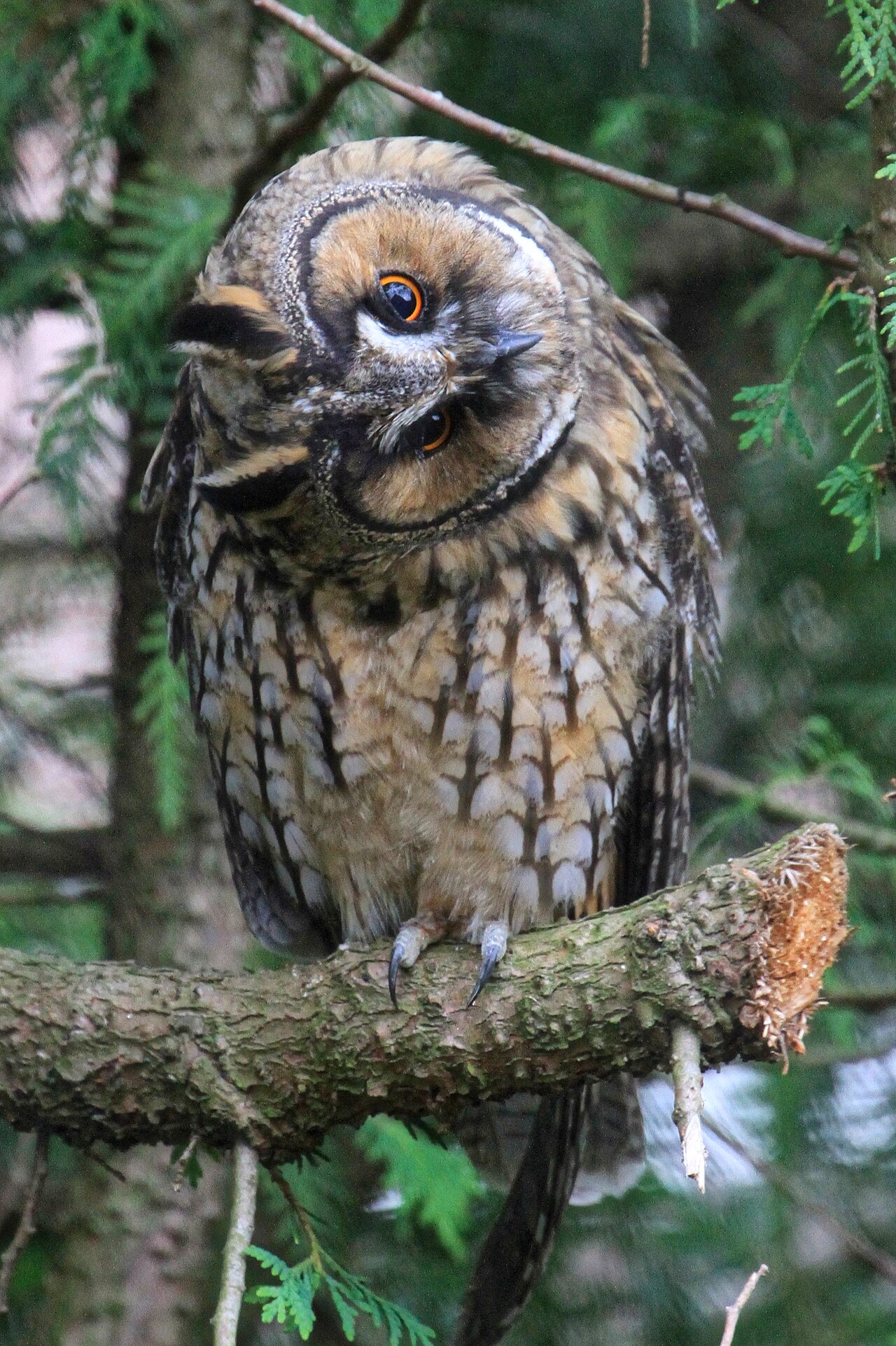
The Barred Owl (Strix varia) gives the most recognizable owl sound in the eastern United States: eight or nine hoots in two phrases, with the last note sliding down into a drawl. Birders write it as “who cooks for you, who cooks for you all,” and once you hear it that way you cannot unhear it.
Barred Owls are also the loudest nighttime arguers. Two birds trading calls escalate into caterwauling, a wild mix of barks, cackles, and gurgles that strangers often report as monkeys or fighting cats. The full range sits in our Barred Owl sound breakdown.
Great Horned Owl: Deep Hoots You Feel More Than Hear
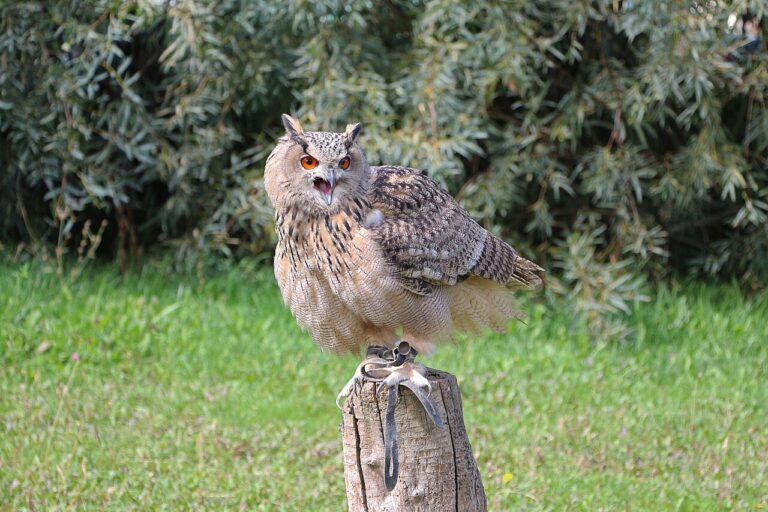
The Great Horned Owl (Bubo virginianus) delivers four or five hoots in an uneven pattern, pitched so low that the sound carries through walls better than it carries detail. It is the owl behind most Hollywood night scenes and most late-autumn calls over suburbs.
When two call together you can often sex them: the female is the higher pitched of the pair, despite being the larger bird. Duetting pairs trade notes for minutes at a time in November and December. More examples sit in our Great Horned Owl call guide.
Eastern Screech-Owl: The Trill and the Whinny
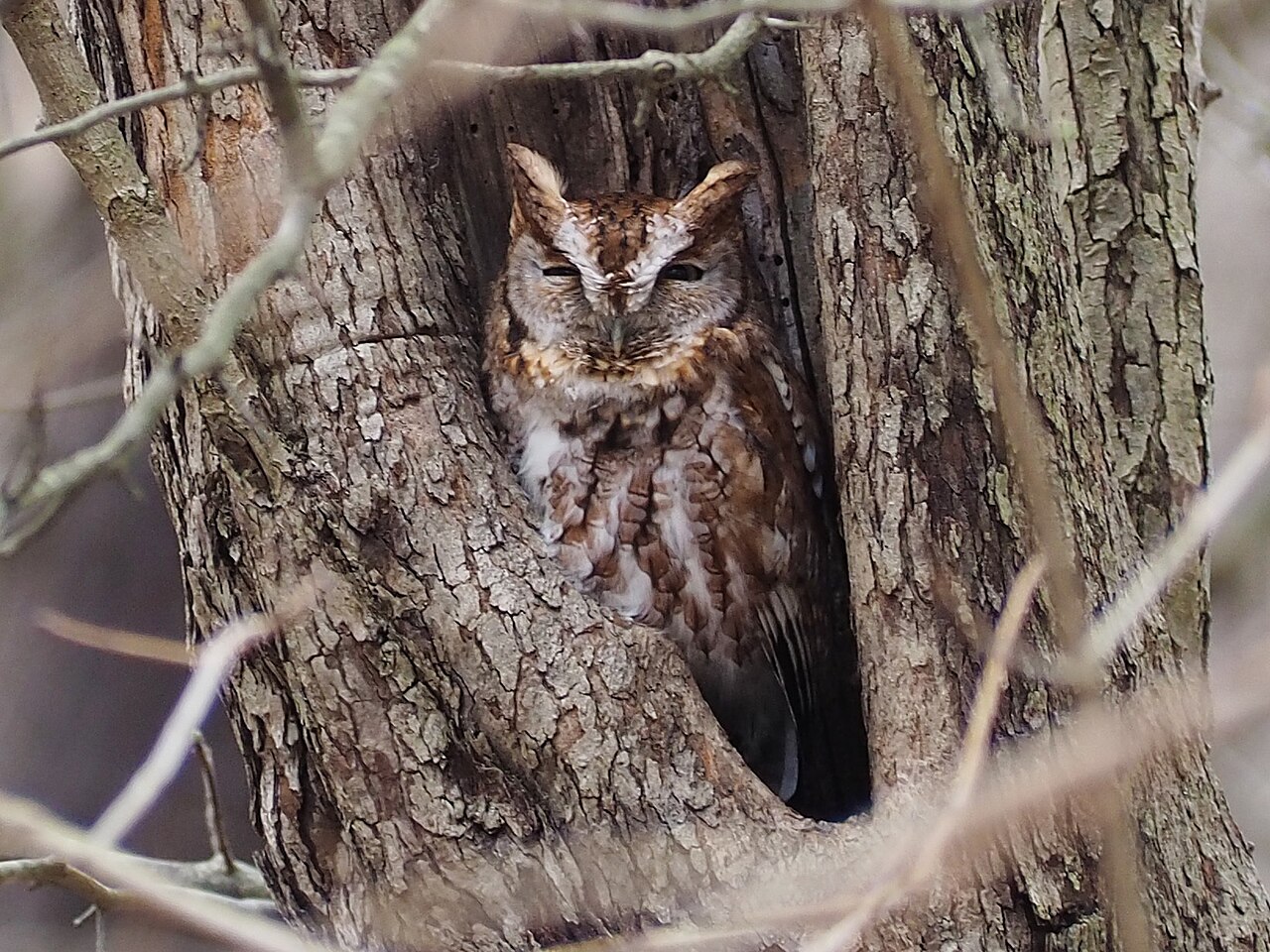
The Eastern Screech-Owl (Megascops asio) does not screech in the way the name suggests. It makes two sounds: an even trill on one pitch, like a soft purring whistle held for several seconds, and a descending whinny that sounds like a small horse. Both come from a bird no taller than a soda can.
What does it mean when you hear a screech owl at night? Usually that a pair is holding a yard-sized territory, often in an old tree cavity or a nest box 10 to 30 ft up. The trill is the contact call between mates; the whinny is the boundary marker. Details live in our Eastern Screech-Owl sound guide.
Barn Owl: The Shriek That Sounds Like a Scream
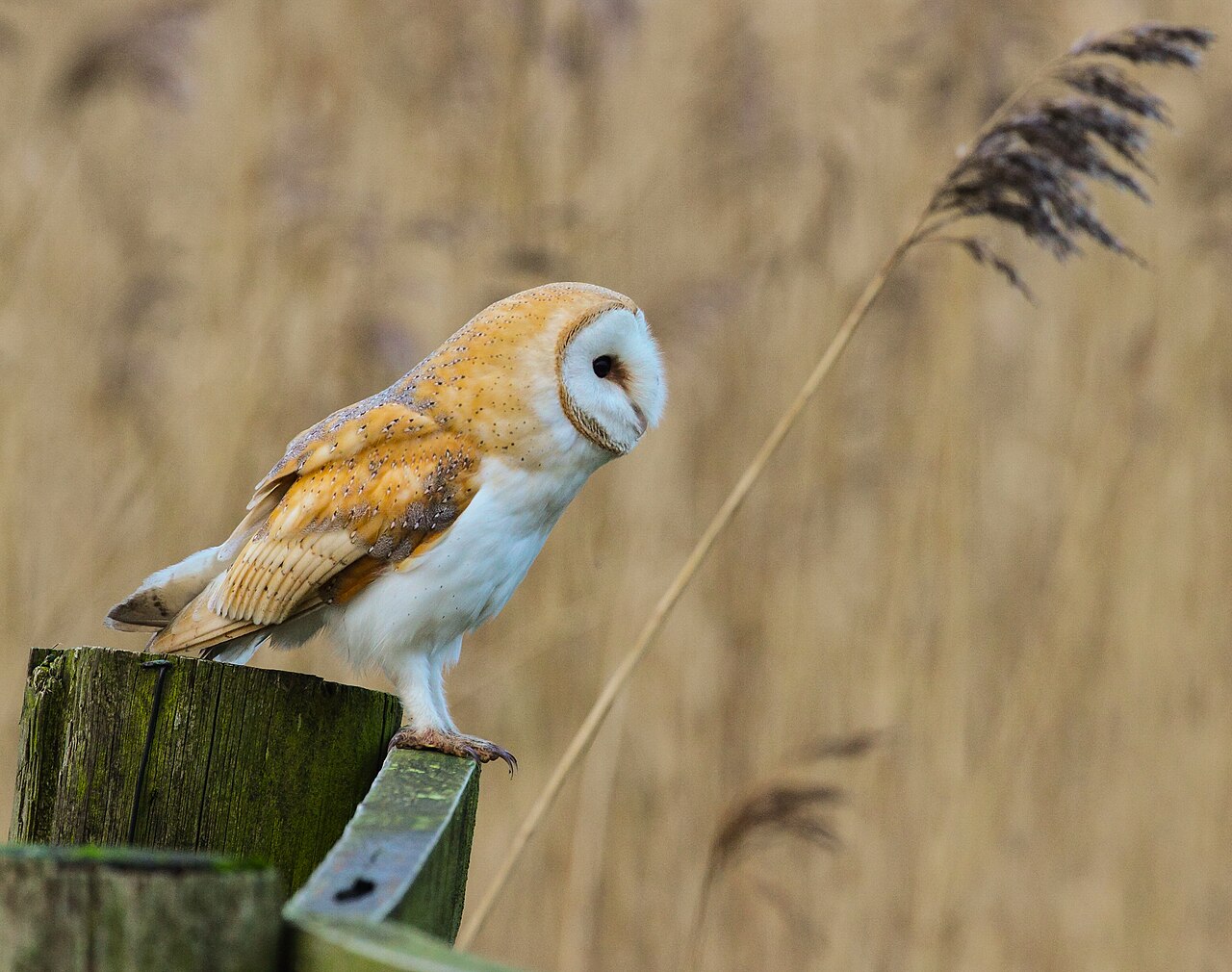
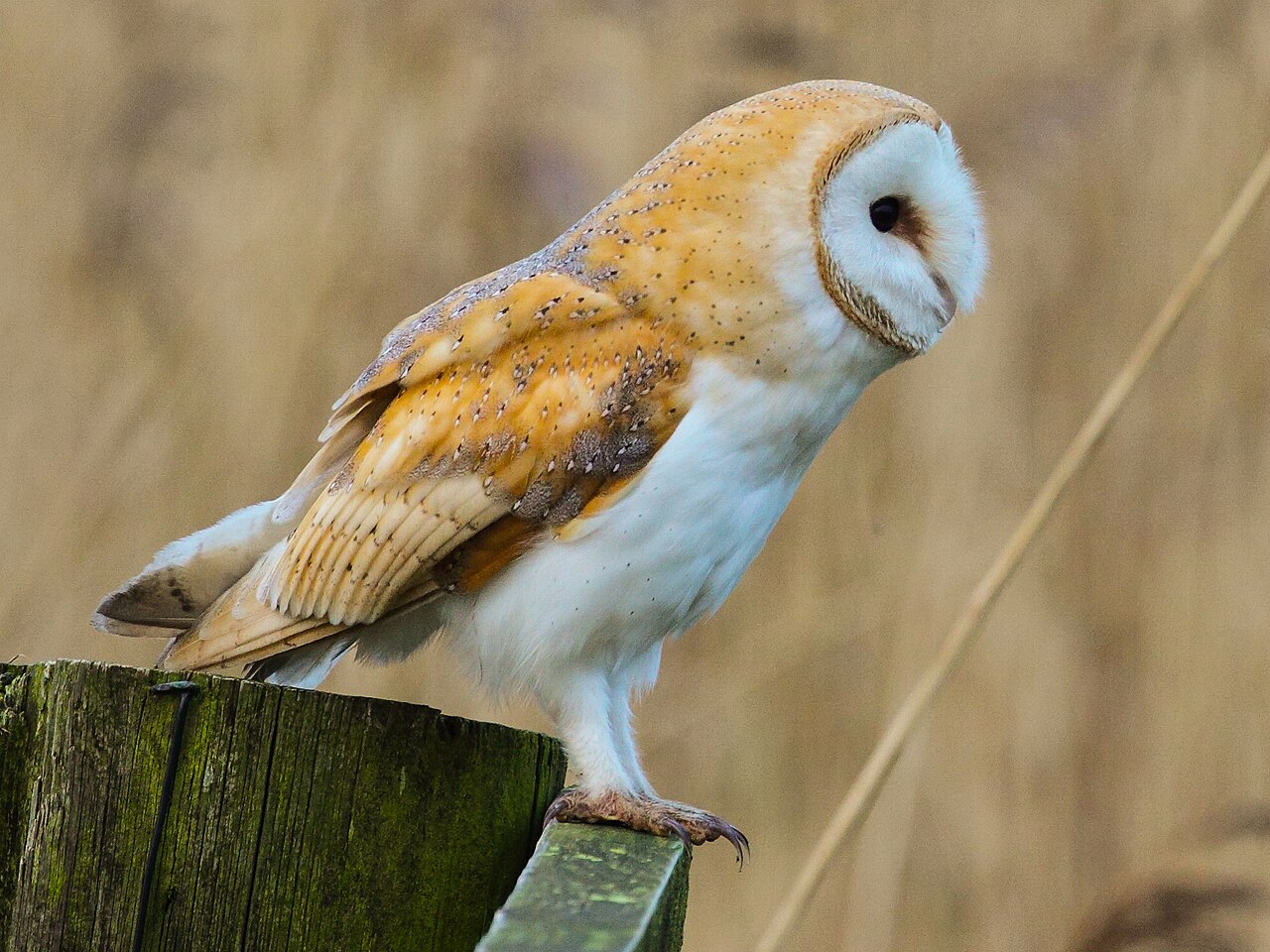
The Barn Owl (Tyto alba) never hoots. Its advertising call is a harsh, drawn-out scream about 2 seconds long, flat and tuneless, delivered in flight as often as from a perch. People who hear it for the first time call police, not birders.
Barn Owls hunt open fields, hay barns, and highway margins, so the scream usually arrives from above and moves. Nestlings add a rasping snore that runs for hours. Our Barn Owl sound profile separates the adult scream from the begging snore.
Alarm Calls: Barks, Hisses, and Bill Snaps
Any owl that feels crowded stops singing and starts warning. Barred and Great Horned Owls bark a short, dog-like “wauk.” Screech-owls and young birds hiss, and the Long-eared Owl (Asio otus) adds dog-like barks and drawn-out squeals that carry across open country. Nearly all of them snap the bill, a sharp dry click that means a bird is within a few yards of you and unhappy about it.
Bill snapping and hissing from a low branch at night is a sign to back away rather than shine a light. Nesting Great Horned Owls will strike at people who walk under the nest tree in February and March.
Courtship Calls and Duets in Late Winter
Courtship adds sounds that no field guide recording prepares you for. Male Great Horned Owls hoot while bowing, females answer higher and faster, and the pair may keep it up for 20 minutes. Barred Owl courtship is noisier still, full of cackling and nasal whoops.
This is the loudest stretch of the owl year in most of the country, running from December to February depending on latitude. Northern species on their breeding grounds follow the same script months later, which is why Snowy Owl calls are rarely heard south of the tundra.
Baby Owl Sounds at Night
Juvenile owls are responsible for a large share of summer complaints. Fledged Great Horned Owls give a raspy, two-note screech every 10 to 20 seconds for weeks, usually from June through August, and they follow their parents around the neighborhood while doing it.
Young Barred Owls add a rising hiss that ends in a squeal. Both calls sound injured, and both are normal. A begging owlet on a low branch does not need rescue unless it is on the ground in daylight with no adult calling nearby.
What Sounds Like an Owl but Isn’t?
The Mourning Dove (Zenaida macroura) is the single most common false alarm, and its soft coo-OO-oo fools people every spring, though it calls by day rather than at night. Red foxes scream in January and February in a way that genuinely resembles a Barn Owl. Raccoons chitter and growl under decks.
Several birds also mimic the rhythm without being owls, which we sort out in birds that sound like owls. If the sound came from inside a wall or attic, it was not an owl at all; owls roost in trees, chimneys, and barns, not wall cavities, and a scratching sound there points to a squirrel or raccoon.
What Does It Mean When You Hear an Owl Hooting Outside Your House?
Biologically it means one thing: a territory holder has included your yard in its range, usually because the yard offers big trees, open hunting ground, or a reliable rodent supply. Repeated hooting from the same tree for several nights is a pair, not a wanderer.
The folklore is a separate question, and it varies widely by culture, from omen of death to sign of protection. We treat that tradition on its own terms in what it means to see an owl at night. The science is simpler: an owl in the yard is a free rodent control service.
Frequently Asked Questions
What does it mean to hear an owl at 3am?
It means the owl is on its second activity peak. Most owls hunt hard at dusk, rest around midnight, then call and hunt again in the hours before dawn. A 3am hoot is routine behavior on the pre-dawn shift and carries no biological significance beyond an active territory nearby.
Is it good to hear owl sound at night?
For your property, yes. A resident pair of Great Horned or Barred Owls removes dozens of rats, voles, and mice per week during nesting season. The main cost is noise in winter and risk to small outdoor pets, which is why cats and toy breeds belong indoors after dark.
Is it good to have owls around your house?
Generally yes, with two caveats. Owls will take unattended chickens and small pets, so secure coops with a solid roof. And nesting Great Horned Owls defend the nest tree aggressively in late winter, so give any active nest a wide berth until the young fledge.
What animal sounds like an owl hooting at night?
Mourning Doves, pigeons, and some cuckoos produce hollow cooing that reads as hooting. Red foxes, raccoons, and bobcats cover the screaming end of the range. Bullfrogs in a nearby pond can also pass for a distant Great Horned Owl on a warm night.
Do female owls sound different from males?
Yes, and not the way most people guess. In Great Horned Owls and Barred Owls the female calls at a higher pitch than the male, even though she is the larger bird. Pairs use that difference to recognize each other, and duets make the contrast obvious.
What is an owl’s worst enemy?
For small owls, the Great Horned Owl is the main predator. For the Great Horned Owl itself, the biggest threats are other Great Horned Owls, vehicle collisions, and rodenticide poisoning. Crows and jays harass owls all day long, which is why daytime mobbing noise often reveals a roost. The Cornell Lab of Ornithology keeps reference recordings for every species above.