Calliope Hummingbird: Identification, Range, and Behavior Guide
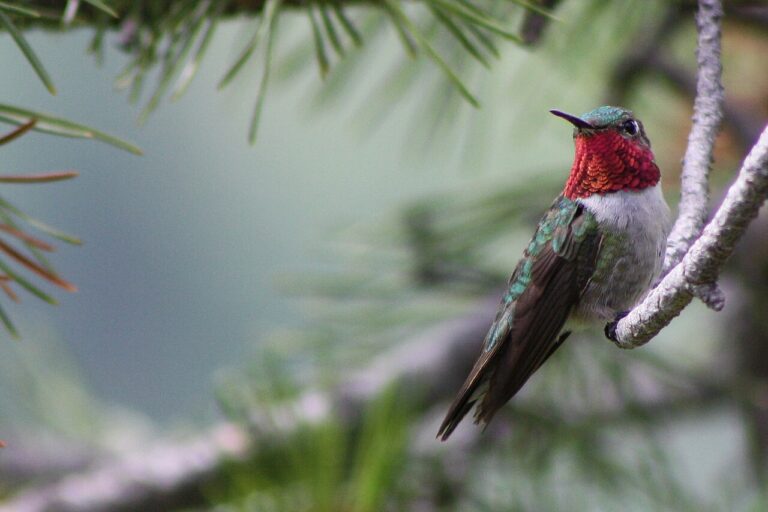
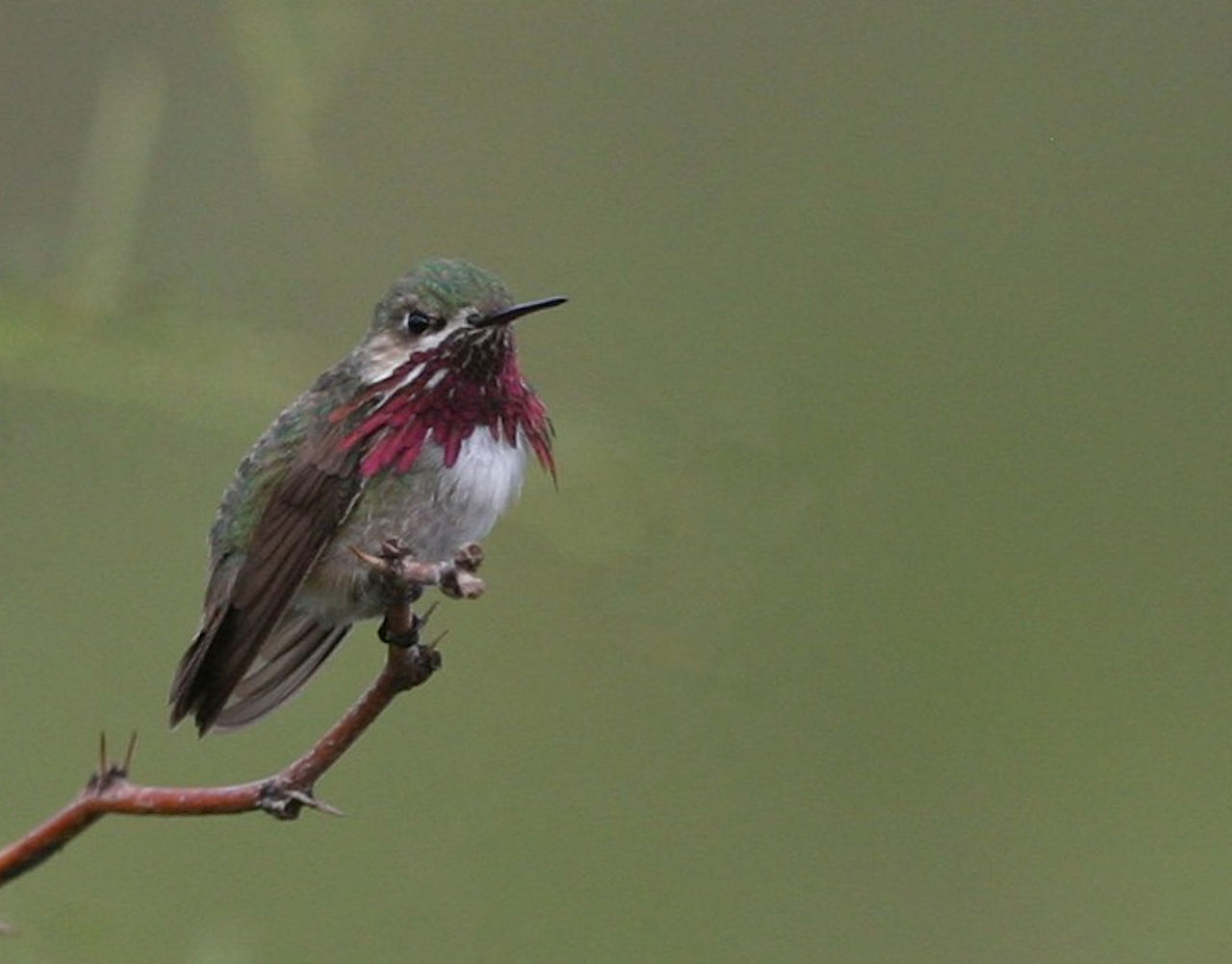
The calliope hummingbird holds a genuine superlative among North American birds: it is the smallest breeding bird found anywhere in the United States and Canada, weighing barely more than a large paperclip and measuring only about 3 inches from bill tip to tail. Despite its tiny size, the male’s throat is anything but subdued, showing streaked magenta feathers arranged in distinct rays rather than a solid gorget, a pattern unlike almost any other North American hummingbird. Named after Calliope, the Greek muse of epic poetry, this diminutive mountain specialist breeds at high elevations across the interior Pacific Northwest and completes a substantial migration to Mexico each year despite its minuscule size, a genuinely remarkable feat of endurance packed into one of the smallest bird bodies found anywhere on the continent.
| Trait | Detail |
|---|---|
| Scientific name | Selasphorus calliope |
| Length | 3 to 3.3 in |
| Weight | 2.3 to 3.4 g |
| Range | Pacific Northwest and northern Rockies in summer, Mexico in winter |
| Habitat | Mountain meadows, open forest, shrubby slopes |
| Notable trait | Smallest breeding bird in the US and Canada |
How to Identify a Calliope Hummingbird
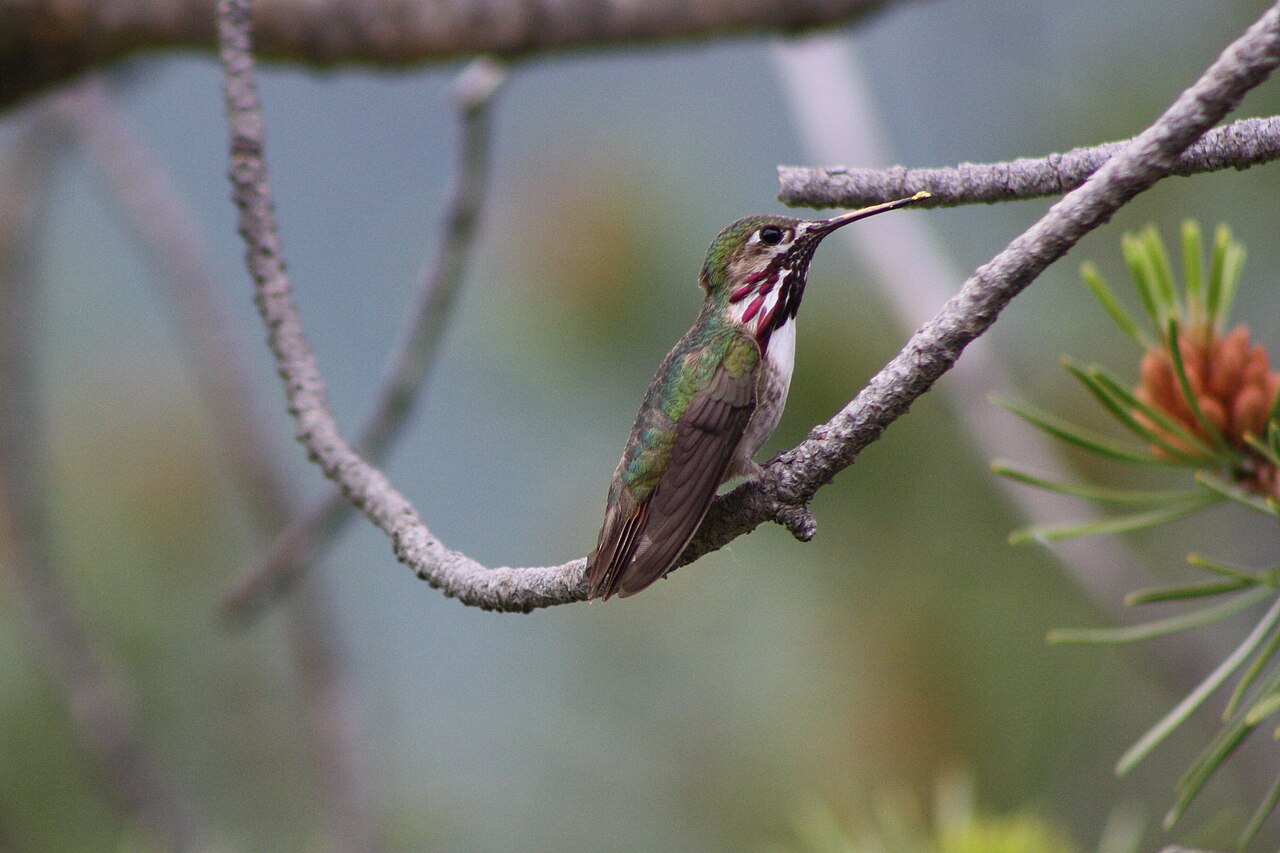
Adult males show a distinctive throat pattern of magenta or wine colored streaks radiating outward against a white background, called rays rather than a solid gorget, a feature unique among common North American hummingbirds and one of the most reliable identification marks available. The back is metallic green, and the tail is notably short, contributing to the species’ overall compact, almost stubby appearance compared to other hummingbirds.
Females and juveniles lack the streaked throat, showing instead a plain whitish or lightly spotted throat, a green back, and buffy colored sides, closely resembling smaller versions of female broad-tailed or rufous hummingbirds. Overall small size and proportionally short tail remain the most useful clues even without a visible throat pattern, and with practice, the calliope hummingbird’s distinctly compact silhouette becomes recognizable even at a quick glance across a feeding station.
In flight, the calliope hummingbird’s tiny size and short tail give it a distinctive, almost bumblebee-like silhouette, and its wingbeats are proportionally even faster than those of larger hummingbird species, a natural consequence of its exceptionally small body size relative to its relatives. When perched, the short tail barely extends past the folded wingtips, another useful clue that separates this species from the longer tailed hummingbirds it sometimes shares habitat with.
Weight is perhaps the most striking statistic of all. At barely 2.3 to 3.4 grams, an adult calliope hummingbird weighs roughly the same as a single ping pong ball, and it remains, pound for pound, one of the lightest warm blooded migratory animals found anywhere on the planet, a fact that continues to amaze researchers studying long distance bird migration.
Range and Migration
Calliope hummingbirds breed across mountainous terrain of the interior Pacific Northwest and northern Rockies, including parts of Washington, Oregon, Idaho, Montana, and south into the Sierra Nevada of California. Preferred breeding habitat includes mountain meadows, open coniferous forest, and shrubby slopes, often at moderate to high elevations similar to those favored by the broad-tailed hummingbird.
Despite its tiny size, this species completes a substantial migration each year, wintering primarily in the highlands of Mexico. Remarkably, some individuals travel close to 5,000 miles round trip relative to their breeding and wintering grounds, an extraordinary distance for a bird that could comfortably perch on a person’s thumb.
Spring migration tends to follow a more direct northward route along the interior mountains, while individuals may take a more easterly path through the Rockies during fall migration, a pattern broadly similar to the loop migration strategy seen in the closely related rufous hummingbird.
Given this migration distance relative to body size, the calliope hummingbird arguably rivals or even exceeds the rufous hummingbird for the title of most impressive long distance traveler among all the world’s hummingbird species, a fact that continues to surprise many birders encountering the species for the first time.
Diet and Feeding Behavior
Nectar from a variety of mountain wildflowers, along with small insects caught in flight or gleaned from foliage, makes up the diet, with insects providing essential protein especially important given the species’ extremely high metabolic rate relative to body size. Calliope hummingbirds are important pollinators of several high elevation wildflower species across their breeding range, visiting a remarkable number of individual blooms across a single foraging day.
At feeders, standard sugar water at a 1 to 4 ratio is readily taken, though this species is frequently displaced from feeders by larger, more aggressive hummingbirds such as the rufous hummingbird, meaning multiple feeding stations can help ensure calliope hummingbirds get adequate access during migration stopovers.
Because of its small body size and correspondingly limited fat storage capacity, the calliope hummingbird must feed almost continuously through daylight hours, visiting a very high number of flowers relative to its body weight each day simply to maintain the energy balance needed to survive overnight and complete its demanding migration.
Nesting Behavior
Females build an exceptionally small nest, often described as roughly the size of a golf ball cut in half, using plant down, moss, and bark fiber bound with spider silk, frequently placed on a horizontal conifer branch sheltered by overhanging foliage above. Nests are sometimes built directly on top of old pine cones or existing lumps on a branch, providing extra camouflage and structural support.
Clutches typically contain 2 eggs, incubated solely by the female for about 15 to 16 days, with chicks fledging roughly 3 weeks after hatching. Given the short high elevation breeding season, most females raise only a single brood per year.
Nest site selection often favors locations beneath a slightly larger branch or overhanging bough, which provides some protection from rain and radiative heat loss overnight, both meaningful concerns given the exposed high elevation habitat this species relies on for breeding each summer.
Calliope Hummingbird Sounds and Displays
Male calliope hummingbirds perform a distinctive dive display during courtship, climbing to a moderate height above a perched female before diving down and pulling up sharply, producing a buzzy popping sound near the bottom of the dive combined with a thin, high pitched song delivered from a nearby perch. This display, while less dramatic in absolute height than the dive of an Anna’s hummingbird, is still an impressive feat of aerial control for a bird of such small size.
Away from courtship, calliope hummingbirds give a variety of soft chip notes used in general communication and territorial disputes, though their calls tend to be quieter and less far carrying than the wing trill produced by a broad-tailed hummingbird sharing the same mountain meadows.
Calliope Hummingbird vs Similar Species
The streaked, ray-like throat pattern of an adult male calliope hummingbird is unlike any other common North American species, making adult males relatively straightforward to identify with a clear view. Females and juveniles require closer attention to overall size and tail length, since a calliope hummingbird is noticeably smaller and shorter tailed than a female broad-tailed hummingbird or rufous hummingbird sharing the same mountain habitat.
At a shared mountain feeder, a useful trick is to compare birds directly against one another rather than trying to judge absolute size alone, since the calliope hummingbird will typically look distinctly smaller and more compact than any other hummingbird species present at the same feeding station.
Conservation Status
The calliope hummingbird is not currently considered threatened, though like other high elevation mountain specialists, it depends on the continued health of subalpine meadow and open forest habitat across its breeding range. According to Audubon, shifting climate patterns that alter the timing of mountain wildflower blooms could pose a longer term challenge for a species whose migration and breeding schedule is so tightly synchronized with a narrow seasonal window of nectar availability.
Continued monitoring of mountain breeding populations, along with backyard feeder support during migration stopovers at lower elevations, both help provide a buffer against the more localized pressures this small, specialized species may face in the years ahead.
Frequently Asked Questions
What is the smallest hummingbird in North America?
The calliope hummingbird is the smallest breeding bird in the United States and Canada, measuring only about 3 to 3.3 inches long and weighing 2.3 to 3.4 grams.
What does a calliope hummingbird look like?
Males show streaked magenta rays on a white throat, a green back, and a very short tail, giving the species a compact, almost stubby overall appearance.
Where do calliope hummingbirds breed?
They breed in mountain meadows and open forest across the interior Pacific Northwest and northern Rockies, including Washington, Oregon, Idaho, Montana, and the Sierra Nevada.
How far do calliope hummingbirds migrate?
Some individuals travel close to 5,000 miles round trip between breeding grounds in the northern Rockies and Pacific Northwest and wintering grounds in the highlands of Mexico.
What does a calliope hummingbird eat?
It feeds on nectar from mountain wildflowers and small insects, and will visit backyard feeders, though it can be displaced by larger, more aggressive hummingbirds.
How can you identify a calliope hummingbird?
Its extremely small size, short tail, and in males the streaked magenta throat pattern make it one of the more distinctive western hummingbirds to identify.
Is the calliope hummingbird endangered?
No, it is not currently considered threatened, though it depends on healthy mountain meadow habitat across its breeding range.