Quaker Parrot: Talking, Temperament, Cost, and Where It Is Illegal
The quaker parrot (Myiopsitta monachus), also sold as the monk parakeet, is a bright green South American parrot about 11 in (28 cm) long that talks better than almost any bird its size and bonds hard with one person. It is one of the few parrots that builds a stick nest rather than using a tree hollow, and that single habit explains both its success as a feral bird in US cities and the laws that ban it in several states.
For a first parrot it sits in an awkward spot: cheap to buy, loud, clever, and prone to becoming territorial about its cage by its second year. People who understand that trade before they buy tend to keep quakers for twenty years. People who expected a quiet green budget bird usually rehome them within two.
A quaker parrot is a small green parrot from South America that reaches 11 in (28 cm), weighs 3 to 5 oz (85 to 140 g), and lives 20 to 30 years in captivity. It is a strong talker, needs several hours of attention a day, and is illegal to own in a number of US states because escaped birds form established colonies.
| Quick Fact | Detail |
|---|---|
| Scientific name | Myiopsitta monachus |
| Adult size | 11 to 12 in (28 to 30 cm), 3 to 5 oz (85 to 140 g) |
| Lifespan | 20 to 30 years in captivity |
| Talking ability | High. Clear speech, vocabulary of 50 to 100 words is common |
| Noise level | Moderate to loud, sharp repeated calls |
| Price | Roughly 250 to 600 USD from a breeder |
What Is a Quaker Parrot?
The quaker parrot is a small parrot native to Argentina, Bolivia, Brazil, Paraguay, and Uruguay, where it lives in noisy flocks across open woodland and farmland. The name comes from the grey bib across the chest and face, which looks like a plain collar, and from the shaking motion young birds make when they beg.
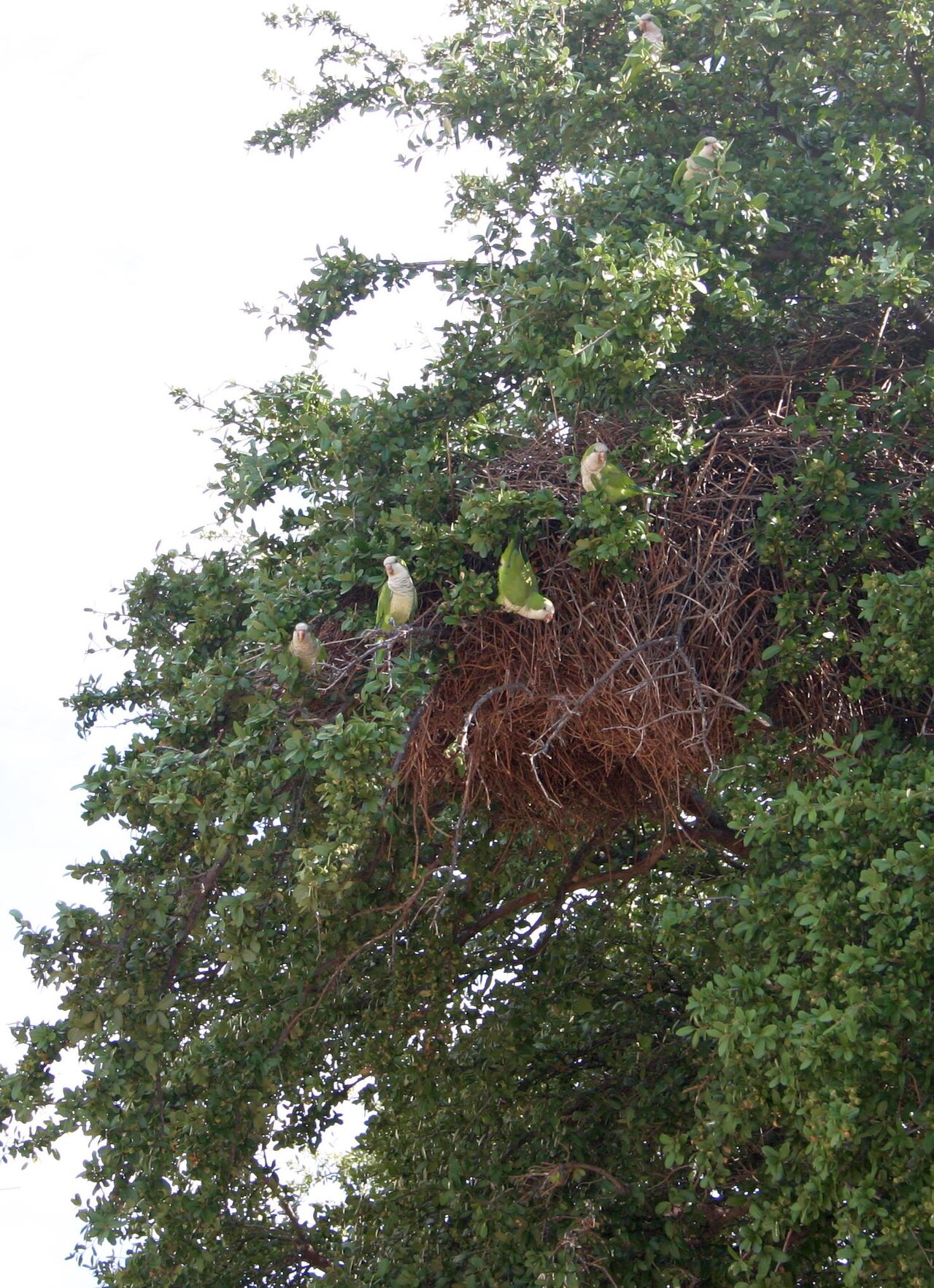
What sets the species apart from every other parrot in the pet trade is architecture. Quakers build large communal stick nests with separate chambers, sometimes weighing hundreds of pounds, and they use them year round rather than only for breeding. That behavior let escaped birds survive winters in Chicago, New York, and Connecticut, forming the feral colonies that made several states nervous enough to legislate.
Quaker Parrot Size, Colors, and Lifespan
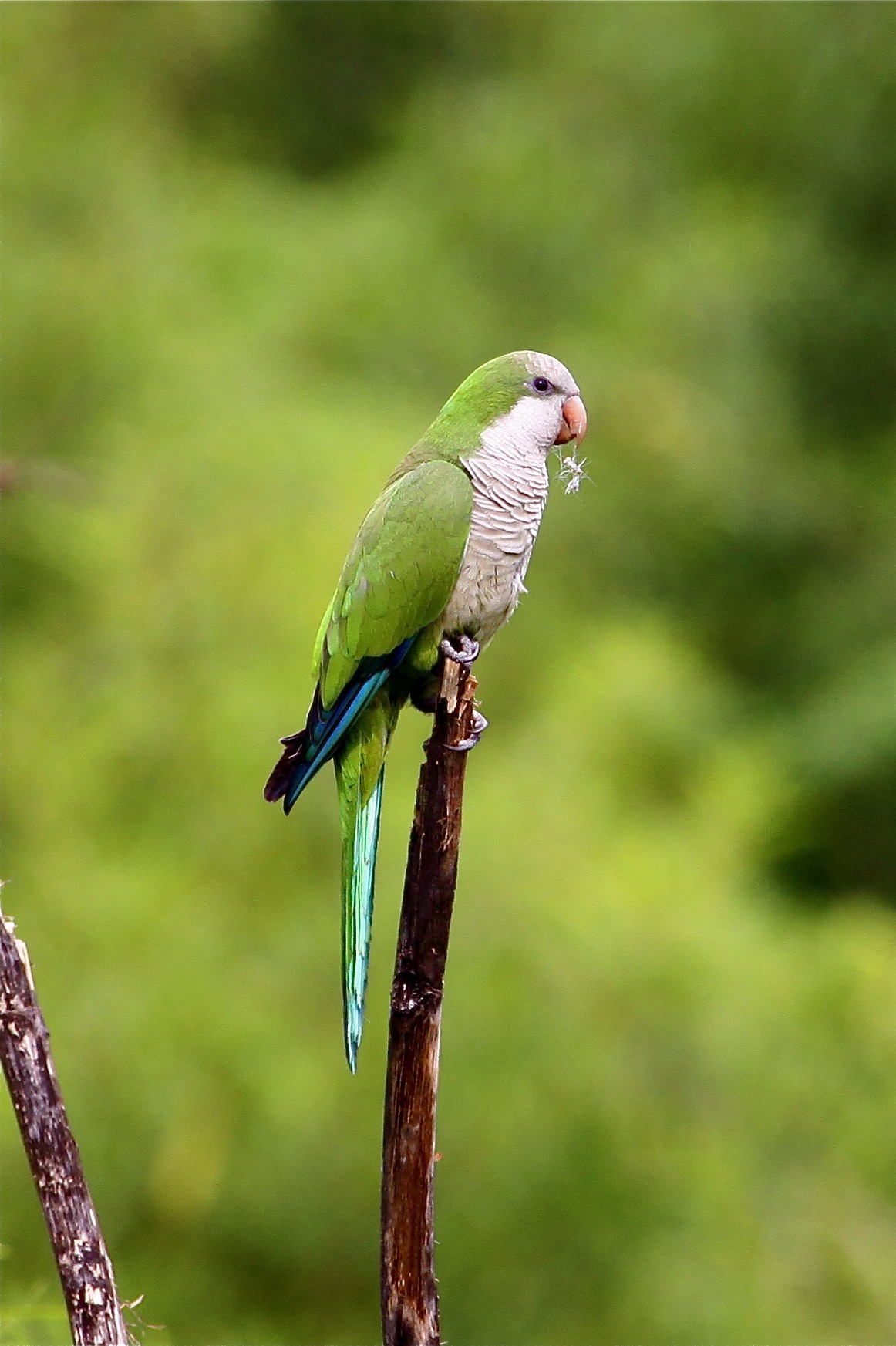
An adult quaker is about 11 to 12 in (28 to 30 cm) from beak to tail tip and weighs 3 to 5 oz (85 to 140 g), which puts it between a cockatiel and a small conure. The wild type is green above, grey across the forehead, cheeks, throat, and chest, with blue flight feathers and an orange horn colored beak.
Breeders have produced blue, cinnamon, lutino, and pied color mutations, and these usually cost more without behaving any differently, much the way an albino peacock commands a premium over a normally colored bird. Lifespan in a well kept home is 20 to 30 years, so buying one is a commitment on the scale of a dog twice over. Males and females look identical, and DNA testing is the only reliable way to sex a bird.
Can Quaker Parrots Talk?
Yes, and they are among the best talkers of any small parrot. Many quakers build a vocabulary of 50 to 100 words and phrases, with clearer diction than a budgie and better volume control than a conure. Some birds start mimicking at three or four months, which is early for a parrot.
Talking is not guaranteed. Individual variation is wide, hand raised birds that get daily one on one conversation do far better than birds left alone, and a quaker that never hears repeated speech may only mimic household noises like the microwave or a phone ringtone. Teaching works best in short sessions of a few minutes, several times a day, with the same phrase and the same tone.
Quaker Parrot Temperament

Quakers are bold, curious, and extremely social. They want to be where their people are, will walk across a table to investigate anything new, and often learn tricks faster than larger parrots. A well socialized quaker is confident rather than nervous, which is a large part of the appeal.
The flip side is intensity. Many quakers pick one favorite person and become possessive, lunging at anyone else who approaches. That behavior is manageable if several household members handle the bird from the start, and much harder to undo once it sets in around the first or second year. Anyone raising a bird from young should read up on the baby parrot stage, because the habits formed there last decades.
Are Quaker Parrots Legal in Your State?
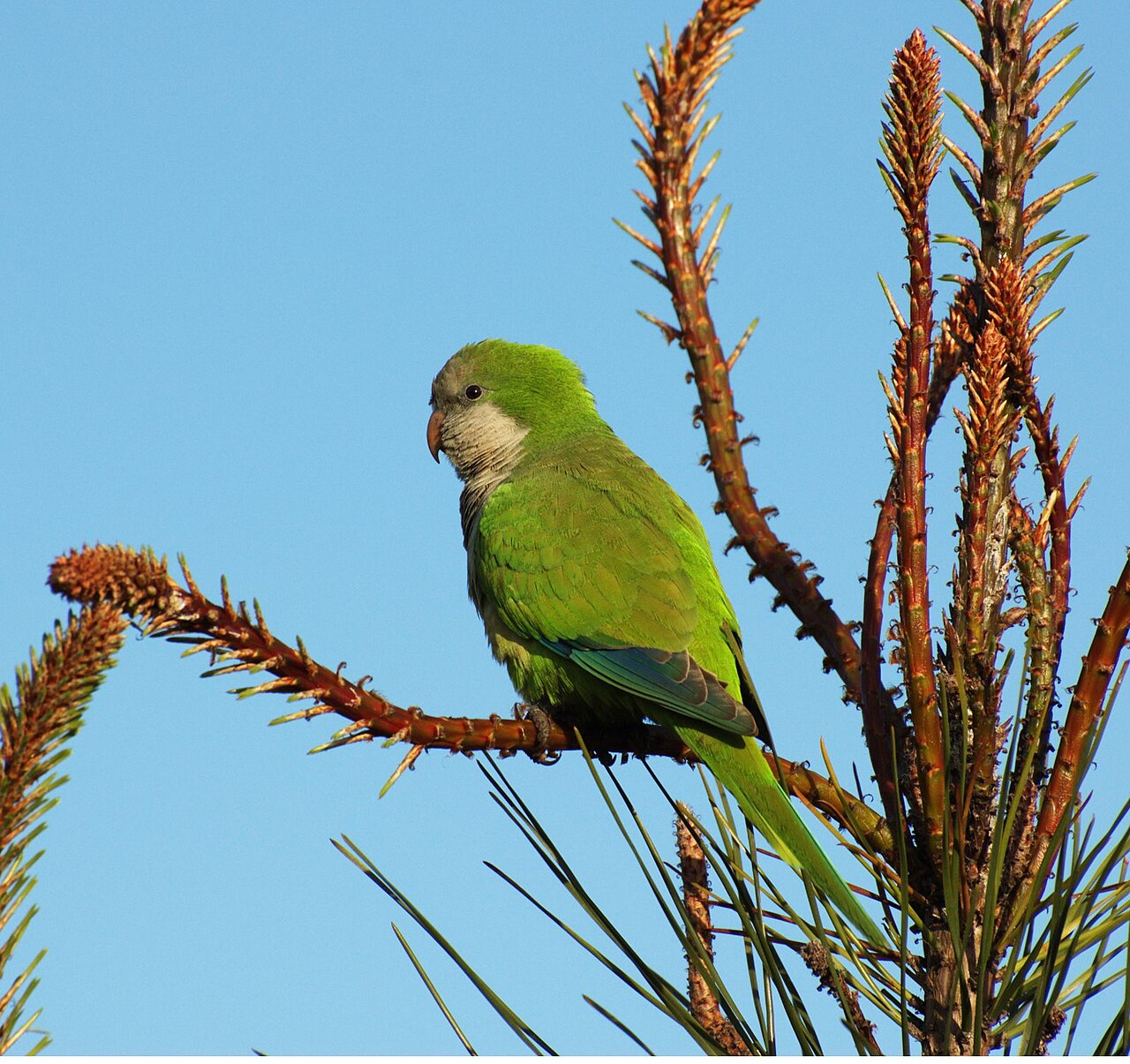
This is the first question to settle, before price or color. A number of US states restrict or ban quaker parrot ownership because escaped birds establish breeding colonies and their nests on utility poles and transformers have caused outages and fires. Restrictions have historically included states such as California, Connecticut, Georgia, Hawaii, Kentucky, and Wyoming, with others requiring banding, permits, or wing clipping.
The rules change, and they differ by city as well as by state. Check with your own state wildlife or agriculture agency before you buy, not with a breeder or a forum post, because possession of an illegal bird can end in confiscation. Shipping a quaker into a restricted state does not make it legal there either.
Cage Setup for a Quaker Parrot
Buy more cage than the bird looks like it needs. A minimum of 24 by 24 by 30 in (61 by 61 by 76 cm) with half inch bar spacing suits one quaker, and bigger is always better because these birds move constantly. Horizontal bars help, since quakers climb the walls more than they fly across.
Fit several perches of different diameters, including natural wood branches that vary in thickness to keep the feet healthy. Rotate toys weekly, and include shreddable material such as untreated wicker, palm leaf, or soft wood: a quaker deprived of destruction targets will find its own. Out of cage time should run three to four hours a day in a bird safe room.
What Do Quaker Parrots Eat?
A formulated pellet should make up roughly 60 to 70 percent of the diet. Seed only diets are the leading cause of preventable illness in quakers, because seed is high in fat and short on vitamin A and calcium. Pellets remove the bird’s ability to pick out only the sunflower seeds.
Build the rest from fresh vegetables and a smaller share of fruit: dark leafy greens, broccoli, carrot, sweet potato, peppers, peas, apple, and berries. Seeds still have a place as a training reward, the same way a feeder full of nyjer keeps an American goldfinch coming back. Avocado, chocolate, caffeine, alcohol, and onion are toxic and must never be offered. Fresh water goes in daily, and any food left in the bowl more than a few hours in a warm room should come out.
Quaker Parrot Behavior Problems and Biting
The three complaints that come up again and again are cage aggression, one person bonding, and screaming. All three are normal quaker behavior rather than a defect, and all three respond better to prevention than to correction. A bird that is handled by several people and taken out of the cage daily rarely develops the worst version of any of them.
For cage territoriality, ask the bird to step up on a perch outside the cage rather than reaching into it. For screaming, note that quakers call to locate their flock: answering from the next room usually quiets a contact call, while ignoring it can escalate the volume. Never respond to a bite by shouting, since the reaction itself is interesting enough to reward the behavior.
The Nest Building Instinct
Quakers are the only parrots that build their own stick structures, and captive birds keep the drive. A pet quaker will weave paper strips, splinters, and shredded toys into a corner of the cage, and hens sometimes become hormonal and defensive once a structure takes shape. This is the behavior behind the nesting colonies that made the species famous in Brooklyn and Chicago.
Let the bird build, but manage the hormones. Remove anything that functions as a nest box, keep daylight hours to about 10 to 12 hours to avoid triggering breeding condition, and avoid stroking the back or under the tail. The Cornell Lab of Ornithology covers the wild nesting behavior of the species in detail at allaboutbirds.org.
Health Problems to Watch For
Fatty liver disease is the most common serious problem and is almost always dietary, the result of years of seed heavy feeding. Feather destructive behavior is the second, and in quakers it is usually boredom, hormonal frustration, or a skin issue rather than a nutritional one. Both are easier to prevent than to reverse.
Watch for changes in droppings, tail bobbing while at rest, fluffed posture during the day, and any drop in weight, since parrots hide illness until it is advanced. Weigh the bird weekly on a gram scale and write the number down. Find an avian veterinarian before you need one, because a general small animal practice often cannot help.
How Much Does a Quaker Parrot Cost?
A hand raised quaker from a breeder typically runs 250 to 600 USD, with blue and lutino mutations at the top of that band. Rescues and rehomes ask far less and often come with the cage. The purchase price is the smallest part of the bill.
Budget for a cage at 200 to 500 USD, an annual avian vet visit around 100 to 250 USD, and 30 to 60 USD a month for pellets, fresh produce, and replacement toys. An emergency fund matters too: an avian workup with bloodwork and imaging can pass 500 USD quickly, and a 25 year bird will need one eventually.
Quaker Parrot vs Other Beginner Parrots
Against a budgie or a cockatiel, the quaker is louder, pushier, and far more talkative, with a lifespan roughly double a cockatiel’s. Against a conure it is quieter and smaller but just as demanding of attention. Against an African grey it is cheaper, shorter lived, and far less fragile emotionally.
Pick a quaker if you want a talking parrot with real personality, have three to four hours a day, and live somewhere the bird is legal. Pick something else if you need quiet, travel often, or want a bird that stays equally friendly with everyone in the house; a planted tank with angelfish asks a fraction of the daily attention, and backyard poultry such as the Cayuga duck is a different commitment again. Flock behavior is part of the appeal either way, and it shows up in the language too: there is a reason people ask what a group of parrots is called.
Frequently Asked Questions
Why are quaker parrots illegal in some states?
Escaped quakers survive US winters and form breeding colonies, and their heavy stick nests on utility poles and substations have caused power outages and fires. Agriculture departments also worry about crop damage, since the species is treated as a pest in parts of its native range. Restrictions vary by state and sometimes by city, so check with your state wildlife agency directly.
Are quaker parrots good for beginners?
They are a reasonable first parrot for someone with time, but not a low effort one. Quakers are cheap to buy, hardy, and easy to tame, which is what earns the beginner label. They are also loud, territorial about their cage, and likely to live 25 years, so the real question is commitment rather than difficulty.
Do quaker parrots bite a lot?
Quakers bite more than cockatiels and less than many conures, and most biting is situational rather than constant. The usual triggers are a hand entering the cage, a stranger approaching the favorite person, or hormonal periods in spring. Handling by several people from a young age and using a perch for step ups prevent most of it.
How loud is a quaker parrot?
Loud enough to be heard through a wall, but not on the scale of a macaw or sun conure. Expect sharp repeated contact calls at dawn and dusk, and short bursts during the day when something changes in the room. Apartment living is possible with a quaker, unlike with most larger parrots, though neighbors will know the bird exists.
Can quaker parrots live alone or do they need a pair?
A single quaker does well as long as a person fills the flock role with several hours of daily interaction. Pairs bond with each other and often become much less interested in people, which is the right choice if you want birds to watch rather than a companion. Two males housed together can fight, particularly in breeding season.
Are quaker parrots and monk parakeets the same bird?
Yes. Monk parakeet is the ornithological name used for wild and feral populations, and quaker parrot is the name used in the pet trade. Both refer to Myiopsitta monachus, and the feral flocks you see in Brooklyn, Chicago, and Austin are the same species sold in stores.