Harlequin Rabbit: 8 Color Combinations, Size, Care and Cost
The harlequin rabbit is the only rabbit breed judged first on its markings and only second on its body, which is why a show quality harlequin rabbit is one of the hardest patterns in the hobby to produce. Its face is split down the middle into two colors, its ears are reversed, and its body carries alternating bands or patches that look painted on. Breeders call it the clown of the rabbit world, and the name fits both the coat and the personality.
Behind the pattern sits a calm, medium sized pet that weighs 6.5 to 9.5 lbs (3 to 4.3 kg), lives 5 to 8 years, and handles better than most rabbits of its size. This guide covers what a harlequin rabbit actually is, how the Japanese and Magpie groups differ, what the breed costs, what it eats, and the health problems that send harlequins to the vet most often.
A harlequin rabbit is a medium sized breed recognized for a split face, reversed ear colors, and banded or patched body markings in orange or white paired with black, blue, chocolate, or lilac. Adults weigh 6.5 to 9.5 lbs (3 to 4.3 kg) and live 5 to 8 years.
What Is a Harlequin Rabbit?
The harlequin is a breed of domestic rabbit (Oryctolagus cuniculus) developed in France in the 1880s and shown in Paris in 1887. It reached the United States in the early 1900s and is recognized today by the American Rabbit Breeders Association as a distinct breed with its own standard of perfection.
What separates the harlequin from every other recognized breed is how it is scored. On most breeds, body type carries the most points and color is secondary. On the harlequin, markings carry roughly half the total score. A rabbit with a flawless commercial body and sloppy bands will lose to a rabbit with an average body and clean markings.
That scoring rule shapes the whole breed. Harlequins are bred for contrast and placement, not for size or fur density, so pet quality harlequins are common and inexpensive while show quality animals stay rare. If you are looking at a litter and only one kit has a properly split face, that is normal.
| Trait | Harlequin Rabbit |
|---|---|
| Adult weight | 6.5 to 9.5 lbs (3 to 4.3 kg) |
| Body type | Commercial, medium build |
| Lifespan | 5 to 8 years |
| Coat | Short, dense, flyback |
| Groups | Japanese (orange base), Magpie (white base) |
| Temperament | Docile, curious, tolerant of handling |
| Typical price | 50 to 100 USD pet quality |
Japanese vs Magpie: The Two Harlequin Groups
Harlequins are divided into two groups by base color. Japanese harlequins pair orange or golden fawn with a dark color. Magpie harlequins replace the orange with white and pair that white with the same dark colors. Everything else in the standard, from body type to marking placement, is identical.
Both groups are shown as the same breed but in separate classes, so a Japanese black harlequin does not compete directly against a magpie black. Judges look for the same three things in each: a face split cleanly down the center, ears that reverse the face colors, and a body that alternates in clear bands or patches without smudging.
Magpies tend to show contrast more sharply because white against black reads more cleanly than orange against black. Japanese harlequins are more common in the United States, and most listings you will find from hobby breeders are Japanese.
How Big Do Harlequin Rabbits Get?
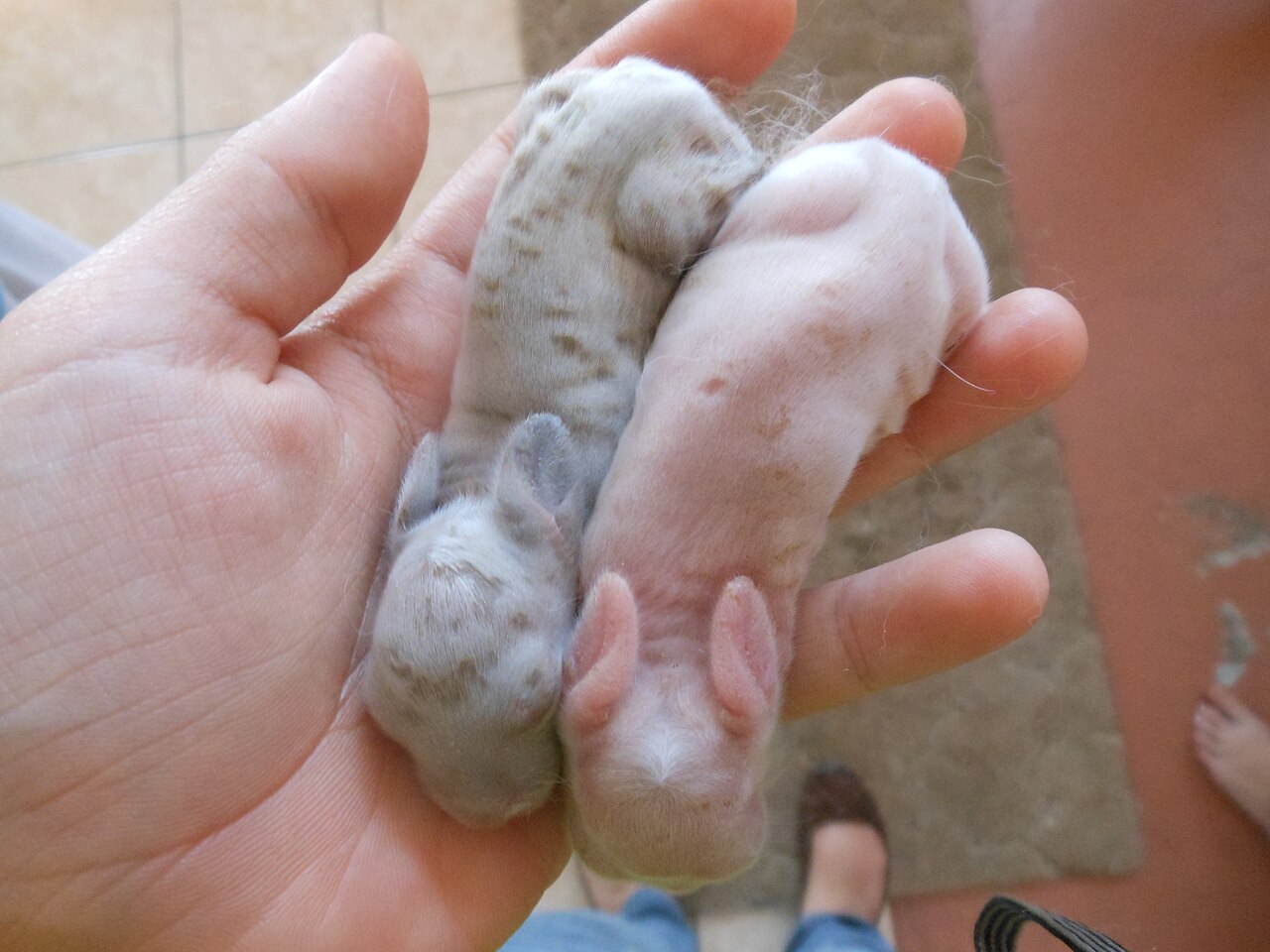
A mature harlequin weighs 6.5 to 9.5 lbs (3 to 4.3 kg), which places it squarely in the medium range. That is roughly three times the weight of a Netherland Dwarf and about half the weight of a Flemish Giant. Does usually finish slightly heavier than bucks.
Body length runs about 14 to 18 in (36 to 46 cm) with a commercial body type, meaning a rounded, medium arch that is deepest at the hips. The breed is not compact like a Dutch and not long and lean like a Britannia Petite.
Kits reach adult weight at about 6 to 8 months. If a young harlequin is still gaining past 10 months, it is usually gaining fat rather than frame, and the diet needs checking before obesity starts pressing on the hocks.
What Colors Do Harlequin Rabbits Come In?
Each group pairs its base color with one of four dark colors: black, blue, chocolate, or lilac. That gives eight recognized combinations in total, four Japanese and four magpie. Black is the most common and usually the sharpest looking; lilac is the softest in contrast and the hardest to judge.
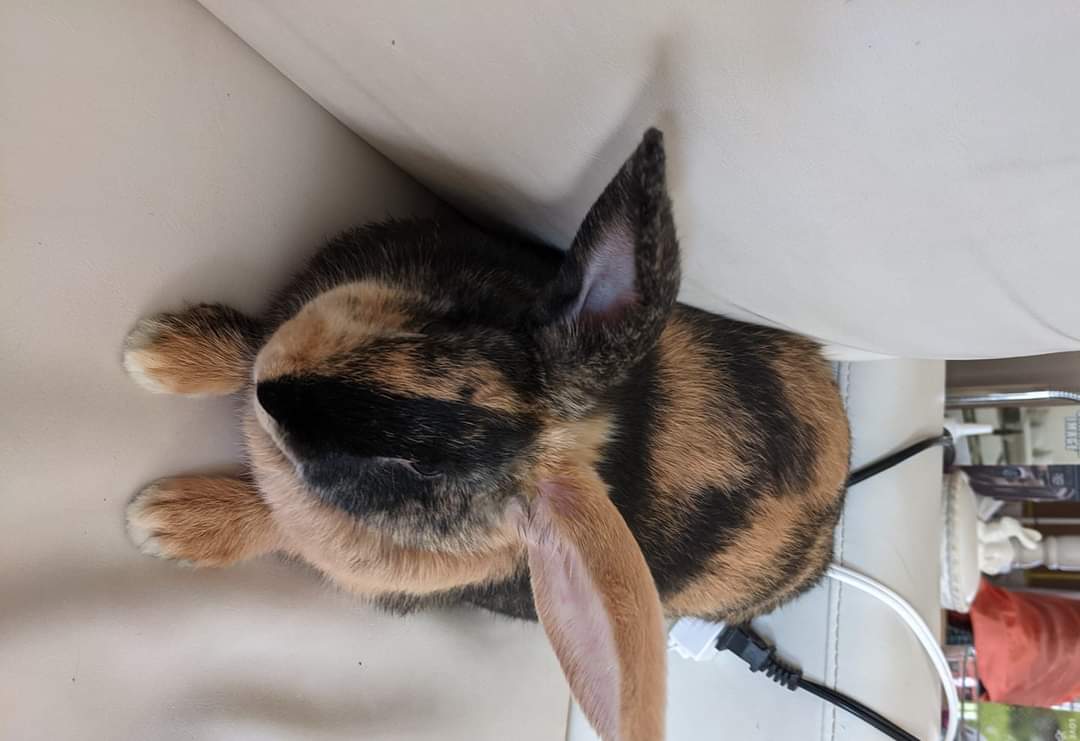
The pattern itself has three parts. The head is split vertically so one side carries the base color and the other the dark color. The ears reverse that split, so the ear on the orange side of the face should be dark. The body then alternates in bands around the barrel or in patches across it.
Bar patterned harlequins carry clean alternating rings; patched harlequins carry irregular blocks. Both are acceptable, but the transitions must stay crisp. Brindling, where the two colors blend into a speckled mix at the edges, is the single most common fault in the breed.
Harlequin Rabbit Temperament and Personality
Harlequins have a reputation for being among the more relaxed medium breeds. They tolerate being picked up better than most, they investigate new objects instead of bolting from them, and they settle quickly in a new home. Breeders often describe them as playful rather than nervous.
That said, no rabbit enjoys being restrained. A harlequin that is handled daily from 8 weeks on will sit calmly on a lap; one that is left alone in a hutch for months will kick and scratch when lifted. Temperament in rabbits is built by handling, not inherited.
They respond well to toys, cardboard tunnels, and food puzzles, and many will come when called once they associate a name with a treat. Like all rabbits they are crepuscular, most active at dawn and dusk, which suits households that are out during the day.
Housing a Harlequin Rabbit
A single harlequin needs an enclosure of at least 30 x 36 in (76 x 91 cm) for resting, plus 3 to 4 hours of supervised run time daily in a rabbit proofed room or pen. Height matters too: a rabbit should be able to sit up fully without its ears touching the roof.
Wire floors cause sore hocks in medium breeds, so use a solid floor with a deep bed of paper based litter or straw. Add a litter box in one corner with hay over it. Rabbits eat and toilet at the same time, and pairing the two speeds up litter training considerably.
Indoors is safer than outdoors in most of the United States. Harlequins tolerate cold better than heat, and anything above 85 F (29 C) puts them at real risk of heat stress. If they live outside, the hutch needs shade, ventilation, and a predator proof latch.
What to Feed a Harlequin Rabbit
Unlimited grass hay should make up around 80 percent of the diet. Timothy, orchard, or meadow hay all work for adults; alfalfa is too rich in calcium and protein for anything past 6 months. The constant chewing hay demands is what keeps rabbit teeth worn down to a working length.
Add about 1/4 cup of plain timothy based pellets per 5 lbs of body weight daily, so roughly 1/3 to 1/2 cup for an adult harlequin. Skip muesli style mixes with seeds and colored pieces, because rabbits pick out the sweet parts and leave the fiber.
Fresh greens fill the rest: romaine, cilantro, parsley, and dandelion greens are safe daily staples. Fruit is a treat at a tablespoon or two per day at most. Many owners ask about specific items, and the honest answers vary: apples are fine without the seeds, strawberries work as an occasional treat, and broccoli needs to be introduced slowly because it can cause gas in sensitive rabbits.
Grooming and Coat Care
The harlequin coat is short, dense, and flyback, meaning it snaps back into place when stroked against the grain. That makes it one of the easier rabbit coats to maintain. A weekly pass with a rubber grooming mitt or slicker removes loose hair and keeps shedding under control.
During a molt, which happens roughly every three months, brushing moves to daily. Rabbits cannot vomit, so swallowed hair has to pass through the gut. Removing loose coat by hand is the most practical way to lower that load, alongside keeping hay in front of them constantly.
Never bathe a rabbit. Wet fur takes hours to dry, and the stress of a bath alone can trigger cardiac problems in a healthy adult. Spot clean soiled fur with a damp cloth, trim nails every 4 to 6 weeks, and check ears monthly for the crusty brown buildup that signals ear mites.
Health Problems to Watch For
Gastrointestinal stasis is the emergency that kills the most pet rabbits. The gut slows or stops, the rabbit stops eating and stops producing droppings, and without treatment it can become fatal within 24 to 48 hours. Any harlequin that refuses food for 12 hours needs a vet, not a wait and see approach.
Dental disease is next. Rabbit teeth grow continuously, and a malocclusion means the molars develop sharp spurs that cut the tongue and cheeks. Drooling, dropped food, and selective eating are the warning signs. A hay heavy diet prevents most cases but not the genetic ones.
Rabbit hemorrhagic disease virus type 2 has spread through wild and domestic populations across the western United States, and a vaccine is now available through exotics vets. The USDA Animal and Plant Health Inspection Service tracks confirmed outbreaks by state, which is worth checking before moving a rabbit across state lines. Watching droppings is the cheapest daily health check you have, and it helps to know what normal looks like, since rabbit droppings are distinctive enough to tell apart from other wildlife at a glance.
How Much Does a Harlequin Rabbit Cost?
Pet quality harlequins from a hobby breeder run 50 to 100 USD. Show quality animals with correct markings cost 100 to 250 USD, and proven breeding stock from a winning line can go higher. Rescues occasionally have harlequin mixes for adoption fees around 40 to 75 USD.
The purchase price is the small part. First year costs including an enclosure, spay or neuter, a vet exam, litter, hay, and pellets typically land between 500 and 900 USD. Spaying a doe is not optional if you want her to live a full lifespan, since uterine cancer rates in unspayed does are high.
Ongoing costs settle around 40 to 70 USD per month for hay, pellets, greens, and litter. Budget separately for exotics vet visits, which cost more than dog and cat appointments and are harder to find on short notice.
Are Harlequin Rabbits Good Pets for Beginners?
Yes, with one caveat. The breed’s temperament, size, and low grooming needs make it a reasonable first rabbit for an adult or a supervised older child. Harlequins are sturdy enough to handle without the fragility of dwarf breeds and small enough to house indoors without a dedicated room.
The caveat is that rabbits in general are not beginner pets in the way the pet trade implies. They need an exotics vet, daily out of cage time, a hay based diet, and 8 or more years of commitment. Most rabbits surrendered to rescues are given up in the first year by owners who expected a low maintenance animal.
If you are buying for a household with young children, understand that rabbits dislike being carried and will scratch to get down. A harlequin will tolerate more of that than most breeds, but tolerance is not enjoyment. Handling a young rabbit gently and often is what produces a confident adult.
Frequently Asked Questions
Is a harlequin rabbit rare?
The breed is uncommon but not endangered. Pet quality harlequins are easy to find through hobby breeders in most states. What is genuinely rare is a show quality specimen with a cleanly split face, correctly reversed ears, and unsmudged body bands, since those markings are difficult to reproduce reliably.
What is the difference between a Japanese harlequin and a magpie harlequin?
Base color, and nothing else. Japanese harlequins pair orange or golden fawn with black, blue, chocolate, or lilac. Magpies pair white with those same four dark colors. Both follow the identical marking standard and body type, and they are shown in separate classes within the same breed.
How long do harlequin rabbits live?
Five to 8 years is typical, and spayed or neutered indoor rabbits regularly reach 10. Outdoor rabbits average shorter lives because of predator stress, temperature swings, and delayed detection of illness. Spaying does removes the uterine cancer risk that shortens many unaltered females to 4 or 5 years.
Are harlequin rabbits friendly?
They are among the more docile medium breeds and are often described as curious and playful. Friendliness still depends on handling. A harlequin held daily from weaning will sit calmly with people, while one kept isolated in a hutch will stay skittish regardless of breed reputation.
How big does a harlequin rabbit get?
Adults reach 6.5 to 9.5 lbs (3 to 4.3 kg) and measure roughly 14 to 18 in (36 to 46 cm) long. They finish growing between 6 and 8 months. That is a medium rabbit, considerably larger than a dwarf breed and well short of the giant breeds.
Can harlequin rabbits live outside?
They can, but indoors is safer. Harlequins handle cold better than heat and are at real risk above 85 F (29 C). An outdoor hutch needs deep shade, cross ventilation, a predator proof latch, and daily checks, since illness in an outdoor rabbit is usually spotted a day or two later than in a house rabbit.