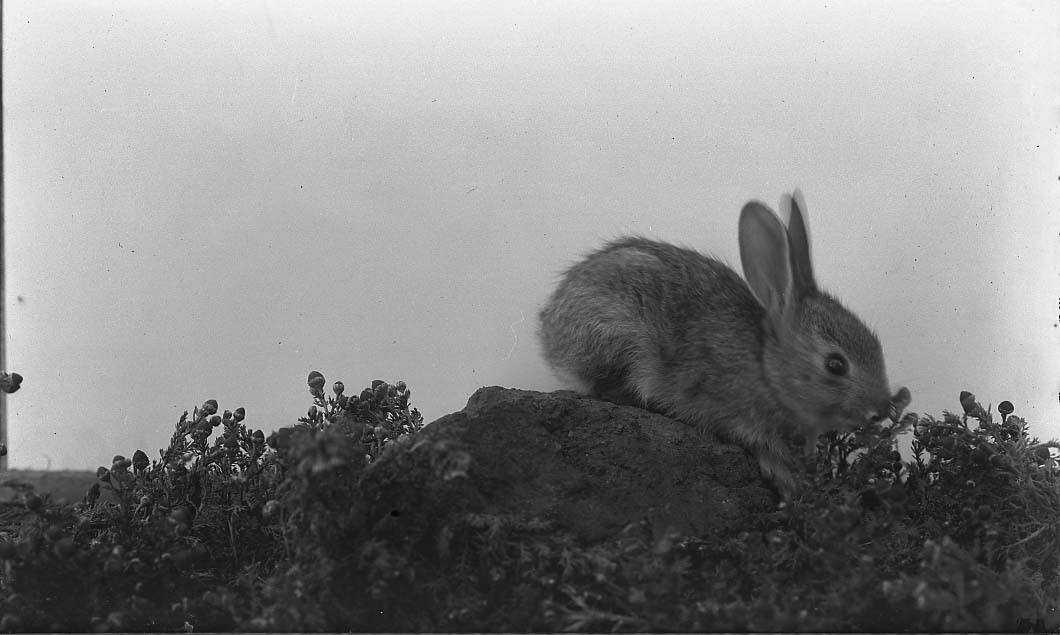
Cottontail Rabbit: Identification, Nests and Backyard Behavior
The cottontail rabbit is the wild rabbit most Americans actually see: brown gray fur, a white puff of a tail, and a habit of freezing in the lawn until you take one step too many. Fifteen or so species in the genus Sylvilagus cover almost the entire United States, and the eastern cottontail (Sylvilagus floridanus) is the one behind most backyard sightings.
Knowing what you are looking at changes what you do about it. Cottontails are not escaped pets, they are not hares, and the nest of babies in your grass is almost certainly not abandoned.
Cottontail rabbits are wild North American rabbits in the genus Sylvilagus, recognized by the white underside of the tail. Adults weigh 2 to 4 lb (0.9 to 1.8 kg), live alone above ground rather than in burrows, breed from February through September, and rarely survive past two years in the wild despite producing up to 35 young a season.
| Feature | Eastern cottontail |
|---|---|
| Scientific name | Sylvilagus floridanus |
| Size | 15 to 19 in (38 to 48 cm), 2 to 4 lb (0.9 to 1.8 kg) |
| Lifespan | 12 to 15 months on average, up to 3 years |
| Litters per year | 3 to 7, with 3 to 8 young each |
| Habitat | Field edges, brush piles, suburban yards, thickets |
| Diet | Grasses and clover in summer, bark and twigs in winter |
What is the difference between a rabbit and a cottontail?
A cottontail is a rabbit, specifically a wild North American one, while the rabbits in pet stores descend from the European rabbit (Oryctolagus cuniculus). The practical difference is behavior: European rabbits dig communal warrens and live in groups, cottontails live alone above ground in shallow forms scraped into grass or brush.
Hares are a different animal again. Jackrabbits and snowshoe hares have longer ears and hind legs, and their young are born furred with open eyes. Cottontail kits are born blind, naked, and helpless, which is why the nest is hidden rather than defended. That split also explains why cottontails cannot be domesticated the way a Netherland dwarf or a harlequin rabbit can.
Where do cottontail bunnies sleep at night?
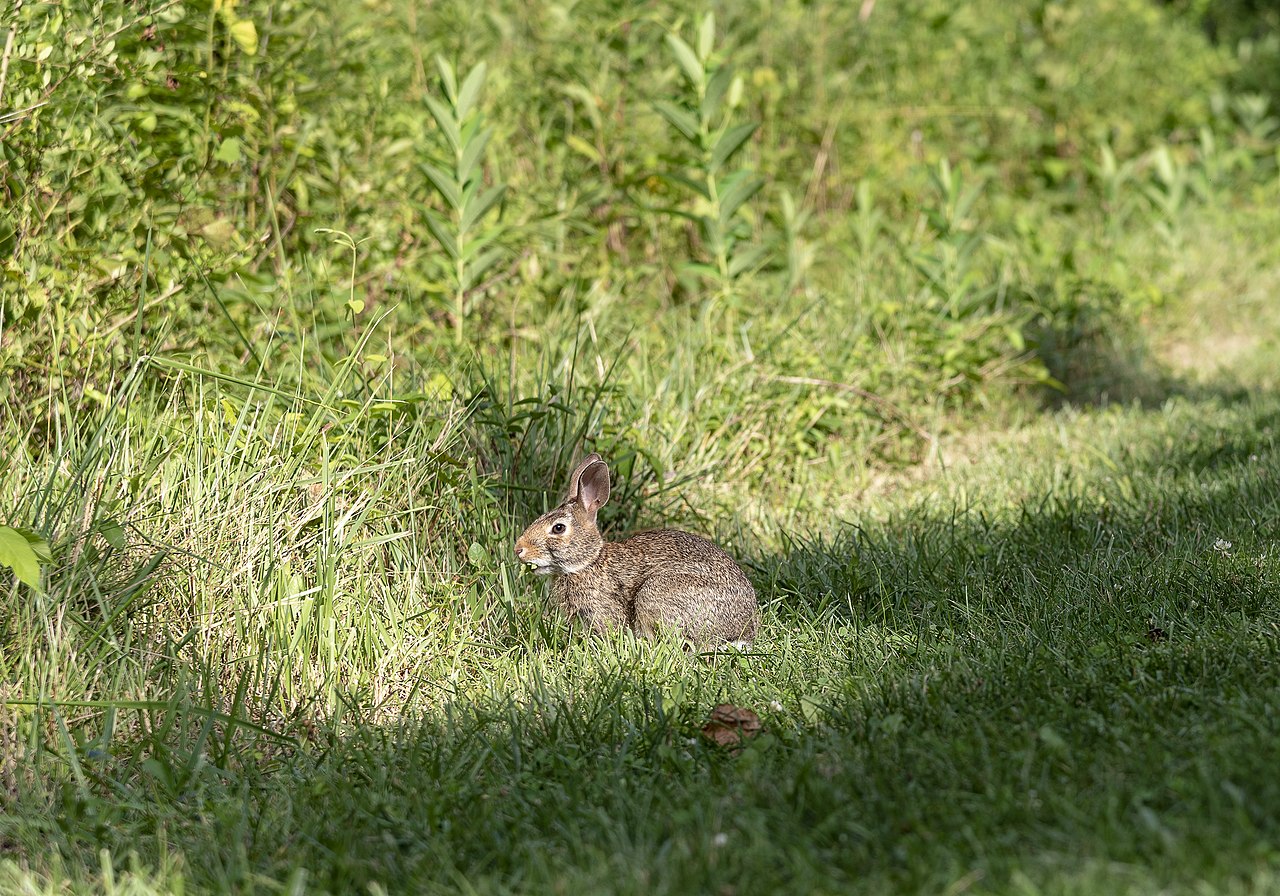
Cottontails rest in a form, a shallow depression in dense grass, under a brush pile, or against a foundation wall, and they use it through the middle of the day rather than through the night. Feeding peaks at dawn and dusk, so a rabbit sitting motionless in your yard at noon is resting, not stranded.
They do not dig their own burrows, though they will shelter in a groundhog hole during hard weather or a chase. This above ground habit is the main reason cottontail survival is so low: a sleeping rabbit is one hedge away from a fox, a hawk, or a loose dog. Their daily rhythm is covered in more detail in our look at whether rabbits are nocturnal.
What month do cottontail rabbits have babies?

Breeding runs from February through September across most of the range, and longer in the south. A female can produce three to seven litters a year, and she is often pregnant again within hours of giving birth. That output is what keeps the species common despite the losses.
Nests are shallow cups in open lawn, lined with fur and dry grass, and they look abandoned because the mother visits only twice a day to avoid drawing predators. Leave them alone. Kits leave the nest at about three weeks, fully weaned and the size of a tennis ball, and a rabbit that small is normal rather than orphaned, as explained in our guide to baby rabbits.
Can cottontail rabbits be pets?
No, and in most states keeping one is illegal without a wildlife rehabilitation permit. Wild cottontails do not tame, they do not habituate to handling, and captured adults frequently die of capture myopathy, a stress reaction that damages muscle tissue within days.
Orphaned kits taken in by well meaning finders have very poor survival rates outside licensed rehabilitation. If you find an injured rabbit, call a state licensed rehabilitator rather than improvising a diet. Cow’s milk and store bought greens kill more rescued cottontails than the original injury does, and even safe foods for domestic rabbits such as apple pieces are not a substitute for proper care.
Should I let wild rabbits live in my yard?
In most yards a resident cottontail is harmless and feeds hawks, owls, and foxes that keep the wider system running. The cost is your garden. Rabbits browse beans, lettuce, and young perennials in summer, then strip bark from shrubs and fruit trees once snow covers the grass.
The fix is physical, not chemical. A 2 ft (60 cm) wire fence with mesh under 1 in (2.5 cm), buried a few inches, keeps them out of beds, and hardware cloth cylinders protect trunks through winter. Removing brush piles moves them along without harm, though it also removes the cover that keeps them out of sight. State wildlife agencies such as the Missouri Department of Conservation publish region specific guidance on cottontail management and legal protections.
Frequently Asked Questions
What is the average lifespan of a cottontail rabbit?
Most wild cottontails live 12 to 15 months. Roughly half of all kits die before they are a month old, and predation accounts for the large majority of losses at every age. Three years is exceptional in the wild, though captive individuals in licensed facilities have reached eight.
What does it mean when a rabbit stays in your yard?
It means the yard offers food and cover within a small home range, usually under 10 acres. A rabbit that sits in the same spot daily has chosen it as a form. There is no folklore based reason to be concerned; it is simply good habitat with grass, edges, and somewhere to hide.
What do wild rabbits hate the most?
Open ground with no cover, and sudden movement above them. Rabbits avoid crossing wide lawns where hawks have a clear line, which is why removing brush near a garden works better than repellents. Commercial deterrents based on predator urine or capsaicin help briefly and need reapplication after rain.
Do cottontail rabbits carry diseases?
They can carry tularemia, and rabbit hemorrhagic disease virus 2 now circulates in western states. Neither is a common route of human infection, but avoid handling sick or dead rabbits bare handed and keep pet rabbits away from wild ones. Report unusual die offs to your state wildlife agency.