Tick vs Bed Bug: Identification, Bites, and Risk
The quickest way to separate a tick from a bed bug is to count the legs. Ticks are arachnids with eight legs as adults, related to spiders and mites. Bed bugs are insects with six legs and short antennae, which ticks do not have at all. Both feed on blood, and that is where the similarity ends.
The practical difference is what happens next. A tick attaches to skin and stays there for days, and the medical concern is disease transmission, above all Lyme. A bed bug feeds for minutes and leaves, and the concern is an infestation in your home that will not resolve on its own. This guide covers identification, where each is found, what the bites look like, disease risk, removal, and what to do about each.
| Feature | Tick | Bed Bug |
|---|---|---|
| Legs | 8 as an adult, 6 as a larva | 6 |
| Antennae | None | Short, visible |
| Body | Rounded, teardrop, no clear segments | Flat oval, apple seed shape, segmented abdomen |
| Feeding | Attaches for 2 to 7 days | Feeds 3 to 10 minutes, then leaves |
| Where encountered | Outdoors in grass and brush | Indoors near beds and furniture |
| Main risk | Disease transmission including Lyme | Infestation, bites, sleep disruption |
Tick or Bed Bug? The Fast Check
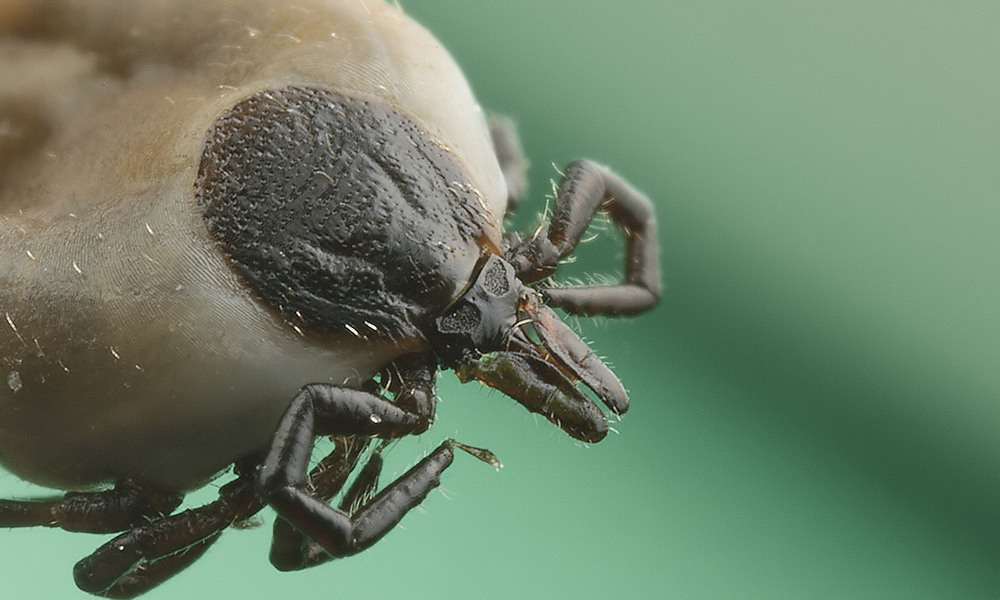
Count the legs first. An adult tick has eight, arranged around a rounded body with no obvious separation between head and abdomen. A bed bug has six legs plus a pair of short antennae projecting forward, and its body is clearly divided into segments.
Then look at the shape. A bed bug is flat, broad, and oval, described almost universally as apple seed shaped, and it stays flat until it feeds. An unfed tick is small and teardrop shaped with a hardened plate on the back in many species, and a fed tick swells into a smooth grey or greenish balloon that looks nothing like the animal that attached.
Behavior confirms it immediately. A tick found on a person is usually attached, embedded head-first in the skin and immobile. A bed bug crawls, and if you can pick an insect off your skin without resistance, it is not an attached tick.
What a Tick Looks Like
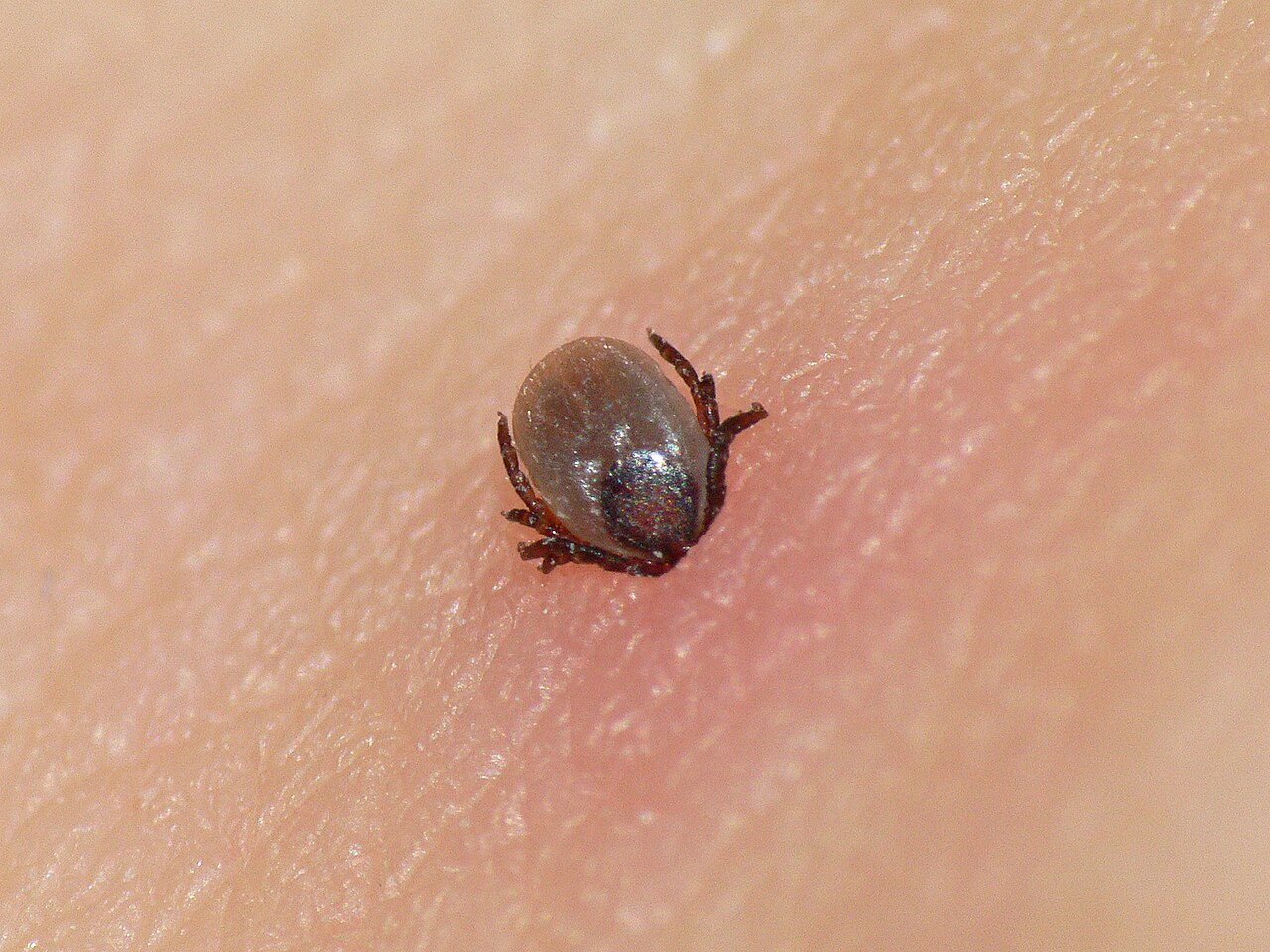
Ticks range from about 0.04 in for a larva to 0.2 in for an unfed adult, swelling to 0.4 in or more when engorged. Common North American species include the blacklegged or deer tick, the American dog tick, the lone star tick with its distinctive white dot on the female, and the brown dog tick.
Life stages differ in leg count, which trips people up. Larval ticks, sometimes called seed ticks, have six legs like an insect, and they are tiny, often appearing in clusters after someone brushes an egg mass. Nymphs and adults have eight.
Their hunting method is called questing. A tick climbs a grass stem or leaf edge and holds its front legs outstretched, waiting to grab an animal that brushes past, detecting hosts by carbon dioxide, body heat, and vibration. Ticks do not jump, fly, or drop from trees, which is a persistent myth. The animals that carry them through a yard are covered in our guides to whether foxes are dangerous and to getting rid of voles, since small mammals are the main reservoir hosts.
What a Bed Bug Looks Like
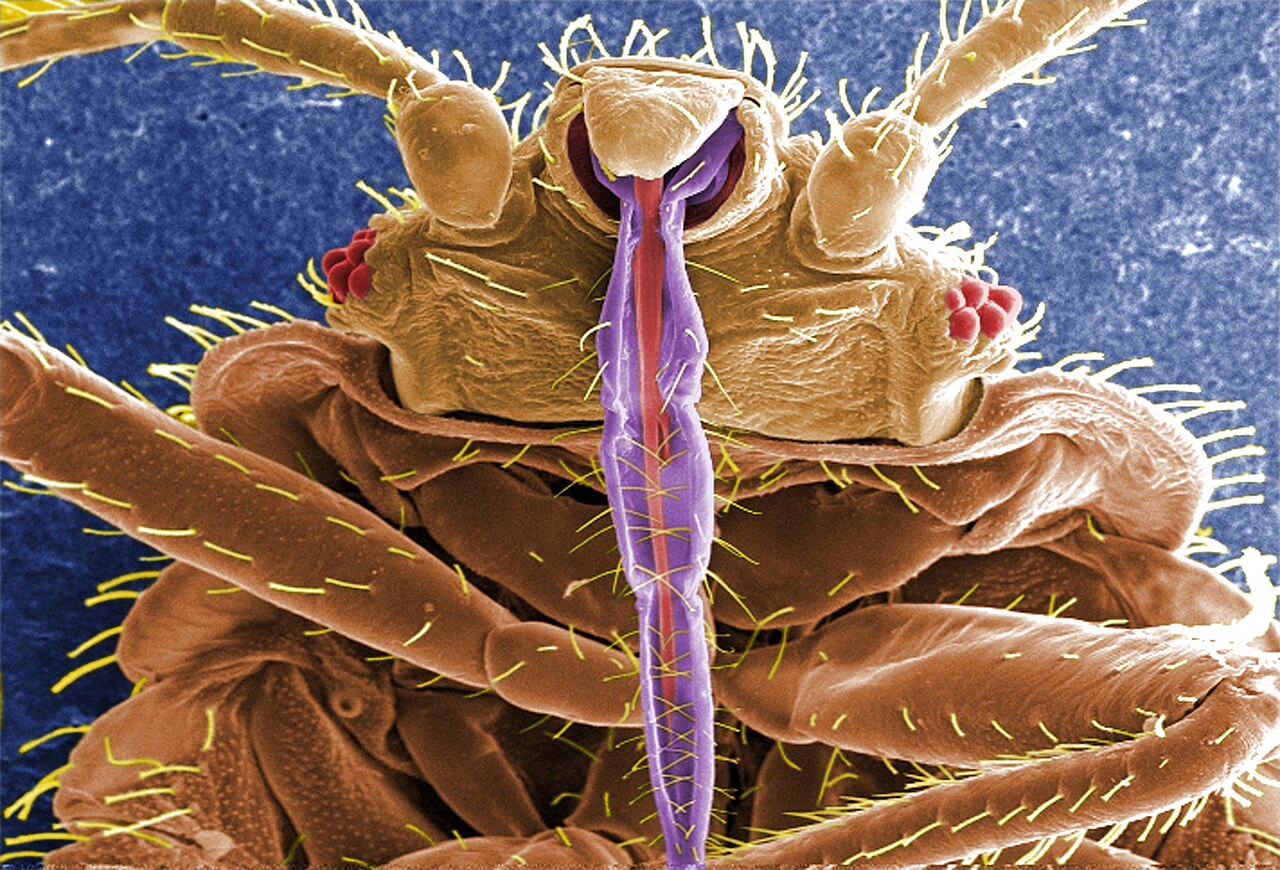
Adult bed bugs are about 0.2 in, flat and reddish-brown when unfed, swelling and darkening to a deeper red after feeding. Nymphs pass through five stages, are smaller and paler, and the youngest are nearly translucent with a visible dark spot of blood in the gut after feeding.
They have vestigial wing pads and cannot fly or jump. That single fact separates them from fleas, which jump, and from many other small household insects. They crawl, and they crawl slowly.
Their evidence is distinctive. Dark spots on sheets and mattress seams that smear reddish-brown when wiped with a damp cloth, pale translucent shed skins in bed frame crevices, small blood smears on bedding, and in heavy infestations a sweet musty odor. Our guides to bed bug bites and to telling a bed bug from a baby cockroach cover the identification in more depth.
Where You Encounter Each One
Ticks are outdoor animals. They live in tall grass, leaf litter, brushy field edges, woodland margins, and shaded ground cover, and they are picked up by walking through vegetation. Peak activity for nymphal blacklegged ticks, which transmit most Lyme cases, runs late spring through midsummer, with adults active in autumn and again on mild winter days.
Bed bugs are indoor animals tied to sleeping areas. They hide in mattress seams and tags, box spring corners, bed frame joints, headboard crevices, nightstands, and nearby upholstered furniture, and they travel between locations in luggage, secondhand furniture, and clothing rather than by walking outdoors.
The context usually answers the question before the insect does. Something found on skin after a hike is a tick. Something found in a mattress seam is a bed bug. Where the two genuinely overlap is a pet-owning household, since ticks carried in on a dog can end up in bedding, but an attached engorged tick and a crawling flat bed bug still look nothing alike.
Tick Bites vs Bed Bug Bites
Tick bites are usually singular. One tick, one bite, and the tick is often still attached when found, since feeding lasts two to seven days. The site may show mild redness and itching, and after removal a small firm bump can persist for days as a local reaction.
The bite that matters most is the one that develops a rash. Erythema migrans, the expanding circular rash sometimes described as a bull’s-eye, appears in a substantial share of Lyme disease cases three to thirty days after a bite and typically expands over days, often without itching or pain. Any expanding rash after a tick bite warrants prompt medical attention, and treatment is far more effective early.
Bed bug bites come in numbers. They appear as itchy raised welts, often in lines or clusters of three, on skin exposed while sleeping, and they appear night after night as the population feeds repeatedly. Reactions vary enormously and a significant proportion of people show no marks at all, which is why bites alone never confirm or rule out an infestation.
Disease Risk
This is the sharpest difference between the two. Ticks are among the most significant disease vectors in North America, transmitting Lyme disease, anaplasmosis, babesiosis, ehrlichiosis, Rocky Mountain spotted fever, Powassan virus, and tularemia, and the lone star tick can trigger alpha-gal syndrome, an acquired allergy to red meat.
Transmission generally requires attachment time. For Lyme, risk rises substantially after a tick has been attached 36 to 48 hours, which is why prompt removal genuinely reduces the danger. The CDC (cdc.gov) publishes region-specific guidance on tick-borne illness and on when post-exposure evaluation is appropriate.
Bed bugs, despite feeding on blood, are not known to transmit disease to humans. The documented harms are itching, allergic reactions in sensitive people, secondary skin infection from scratching, sleep disruption, and psychological distress, which are real but categorically different. Anemia has been documented only in extreme cases with very heavy infestations.
How to Remove a Tick
Use fine-tipped tweezers and grasp the tick as close to the skin surface as possible, gripping the mouthparts rather than the swollen body. Pull upward with steady even pressure without twisting or jerking, since twisting can break the mouthparts off in the skin.
Then clean the area thoroughly with soap and water or alcohol, and wash your hands. If mouthparts remain in the skin and cannot be removed easily with tweezers, leave them and let the skin heal, since digging causes more damage than the fragment does.
Skip every folk method. Petroleum jelly, nail polish, a hot match, and alcohol applied to a still-attached tick all aim to make it back out on its own, and all of them increase the time it stays attached and may cause it to regurgitate into the wound. Note the date, save the tick in a sealed bag if you want it identified, and watch for rash, fever, fatigue, or joint pain over the following weeks.
What to Do About Each Problem
Ticks are a prevention problem. Wear long trousers tucked into socks in tall grass, treat clothing and boots with permethrin, which stays effective through several washes, and use an EPA-registered repellent on exposed skin. Check thoroughly after being outdoors, focusing on the scalp, behind the ears, armpits, waistline, groin, and behind the knees, and shower within two hours.
Yard management reduces exposure at the source. Keep grass mown, clear leaf litter and brush, create a gravel or wood chip border between lawn and woodland, and reduce the small mammal populations that host immature ticks. Treat dogs and cats with veterinarian-recommended tick prevention year-round.
Bed bugs are an eradication problem and usually a professional one. They hide in inaccessible crevices, survive months without feeding, and rebound from any incomplete treatment, so heat treatment, mattress and box spring encasements, high-temperature laundering, and repeated follow-up inspection are the standard approach. Do not throw out the mattress before treatment, since that spreads the problem, and do not attempt a fogger, which drives insects deeper into walls. The identification-first principle running through this article applies equally in our guide to the carpet beetle rash, where the culprit turns out not to bite at all.
Frequently Asked Questions
How do I tell a tick from a bed bug?
Count the legs. Adult ticks have eight and no antennae, bed bugs have six plus short antennae. Ticks are rounded with no clear segments and attach to skin for days, while bed bugs are flat apple seed shapes that feed for minutes and crawl away.
Do bed bugs attach to skin like ticks?
No. Bed bugs feed for three to ten minutes and then leave to hide, while ticks embed their mouthparts and remain attached for two to seven days. Anything you can brush off your skin without resistance is not an attached tick.
Which is more dangerous, a tick or a bed bug?
Ticks, by a wide margin. They transmit Lyme disease, anaplasmosis, babesiosis, Rocky Mountain spotted fever, and others, and the lone star tick can trigger a red meat allergy. Bed bugs are not known to transmit disease, though they cause itching, secondary infection, and sleep disruption.
What do tick bites look like compared with bed bug bites?
Tick bites are usually single, often with the tick still attached, leaving a small firm bump. Bed bug bites are multiple itchy welts, frequently in lines or groups of three on skin exposed while sleeping, recurring night after night.
How do I remove a tick properly?
Grasp it with fine-tipped tweezers as close to the skin as possible and pull upward with steady even pressure without twisting. Clean the area with soap and water afterward. Never use petroleum jelly, nail polish, or a hot match, since all of them prolong attachment.
How long must a tick be attached to transmit Lyme disease?
Risk rises substantially after 36 to 48 hours of attachment, which is why daily tick checks and prompt removal genuinely reduce danger. Watch for an expanding circular rash three to thirty days after a bite, and seek medical care promptly if one appears.
Can ticks infest a house like bed bugs?
Most species cannot, since they need outdoor habitat and drop off after feeding. The brown dog tick is the exception and can complete its life cycle indoors in homes with dogs, which is why it occasionally establishes an indoor population. Bed bugs live indoors permanently.