Hornet vs Wasp: Key Differences Explained
All hornets are wasps, but not all wasps are hornets, a distinction that trips up most people trying to identify a stinging insect in their yard. Hornets specifically belong to the genus Vespa and are generally the largest, most robust members of the broader wasp family, while “wasp” covers an enormous range of over 100,000 species with wildly varying size, behavior, and appearance. This guide covers the reliable size, body shape, nest, and behavioral differences that separate hornets from other common wasps.
| Trait | Hornet | Wasp (general) |
|---|---|---|
| Size | 1.25 to 2 inches | 0.5 to 1 inch |
| Body build | Thicker, more robust, wider head | Slender, narrow waist |
| Color | Muted (black/brown/white), less bright | Bold black-and-yellow stripes common |
| Nest shape | Large, teardrop-shaped, enclosed | Varies: open comb, underground, enclosed |
| Aggression | Generally more aggressive defending nest | Varies widely by species |
Are Hornets a Type of Wasp?
Yes. Hornets are a specific genus, Vespa, within the much broader wasp family Vespidae, meaning every hornet is technically a wasp, but the reverse is not true, since the vast majority of the over 100,000 known wasp species belong to entirely different genera. This taxonomic relationship is the root of most of the common confusion around the two terms: people often use “hornet” loosely to describe any large, intimidating wasp, when true hornets represent just one specific, more limited group within that much larger category.
Where Did Hornets and Wasps Come From?
Wasps as a broad group have an ancient evolutionary history stretching back over 100 million years, with bees actually descending from a wasp ancestor that shifted toward pollen and nectar collection rather than predation. Hornets specifically, as a subset within this larger family, are native to Europe, Asia, and parts of Africa; the European hornet is the only true hornet species that established itself in North America, arriving with European settlers centuries ago, while native North American stinging insects that get casually called “hornets,” like the bald-faced hornet, are technically wasps rather than true Vespa-genus hornets despite the common name.
Hornet vs Wasp: Size and Appearance
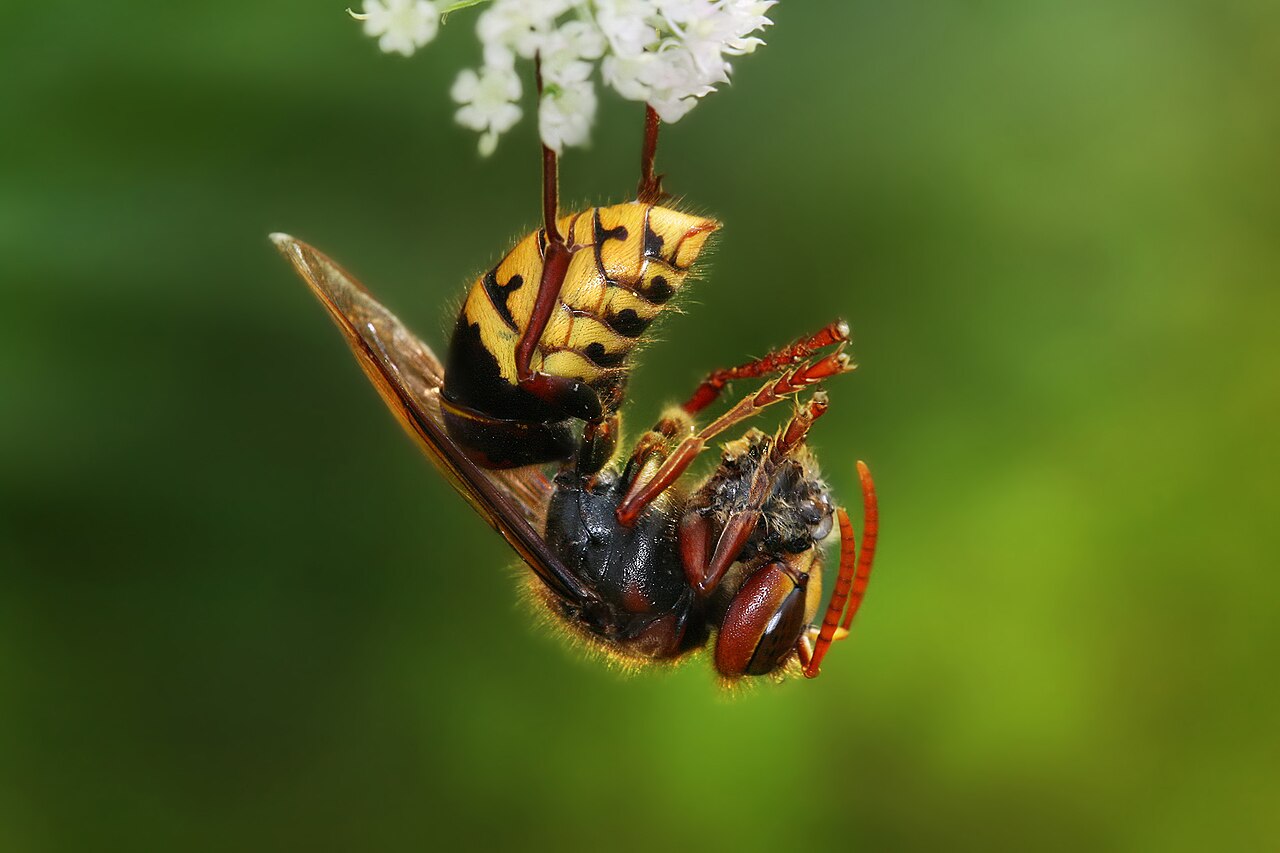
Size is the most immediately noticeable difference in most encounters. Hornets typically measure 1.25 to 2 inches long, with some species like the northern giant hornet reaching truly impressive sizes, while common wasps such as yellowjackets and paper wasps generally run 0.5 to 1 inch. Body build differs meaningfully too: hornets have a thicker, more robust build with a wider head and less pronounced waist, giving them a heavier, more substantial appearance, while typical wasps have a slender, elongated body with a distinctly narrow waist, or petiole, connecting the thorax and abdomen. Color patterns also tend to differ: hornets often display more muted, earthy tones, black, brown, or white rather than the vivid black-and-yellow banding seen on many common wasps like yellowjackets and paper wasps, though there are exceptions, such as the bald-faced hornet, which despite its striking black-and-white pattern retains a hornet’s characteristically robust build.
Do Hornets and Wasps Play Any Ecological Role?
Yes, and their contribution goes well beyond simply being unwelcome guests at outdoor gatherings. Both hornets and wasps function as significant natural pest control agents, actively hunting caterpillars, flies, and other insects that would otherwise damage garden plants and agricultural crops, a predatory pressure some regions specifically protect by law given its genuine ecological value. Several wasp species also contribute meaningfully to pollination as they visit flowers for nectar, adding a second overlooked ecological benefit beyond their role as predators, even though bees generally receive far more public credit and appreciation for pollination specifically.
Hornet vs Wasp Nests
Nest shape and material offer another reliable clue, though both groups build from the same basic paper-like substance made of chewed wood fibers and saliva. Hornet nests are typically large, enclosed structures with a distinctive teardrop or football shape, a single entrance point, and internal hexagonal combs, commonly built in trees, shrubs, or occasionally in the eaves and crawl spaces of buildings. Wasp nests vary far more widely depending on species: paper wasps build smaller, open, umbrella-shaped combs without any outer covering, often under eaves or in sheltered corners, while yellowjackets frequently nest underground or within wall voids, making their presence considerably less obvious until an unsuspecting person or pet disturbs the hidden entrance.
What to Do If a Hornet or Wasp Nest Is on Your Property
A nest discovered in a low-traffic area away from doors, walkways, and outdoor living spaces can often simply be left alone and monitored from a safe distance, since both hornets and wasps generally will not attack unless the nest itself is directly disturbed. Nests in high-traffic locations, near entryways, play areas, or anywhere frequent human activity creates a real risk of accidental disturbance, are better handled by a professional pest control service rather than DIY removal, since an improperly handled active nest can result in an aggressive mass response from dozens or even hundreds of defending workers at once, a coordinated colony defense not unlike the group response documented in bullet ant colonies when disturbed. Anyone with a known insect sting allergy should treat nest removal, regardless of species, as a task for professionals rather than a home project under any circumstances, the same precaution worth applying around any unfamiliar wildlife encounter where risk assessment matters more than curiosity.
Which Is More Aggressive: Hornets or Wasps?
Hornets have a reputation for being more aggressive, and while this holds true in many direct comparisons, particularly when a nest is disturbed, the reality varies significantly by species on both sides of this divide. Yellowjackets, a type of wasp, are widely regarded as among the most aggressive and readily provoked stinging insects, arguably rivaling or exceeding many hornet species in that respect, while solitary wasps such as mud daubers are typically quite docile and rarely sting unless directly handled. Hornets generally do carry a genuine size advantage in venom capacity and can sting repeatedly since their stingers, like those of most wasps, lack the barb that causes honeybee stingers to become lodged and detach after a single use.
Hornet vs Wasp Sting: Which Hurts More?
Hornet stings are generally regarded as more painful than typical wasp stings, largely attributed to a higher concentration of acetylcholine in hornet venom, a compound directly linked to pain intensity in insect stings. That said, sting severity varies considerably by species and individual sensitivity on both sides; a yellowjacket sting, for example, is frequently described as quite painful despite yellowjackets being technically classified as wasps rather than hornets. Both hornet and wasp stings can trigger serious, even life-threatening allergic reactions in sensitive individuals regardless of which specific species delivered the sting, which makes underlying allergy status a far more important safety factor for any individual person than which particular insect happens to be involved.
Common Hornet and Wasp Species in North America
The European hornet (Vespa crabro) is the only true hornet widely established in North America, found throughout much of the eastern United States and recognized by its notably large size and reddish-brown coloring, according to university entomology extension resources. Beyond true hornets, the most commonly encountered wasps include yellowjackets, aggressive and social, often nesting underground or in wall voids, and paper wasps, generally less aggressive and recognized by their reddish-brown coloring and distinctive open, umbrella-shaped nests built without any outer covering.
Diet: What Do Hornets and Wasps Eat?
Both hornets and wasps are largely omnivorous as adults, favoring sugary substances like nectar, tree sap, and ripening or rotting fruit, while also hunting live insects, spiders, and other small invertebrates primarily to feed protein to developing larvae back at the nest rather than for their own adult nutrition. This predatory role toward other insects, including species some people consider pests, such as caterpillars and flies, makes both hornets and wasps genuinely valuable for natural pest control in gardens and agricultural settings, even as their stinging behavior makes them unwelcome company at outdoor gatherings, particularly around sugary drinks and food that attract foraging workers.
How to Tell Hornets, Wasps, and Bees Apart
Bees offer the clearest three-way distinction, since they are notably fuzzy and hairy, an adaptation for collecting and transporting pollen, with flatter, less visible legs during flight, while both hornets and wasps have smooth, largely hairless bodies. Once bees are ruled out visually, the hornet-versus-wasp distinction comes down to the size, build, and color patterns covered above: a notably large, robust, muted-colored insect building a large enclosed paper nest points toward a hornet, while a smaller, slender, brightly striped insect, or one building a small open comb or underground nest, points toward one of the many wasp species that are not hornets, a distinction worth remembering the next time an unidentified large spider shows up uninvited at a backyard gathering. Species like the red wasp illustrate this well, since its more slender build and reddish coloration place it firmly in the broader wasp category rather than among true hornets.
Related reading: Red Wasp.
Related reading: Red Wasp.
Related reading: Red Wasp.
Related reading: Red Wasp.
Related reading: Red Wasp.
Related reading: Red Wasp.
Related reading: Red Wasp.
Related reading: Red Wasp.
Related reading: Murder Hornet.
Related reading: Hornet Nest vs Wasp Nest.
Related reading: Blue Wasp.
Related reading: Bald Faced Hornet.
Frequently Asked Questions
Are hornets and wasps the same thing?
No, but they are related. All hornets are a specific type of wasp (genus Vespa), but the vast majority of wasp species are not hornets. Hornets are generally larger and more robust than typical wasps.
How can you tell a hornet from a wasp?
Hornets are larger (1.25 to 2 inches), thicker-bodied, and more muted in color, building large enclosed teardrop-shaped nests. Wasps are typically smaller, slender with a narrow waist, and often brightly striped.
Which is more dangerous, a hornet or a wasp sting?
Hornet stings are generally more painful due to higher acetylcholine concentration in their venom, but some wasps like yellowjackets are considered highly aggressive and painful as well. Both can cause serious allergic reactions.
Do hornets and wasps build the same type of nest?
No. Hornets typically build large, enclosed, teardrop-shaped nests with one entrance, often in trees. Wasp nests vary widely, from open paper combs under eaves to underground or wall-void nests for species like yellowjackets.
What do hornets and wasps eat?
Both are omnivorous as adults, feeding on nectar, sap, and rotting fruit, while hunting insects and spiders primarily to feed protein to their developing larvae rather than for their own nutrition.
Are yellowjackets hornets or wasps?
Yellowjackets are wasps, not true hornets, despite their aggressive reputation sometimes leading people to call them hornets. True hornets belong specifically to the genus Vespa.
How do you tell hornets and wasps apart from bees?
Bees are notably fuzzy and hairy with flatter legs for collecting pollen. Both hornets and wasps have smooth, hairless bodies, distinguishing either from a bee at a glance before considering size or nest differences.
Whichever species is actually involved, both hornets and wasps generally prefer to be left alone and will not attack unprovoked, so maintaining a reasonable distance and avoiding sudden movements near an active nest remains the most reliable safety strategy, similar to the calm, non-threatening approach recommended around most defensive wildlife, from a startled orange ladybug to a cornered snake.
Understanding these ecological contributions does not make an unwanted nest near a doorway any less concerning, but it does help explain why removal, rather than broader eradication, is generally the recommended approach when a hornet or wasp nest genuinely needs to go.
Getting the identification right ultimately matters less for its own sake than for choosing the correct response, whether that means calmly walking away, calling a professional, or simply appreciating a genuinely valuable garden predator from a comfortable distance.