What Do Possums Eat? Diet, Winter Food, and Yard Habits
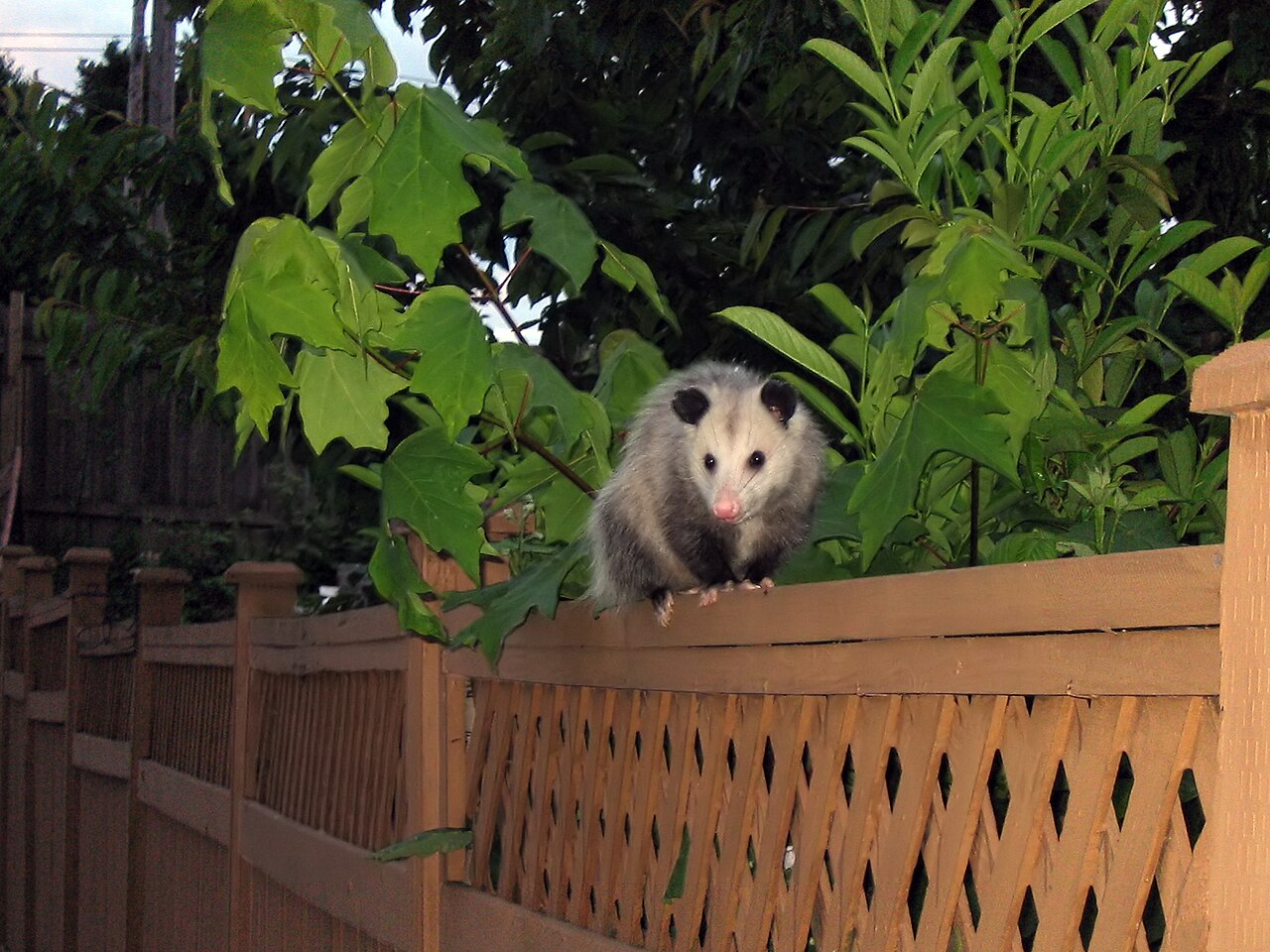
Possums eat almost anything. The Virginia opossum is one of North America’s most opportunistic omnivores, and its diet includes insects, snails, slugs, worms, carrion, small rodents, frogs, bird eggs, fruit, nuts, grain, garden vegetables, pet food, and household garbage. That flexibility is the main reason a marsupial built for the tropics has spread as far north as southern Canada.
What an individual eats on a given night depends almost entirely on what is available within its range, which is typically only 10 to 50 acres. In late summer that means fallen fruit and insects. In February it may mean carrion and whatever the trash cans give up. This guide covers the full natural diet, seasonal shifts, what possums eat in your yard, what baby possums eat, and why feeding them is a bad idea even when they look hungry.
| Quick Facts | Possum Diet |
|---|---|
| Diet type | Omnivore and opportunistic scavenger |
| Main foods | Insects, snails, carrion, fruit, small vertebrates, eggs |
| Feeding time | Nocturnal, most active from dusk to a few hours before dawn |
| Winter behavior | No hibernation, forages year-round |
| Unusual trait | Highly resistant to snake venom, eats venomous snakes |
| Calcium craving | Very high, drives bone and shell consumption |
What Do Possums Eat in the Wild?
The core of the wild diet is invertebrates. Beetles, crickets, grasshoppers, cockroaches, snails, slugs, and earthworms make up a large share of what an opossum consumes across most of its range, and studies of stomach contents consistently find insects as the single most common category. This is the part of the diet that makes opossums genuinely useful in a garden.
Small vertebrates fill in the protein. Mice, rats, voles, shrews, moles, frogs, lizards, salamanders, and the occasional snake all appear on the menu, along with bird eggs and nestlings when an opossum stumbles across a low nest. They are slow hunters and rarely chase anything down, so most vertebrate prey is caught opportunistically, cornered, or already dead.
Plant material rounds it out. Persimmons, wild grapes, berries, apples, pawpaws, acorns, hickory nuts, and grain all get eaten in season, and fruit becomes a substantial part of the diet in late summer and autumn. Opossums are not efficient foragers in the way a squirrel is, but their tolerance for a wide range of foods means they rarely go hungry for long. Their scavenging habits show up clearly in what they leave behind, as our guide to possum droppings explains.
Insects, Snails, and Garden Pests
Opossums are effective invertebrate predators, and the pests they eat are mostly the ones gardeners least want. Slugs and snails feature heavily, as do cockroaches, beetle grubs, cutworms, and crickets. An opossum working its way along a garden bed at night is doing free pest control, which is one of the better arguments for tolerating them.
They also clean up what most predators leave. Dead insects, carrion beetles working a carcass, and rotting fruit swarming with flies all get eaten, which reduces the material that draws additional pests into a yard. Their nose does most of the work, since opossum eyesight is poor and they locate food primarily by smell.
The claim that possums eat thousands of ticks per season has not held up. That figure came from a controlled laboratory study and was contradicted by a 2021 examination of wild opossum stomach contents, which found essentially no ticks at all. They remain useful for the slugs, snails, and roaches, but they are not a tick control strategy. For a sense of the invertebrates that actually dominate a yard food web, our guides to what snails eat and what crickets eat cover the layer below.
Carrion and Why Possums Eat Roadkill
Opossums are among North America’s most committed scavengers, and carrion is a reliable year-round food source that requires no hunting skill. This is why they turn up so often along roadsides, and tragically why so many are killed there. A dead deer, raccoon, or squirrel represents days of food for an animal that weighs 4 to 14 lb.
They tolerate spoiled meat far better than most mammals, and they show unusually low rates of many diseases that scavenging would normally spread. Part of this appears to be immune, and part of it is simply a digestive system adapted to a diet that includes material other animals avoid.
The most remarkable adaptation is venom resistance. Opossums carry a peptide known as lethal toxin-neutralizing factor in their blood that neutralizes venom from pit vipers, and they routinely kill and eat copperheads and rattlesnakes. Researchers have studied the peptide as a potential basis for broad-spectrum antivenom. It is a striking capability for an animal whose primary defense against a barking dog is to fall over and pretend to be dead, a behavior covered in our guide to whether possums are dangerous.
What Do Possums Eat in Winter?
Opossums do not hibernate, so they forage all winter, which is the hardest part of the year for a subtropical marsupial living in a cold climate. Insects disappear, fruit is gone, and the diet shifts heavily toward carrion, small rodents, bark, buds, and whatever human food waste is accessible. Many animals lose significant body weight between December and March.
They compensate by building fat reserves in autumn and by reducing activity in extreme cold, sheltering in dens, brush piles, hollow logs, and under decks and sheds for several days at a stretch. When they do emerge in deep cold, the cost is visible. Opossums have naked ears and a mostly hairless prehensile tail, and frostbite damage to both is extremely common in northern populations.
Winter is when opossums become most visible to people, because scarcity pushes them toward reliable human food sources. Trash cans, compost piles, pet bowls, and spilled birdseed all draw them in, and an animal that finds a dependable source will return nightly. Removing that source is far more effective than trying to remove the animal.
Fruits, Nuts, and Plants Possums Eat
Fruit is a seasonal favorite. Persimmons are close to a signature food in the southeastern United States, and opossums also take wild grapes, mulberries, blackberries, apples, pawpaws, figs, and any cultivated fruit that falls within reach. They are strong climbers, using the prehensile tail for balance rather than hanging, and will go up a tree for ripe fruit.
Nuts and grain fill in the calories. Acorns, hickory nuts, beechnuts, and corn all get eaten, particularly in autumn when animals are building the fat reserves that carry them through winter. Grain spilled around livestock feeders is a common draw on farms, which is exactly the contact point that matters for horse owners because of the parasite opossums shed in their droppings.
Garden vegetables are fair game too. Tomatoes, sweet corn, beans, and squash all get sampled, and a nightly visitor can do real damage to a small vegetable plot. The damage pattern is usually partial, with fruit chewed on one side and left rather than carried off, which distinguishes opossum feeding from that of a raccoon or deer.
What Possums Eat in Your Yard and Trash
In suburban areas, human-associated food often makes up the majority of an opossum’s diet. Unsecured garbage is the single largest draw, followed by pet food left outdoors, spilled birdseed beneath feeders, compost piles containing kitchen scraps, and fallen fruit under ornamental trees. All of it is easier to obtain than hunting.
Chicken coops are the one place where an opossum stops being merely a nuisance. They take eggs readily and will kill young chicks and occasionally adult birds at night, returning repeatedly once they identify a reliable source. Hardware cloth, two-step latches, daily egg collection, and metal feed containers close that door.
The rest is straightforward removal of attractants. Use garbage cans with locking lids, bring pet food and bird feeders in at night, clean up fallen fruit, keep compost in a sealed bin, and seal gaps under decks and sheds once you have confirmed nothing is living there. Opossums are nomadic and usually move on within days when the food stops, unlike the more persistent raccoons that will work at a problem for weeks.
What Do Baby Possums Eat?
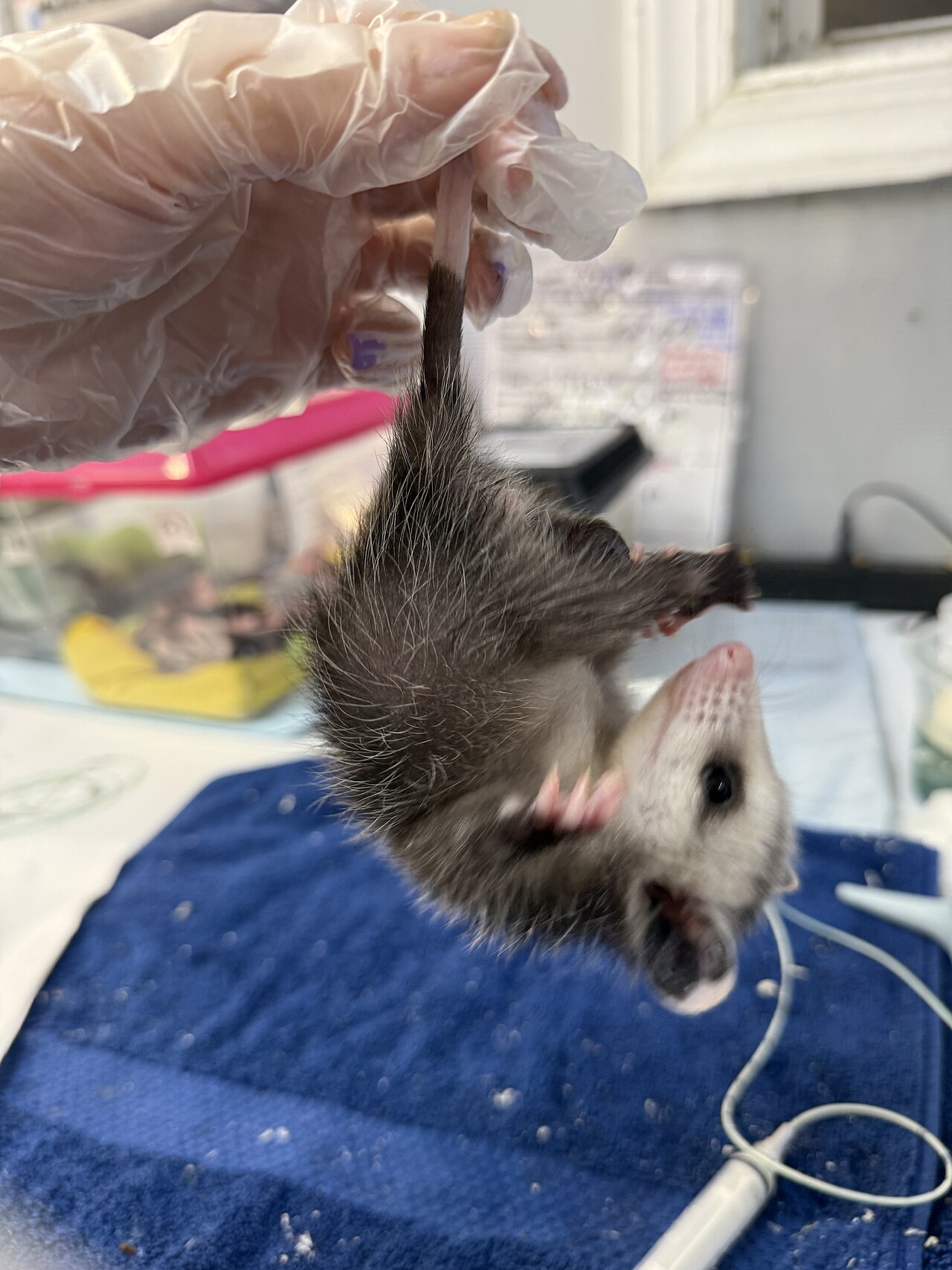
Newborn opossums are astonishingly undeveloped, arriving after a gestation of just 12 to 13 days at roughly the size of a honeybee. They crawl unaided into the mother’s pouch, attach to a nipple, and stay attached continuously for the next 6 to 7 weeks, feeding on nothing but milk. A female has 13 nipples and typically raises 6 to 9 joeys, since more are born than can attach.
At around 7 to 10 weeks the joeys begin releasing the nipple and venturing out of the pouch, riding on the mother’s back as she forages. This is when they start sampling solid food, following her lead on what is edible and learning the routes through her home range. Weaning finishes at roughly 3 to 4 months.
Independent young eat the same omnivorous mix as adults, scaled down to insects, worms, snails, soft fruit, and carrion they can manage. If you find an orphaned joey, the correct response is to contact a licensed wildlife rehabilitator rather than attempting to feed it, since cow’s milk causes fatal digestive problems in young opossums. Our guide to the baby possum covers how to judge whether a joey actually needs help.
Should You Feed Possums?
No, and the reasons are practical rather than sentimental. An opossum that finds reliable food at your house will keep returning, will lose its natural wariness, and may bring others. Concentrating wildlife at a feeding station also increases disease and parasite transmission among the animals themselves.
Feeding creates conflicts that end badly for the animal. A habituated opossum comes closer to houses, encounters more dogs, gets into more garages, and is more likely to be trapped, hit by a car, or killed as a nuisance. In many states it is also illegal to feed wildlife, and relocating a trapped animal is illegal in most, which leaves few good outcomes once a problem starts.
There is one narrow exception worth knowing. Injured or orphaned opossums sometimes do need intervention, and the right move is a licensed wildlife rehabilitator, not a bowl of food on the porch. Rehabilitators feed species-appropriate diets with the correct calcium balance, because a poorly fed captive opossum develops metabolic bone disease quickly.
What Not to Feed a Possum
Several common foods cause real harm. Cow’s milk and dairy generally cause severe digestive upset, and in young opossums it can be fatal. Bread, sugary foods, and processed human snacks provide calories without the calcium and protein the animal needs, and a diet heavy in them produces the metabolic bone disease that rehabilitators see constantly in animals people tried to raise themselves.
Chocolate, caffeine, onions, garlic, and anything moldy should never be offered, and raw or spoiled meat left out for wildlife draws rats and creates a disease risk for everything that visits. Cat food is often suggested online as a possum food and is a poor choice for regular feeding, since the calcium to phosphorus ratio is wrong for a species with an unusually high calcium requirement.
The most useful thing you can do for opossums is leave the yard slightly wild rather than provisioned. Brush piles, leaf litter, and unsprayed garden beds support the insects, snails, and slugs that make up their natural diet, which is better for the animal than anything you could put in a dish. Building that kind of habitat helps the wider food web too, from ground-feeding birds to the insects covered in our guide to what ladybugs eat.
Frequently Asked Questions
What do possums eat the most?
Insects and other invertebrates make up the largest share of a wild opossum’s diet, particularly beetles, crickets, snails, slugs, and earthworms. Carrion, small rodents, fruit, and human food waste fill in the rest depending on season and location.
What do possums eat in winter?
Opossums do not hibernate, so they forage all winter on carrion, small rodents, bark, buds, and human food waste when insects and fruit disappear. Many lose significant weight, and frostbite on the naked ears and tail is common in northern populations.
Do possums eat snakes?
Yes, including venomous ones. Opossums carry a peptide called lethal toxin-neutralizing factor that neutralizes pit viper venom, and they regularly kill and eat copperheads and rattlesnakes. Researchers have studied the peptide as a possible basis for broad-spectrum antivenom.
What fruit do possums eat?
Persimmons, wild grapes, mulberries, blackberries, apples, figs, and pawpaws are all common, along with any cultivated fruit within reach. Fruit becomes a major part of the diet in late summer and autumn when animals are building fat reserves for winter.
Do possums eat cat food?
They will eat it readily, which is why outdoor pet bowls are one of the most common reasons opossums visit a yard. It is a poor food for them because the calcium to phosphorus ratio does not suit a species with very high calcium needs, and leaving it out encourages nightly return visits.
What do baby possums eat?
Newborn joeys feed exclusively on milk in the pouch for the first 6 to 7 weeks. They begin sampling solid food at around 7 to 10 weeks while riding on the mother’s back and are fully weaned by 3 to 4 months. Never give cow’s milk to an orphaned joey, as it causes fatal digestive problems.
Should I feed the possum in my yard?
No. Feeding habituates the animal, draws more individuals, increases disease transmission, and leads to conflicts that usually end badly for the opossum. If you find an injured or orphaned animal, contact a licensed wildlife rehabilitator instead.