What Do Snails Eat? Complete Diet Guide by Type
Snails eat mostly plant material: soft leaves, algae, fungi, and decaying vegetation, though the exact menu shifts depending on whether you are watching a garden pest strip your lettuce, feeding a pet snail in a tank, or looking at one of the handful of species that actually hunt other animals. Below is a species-by-species breakdown of what snails eat in each setting, the one mineral no snail can skip, and the foods that are genuinely unsafe to offer them, drawn from how gardeners, aquarium keepers, and pet owners each encounter these animals in very different daily contexts.
| Snail type | Main diet | Notes |
|---|---|---|
| Garden and land snails | Leaves, stems, fruit, fungi, decaying plants | Most species; can damage crops |
| Aquatic (freshwater/pond) | Algae, biofilm, detritus, leftover fish food | Kept in aquariums as cleanup crew |
| Pet land snails | Vegetables, leafy greens, fruit, calcium source | Diet should mirror wild preferences |
| Predatory species | Other snails, slugs, earthworms | Minority of species; true carnivores |
Do Snails Eat Leaves?
Yes, and leaves make up the bulk of most snails’ diets. Snails favor tender, young foliage over old, tough leaves because it is easier to rasp apart and more nutritious. In gardens this means lettuce, spinach, cabbage, and kale are frequent targets, along with the soft new growth on ornamental plants. A snail feeding on a leaf leaves behind a distinctive irregular hole with ragged edges, usually accompanied by a dried slime trail, which is often the first sign gardeners notice, well before they spot the snail itself.
Aquarium snails are often kept alongside other freshwater pets. If you are setting up a tank, see our guide to betta fish care for tank size, water conditions, and whether snails make safe tankmates.
What Do Snails Eat Besides Plants?
Beyond fresh leaves, snails commonly eat fungi, algae growing on bark and rocks, and decaying organic matter such as fallen leaves and rotting wood. University extension programs and invertebrate researchers at organizations like the Xerces Society classify this detritus-feeding habit as ecologically important: snails break down dead plant material and cycle nutrients back into the soil, functioning as one of a garden’s quieter recyclers alongside other beneficial invertebrates. A smaller number of species also take in soil or small mineral particles, not for calories but to access calcium and other minerals locked in the ground.
What Do Aquarium and Pond Snails Eat?
Freshwater and pond snails eat differently from their land relatives. Their staple is algae, specifically the soft biofilm that coats aquarium glass, rocks, and plant leaves, which is exactly why aquarists keep them as a low-effort cleaning crew. They also scavenge uneaten fish food and decaying plant matter off the substrate. Keepers who want to supplement this natural grazing typically offer algae wafers, blanched zucchini, or spinach, and calcium-shelled species still need a mineral source to prevent thin or pitted shells.
Common Garden Snail Species
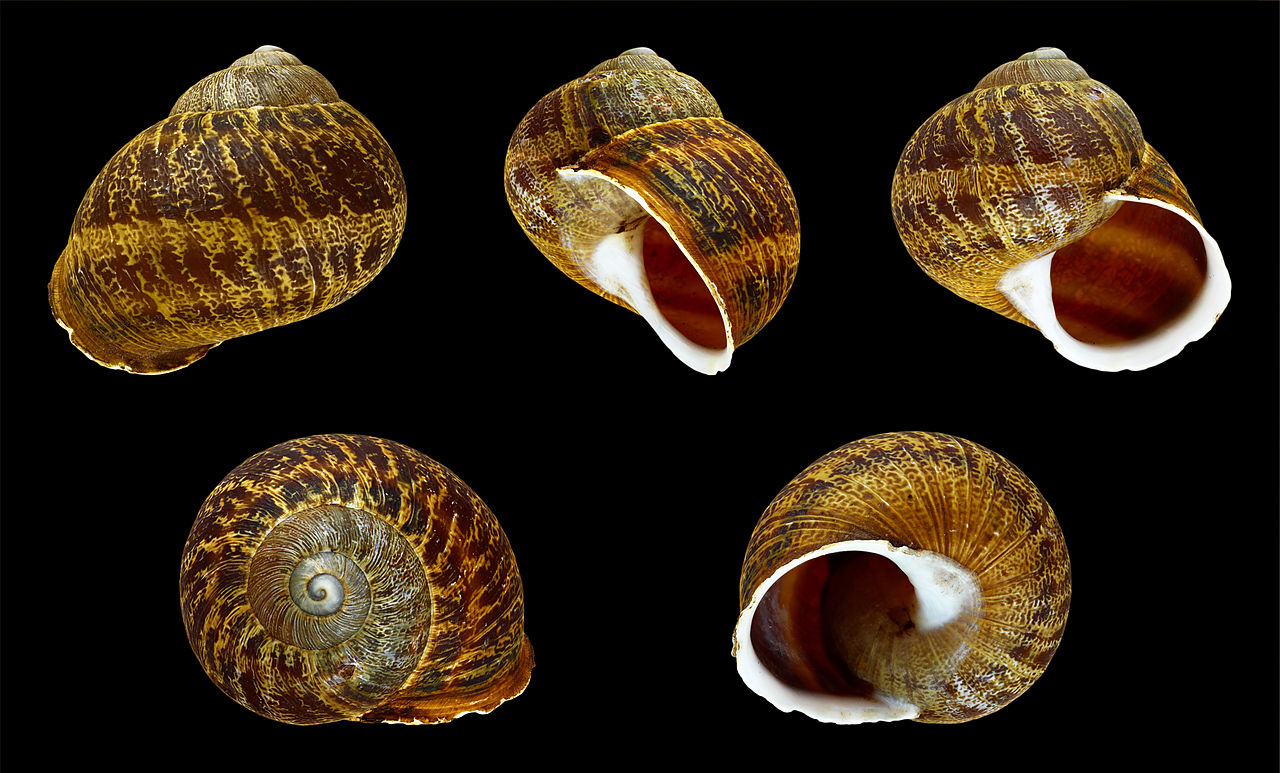
The animal most people picture when they think of a garden pest is the common garden snail (Cornu aspersum), native to the Mediterranean and now found on six continents thanks to human transport. Its shell typically reaches about 1.5 inches across, in shades of brown with lighter streaking, and the body retracts fully inside when threatened. It shares garden habitat with other small feeders, including crows that eat aphids rather than plants, which is one reason not every small crawling animal in a garden bed deserves the same response.
What to Feed a Pet Snail
A healthy captive diet mirrors what a wild snail would encounter: rotate through leafy greens like romaine, kale, and dandelion leaves, softer vegetables such as cucumber, zucchini, and carrot, and offer fruit like apple, melon, or banana in smaller portions since too much sugar can cause digestive upset. Wash everything thoroughly to remove pesticide residue, feed in the evening when snails are naturally most active, and clear away anything uneaten within a day so it does not mold in a humid enclosure. Snails can be surprisingly particular, favoring some foods and ignoring others entirely, so it pays to watch what actually disappears overnight.
Why Snails Need Calcium
A snail’s shell is built from calcium carbonate, and without a steady dietary supply the shell grows thin, weak, or pitted, leaving the animal exposed to injury and predation. The classic supplement for pet snails is a cuttlebone, offered soft-side up so it is easy to rasp, along with crushed and thoroughly rinsed eggshell or a food-grade calcium powder dusted over produce. In the wild, snails get the same mineral by ingesting calcium-rich soil, limestone particles, and even the shells of dead snails.
Are Any Snails Carnivorous?
Most familiar snails are herbivores, but a meaningful minority are omnivores or outright predators. Omnivorous species round out a plant-based diet with carrion, eggs, or other soft invertebrates when the opportunity arises. True predatory snails exist too: the New Zealand genus Powelliphanta hunts earthworms, and certain land and aquatic species actively pursue and consume other snails and slugs, using the same radula that herbivorous snails use to rasp leaves, just turned toward a very different meal. Predators of this kind sit in the same ecological role as larger invertebrate hunters that patrol gardens after dark.
How Fast Do Snails Grow?
Growth rate depends heavily on food quality and calcium availability rather than age alone. A well-fed garden snail with steady access to calcium can reach adult shell size within about a year, while a calcium-deficient or poorly fed individual may take considerably longer and end up with a visibly thinner, more fragile shell. Growth also slows or pauses entirely during dormancy, so a snail that spends a hot, dry summer sealed inside its shell is effectively on hold until conditions improve and feeding resumes.
What Do Baby Snails Eat?
Newly hatched snails often consume their own eggshell first, an easy source of calcium right when they need it most for rapid early shell growth. From there they move to the same categories adults eat, just softer and easier to process: tender young leaves, soaked oatmeal, and finely grated vegetables. Because hatchlings are building an entire shell from nothing, a reliable calcium source matters even more for them than for grown snails.
Foods That Can Hurt or Kill Snails
Salt is the single most dangerous substance for a snail. Even a small amount draws moisture out of the animal’s body and can be fatal, which rules out salty, seasoned, or heavily processed human foods entirely. Pesticide residue on unwashed produce is another common hazard, and citrus fruit should be offered sparingly at most, since it can be harmful in quantity. Bread, crackers, and rice add little nutritional value and are best avoided. In the garden, this same sensitivity is turned into a control method: snails are strongly drawn to beer, and shallow dishes of it are a long-used organic trap that lures and drowns them overnight.
How a Snail Actually Eats
Snails do not chew the way mammals do. Instead, they feed using a radula, a ribbon-shaped organ lined with thousands of microscopic, backward-curving teeth made of chitin. Dragging the radula across food works like a rasp or a fine file, shredding leaves, scraping algae off a rock, and even wearing down a cuttlebone over time. In a quiet room, a large pet snail eating can actually be heard, a faint rasping sound that is the same mechanism whether the animal is grazing lettuce or, in predatory species, working through prey.
How Snail Diet Changes With the Seasons
Snail feeding is not constant year-round. Activity, and therefore appetite, tracks moisture and temperature closely. Snails feed most heavily in the evening, at night, and after rainfall, when humidity is high and soft plant tissue is easiest to find and digest. In hot, dry weather or hard freezes, many land snails retreat into their shells and seal the opening with a dried mucus layer called an epiphragm, entering a dormant state where they eat nothing at all until conditions improve. That is why garden damage tends to spike after a warm rain and go quiet during a heat wave or cold snap, and it also explains why a snail can seem to vanish for weeks at a time without dying.
What Eats Snails in the Wild?
Slow and often shelled, snails are still an important food source for a wide range of predators. Birds and waterfowl feed on them readily, as do frogs, toads, lizards, snakes, hedgehogs, and various small mammals. Certain insects specialize in them too, including some ground beetle and glowworm larvae, and even backyard birds that peck insects like mosquitoes and other small invertebrates will take a slow-moving snail when they find one. A modest resident snail population can therefore be part of a healthy backyard food web rather than purely a problem, feeding the birds and amphibians a garden owner may actually want to attract.
Related reading: what do ladybugs eat.
Related reading: what do ladybugs eat.
Related reading: what do ladybugs eat.
Related reading: what do ladybugs eat.
Related reading: what do ladybugs eat.
Related reading: what do ladybugs eat.
Related reading: what do ladybugs eat.
Related reading: what do ladybugs eat.
Related reading: what do ladybugs eat.
Related reading: what do ladybugs eat.
Related reading: what do ladybugs eat.
Related reading: what do ladybugs eat.
Related reading: what do ladybugs eat.
Related reading: what do ladybugs eat.
Related reading: what do ladybugs eat.
Related reading: What Do Dolphins Eat?.
Related reading: What Do Koalas Eat?.
Related reading: what do giraffes eat.
Related reading: what do jumping spiders eat.
Related reading: what do tadpoles eat.
Related reading: what do scorpions eat.
Related reading: what do beavers eat.
Related reading: what do grasshoppers eat.
Related reading: what eats snakes.
Related reading: what do jellyfish eat.
Related reading: what do camels eat.
Related reading: what do foxes eat.
Related reading: what do kangaroos eat.
Frequently Asked Questions
What do snails eat in the wild?
Wild snails mostly eat living plant leaves, grass, algae, and fungi, plus large amounts of decaying plant matter like fallen leaves and rotting wood. A smaller number of species are omnivores or predators that also eat carrion, eggs, or other snails.
What is safe to feed a pet snail?
Offer washed leafy greens such as kale, romaine, and dandelion leaves, vegetables like cucumber and carrot, and small amounts of fruit such as apple or melon. Always include a calcium source like cuttlebone, and remove uneaten food daily.
Why do snails need calcium?
A snail’s shell is made of calcium carbonate, so it needs a constant dietary supply to grow the shell and repair damage. Without enough calcium the shell becomes thin, brittle, or pitted, leaving the snail vulnerable.
Can snails eat lettuce every day?
Snails will eat lettuce readily since it is soft and easy to rasp, but it is low in nutrients on its own. Rotate in darker, more nutritious greens like kale or collards alongside it for a balanced diet.
What foods are dangerous to snails?
Salt is the most dangerous, since it draws moisture from a snail’s body and can kill it even in small doses. Avoid salty, seasoned, or processed foods, unwashed produce with pesticide residue, and go easy on citrus.
What do baby snails eat first?
Many hatchlings eat their own eggshell first, which supplies an immediate dose of calcium. After that they move on to tender young leaves, soaked oatmeal, and finely grated vegetables while they build their shells.
Do any snails eat other animals?
Yes. While most snails are herbivores, some are omnivores that eat carrion or eggs, and a smaller number, like the New Zealand genus Powelliphanta, are true predators that hunt earthworms and other snails.