What Do Beavers Eat? Bark, Cambium, and Winter Caches
Beavers do not eat wood. They eat the soft living layer just beneath the bark, called cambium, along with leaves, twigs, buds, aquatic plants, and roots, and they are strict herbivores despite living in water and being frequently assumed to eat fish. The felled trees that make them famous supply food and building material, not a meal in themselves.
Their winter strategy is the more interesting part. Beavers cannot forage on land under ice, so through autumn they cut branches and jam them into the mud at the bottom of the pond, building an underwater food cache they swim to from inside the lodge without ever surfacing. This guide covers the seasonal diet, the cambium question, the cache, the unusual digestion that makes a wood-based diet work, and what their feeding does to a landscape.
| Quick Facts | Beaver Diet |
|---|---|
| Diet type | Strict herbivore, never eats fish |
| Main winter food | Cambium from stored branches |
| Preferred trees | Aspen, willow, cottonwood, birch, alder |
| Summer diet | Aquatic plants, leaves, forbs, roots |
| Daily intake | Roughly 1 to 2 lb of bark and vegetation |
| Winter strategy | Underwater food cache beside the lodge |
Beavers Do Not Eat Wood
This is the correction worth leading with, because the misconception drives most confusion about the species. Beavers gnaw through trunks to fell trees, but the woody heartwood passes through no part of their diet.
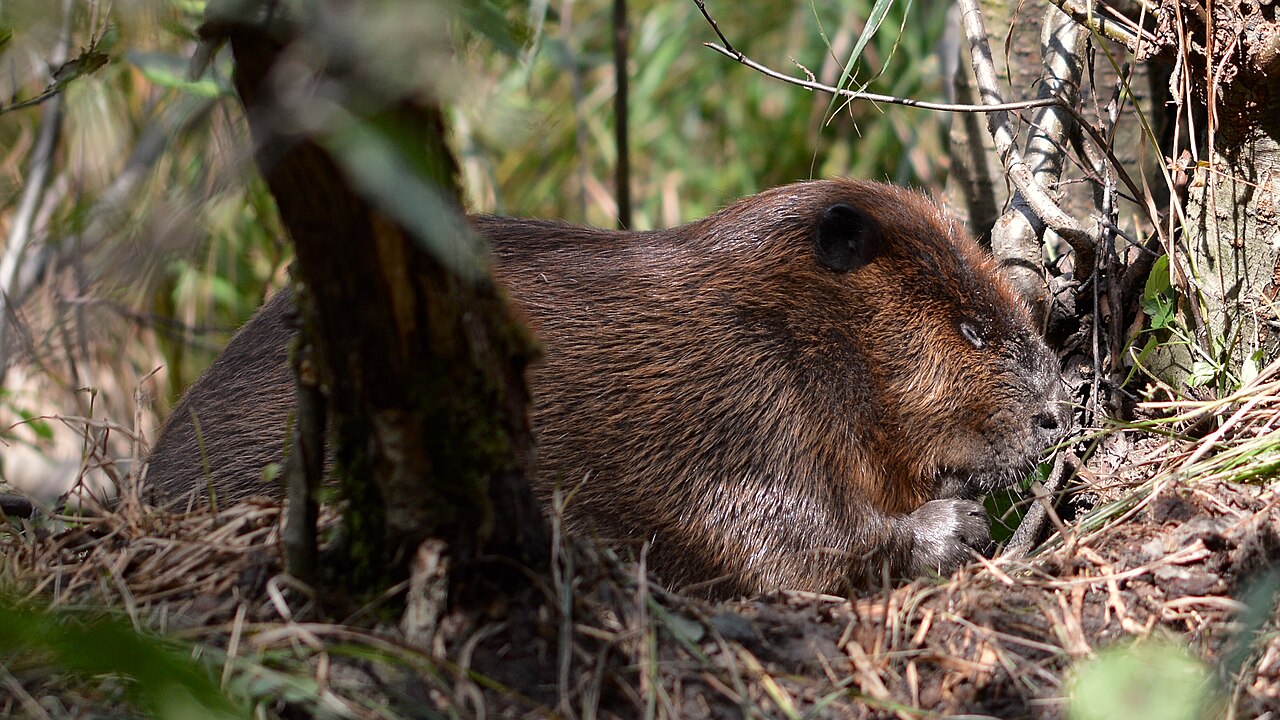
What they eat is cambium, a thin layer of actively growing tissue between the bark and the wood, rich in sugars and nutrients because it is the tissue through which the tree moves its resources. A beaver strips the outer bark, scrapes the cambium off with its incisors, and leaves the stripped stick behind, which is why beaver-worked ponds accumulate piles of pale peeled branches.
Felling serves several purposes at once. It brings the canopy foliage and upper twigs within reach, provides construction material for dams and lodges, and opens the canopy so that willow and aspen regrow as accessible shoots. Our guide to the baby beaver covers the family structure that all this work supports.
Which Trees Beavers Prefer
Preference is consistent enough to predict where beavers will work. Aspen sits at the top of the list nearly everywhere it occurs, followed by willow, cottonwood, birch, alder, and maple, all fast-growing deciduous species with nutritious cambium and the ability to resprout from cut stumps.
That resprouting matters ecologically. Willow and aspen respond to cutting by producing dense new shoots from the base, which regenerates the food supply within a few years, so beaver foraging is closer to coppicing than to clear-felling in its long-term effect.
Conifers are generally avoided as food and taken mainly for construction when nothing better is available. Beavers also show a distance gradient, working hardest close to water and taking progressively less as distance increases, because dragging a branch overland exposes them to predators. That is why beaver activity produces a visible zone of cutting extending roughly 100 ft from the bank, thinning beyond it.
The Summer Diet
Summer feeding looks quite different from the winter version and involves far less wood. Aquatic and herbaceous plants dominate, including water lilies with their nutritious rhizomes, pondweed, cattail, sedges, rushes, ferns, and a wide range of forbs.
Water lily rhizomes are a particular favorite, and beavers dive to pull them from the sediment. Leaves and green twigs of preferred trees are taken freely, along with grasses, aquatic invertebrate-free vegetation of many kinds, and occasionally agricultural crops including corn and soybeans where fields meet water.
This seasonal shift makes ecological sense. Soft green vegetation is abundant, easy to digest, and higher in protein than bark, so a beaver eats it while it can and turns to cambium when it cannot. Daily intake runs roughly 1 to 2 lb, and the animals build fat reserves through late summer and autumn ahead of the lean season.
The Winter Food Cache
Beavers do not hibernate and cannot forage on land once ice forms, so they solve the problem in autumn by building a food cache, sometimes called a feed bed, in the water beside the lodge.
Construction is deliberate. Through autumn the family cuts branches and drags them to a spot near the lodge entrance, jamming the butt ends into the mud so the pile is anchored and largely submerged. The cache can be substantial, and a large family may store the equivalent of a small woodpile.
Submersion is what preserves it. Cold water keeps the cambium from drying out or rotting, and because the cache sits below the ice, the beavers swim from the lodge to the pile and back without ever surfacing, retrieving branches and eating in the dry chamber inside. The dam serves this purpose directly by keeping water deep enough that the cache does not freeze solid.
How a Beaver Digests Bark
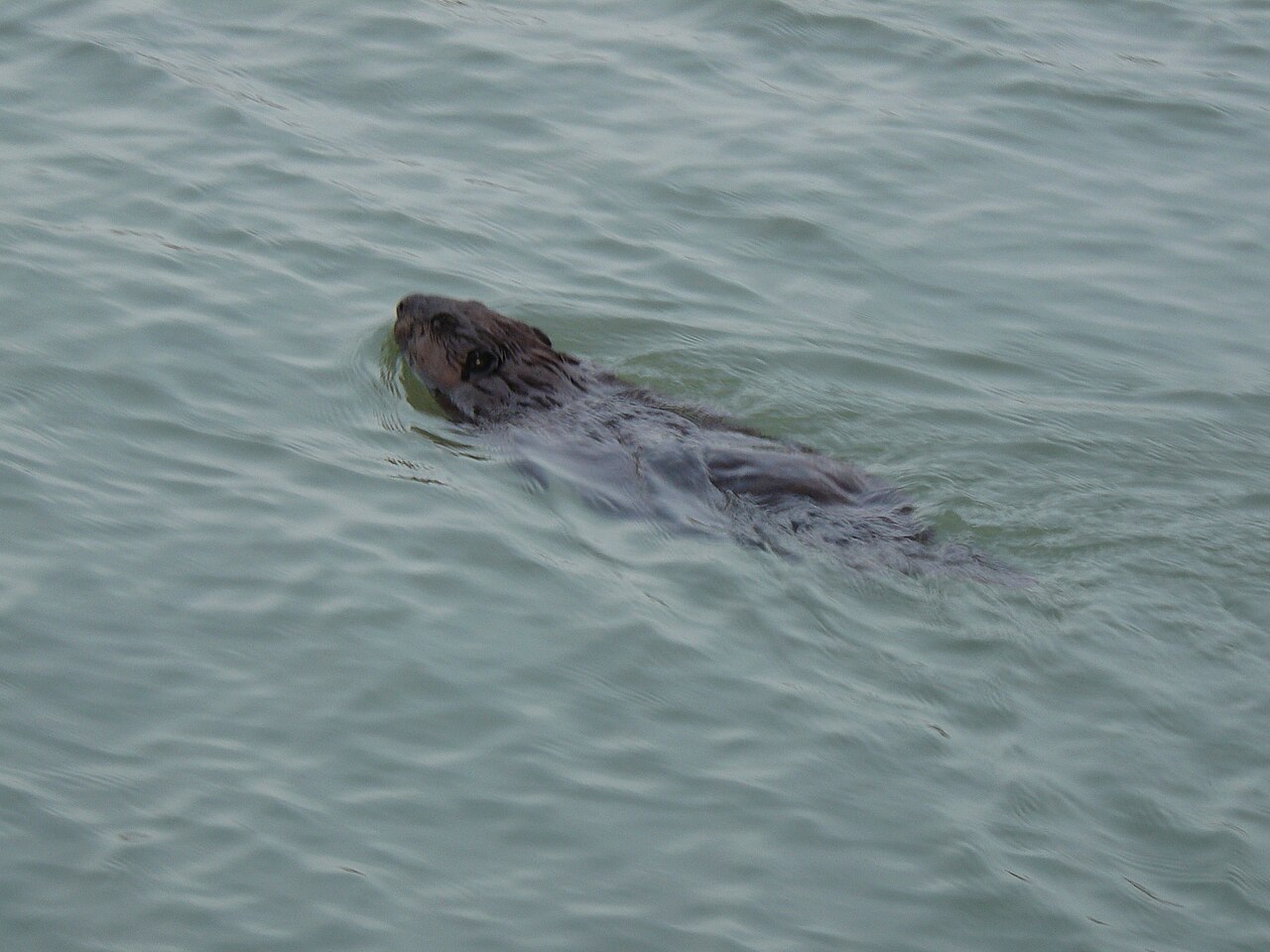
Cambium and bark are high in cellulose, which no mammal can digest with its own enzymes, so beavers rely on gut microbes. Fermentation happens in an enlarged cecum, a pouch at the junction of the small and large intestine that houses the bacterial population doing the work.
They then eat the product a second time. Beavers practice coprophagy, producing soft green cecal pellets that they consume directly and pass through the digestive system again, extracting nutrients and microbial protein that the first pass could not reach. It is the same strategy rabbits use and it roughly doubles the value of a low-quality diet.
The teeth are built to match. Beaver incisors grow continuously throughout life and are reinforced with iron compounds in the enamel, which gives them their characteristic orange color and makes them substantially harder than ordinary enamel. The softer dentine behind wears faster, maintaining a chisel edge automatically as the animal gnaws.
Beavers Never Eat Fish
The belief that beavers eat fish is common and entirely wrong. They are strict herbivores with a digestive system built for plant fermentation, and no credible documentation of fish consumption exists.
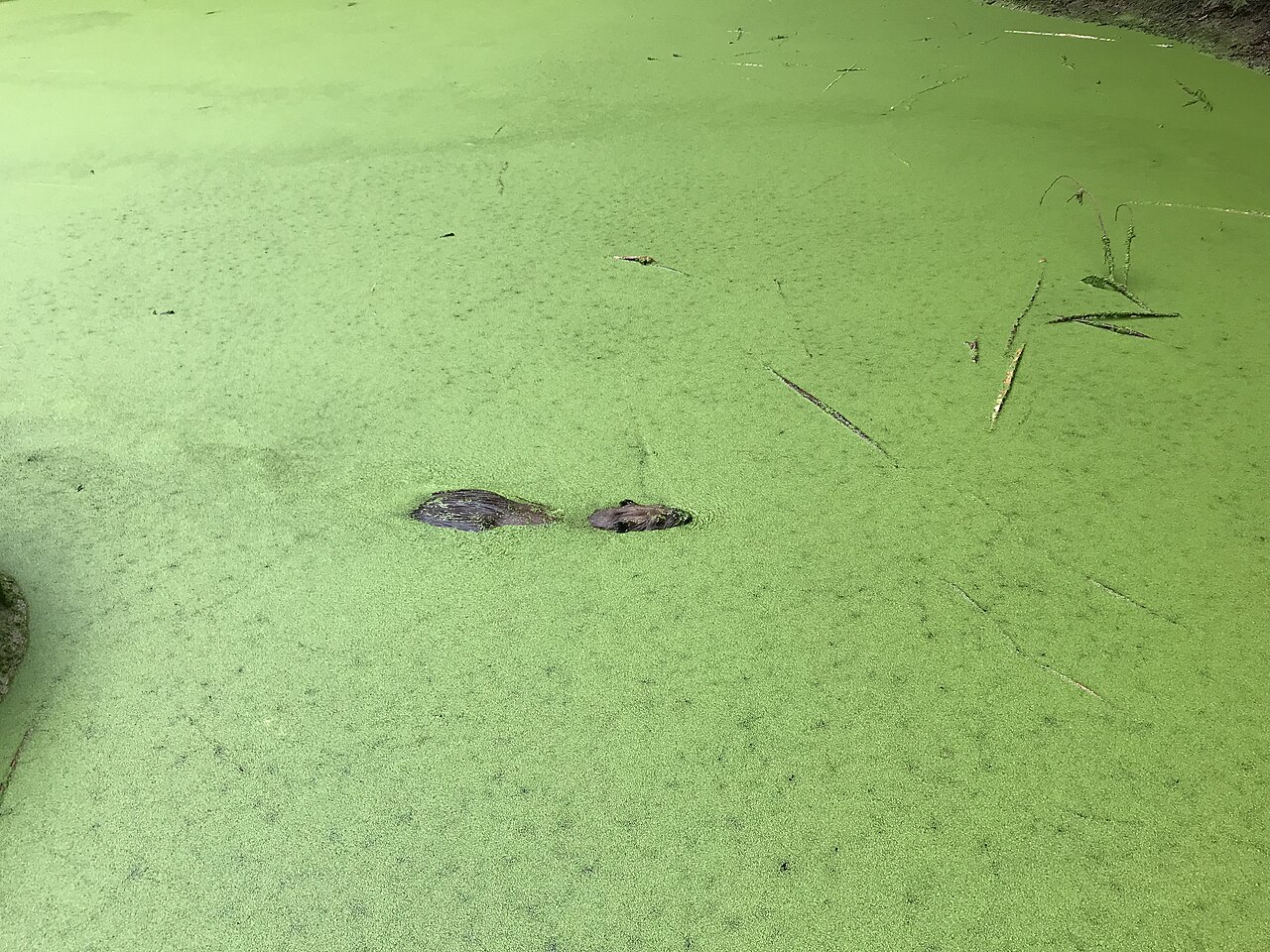
Two things drive the confusion. Beavers are large semi-aquatic rodents that look superficially similar to otters and muskrats at a distance, and river otters genuinely are fish eaters, so a swimming animal in a pond gets misidentified routinely. Our guide to the baby otter covers the animal actually responsible.
The fisheries relationship runs the opposite way from what the myth implies. Beaver ponds create slow deep water, cover, and invertebrate habitat that benefit many fish species, and there is substantial research on beaver dams improving juvenile salmonid habitat. Beaver activity generally supports fish populations rather than competing with them.
What Beaver Feeding Does to a Landscape
Beavers are ecosystem engineers, and the feeding and the building are inseparable. Damming creates ponds and wetlands where there were streams, raising water tables, storing water through dry periods, trapping sediment, and creating habitat for amphibians, waterfowl, fish, and invertebrates.
The tree cutting is part of the same process. Opening the canopy along a watercourse promotes the willow and aspen regrowth beavers depend on, and the standing dead trees created when a pond floods a wooded area become nesting habitat for woodpeckers, ducks, and cavity nesters.
Conflict arises when this meets human infrastructure. Flooded roads and fields, culverts blocked by dams, and valued ornamental or orchard trees felled overnight are genuine problems. Solutions that work with the animals rather than removing them include flow devices such as pond levelers that keep water at a set height without triggering damming behavior, culvert protection fencing, and wire mesh or sand-paint barriers around individual trees. Removal usually produces only a temporary vacancy, since good beaver habitat attracts new beavers within a season or two.
How Much Territory a Family Needs
A beaver colony is a family group, typically a bonded pair with the current year’s kits and the previous year’s young, and the food supply determines how long they can stay. State wildlife agencies that manage beaver populations estimate colony territories along a few hundred yards of stream, expanding where preferred trees are scarce.
They exhaust local resources and move on. Once the accessible aspen and willow within a safe distance of water are cut, the colony relocates, often only a short way upstream or downstream, and the abandoned pond gradually breaches and drains. The resulting beaver meadow is a distinct habitat type, a wet open area rich in sediment that supports grasses, sedges, and eventually regenerating willow.
That cycle operates over years to decades and it is why beaver landscapes look patchy. Active ponds, recently abandoned ponds, and meadows at various stages of regrowth all occur along the same watercourse, and the mosaic supports far more species than any single stage would.
Feeding Habits Compared With Other Herbivores
Beavers sit in an unusual niche. Where deer and moose browse standing vegetation at whatever height they can reach, beavers restructure the vegetation to bring it to them, felling the canopy rather than reaching it. Our guide to what moose eat describes the browsing approach in an animal sharing much of the same range.
The winter strategies diverge sharply too. Moose and deer continue browsing standing twigs through winter and lose weight steadily, while beavers spend autumn provisioning and then live off a stored supply, which is closer to a squirrel caching nuts than to any large browser.
Their winter caching also has no equivalent among the ungulates but parallels what smaller mammals do, and the sign left behind by other rodents in the same habitat is covered in our guide to squirrel droppings. Among rodents the arrangement is distinctive because of the scale involved. A beaver family alters the hydrology of a whole valley in the course of feeding itself, which no other rodent approaches, and the omnivorous scavengers sharing that habitat, described in our guide to what possums eat, benefit indirectly from the wetland it creates.
Frequently Asked Questions
What do beavers eat?
Cambium, the soft living layer beneath tree bark, plus leaves, twigs, buds, aquatic plants, roots, and forbs. They do not eat the woody part of trees. Aspen, willow, cottonwood, birch, and alder are the preferred species, and daily intake runs roughly 1 to 2 lb.
Do beavers eat fish?
No. Beavers are strict herbivores with a digestive system built for fermenting plant material, and no credible documentation of fish eating exists. The confusion comes from mistaking them for otters, which genuinely do eat fish.
What do beavers eat in winter?
Cambium from branches stored in an underwater cache built beside the lodge during autumn. Cold water preserves the branches, and because the cache sits below the ice the beavers swim to it from inside the lodge without surfacing.
Why do beavers cut down trees if they do not eat wood?
To reach the cambium, leaves, and upper twigs, to obtain construction material for dams and lodges, and to open the canopy so willow and aspen regrow as accessible shoots. The stripped pale sticks left around a beaver pond are the leftovers.
How do beavers digest bark?
Through microbial fermentation in an enlarged cecum, since no mammal can digest cellulose alone. They then eat soft cecal pellets and pass the material through a second time, extracting nutrients and microbial protein the first pass missed, the same strategy rabbits use.
Why are beaver teeth orange?
Their incisors contain iron compounds in the enamel, which colors them orange and makes them much harder than ordinary enamel. The softer dentine behind wears faster, maintaining a self-sharpening chisel edge as the continuously growing teeth are used.
How do I stop beavers cutting my trees?
Wrap individual trunks with wire mesh to about 3 ft, or paint them with a sand and latex paint mixture that deters gnawing. For flooding problems, pond levelers and culvert fencing manage water levels without removing the animals, which is more durable since good habitat attracts replacements quickly.