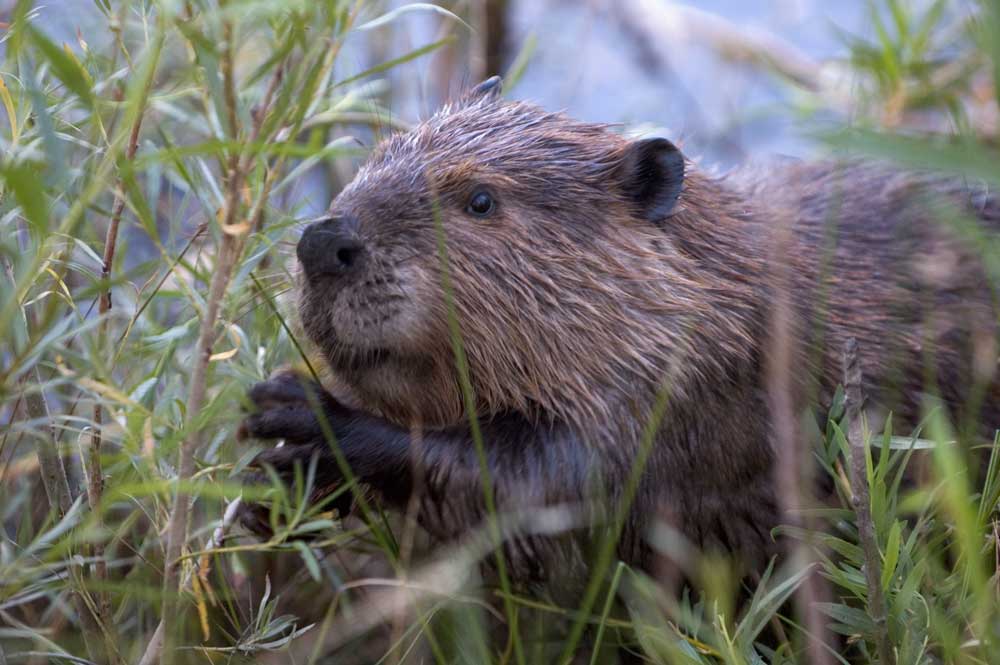
Beaver Sounds: 8 Calls and Noises and What Each One Means
The loudest beaver sound you are likely to hear is not a voice at all: it is a flat tail slapped hard onto water, a rifle crack that carries for hundreds of yards and means the colony has seen you. Beaver sounds otherwise run quiet and surprisingly human, a mix of whines, mumbles, chirps, hisses and the steady rasp of incisors on wood.
North American beavers (Castor canadensis) are social, family based rodents that live in a lodge with a mated pair, that year’s kits and often last year’s yearlings. Most of their noise is family communication inside or just outside the lodge, which is why people who live near a pond hear far more than people who visit one. This guide takes the calls one at a time, says what each one means, when you are most likely to hear it, and what other animals get mistaken for a beaver in the dark.
Beavers make eight main sounds: a tail slap alarm, whines and whimpers, chirps and mumbles, hisses, growls, teeth chattering, gnawing on wood, and splashing while building. The whining is the one most people notice, because a beaver kit can sound almost exactly like a crying human baby.
| Sound | What it means | When you hear it |
|---|---|---|
| Tail slap on water | Alarm, dive now | Dusk to dawn, when a person or predator appears |
| Whine or whimper | Begging, greeting, kit calling the adults | Spring and early summer, mostly at the lodge |
| Chirp or mumble | Contact chatter inside the family | While feeding or resting together |
| Hiss | Threat warning, back off | When cornered on land or at the lodge entrance |
| Growl | Serious conflict, usually territorial | Fall dispersal and in defense of a dam |
| Teeth chattering | Agitation or stress display | Close encounters, often before a hiss |
| Gnawing and chewing | Foraging or dam work, no message | All night, loudest in autumn |
| Splash and drag | Building, hauling branches and mud | Autumn, before the water freezes |
What Do Beavers Sound Like Overall?
Beaver vocalizations sit low and soft. Researchers who have recorded colonies describe most calls in the range of a hoarse puppy or a complaining child, delivered at a volume that barely carries 50 ft (15 m) across still water. That is the opposite of what people expect from a 40 to 60 lb (18 to 27 kg) rodent.
The acoustic exception is percussion. The tail slap, the crack of a gnawed tree giving way and the slap of mud onto a dam are mechanical noises, and they travel. If you hear a beaver from a distance, you are almost certainly hearing one of those three rather than a call.
There is also a seasonal rhythm. Spring and early summer are the vocal months because kits are in the lodge demanding food. Autumn is the mechanical season, when the colony is cutting and hauling before freeze up, so the pond sounds like a construction site and almost never like a conversation.
The Tail Slap: The Alarm That Carries
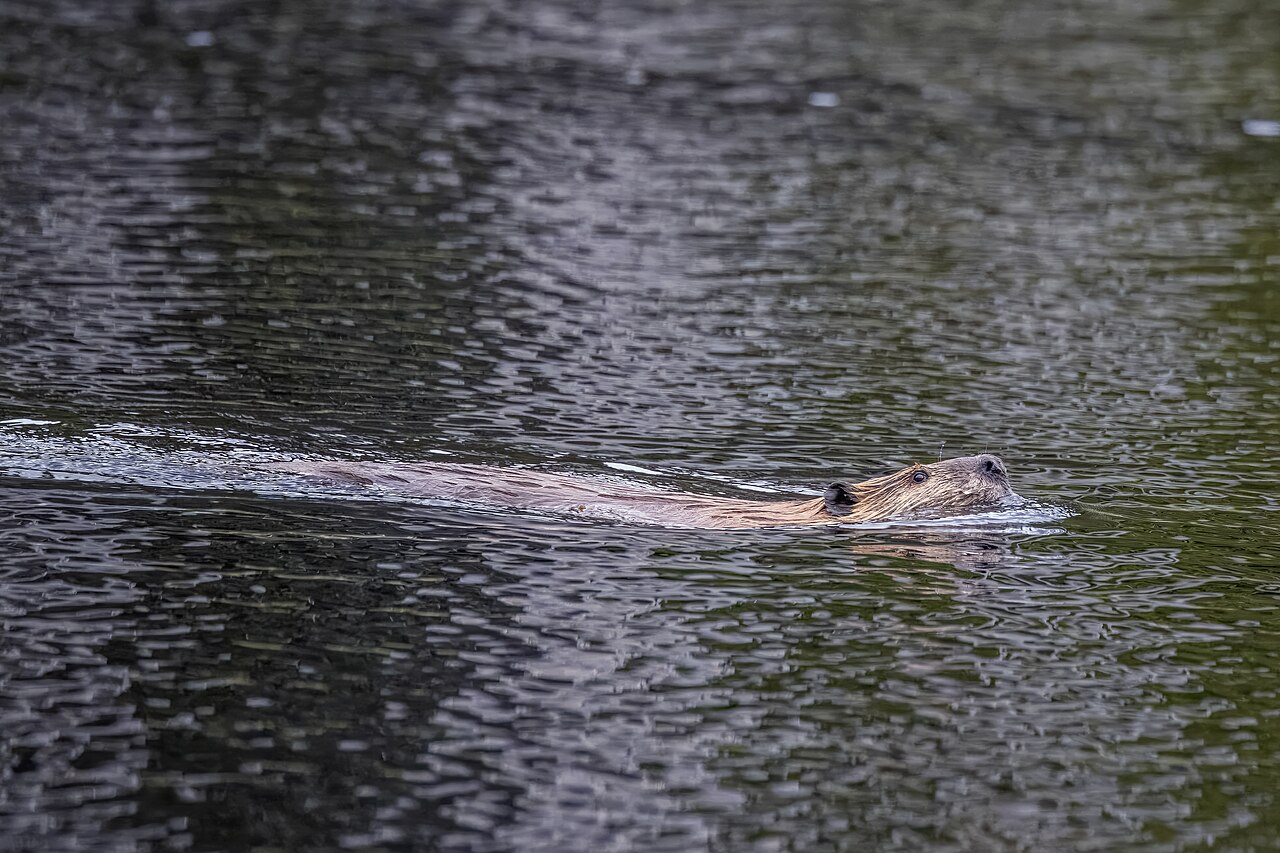
An adult beaver lifts its hindquarters, swings the tail down and strikes the surface flat, then dives in the same motion. The result is a hard, hollow crack that can be heard well over 200 yards away and often triggers every other beaver in the pond to dive within a second or two.
The slap is a warning aimed at family members, not at you. Kits learn it early and slap with much less effect, which is why you sometimes hear a weak version followed by an adult’s full report. A colony that has been disturbed repeatedly will sometimes slap and then resurface at a distance to watch, so hearing one does not mean the animals have left.
It is the single most reliable identifying beaver sound in the wild. No other North American freshwater animal produces that flat, deliberate percussion on open water, which separates it immediately from a jumping fish or a diving duck.
Whines and Whimpers: Why Beavers Sound Like Babies
The whine is the call that startles people most. It is a rising, nasal, slightly broken sound that genuinely resembles a crying human infant, and in an enclosed lodge or culvert it amplifies. Adults use it as a greeting and a low level complaint, and kits use it constantly to beg.
If you hear what sounds like a child crying near water after dark, beaver kits are a realistic explanation between April and July. Our guide to the baby beaver covers how long kits stay in the lodge and what the begging behavior looks like when you can actually see it.
The whine also appears during feeding when two animals want the same branch. In that context it functions like grumbling rather than distress, and it typically stops as soon as one animal gives way.
Chirps and Mumbles: The Family Chatter
Beavers resting or feeding together produce a stream of short chirps, grunts and mumbles that observers often compare to muttering. The sounds are quiet, overlapping and continuous, and they seem to function as contact calls that keep the family aware of one another in the dark.
Mumbling is most audible in the hour after the colony emerges, roughly from sunset to full dark, when animals are near the lodge and not yet dispersed to feeding sites. From a canoe at 30 ft (9 m) on a calm evening it is clearly audible; from a trail it usually is not.
Hisses: The Threat Warning
A cornered beaver hisses. It is a sharp exhalation through an open mouth, often with the body turned side on and the incisors visible, and it means the animal has decided it cannot retreat. Beavers on land are slow and they know it, so the hiss comes out faster there than in water.
Take it at face value and give the animal a clear route back to water. Those incisors cut hardwood, and the few serious beaver bites on record involved people who approached a hissing animal. Among North American wildlife the signal is as unambiguous as the warnings covered in bobcat sounds.
Growls and Teeth Chattering
Growling is lower, longer and rarer than hissing, and it shows up in real conflict: a strange beaver crossing into occupied territory, or two animals contesting a dam. Autumn is the likely season because yearlings disperse then and run into established colonies.
Teeth chattering is the stress tell that often comes first. It is a rapid clicking of the incisors, sometimes with a slight jaw pop, and it usually escalates into a hiss if whatever caused it keeps coming closer. Hearing chattering at close range is a good reason to back away immediately.
Gnawing, Chewing and Falling Trees
The sound of a beaver working is a wet, rhythmic rasping, roughly two to four bites per second, punctuated by pauses while the animal repositions. On a thick trunk it can continue for 20 to 40 minutes, and the final crack as the tree goes over is loud enough to wake a campsite.
Feeding noise is softer and faster: a beaver stripping bark from a branch sounds much like a large rodent eating a carrot, with the branch rotating in its forepaws. That is normal nightly behavior, and what the animal is actually after is described in our guide to what beavers eat.
Dam and Lodge Construction Noises
Building produces the broadest sound range of all: branches dragged over gravel, mud slapped onto a dam, repeated small splashes as the animal dives and resurfaces, and the dull thud of a log pushed into place. None of it is communication, but it is the clearest evidence that a colony is active.
Autumn is peak construction, when the family reinforces the dam and builds the underwater food cache. A pond that was quiet in August can sound busy for several hours a night in October, which is often when homeowners first realize beavers moved in.
When Beavers Are Most Vocal
Beavers are crepuscular to nocturnal, most active from about an hour before sunset until an hour after sunrise, with a clear peak in the first few hours of darkness. Daytime sounds are uncommon except at lodges with young or in undisturbed backcountry ponds.
Seasonally, vocal activity peaks from April through July with kits in the lodge, drops through late summer, and gives way to mechanical noise in September and October. Under ice in midwinter the colony is nearly silent from outside, since activity moves to the lodge and the water beneath the ice.
Sounds Mistaken for Beavers
Muskrats share the same ponds and also slap the water, but the sound is thinner and the animal is far smaller at 2 to 4 lb (0.9 to 1.8 kg). River otters whistle, chuckle and snort, a much higher and more varied repertoire. Nutria, common in the Gulf states, produce a pig like grunt that beavers do not make.
Above the waterline the confusion usually involves nocturnal callers near water rather than mammals. A bullfrog sound is the classic false alarm on a summer night, a barred owl sound fools people who hear the longer calls as something mammalian, and the high chatter of bat sounds over the same pond belongs to animals far too small to be making it. Rasping, slapping and whining near the water at night points to a beaver; whistles, trills and barks point somewhere else.
Hearing Beavers Near Your Property
Repeated gnawing, splashing and tail slaps within earshot of a house mean an active colony inside roughly a quarter mile. The sounds themselves are harmless, but what produces them is not: a working pair can drop ornamental trees and raise the water table enough to flood a yard or a culvert within weeks.
Beavers do not enter attics or walls, so night noise from inside a structure is a different animal. For the pond itself, state wildlife agencies and the US Fish and Wildlife Service favor non lethal management such as tree wrapping and flow devices, and most states regulate removal, so a call to the local agency comes before any action. Among nearby wildlife noises, the deeper cracks and slaps are beaver work, while a true roar or bellow from a southern waterway is covered in alligator sounds.
Frequently Asked Questions
What is a flock of beavers called?
A group of beavers is a colony, and a colony is almost always a single family: a mated pair, that year’s kits and often the previous year’s yearlings, typically 4 to 8 animals. The word flock is not used for beavers. Family and colony are the terms wildlife biologists use interchangeably.
What does the beaver eat?
Beavers are strict herbivores. In summer they take aquatic plants, grasses, sedges and leaves, and in winter they live on bark and the soft cambium layer of trees stored in an underwater cache, with aspen, willow, cottonwood and birch preferred. They do not eat fish.
Why does a beaver sound like a crying baby?
Beaver kits beg with a rising, nasal whine whose pitch and rhythm fall close to a human infant cry, and a lodge or culvert amplifies it. Adults make a quieter version as a greeting. The resemblance is coincidental, not mimicry, and it is strongest from April through July.
Do beavers make sounds at night?
Yes, and that is when nearly all beaver sound happens. Activity runs from about an hour before sunset to an hour after sunrise, peaking in the first hours of darkness. Daytime noise is unusual unless the pond is undisturbed or kits are in the lodge.
Where can I hear recordings of beaver sounds?
Public domain and openly licensed recordings of tail slaps, kit whines and gnawing are held by federal agencies and university sound archives, and nature recordists publish full pond sessions. Search for the call type rather than just the species, since a clip labeled only beaver sounds is usually a tail slap.
Do beavers hiss when they are angry?
Hissing is the standard beaver threat signal, used when the animal is cornered and cannot reach water, and it often follows teeth chattering. Growling appears in genuine territorial conflict instead. Both mean the same thing in practice, which is that the animal wants distance and should be given it.