Box Turtle Habitat: 7 Things Every Enclosure Needs
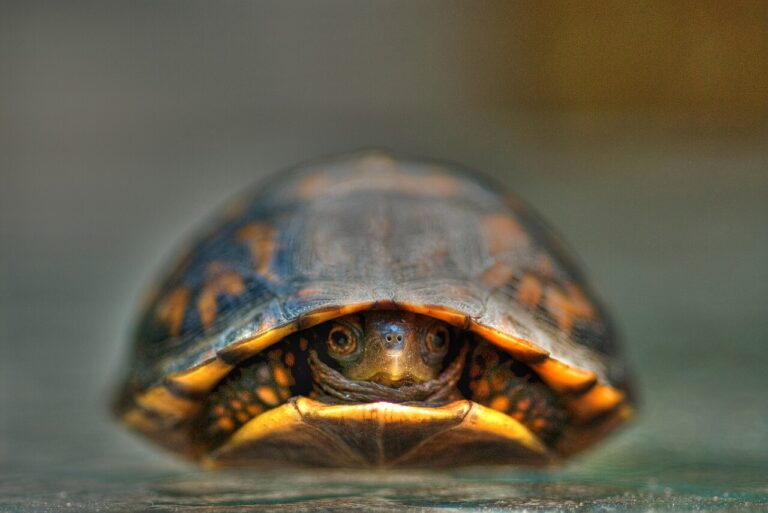
A working box turtle habitat is a humid, heavily planted floor space with deep diggable substrate, dense shade, shallow water and a secure barrier, and an outdoor pen of at least 4 by 8 ft beats any indoor tank of any price. Box turtles are ground dwelling forest turtles, not aquatic ones, so height and water volume matter far less than floor area and humidity.
Most captive box turtles fail for two reasons: an enclosure that is too dry and an enclosure that is too small. Both are fixed at setup rather than later. Below is what an enclosure needs outdoors and indoors, which plants belong in it, and why the turtle you found in the yard should almost always stay there.
One adult box turtle needs at least 4 by 8 ft of floor space outdoors or 4 by 2 ft indoors, with 4 to 6 in of loose substrate, humidity of 60 to 80 percent, daytime temperatures of 75 to 85 F, a basking spot near 88 F, shallow water it can walk into, and a covered top to stop raccoons and dogs.
| Requirement | Target |
|---|---|
| Outdoor pen, one adult | 4 by 8 ft minimum, larger is better |
| Indoor enclosure, one adult | 4 by 2 ft minimum, open top turtle table |
| Wall height and depth | 16 to 18 in above ground, 8 to 12 in buried |
| Substrate depth | 4 to 6 in of soil, leaf litter and cypress mulch |
| Humidity | 60 to 80 percent |
| Temperature | 75 to 85 F day, basking 88 F, nights above 65 F indoors |
| Water | Sunken shallow dish, 2 to 3 in deep, easy exit |
What Every Box Turtle Habitat Needs
Five elements decide whether an enclosure works: floor space, deep loose substrate, humidity, shade and security. A box turtle spends most of the day walking, digging and resting under cover, so the space has to be wide rather than tall, and cluttered rather than tidy. An empty pen with a water bowl produces a stressed animal that paces the perimeter.
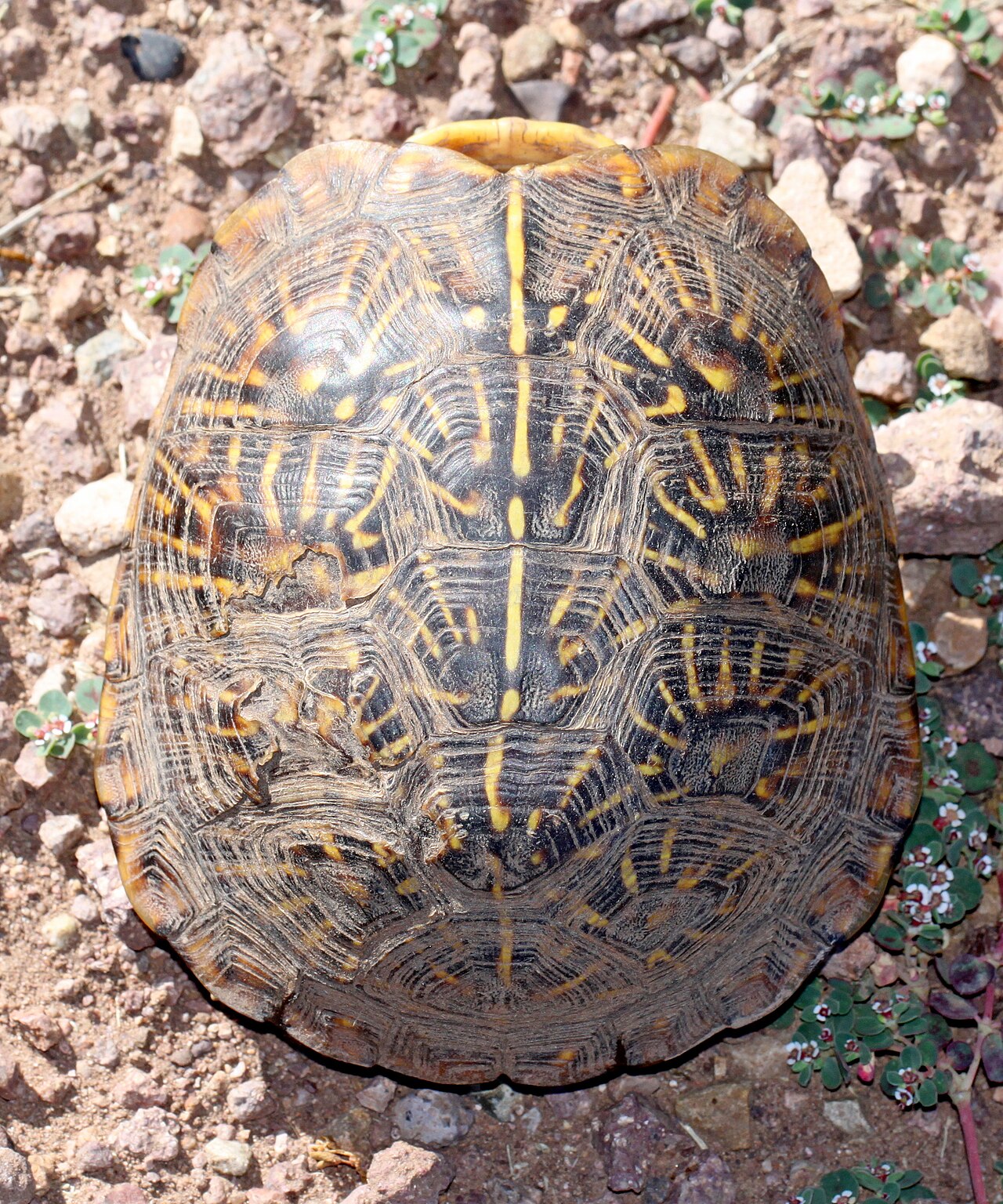
Security means both directions. Walls need to be solid and opaque, 16 to 18 in high with 8 to 12 in buried, because box turtles dig under barriers and climb corners. A wire or hardware cloth lid keeps out raccoons, crows and dogs, which are the leading cause of death in backyard pens. The details differ a little by species, and an ornate box turtle wants drier, grassier ground than an eastern box turtle.
Outdoor Box Turtle Habitat Setup
An outdoor pen is the gold standard because it supplies natural sunlight, real rain and a temperature gradient no lamp reproduces. Build it on well drained soil in dappled shade, with roughly 8 by 8 ft for one to two adults if space allows. Use untreated lumber, concrete block or buried landscape edging for walls, and check the perimeter each spring for gaps and erosion.
Inside, aim for 60 to 70 percent shade, several hiding spots made from half logs or stacked slate, a mound of damp leaf litter, and a sunken water pan the turtle can enter and leave without tipping. A misting line or sprinkler run for ten minutes on hot afternoons keeps humidity up and triggers natural foraging. In the native range of the species, an outdoor pen also lets the turtle overwinter properly, which is worth understanding before you plan a winter: see our guide to whether turtles hibernate.
Indoor Box Turtle Habitat Setup
Indoors, skip the glass aquarium. A wooden turtle table, a large plastic tub or a custom box with an open top holds humidity better at the floor and avoids the endless wall pacing that clear sides cause. Minimum useful size is 4 by 2 ft for one adult, and 6 by 3 ft is far closer to comfortable.
Fit a UVB lamp plus a basking bulb over one end to create a warm side near 88 F and a cool, shaded, humid side in the low 70s. Keep the substrate damp enough to hold a shape when squeezed, mist daily, and never park the enclosure over a heating vent or in direct window sun. Hatchlings need the same layout in miniature with even higher humidity, which our baby box turtle guide covers in detail.
Substrate, Humidity and Temperature
The best substrate is a mix of topsoil without fertilizer, coconut coir or sphagnum moss, and a top layer of dead leaves, 4 to 6 in deep so the turtle can bury itself completely. Cypress mulch works well as part of the blend. Avoid sand, gravel, cedar and pine shavings, all of which either abrade or irritate.
Humidity between 60 and 80 percent is not decoration; chronically dry air produces sunken eyes, shell pyramiding and kidney strain. Measure it with a digital hygrometer at substrate level, not at the top of the enclosure. Temperatures should sit at 75 to 85 F through the day with a basking spot near 88 F, and indoor nights should not drop below 65 F.
What Plants Can I Put in a Box Turtle Habitat?
Safe and useful plants include hostas, ferns, sedges, ornamental grasses, violets, clover, dandelion, plantain and strawberry, plus mulberry or hibiscus for shade and edible leaves. Dense low growth is the point: it holds ground moisture, provides cover from overhead predators, and gives the turtle reasons to explore.
Keep toxic ornamentals out entirely, including azalea, rhododendron, foxglove, lily of the valley, oleander, English ivy and daffodil bulbs. Skip any plant treated with pesticide, herbicide or systemic insecticide, and do not use fertilized potting mix in a planted pen. When in doubt, plant vegetables and herbs the turtle can safely nibble instead.
Food and Water in the Enclosure
Box turtles are omnivores, and roughly half the adult diet should be animal protein: earthworms, slugs, snails, crickets, dubia roaches and the occasional bit of cooked lean meat. The rest is leafy greens, squash, mushrooms, and a small amount of berries or melon as a treat. Feed on a flat stone or tile so the turtle does not swallow substrate.
Water needs to be present at all times in a dish shallow enough to walk into and out of, since box turtles drink, soak and defecate in it. Change it daily. A planted pen that hosts its own worms, snails and beetles lets the turtle hunt, which is closer to how it feeds in the wild than any dish of chopped salad. For species specific portions, compare the diet notes in our box turtle overview.
Can I Keep a Box Turtle I Found in My Yard?
Almost always no, and in many states it is illegal. A wild box turtle lives in a home range of about 1 to 5 acres and navigates back to it; moved animals wander for months trying to return and often die on roads. Removing one adult from a slow breeding population has a measurable local effect, which is why the species is listed as vulnerable.
If the turtle is crossing a road, carry it to the shoulder it was heading toward and leave it. If it is visibly injured, call a licensed wildlife rehabilitator rather than treating it yourself. Legal captive box turtles come from captive bred stock with documentation, and permit rules are published by state wildlife agencies and the U.S. Fish and Wildlife Service. A captive bred tortoise such as a leopard tortoise is often the cleaner choice legally.
Frequently Asked Questions
What makes box turtles happy?
Space, cover and humidity, in that order. A turtle that digs, forages through leaf litter, soaks on its own schedule and hides when it wants to is behaving normally. Constant pacing along a wall, refusal to eat, or sitting in the open all day usually means the enclosure is too small, too dry or too exposed.
Why is it illegal to own a box turtle?
Wild populations are declining from habitat loss, road deaths and collection, and box turtles breed too slowly to absorb losses. Many states therefore protect them, banning collection from the wild and sometimes possession without a permit. Captive bred animals with paperwork are legal in most places; a turtle picked up outside usually is not.
In what states are box turtles illegal to take from the wild?
Collection is prohibited or tightly restricted in many states, among them New York, Michigan, Illinois, Indiana, Ohio, Massachusetts, Connecticut and North Carolina, and rules change. Some states allow possession of animals acquired legally before a ban. Always confirm with your state wildlife agency, since penalties fall on the keeper, not the seller.
Does a box turtle bite hurt?
A box turtle bite can pinch hard enough to bruise a finger, because the beak is built to crush snails and beetles, but it rarely breaks skin and is not dangerous. Bites happen mostly during hand feeding when a finger looks like food. Wash any broken skin, since turtles can carry Salmonella.
How hard is it to keep a box turtle alive?
Not hard once the habitat is right, and very hard when it is not. Deaths in captivity cluster around dry air, cramped tanks, poor diet and predator attacks in unsecured pens. Get floor space, humidity and security right at setup and a captive box turtle can live 40 years or more, as our Florida box turtle profile shows.