Mexican Alligator Lizard: Care, Cost, and 8 Key Facts
The Mexican alligator lizard (Abronia graminea) is a small, emerald green, tree dwelling lizard from the cloud forests of eastern Mexico, and it is not venomous. It reaches about 10 to 12 in (25 to 30 cm) including the tail, lives in bromeliads high in oak and pine trees, and is listed as Endangered by the IUCN. In the United States it shows up in the reptile trade as a captive bred animal priced between roughly $400 and $900.
Almost everything that makes this lizard desirable also makes it difficult. It needs cool temperatures, high humidity and vertical space, three things most beginner setups get wrong. This guide covers what the species is, whether it bites, how big it gets, what a working enclosure looks like, and what one actually costs.
The Mexican alligator lizard is a non venomous, arboreal lizard native to cloud forests in Veracruz and Puebla, Mexico. Adults reach 10 to 12 in (25 to 30 cm), live 10 to 15 years in captivity, and need cool, humid, heavily planted vertical enclosures. Captive bred animals cost about $400 to $900.
| Quick Facts | Mexican Alligator Lizard |
|---|---|
| Scientific name | Abronia graminea |
| Adult length | 10 to 12 in (25 to 30 cm) including tail |
| Native range | Cloud forests of Veracruz and Puebla, Mexico |
| Venomous | No |
| Lifespan | 10 to 15 years in captivity |
| Ideal day temperature | 70 to 80 F (21 to 27 C) |
| Typical price | $400 to $900, captive bred |
What Is a Mexican Alligator Lizard?
The Mexican alligator lizard is one of roughly 30 species in the genus Abronia, a group of arboreal lizards in the family Anguidae. The same family contains the North American alligator lizards, including the southern alligator lizard (Elgaria multicarinata) that many Californians find in their gardens. The name comes from the heavy, keeled scales that look like the armored hide of a small crocodilian.
Unlike its ground dwelling relatives, Abronia graminea spends nearly its whole life in trees. It has a prehensile tail, strong grasping feet and a flattened head that lets it push into the tight leaf bases of bromeliads. Those plants collect rainwater and insects, so a single bromeliad can supply shelter, drinking water and food.
Adults are usually a striking emerald to turquoise green, sometimes with a bluish cast around the head. Juveniles are duller, often olive or brown with pale bands, and the adult color develops over the first year. Because color varies by population, two animals from different mountain ranges can look noticeably different.
Are Mexican Alligator Lizards Venomous?
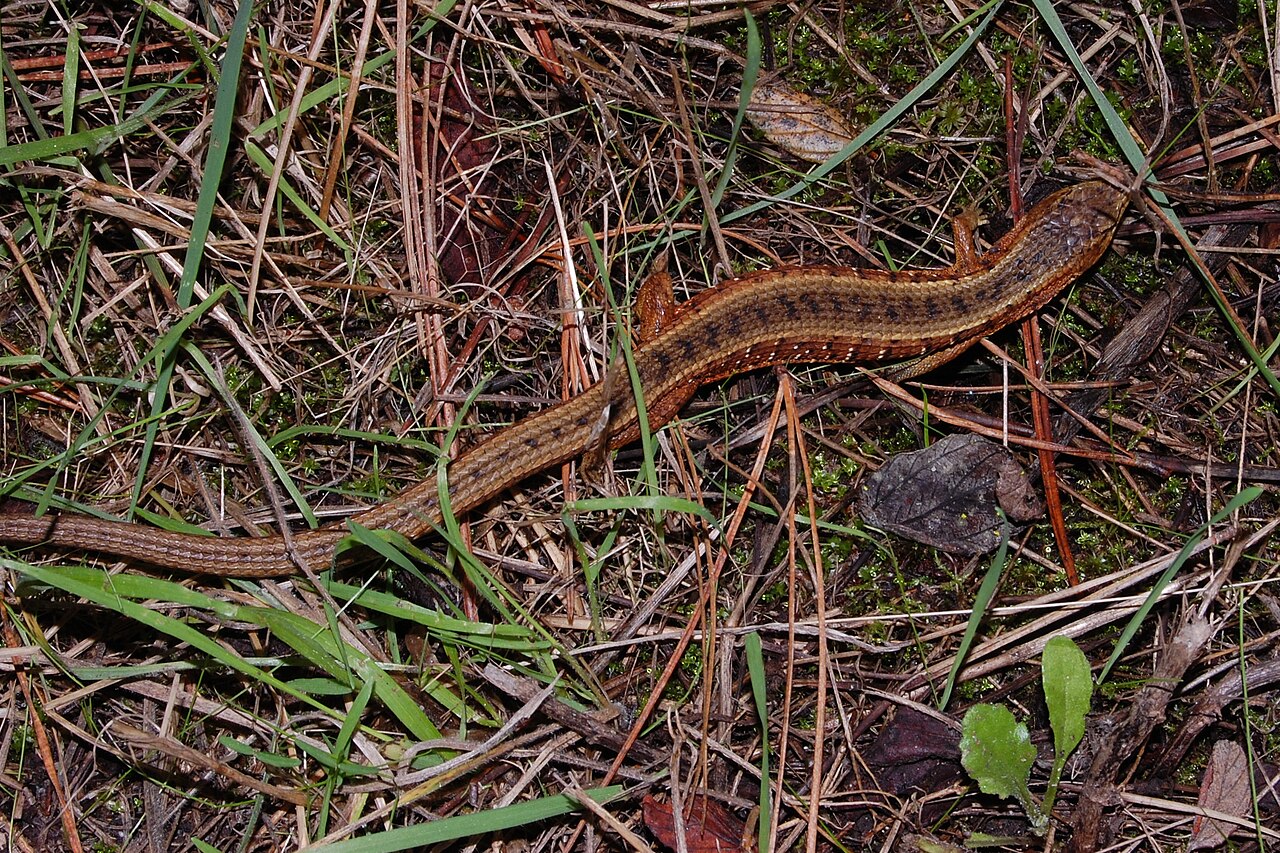
No. Mexican alligator lizards are not venomous and carry no venom glands. There is no medically significant lizard venom anywhere in the family Anguidae. The only lizards in the Americas with a genuine venom delivery system are the Gila monster and the beaded lizards in the genus Heloderma, which are not close relatives.
The related question people actually mean is whether the lizard is poisonous, which is a different word for a different thing. A poisonous animal is dangerous to eat or touch. Abronia graminea is neither. Its skin carries no toxin, and handling one poses no chemical risk beyond the ordinary hygiene rule that applies to every reptile.
That rule matters more than people expect. Reptiles commonly carry Salmonella in their gut without showing symptoms, and the bacteria travel on skin, enclosure surfaces and water. Wash your hands after any contact, and keep the enclosure out of kitchens. The same caution applies to cleaning up after them, as covered in our guide to identifying lizard droppings.
Do Alligator Lizard Bites Hurt, and Are They Aggressive?
An adult Mexican alligator lizard can break skin, but a bite is a minor event. The jaws are short, the teeth are small and conical, and the usual result is a pinch with a few pinprick marks. It stings for a minute and rarely needs more than soap, water and a bandage. Larger anguids like the southern alligator lizard bite harder and hold on longer.
Aggression is not the right frame for this species either. Abronia graminea is defensive rather than pugnacious. A stressed animal gapes, hisses, whips its tail or simply drops out of the branches, which in a tall enclosure is its preferred escape. Bites almost always follow a grab from above, because a hand closing over the back mimics a bird.
Practically, this is a look at species, not a handling species. Most keepers touch their animals only for health checks and enclosure moves. Reptiles that tolerate regular handling, such as the albino leopard gecko, are a better fit for anyone who wants an animal to hold.
Mexican Alligator Lizard Size, Colors, and Lifespan
Adults measure about 4 to 5 in (10 to 13 cm) from snout to vent, with the tail nearly doubling that, for a total of roughly 10 to 12 in (25 to 30 cm). They are slender animals and rarely weigh more than about 1.5 oz (43 g). Females tend to be slightly heavier bodied, and males often have a broader head.
Captive lifespan is commonly cited at 10 to 15 years, and well kept animals have exceeded that. Wild lifespan is not well documented, which is true for most cloud forest reptiles. What is documented is the reproductive pattern: the species is viviparous, giving birth to live young rather than laying eggs, usually a litter of 1 to 12 in late spring or early summer after a gestation of several months.
Color is the main reason the species commands high prices. The emerald green of a mature animal is unusual among lizards sold in the US, and it holds up in ordinary room light rather than needing a photographer’s flash to look good.
Where Abronia graminea Lives in the Wild
The species is endemic to a narrow band of cloud forest in the Mexican states of Veracruz and Puebla, at elevations of roughly 4,600 to 8,900 ft (1,400 to 2,700 m). Those forests are cool, wet and often fog bound, with temperatures that rarely climb past the low 80s F and drop into the 50s F at night. The lizards live in the canopy, concentrated in epiphytic bromeliads.
That habitat is the species’ biggest problem. Cloud forest in this region has been cleared for agriculture and pasture for decades, and the remaining patches are fragmented. The IUCN lists Abronia graminea as Endangered, and the genus is covered by CITES Appendix II, which regulates international commercial trade. The Smithsonian’s National Zoo keeps and breeds related Abronia species as part of that conservation work; you can read about their reptile program at the National Zoo’s animal pages.
For keepers, the habitat data is the care sheet. A species from persistent fog at 6,000 ft does not want a desert basking lamp, and a canopy animal does not want floor space.
Are Mexican Alligator Lizards Good Pets?
They are good pets for experienced keepers and poor pets for beginners. The animals are hardy once their conditions are right, they are active during the day, and they use their space visibly, which makes a planted enclosure genuinely interesting to watch. They also tolerate being left alone, since they do not want interaction.
The difficulty is the climate. Sustained temperatures above about 85 F (29 C) are dangerous, so a warm room or a summer without air conditioning can kill an animal that was fine all winter. Humidity has to stay high without letting the enclosure go stagnant, which means real ventilation and daily misting or an automated system.
Legality is a second filter. Captive bred animals are widely and legally available in the US, but wild caught imports are restricted, and some states regulate exotic reptiles separately. Buy from a breeder who can name the lineage. If you want a large, impressive lizard with simpler requirements, compare it against a monitor lizard as a pet or the unusual earless monitor lizard before committing.
What Is the Minimum Size Tank Needed for a Mexican Alligator Lizard?
Plan on a minimum of 18 x 18 x 24 in (46 x 46 x 61 cm) for a single adult, and treat that as the floor rather than the target. Height matters more than footprint, so a 24 x 18 x 36 in enclosure is a much better home for the same animal. Front opening glass or screen terrariums with cross ventilation work well; sealed aquariums do not.
Fill the space with climbing structure: cork bark, branches at several angles, and live or artificial bromeliads clustered near the top where the lizard will sleep. Keep daytime temperatures at 70 to 80 F (21 to 27 C) with a small basking spot near 85 F (29 C), let nights fall to 60 to 68 F (16 to 20 C), and hold humidity around 70 to 80 percent. Provide UVB, since this is a diurnal species that basks.
How Much Does a Mexican Alligator Lizard Cost?
Captive bred Mexican alligator lizards typically sell for $400 to $900 in the US, with proven adult pairs and unusually blue animals going higher. Prices have softened somewhat as captive breeding has improved, but this remains one of the more expensive small lizards in the hobby. Treat an animal offered well under $300 as a reason to ask questions about origin.
The setup costs as much as the lizard. A tall, ventilated terrarium, UVB and low wattage heating, a misting system or humidifier, live plants and a feeder insect supply add up to roughly $400 to $700 before the first year of food. Their diet is straightforward for anyone who already keeps insectivores, and it follows the same principles described in what lizards eat: appropriately sized crickets, dubia roaches and the occasional worm, dusted with calcium and a vitamin D3 supplement. Keepers coming from a gecko background will recognize the feeding rhythm from a leopard gecko diet.
Frequently Asked Questions
Can I keep an alligator lizard as a pet?
Yes, where it is legal. Captive bred Mexican alligator lizards are sold openly in the US, and native North American species such as the southern alligator lizard are protected wildlife in some states. Check your state regulations first, buy captive bred, and never take one from the wild.
Are alligator lizards toxic to dogs?
No. Alligator lizards carry no venom and no skin toxin, so a dog that mouths one is not poisoned. The real risks are bacterial and parasitic: Salmonella from the lizard’s gut, and internal parasites. If your dog eats a wild lizard, watch for vomiting or diarrhea and call your veterinarian.
What is the lifespan of an alligator lizard?
Mexican alligator lizards commonly live 10 to 15 years in captivity, with records beyond that under good care. North American alligator lizards in the genus Elgaria have similar potential, though wild animals rarely reach it because of predation from birds, snakes and cats.
What do Mexican alligator lizards eat?
They are insectivores. Captive diets center on crickets, dubia roaches, silkworms and occasional mealworms or waxworms as treats, all dusted with calcium plus D3 two or three times a week. Adults eat every two to three days; juveniles eat daily. Wild animals hunt insects inside bromeliads.
Are Mexican alligator lizards rare?
In the wild, yes. The IUCN lists Abronia graminea as Endangered because its cloud forest habitat in Veracruz and Puebla has been heavily fragmented, and international trade is regulated under CITES Appendix II. In captivity the species is uncommon but no longer scarce, thanks to established breeding.