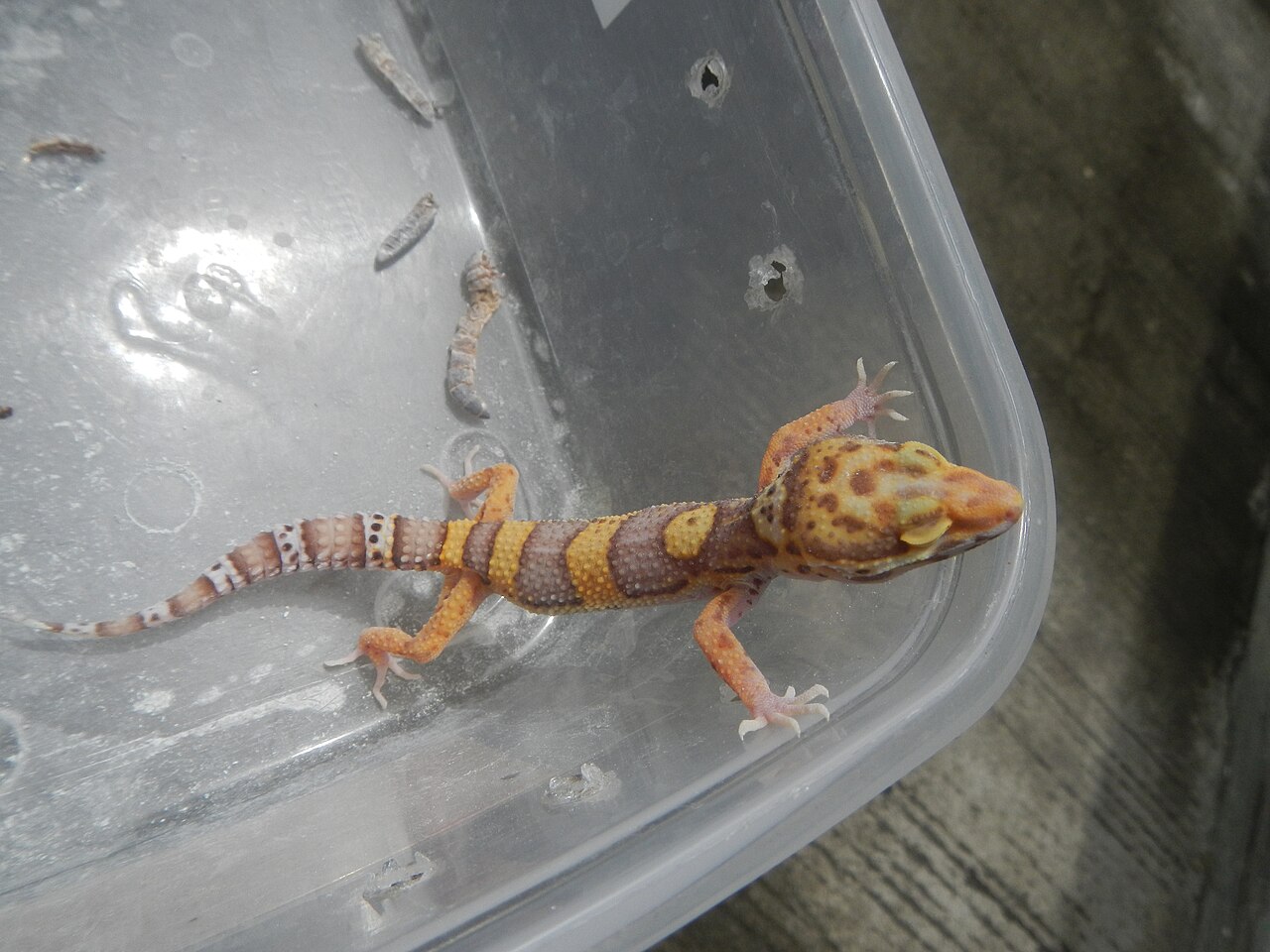
Leopard Gecko Diet: What to Feed, How Much, and How Often
Leopard geckos (Eublepharis macularius) eat live insects and nothing else. A working diet is built on two or three staple insects, usually dubia roaches, crickets and black soldier fly larvae, dusted with calcium and offered on a schedule that changes with the gecko’s age. They cannot digest fruit, vegetables or plant matter.
Most feeding problems come from the same three mistakes: one insect type for years, prey that is too large, and supplements skipped because the gecko looks fine. This guide gives the staples, the portions and the timing.
Feed leopard geckos live insects only. Rotate two or three staples such as dubia roaches, crickets and black soldier fly larvae, dusted with calcium and D3 two or three times a week. Juveniles eat daily, adults every two to three days, roughly two insects per inch of body length per feeding.
| Age | Frequency | Amount per feeding |
|---|---|---|
| Hatchling, 0 to 4 months | Daily | 4 to 6 small insects |
| Juvenile, 4 to 10 months | Daily or every other day | 5 to 8 insects |
| Adult, 10 months and up | Every 2 to 3 days | 6 to 10 insects |
| Gravid female | Daily | As much as she takes in 15 minutes |
| Shedding gecko | Skip a day if refused | Normal portion once shed |
What Do Leopard Geckos Eat?
Leopard geckos are strict insectivores. In the dry scrublands of Pakistan, Afghanistan and northwest India they hunt crickets, beetles, spiders, small scorpions and the occasional newborn rodent. In captivity that translates to commercially raised feeder insects, alive and moving, because the hunting response is triggered by movement.
Variety is not a luxury here. Each feeder has a different ratio of protein, fat, calcium and moisture, so a gecko fed only mealworms for a year gets a high fat, low calcium diet. Rotating at least two staples across the week smooths those numbers out on its own, which is the simplest nutrition insurance available.
Best Staple Insects, and Which to Skip

The strongest staples are dubia roaches (Blaptica dubia), crickets and black soldier fly larvae. Dubia roaches are high in protein, easy to gut load and quiet. Crickets drive an enthusiastic feeding response. Black soldier fly larvae, sold as calcium worms, carry enough calcium to need no dusting at all, which makes them useful for geckos that refuse supplement powder.
Mealworms, superworms (Zophobas morio) and waxworms belong in the treat column. All three are fatty, waxworms most of all, and geckos will hold out for them the way a child holds out for dessert. Never feed wild caught insects, which may carry pesticides or parasites, and skip fireflies entirely: they are toxic to reptiles and have killed geckos.
How Much Should a Leopard Gecko Eat a Day?
The working rule is two appropriately sized insects per inch of the gecko’s total length, offered at each feeding. A 7 in adult therefore takes somewhere around 14 small crickets across a feeding day, or fewer larger roaches. Prey should never be wider than the space between the gecko’s eyes, which prevents impaction and choking.
Adults eat every two to three days, not daily. Body condition tells you whether the portion is right: a healthy leopard gecko has a tail slightly wider than its neck and no visible hip bones. A tail as thick as the body means overfeeding, and a thin, wrinkled tail means the opposite. Weigh the animal monthly and track the trend, as described in our guide to leopard gecko lifespan.
What Time of Day Should You Feed a Leopard Gecko?
Feed in the evening. Leopard geckos are crepuscular, most active at dusk and dawn, and they are far more likely to hunt after the enclosure lights go down. Offering food in the middle of the morning often gets a flat refusal from an animal that would have eaten eagerly eight hours later.
Use a smooth sided feeding dish for roaches and worms so they cannot escape into the substrate, and remove uneaten crickets the same night. Crickets left loose will chew on a sleeping gecko and will hide in the decor of a well furnished leopard gecko enclosure.
Can Leopard Geckos Eat Vegetables or Fruit?
No. Leopard geckos have no dietary need for plant matter and lack the gut fermentation to process it. Vegetables, fruit, lettuce and baby food are not just unnecessary, they can cause digestive upset, and a gecko filling up on them misses the protein and calcium it actually needs. This is where the species differs sharply from a crested gecko diet, which is built around fruit based powdered meals.
The place plants do belong is inside the feeder insects. Gut loading means feeding your roaches and crickets carrots, squash, dark leafy greens and a commercial gut load 24 to 48 hours before they go to the gecko. The nutrients pass through, which is the only route by which a leopard gecko benefits from vegetables.
Frequently Asked Questions
How long can leopard geckos go without eating?
A healthy adult with a full tail can go two weeks or more without food, since the tail stores fat. Brief fasts happen normally during shedding, breeding season and cooler months. A refusal lasting beyond two weeks, or any refusal paired with weight loss or lethargy, needs a veterinary exam.
How can you tell if a gecko is hungry?
A hungry leopard gecko becomes visibly alert at dusk, patrols the enclosure, licks its lips and tracks movement outside the glass. Some tap at the front panel when they see you approach. A gecko that ignores a moving insect placed directly in front of it is not hungry, and crowding it with food will not change that.
What stresses leopard geckos out?
Handling too soon after arrival, temperatures outside the 88 to 92 F (31 to 33 C) warm side range, no hide, a too bright enclosure, cohabitation with another gecko, and loose crickets at night. Stress shows up first as refused food, then as hiding all day. Correct the husbandry before adjusting the diet, starting with leopard gecko habitat basics.
Do baby leopard geckos eat the same food?
Same insects, smaller sizes and a faster schedule. Hatchlings need small crickets or quarter inch dubia roaches daily, dusted with calcium at almost every feeding because they are building bone quickly. Undersupplemented juveniles develop metabolic bone disease, which veterinary programs such as the University of Illinois College of Veterinary Medicine see routinely in young reptiles. Details in our guide to the baby leopard gecko, and morph specific notes in albino leopard gecko care.