Leopard Gecko Habitat: The Tank Setup That Actually Works
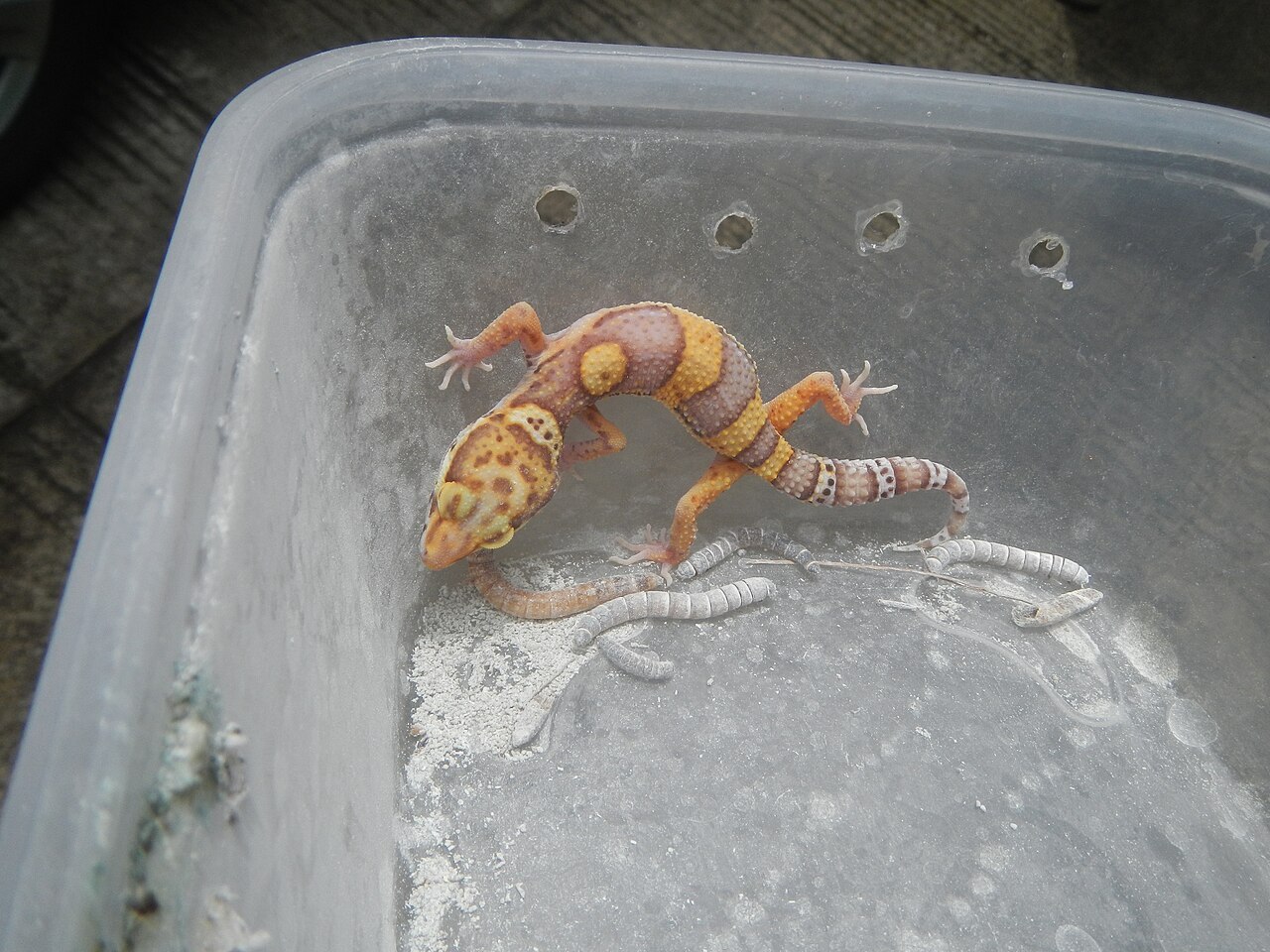
A leopard gecko habitat needs four things to work: floor heat on one side, three hides, a dry substrate that cannot be swallowed, and enough floor space to have a genuinely cool end. Get that combination right and the leopard gecko (Eublepharis macularius) is one of the most forgiving reptiles in the hobby. Get the heat gradient wrong and nothing else you do will compensate.
The most common setup mistake is copying a desert theme instead of the actual habitat. Wild leopard geckos do not live on open sand. They live on rocky, dry grassland across Afghanistan, Pakistan, northwest India and eastern Iran, sheltering in crevices through the heat of the day.
The best leopard gecko habitat is a 20 gallon long tank or larger with a belly heat source on one side, a warm surface of 90 to 94 F (32 to 34 C), a cool end of 75 to 80 F (24 to 27 C), three hides including one humid hide, a solid or fine bioactive substrate, and a shallow water dish. Night temperatures should not fall below 65 F (18 C).
| Habitat parameter | Target |
|---|---|
| Minimum tank (one adult) | 20 gallon long, 30x12x12 in (76x30x30 cm) |
| Recommended tank | 40 gallon breeder, 36x18x18 in (91x46x46 cm) |
| Warm side surface | 90 to 94 F (32 to 34 C) |
| Cool side | 75 to 80 F (24 to 27 C) |
| Night minimum | 65 F (18 C) |
| Ambient humidity | 30 to 40 percent |
| Humid hide | 70 to 80 percent |
Where Do Leopard Geckos Live in the Wild?
Leopard geckos occupy dry rocky grassland and the stony margins of desert. The ground is compacted clay and gravel rather than loose sand, broken by rock slabs, and the vegetation is sparse scrub. Nothing about that landscape resembles a dune.
They are crepuscular, most active at dawn and dusk, and spend the hot part of the day underground. Temperatures in their range swing widely between day and night, and winters get genuinely cold, which is why a captive gecko handles a night drop far better than continuous warmth.
The wild picture explains almost every care rule that follows. Belly heat replaces sun warmed rock, hides replace burrows, and a dry substrate with one humid pocket replaces dry ground over damp subsoil.
What Is the Best Habitat for a Leopard Gecko?

The best habitat is a front opening or standard glass terrarium with a secure screen top, a thermostat controlled heat source under one third of the floor, and a clear temperature gradient from end to end. Everything else, from decor style to substrate choice, is secondary to that gradient.
Build it in this order: tank, heat and thermostat, thermometers at both ends, three hides, substrate, then decor. Keepers who decorate first end up with hides in the wrong places, because the warm hide has to sit directly over the heat and the cool hide as far from it as the tank allows.
Run the habitat empty for two or three days first, with a digital probe thermometer reading the surface temperature under each hide. Stick on dial gauges are inaccurate enough to be dangerous. For tank choice and construction, see our guide to the leopard gecko enclosure.
Tank Size and Layout

One adult needs a 20 gallon long tank as a minimum, and a 40 gallon breeder is what most experienced keepers now treat as standard. Floor area matters, height does not: leopard geckos are terrestrial and a tall tank wastes the space where the gradient should be.
Lay the tank out in thirds. The warm third holds the heat source and the warm hide, the middle third the humid hide and water dish, the cool third the cool hide. Low rocks and cork bark fill the space between.
House leopard geckos singly unless you are breeding deliberately. Two males will fight, and mixed groups put constant reproductive stress on the female. Juveniles housed together compete for food and lose toes and tail tips, which is why baby leopard geckos should be raised alone.
Heating and Temperature
Leopard geckos digest through their belly, absorbing heat from the ground rather than basking in the air. An under tank heat mat or a deep heat projector aimed at a slab, covering about one third of the floor and wired through a thermostat, gives a warm surface of 90 to 94 F (32 to 34 C). Never run a heat source without a thermostat.
How cold is too cold at night? Below 65 F (18 C) the gecko stops digesting properly, and food sitting undigested in the gut causes serious problems. A drop from the daytime warm spot to the low 70s F (around 22 C) overnight is healthy and mirrors the wild cycle, so most homes need no night heat at all.
Heat rocks belong nowhere in this setup. They produce uncontrolled surface temperatures and cause severe belly burns, and a gecko will sit on one until it is injured because it registers warmth, not damage.
Substrate That Is Safe
For a first gecko, use paper towel, slate tile or reptile carpet. All three are impaction proof, easy to clean and let you see droppings clearly, which is the fastest way to notice a health problem. Tile also conducts belly heat well.
Loose calcium sand is the substrate to avoid. Geckos ingest it while feeding and it compacts in the gut, and juveniles are most at risk. A bioactive mix of topsoil, play sand and excavator clay, packed firm, is the advanced option once the keeper has a year of experience.
Spot clean daily and change solid substrate monthly. Our comparison of leopard gecko substrate options covers the trade offs, including which bioactive mixes hold a burrow without going dusty.
Hides, Humidity and Lighting
Three hides is the rule: one on the warm end, one on the cool end, and a humid hide in the middle holding 70 to 80 percent humidity. The humid hide is a sealed container with an entry hole and damp sphagnum moss or paper towel inside, and it is what makes shedding clean and complete.
Ambient humidity should sit at 30 to 40 percent. Higher readings across the whole tank cause respiratory infection and scale rot, so ventilate rather than mist. A shallow water dish on the cool side supplies drinking water without raising ambient humidity much.
Lighting advice has shifted. Leopard geckos were long kept without ultraviolet light, but low output UVB at 2 to 5 percent over part of the tank is now widely recommended and improves calcium metabolism. Keep a 12 hour day cycle and shaded hides so the animal can choose.
What Not to Do With Leopard Geckos
Do not grab the tail. Leopard geckos drop their tails when seized, and while the tail regrows it comes back short and bulbous, and the animal loses its main fat reserve. Support the whole body from underneath and let the gecko walk onto your hand.
Do not house them on loose sand, do not use unregulated heat, and do not offer wild caught insects, which may carry parasites or pesticide residue. Do not keep two adults together to save space.
Do not skip veterinary care either. Reptiles hide illness until it is advanced, and an annual check with an exotics vet catches parasites and early metabolic bone disease; the American Veterinary Medical Association maintains guidance on finding one. Housing done right supports the full leopard gecko lifespan of 15 to 20 years, far longer than a comparably sized panther chameleon.
Frequently Asked Questions
What does a leopard gecko need in their tank?
A leopard gecko needs a thermostat controlled belly heat source, three hides including a humid one, a safe substrate, a shallow water dish, and a digital thermometer at each end. Add low rocks or cork bark for climbing. Skip heat rocks, loose calcium sand and tank mates, all three of which cause more harm than the decor adds.
Are leopard geckos easy to keep alive?
Leopard geckos are among the easiest reptiles to keep alive, with a lifespan of 15 to 20 years in good conditions. They tolerate a wide range of humidity, eat readily and handle calmly. The two failures that kill them are an unregulated heat source and loose sand impaction, and both are setup problems rather than ongoing care problems.
Can I leave my gecko alone for a week?
A healthy adult leopard gecko can be left for up to a week with a full water dish and a thermostat holding temperatures steady, since adults tolerate several days without food. Juveniles cannot. Have someone check the temperature and water midweek anyway, because a failed heat mat over seven days is a serious problem.
What stresses geckos out?
Geckos are stressed by a missing temperature gradient, no place to hide, frequent handling, tank mates and constant vibration or noise. Signs include hiding permanently, refusing food, glass surfing and tail waving. Most stress traces back to habitat rather than temperament, so check heat, hides and neighbors before assuming the animal is nervous.
Will a leopard gecko bite hurt?
A leopard gecko bite rarely hurts and almost never breaks skin on an adult human. They have small teeth, no venom, and biting is a last resort after tail waving and retreat are ignored. Most bites happen during feeding when a finger is mistaken for a cricket, which is why feeding tongs are worth using. Coloration has no effect on temperament despite the claims made for some leopard gecko morphs.