Panther Chameleon Care: Size, Locales, Cost and Setup That Works
The panther chameleon (Furcifer pardalis) is a Madagascan lizard kept for one reason above all others: the males are among the most intensely colored reptiles on earth, and their color depends on where in Madagascar their bloodline came from. An adult male reaches 17 to 21 in (43 to 53 cm) including the tail, lives 5 to 7 years, and needs a tall screen enclosure with strong ultraviolet lighting and daily misting.
They are also the chameleon most often recommended to a first time keeper, which is true in a limited sense. Panthers are hardier and more tolerant of handling than most of the family, but the family sets a low bar. This species still demands precise lighting, temperature and hydration, and the failures that kill captive chameleons are almost always environmental.
Panther chameleons are arboreal lizards from northern Madagascar. Males grow 17 to 21 in (43 to 53 cm) and live 5 to 7 years; females stay near 13 in (33 cm) and live 2 to 3 years. They need a screen enclosure at least 24x24x48 in, a T5 HO UVB lamp, a basking spot of 82 to 88 F (28 to 31 C), and misting or dripping water daily.
| Quick facts | Panther chameleon |
|---|---|
| Native range | Northern and eastern Madagascar |
| Male size | 17 to 21 in (43 to 53 cm) with tail |
| Female size | 9 to 13 in (23 to 33 cm) |
| Lifespan | Males 5 to 7 years, females 2 to 3 years |
| Minimum enclosure | 24x24x48 in (60x60x120 cm) screen |
| Basking temperature | 82 to 88 F (28 to 31 C) |
| Typical price | 150 to 500 USD, premium locales higher |
What Is a Panther Chameleon?
The panther chameleon is a large arboreal chameleon native to the humid coastal forest and scrub of northern Madagascar, with introduced populations on Reunion and Mauritius. It is a CITES Appendix II species, so legal imports carry export permits, and most animals sold in the United States today are captive bred rather than wild caught.
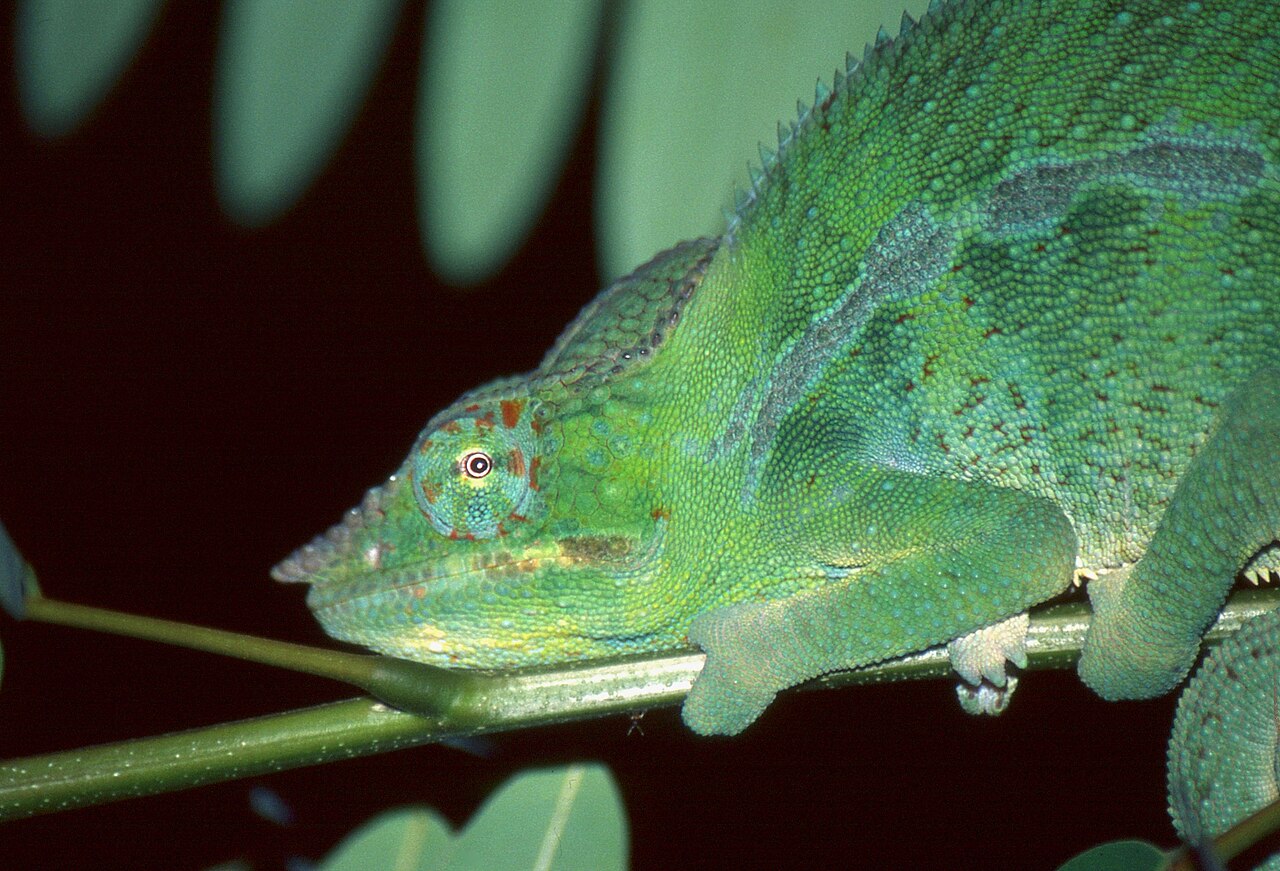
Everything about the body is built for slow arboreal hunting. The feet are zygodactyl, fused into opposing pairs that grip branches like pliers. The tail is prehensile and acts as a fifth limb. The eyes rotate independently through nearly a full sphere, then lock forward together when the animal ranges a target for its projectile tongue.
Color change in this species is not camouflage in the way the popular image suggests. Panthers shift color to signal mood, temperature and readiness to breed. A male going dark is usually cold or stressed; a male flashing bright bands is displaying at a rival or a female.
How Big Do Panther Chameleons Grow?
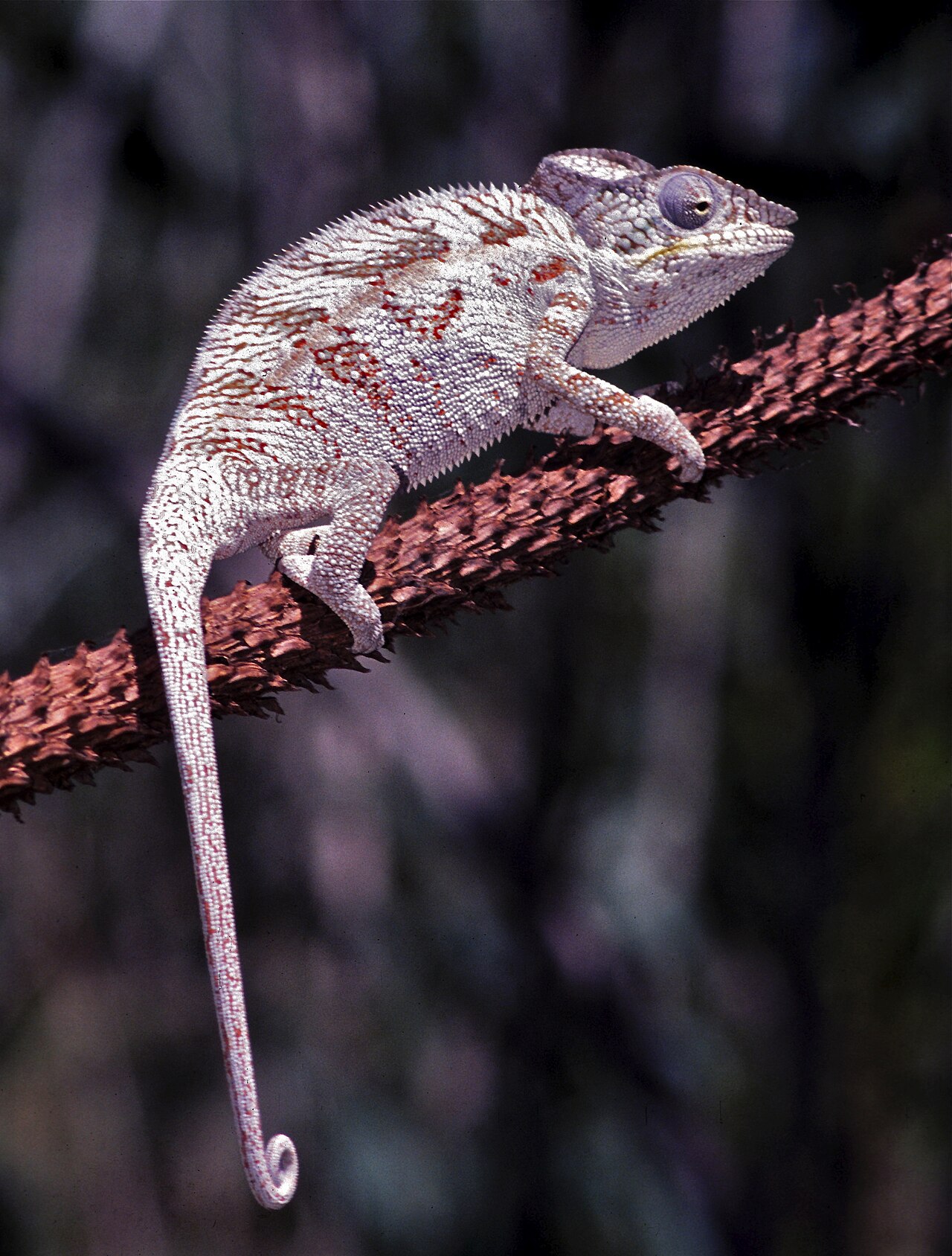
Adult males reach 17 to 21 in (43 to 53 cm) total length, with the tail making up close to half of that, and weigh 4 to 7 oz (115 to 200 g). Females are markedly smaller at 9 to 13 in (23 to 33 cm), a size difference large enough that sex is obvious long before adulthood.
Growth is fast. Hatchlings emerge at around 2 in (5 cm) and reach adult size in 9 to 12 months given correct temperatures and food volume. A panther that stalls in growth is usually running too cool, since digestion in this species is temperature driven and a basking spot a few degrees low slows everything down.
Males also carry a rostral bump on the snout and a thicker tail base, both visible from about three months. Reputable breeders sex animals well before sale, and an unsexed juvenile at an adult male price is a warning sign.
Panther Chameleon Locales and Color
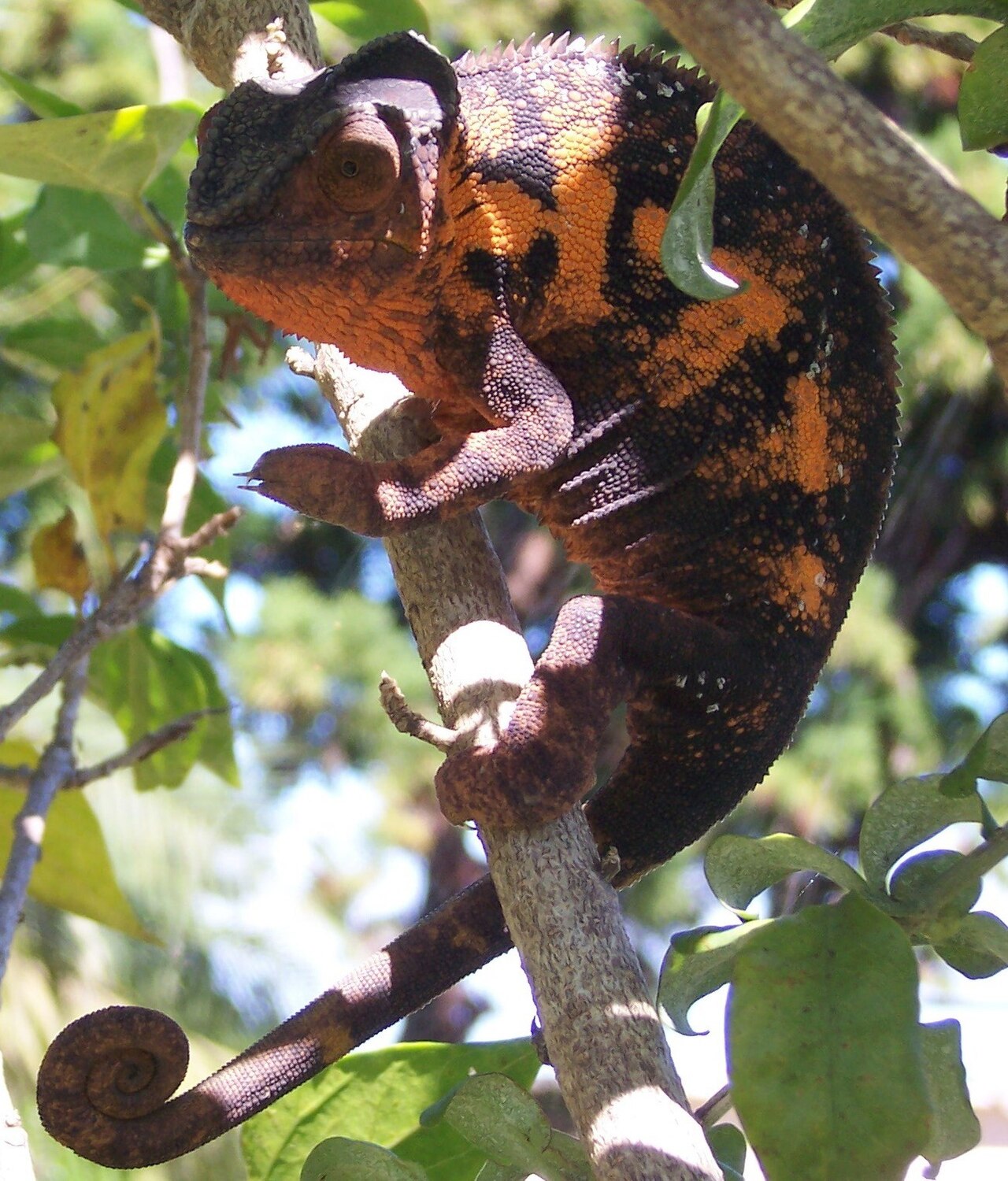
Panther chameleons are sold by locale, the geographic population a bloodline traces back to, and the locale determines the adult male’s color pattern. Ambilobe males show red and blue bands over green or yellow. Nosy Be animals are a solid turquoise blue. Ambanja runs blue with dark vertical bars, and Sambava tends toward green with red.
Locale is the main driver of price. A mixed or unlabeled panther might sell for 150 USD while a well documented Ambilobe or Nosy Be line from a known breeder runs 400 to 900 USD. Crossed locales produce unpredictable adults, which is why serious breeders keep lines separate.
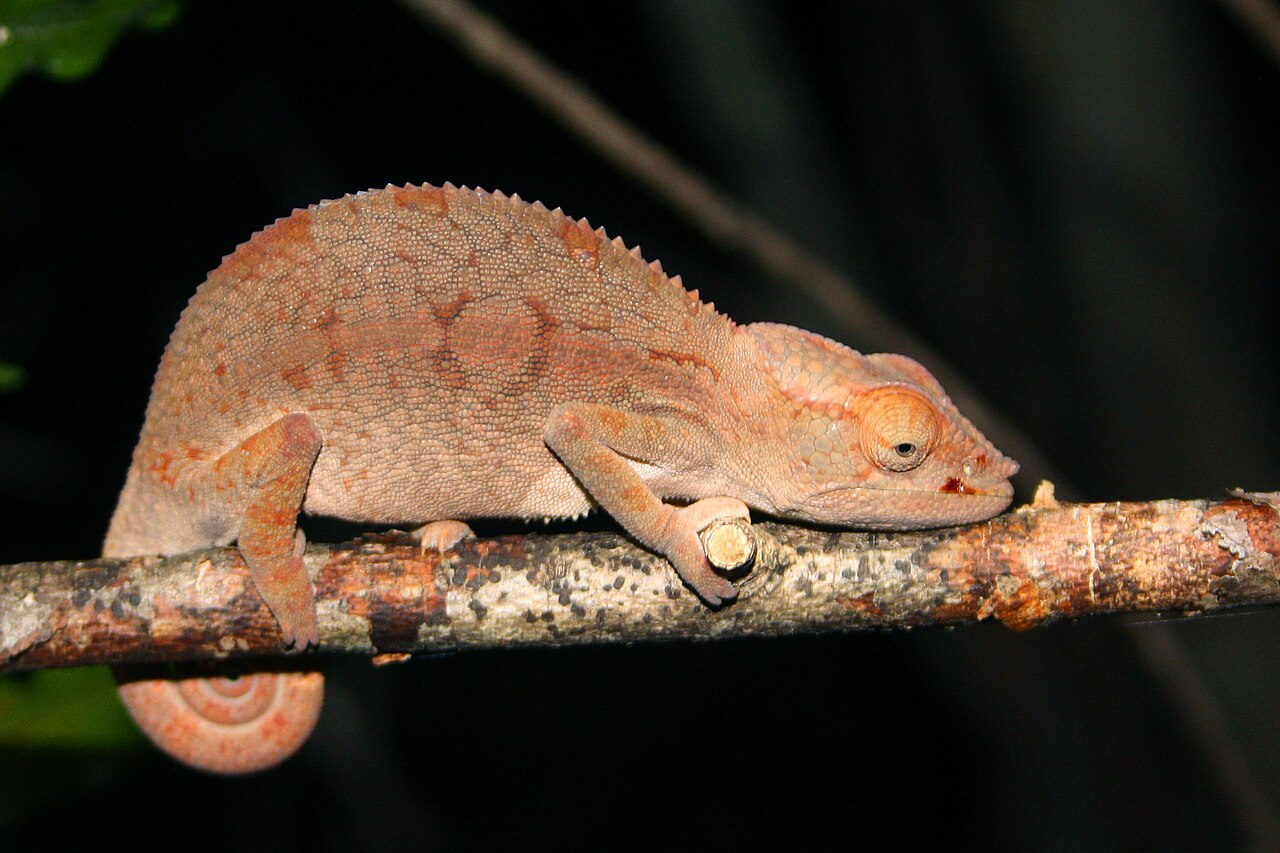
Females are the exception to all of this. Regardless of locale, female panthers are tan, peach or pale brown, turning dark with pink or orange flushes when gravid or rejecting a male. Anyone buying for color is buying a male, and should expect the full pattern to develop over the first year rather than at purchase.
Enclosure and Lighting
An adult male needs a screen enclosure of at least 24x24x48 in (60x60x120 cm), and larger is genuinely better for an animal that moves through vertical space. Screen matters because panthers need constant air exchange; glass tanks trap stagnant humid air and drive respiratory infections, which is the opposite of the setup that suits a ground dwelling lizard like a leopard gecko habitat.
Ultraviolet lighting is not optional. A linear T5 HO UVB lamp running the length of the enclosure, mounted above the screen, replaced every 9 to 12 months, is the current standard. Without it, calcium metabolism fails and metabolic bone disease follows within months. Coil style bulbs are a common cause of eye problems and should be avoided.
Furnish densely with branches at multiple heights and heavy live or artificial foliage. A panther that can never get out of sight lives under chronic stress, and visual barriers reduce the glass surfing and pacing seen in sparse enclosures. Pothos, ficus and schefflera are the usual safe live plants.
Temperature, Humidity and Water
Set a basking spot of 82 to 88 F (28 to 31 C) at the top of the enclosure with ambient temperatures of 72 to 80 F (22 to 27 C) below it, and allow a night drop to 65 to 70 F (18 to 21 C). That nightly drop is beneficial rather than something to prevent, and keepers who heat through the night often see poorer long term health.
Humidity should cycle rather than stay flat. Aim for 50 to 70 percent during the day with a rise toward 80 to 100 percent overnight and in the early morning, then a genuine dry down. Permanently wet enclosures cause respiratory disease as reliably as permanently dry ones cause dehydration.
Panthers do not drink from standing water; they drink moving droplets off leaves. A dripper running 20 to 30 minutes a day plus two misting sessions covers it. Sunken eyes and orange tinted urates are the two early dehydration signs, and kidney failure from chronic mild dehydration kills more captive chameleons than any single acute cause.
What Panther Chameleons Eat
Adults eat a rotation of appropriately sized insects every other day, while juveniles eat daily. Crickets, dubia roaches, locusts, silkworms and hornworms all work, and variety matters more than any single feeder. Mealworms are a poor staple given their shell to meat ratio.
Gut loading and dusting carry the nutrition. Feeders should be fed a quality diet for 24 to 48 hours before use, dusted with plain calcium at most feedings, and with calcium plus D3 and a multivitamin roughly twice a month. Exact dusting frequency depends on UVB output, which is the reason lamp quality and supplement schedule have to be planned together.
Adults are easy to overfeed. A male taking 5 to 7 medium insects every other day stays in condition; daily feeding into adulthood produces fat deposits and gout. Skipping one day a week does no harm at all.
Is It Better to Get a Male or Female Chameleon?
For a first panther chameleon, a male is the better choice. Males carry the color the species is known for, grow larger, and live roughly twice as long. They also avoid the reproductive risks that dominate female husbandry, which makes the first two years far more forgiving of small mistakes.
Female panthers lay eggs whether or not they have been bred, clutches of 15 to 45, and every clutch depletes calcium reserves. They require a laying bin of moist sand or soil at least 12 in (30 cm) deep from the age of about six months. Without it, egg binding follows, and it is frequently fatal.
Keep either sex alone. Panther chameleons are solitary and territorial, and two housed together produce chronic stress at best and serious injury at worst. Communal housing works for some reptiles, including species such as the African bullfrog under narrow conditions, but never for this one.
Is a Panther Chameleon a Good Pet?
A panther chameleon is a good pet for someone who wants an animal to observe and maintain precisely, and a poor one for someone who wants interaction. They tolerate brief handling better than most chameleons, but handling is still a stressor, and the healthiest captive panthers are the ones handled least.
The realistic entry cost is higher than the animal. Enclosure, T5 HO lighting, dripper, misting system, plants, thermostat and supplements typically total 400 to 700 USD before the chameleon, and a live insect supply has to be maintained weekly for the animal’s whole life.
Anyone wanting a display reptile with a lighter care load is better served by a veiled chameleon, which tolerates a wider range of conditions, or by a non chameleon species such as an albino leopard gecko or albino ball python. Wild populations remain under collection and habitat pressure, and the species status is tracked on the IUCN Red List, which is one more reason to buy captive bred.
Frequently Asked Questions
How much does a panther chameleon cost?
A panther chameleon costs 150 to 500 USD for most captive bred animals, with documented premium locales such as Ambilobe or Nosy Be reaching 900 USD or more. Females are consistently cheaper than males. Budget another 400 to 700 USD for the enclosure, UVB lighting, misting and plants before the animal arrives.
Is it legal to own a panther chameleon?
It is legal to own a panther chameleon in nearly every US state. Hawaii is the significant exception, banning chameleons outright to protect native insects. Imported animals require CITES Appendix II documentation, and some counties in Florida regulate species with established wild populations, so check local code before buying.
What is the friendliest breed of chameleon?
The panther chameleon is generally considered the friendliest chameleon, meaning it is the most tolerant of a keeper’s presence and brief handling. Jackson’s chameleons are calm but shy. No chameleon enjoys being held; the friendly ones simply stress less. Judge temperament by how little the animal darkens when you approach.
What is the most aggressive chameleon?
The veiled chameleon is the most aggressive commonly kept species, quick to gape, hiss and bite, and notably territorial as an adult male. Panthers display at rivals but rarely at people. Any chameleon housed with another of its species will show aggression, which is why they are kept singly.
How hard is it to raise a panther chameleon?
Raising a panther chameleon is moderately hard: the husbandry is unforgiving but it is also well documented. Lighting, the day to night temperature cycle and hydration account for most deaths. Get those three right and the species is robust. Beginners who fail usually did so on equipment chosen before research, not on the animal itself, much as with an albino corn snake kept too cool.