Crested Gecko Care: Habitat, Diet & Lifespan Guide
The crested gecko (Correlophus ciliatus) is one of the most popular pet lizards in the world, prized for its docile temperament, distinctive eyelash-like crests, and genuinely low-maintenance care requirements that make it a favorite first reptile for beginners. Native exclusively to New Caledonia and once thought extinct until its rediscovery in 1994, this gecko now thrives both in the wild and across the pet trade worldwide. This guide covers identification, habitat setup, diet, lifespan, and the most common care mistakes new keepers make.
| Trait | Detail |
|---|---|
| Scientific name | Correlophus ciliatus (formerly Rhacodactylus ciliatus) |
| Native range | New Caledonia (South Pacific) |
| Adult size | Reaches full size within 6 to 12 months |
| Minimum enclosure | 18″L x 18″W x 24″H (taller preferred; vertical space matters most) |
| Lifespan | 15 to 20 years, some reports of 20+ with excellent care |
| Diet | Omnivore: commercial gecko diet powder plus occasional gut-loaded insects |
Where Crested Geckos Fit Among Reptile Pets
Crested geckos occupy a distinctive niche in the reptile hobby: unlike many popular pet lizards, they need no basking lamp or UVB in the strictest sense and tolerate normal household temperatures without supplemental heat in most climates, which meaningfully lowers the equipment cost and complexity compared with species like bearded dragons or iguanas that require more specialized lighting and heating setups from day one, closer in overall diet complexity to what a keeper might expect from researching general feeding requirements across different animal types.
Crested Gecko Rediscovery and History
Crested geckos have a genuinely remarkable backstory: for decades this species was believed extinct, known only from old museum specimens, until a population was rediscovered on New Caledonia in 1994 following a tropical storm. Wild specimens are not available for export from New Caledonia today, but the species turned out to breed readily in captivity, and the pet trade population that exists worldwide now descends entirely from that small rediscovered founding population combined with subsequent captive breeding. This history is part of why crested geckos, despite being genuinely widespread as pets, remain conservation-restricted in their native range.
Crested Gecko vs Other Popular Pet Geckos
Crested geckos are frequently compared with leopard geckos, another extremely popular beginner species, and the differences matter for anyone choosing between them. Leopard geckos are ground-dwelling, strictly insectivorous, and need supplemental heating since they lack the crested gecko’s tolerance for cooler room-temperature conditions, while crested geckos are arboreal, omnivorous with a simple staple diet, and generally need less specialized equipment overall. Both make excellent first reptiles, but a crested gecko’s climbing, jumping nature and need for taller housing is a meaningfully different care profile from a leopard gecko’s ground-based terrarium setup, so the choice often comes down to whether a keeper prefers a climbing display animal or a more grounded, easily observed one, a decision similar in spirit to comparing an active other small captive animals setup against a calmer, less demanding one before committing to either.
What Does a Crested Gecko Look Like?
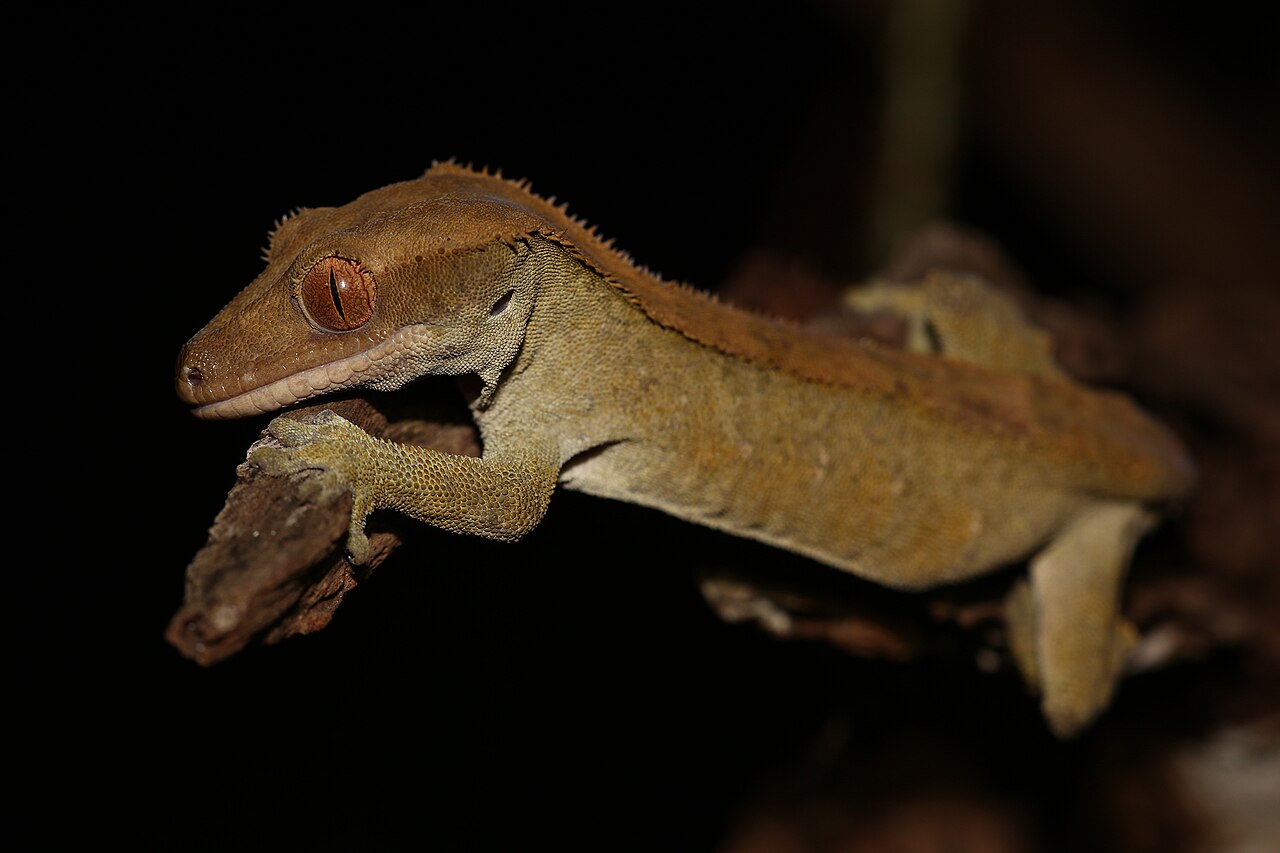
The crested gecko’s most recognizable feature is the row of spiky, hair-like projections running from above each eye down the sides of the body to the tail, resembling eyelashes or a crown, which is the source of both its common name and its “crested” appearance. Coloration varies enormously through selective breeding, spanning shades of brown, red, orange, yellow, and near-white, often with distinctive patterns like tiger stripes, dalmatian spots, or a lighter “pinstripe” running down the back. Unlike many other gecko species, crested geckos permanently lack eyelids, and they cannot regrow a lost tail the way many lizards can, so a crested gecko that has dropped its tail, sometimes called a “frogbutt” in the hobby, will remain tailless for life, which does not affect its health or lifespan.
Crested Gecko Habitat and Enclosure Setup
Because crested geckos are arboreal, spending most of their time climbing rather than on the ground, enclosure height matters far more than floor space; a single adult needs a minimum of 18 inches wide by 18 inches deep by 24 inches tall, with taller, more vertically oriented tanks strongly preferred over the older standard of a horizontal 20-gallon tank. The enclosure should be furnished with plenty of vines, branches, and cork bark for climbing, along with a secure, well-ventilated screened lid, since crested geckos are accomplished jumpers as well as climbers and will escape through any gap. Young geckos under about 12 grams often do better started in a smaller, temporary “grow-out” enclosure around 12 inches cubed before graduating to full adult housing as they mature.
Temperature, Humidity, and Lighting Needs
Crested geckos need daytime temperatures between roughly 72 and 80°F, with anything above 85°F posing a genuine heat-stress risk since this species is notably sensitive to overheating compared with many other pet reptiles; nighttime temperatures in the low-to-mid 70s are fine without supplemental heat in most households. Humidity should stay in the 70 to 80 percent range, achieved through daily misting with a pump sprayer and a moisture-retentive substrate, since consistent humidity supports healthy shedding and hydration. While crested geckos are nocturnal and can survive without UVB lighting, since their diet already supplies vitamin D3, low-level UVB exposure is increasingly recommended by keepers and some veterinary sources as a way to boost natural activity levels and coloration, provided the enclosure includes shaded retreats so the gecko can choose whether to be under the light.
What Do Crested Geckos Eat?
Crested geckos are omnivores whose captive diet centers on commercial crested gecko diet (CGD), a nutritionally complete powder from brands like Pangea or Repashy that is mixed with water into a smoothie-like consistency and offered directly in the enclosure, typically three times a week. This single food can serve as a complete diet on its own, but most keepers also offer gut-loaded feeder insects such as crickets or dubia roaches once or twice a week for variety and enrichment, along with occasional mashed soft fruit as a treat. In the wild, crested geckos eat a mix of overripe fruit, nectar, and small insects, and the commercial CGD powder is formulated to replicate that natural balance without requiring an owner to source fresh fruit and insects daily.
Crested Gecko Shedding and Skin Care
Like most geckos, crested geckos shed their skin in one piece as they grow, with juveniles shedding roughly every one to two weeks and adults shedding closer to once a month as growth slows. A gecko preparing to shed typically turns visibly duller or paler in color beforehand, which is a normal sign rather than a health concern. Adequate humidity is the single biggest factor in a clean shed; a humid hide filled with damp sphagnum moss gives the gecko somewhere to retreat during the process, and incomplete or “stuck” shed, particularly around the toes and tail tip, can cut off circulation and cause serious injury if not addressed, making consistent humidity a genuine health priority rather than just a comfort measure.
Housing Multiple Crested Geckos Together
Adult male crested geckos should never be housed together, since they are territorial and will fight, sometimes seriously enough to cause lasting injury. A male and female can be housed together, but this will typically result in breeding, so keepers not intending to breed their geckos should house individuals separately or keep only females together, since females generally tolerate cohabitation far better than males do. Even compatible pairings benefit from careful monitoring for the first introduction, since individual temperament varies and a seemingly compatible pairing can still turn aggressive without warning, the same caution keepers apply when introducing any two individual animals, from geckos to territorial fish, regardless of a species’ general reputation for compatibility.
Crested Gecko Lifespan and Common Health Issues
With proper care, crested geckos commonly live 15 to 20 years, with some individuals reportedly living even longer, a genuinely long-term commitment for what is often marketed as a simple beginner pet. The most common health problems trace back to husbandry rather than inherent fragility: metabolic bone disease from inadequate calcium or vitamin D3, poor sheds from insufficient humidity that can progress to lost toes or tail tips if untreated, and obesity from overfeeding fatty feeder insects like waxworms or superworms too frequently. Crested geckos do have a built-in calcium reserve in specialized structures on the roof of the mouth called endolymphatic sacs, which gives them somewhat more of a buffer against calcium deficiency than many other lizards, though this is a safety margin rather than a reason to skip proper calcium supplementation.
Handling a Crested Gecko Safely
Crested geckos generally tolerate gentle handling well once accustomed to their owner, but their jumping ability means handling sessions need to happen low to the ground or over a soft surface, since a startled gecko can leap unexpectedly and suffer a serious fall injury from even a modest height. Unlike many lizards, crested geckos lack eyelids and cannot blink or close their eyes to signal discomfort the way some other reptiles do, so gauging stress relies more on body language like tail position and overall alertness than facial cues. Short, calm handling sessions that avoid grabbing the tail directly, given the risk of it dropping, help build trust over time without triggering a defensive tail-drop response.
Are Crested Geckos Good Pets for Beginners?
Yes, and this reputation is well earned rather than just marketing. Crested geckos combine genuinely simple care, no specialized heating or lighting is strictly required, a forgiving diet built around a single staple powder, and a docile temperament that tolerates gentle regular handling far better than many other reptile species, in contrast to more defensive or specialized-diet reptiles like other wildlife care topics that demand a more precise feeding routine. They rarely bite, and their manageable adult size makes them easy to house long-term without the space demands of larger lizards like constrictor snakes or big monitor species. The main caution for beginners is the multi-decade lifespan commitment and the fact that, as jumpers, they require more careful handling technique than a typical beginner might expect from a small, docile-looking lizard.
Related reading: Mediterranean House Gecko.
Related reading: Pacman Frog.
Related reading: Baby Snapping Turtle.
Related reading: Gila Monster Bite.
Related reading: Crested Gecko Lifespan.
Related reading: Veiled Chameleon.
Related reading: white tree frog.
Related reading: White Tree Frog.
Related reading: Baby Leopard Gecko.
Related reading: Earless Monitor Lizard.
Related reading: Monitor Lizard.
Related reading: Indian Star Tortoise.
Related reading: Komodo Dragon Speed.
Related reading: Crested Gecko Food.
Related reading: Leopard Gecko Substrate.
Related reading: Green Anole.
Related reading: Spring Peeper Sound.
Frequently Asked Questions
What do crested geckos eat?
Crested geckos are omnivores that thrive on commercial crested gecko diet (CGD) powder mixed with water, offered about three times a week, supplemented with gut-loaded insects once or twice weekly and occasional soft fruit.
How long do crested geckos live?
With proper care, crested geckos typically live 15 to 20 years, and some individuals live even longer. This makes them a genuine long-term commitment despite their reputation as an easy beginner pet.
What size enclosure does a crested gecko need?
A single adult needs a minimum of 18 inches wide by 18 inches deep by 24 inches tall, with height mattering more than floor space since crested geckos are arboreal climbers. Taller enclosures are strongly preferred.
Do crested geckos need UVB lighting?
Not strictly, since their diet provides adequate vitamin D3 and they are nocturnal. However, low-level UVB is increasingly recommended by some keepers and veterinary sources to boost activity and coloration, with shaded retreats available.
What happens if a crested gecko loses its tail?
Crested geckos cannot regrow a lost tail, unlike many other lizards. A gecko that drops its tail remains permanently tailless, often called a “frogbutt” in the hobby, but this does not affect its health or lifespan.
What humidity do crested geckos need?
Crested geckos need 70 to 80 percent humidity, maintained through daily misting and a moisture-retentive substrate. Adequate humidity is essential for healthy shedding and hydration.
Are crested geckos good pets for beginners?
Yes. They require no specialized heating or lighting, eat a simple commercial diet, and have a docile temperament that tolerates gentle handling. The main consideration is their genuinely long, 15 to 20 year lifespan commitment.