Crested Gecko Morphs: 15 Patterns and Traits With Real Prices
Crested gecko morphs are the recognized combinations of base color, pattern, and structural trait that breeders use to describe a single animal. There is no official standard body, so the list is a working vocabulary rather than a registry, and it keeps growing as new genetic traits appear. Roughly a dozen pattern names and half a dozen proven genetic traits cover almost every crested gecko for sale in the United States today.
The confusing part for a new keeper is that the words describe two different things at once. Flame, harlequin, and pinstripe are visual pattern grades that are only loosely heritable. Lilly White, Cappuccino, and axanthic are actual genetic traits with predictable inheritance. Knowing which category a label belongs to tells you whether a price tag makes sense.
Crested gecko morphs fall into two groups: pattern morphs such as flame, harlequin, pinstripe, and dalmatian, which are polygenic and graded by eye, and genetic traits such as Lilly White, Cappuccino, and axanthic, which follow known inheritance. Base colors range from olive and buckskin to red, orange, and cream, and any of them can combine with any pattern.
| Morph or trait | Type | Key feature | Typical US price |
|---|---|---|---|
| Flame | Pattern | Clean dorsal stripe, lighter than the body | 60 to 150 USD |
| Harlequin | Pattern | Flame plus heavy pattern on the legs and sides | 150 to 400 USD |
| Pinstripe | Pattern | Raised cream scales along both dorsal ridges | 150 to 500 USD |
| Dalmatian | Pattern | Black or colored spots scattered over the body | 100 to 600 USD |
| Lilly White | Genetic trait | Co dominant, white flooding that spreads with age | 300 to 1,200 USD |
| Cappuccino | Genetic trait | Co dominant, soft dark body with reduced pattern | 500 to 1,500 USD |
| Axanthic | Genetic trait | Recessive, removes yellow and red pigment | 400 to 1,200 USD |
What Is a Crested Gecko Morph?
A crested gecko morph is a named appearance, not a subspecies or a breed. Every crested gecko belongs to one species, Correlophus ciliatus, a nocturnal arboreal lizard endemic to New Caledonia, and the entire captive population descends from a small number of animals collected after the species was rediscovered in 1994.
What breeders call a morph is really a description of three layers stacked on one animal: the base color underneath, the pattern painted on top, and any structural or pigment trait that modifies both. A single gecko is routinely described as a red harlequin pinstripe, which names all three layers at once.
Because most of these layers are polygenic, breeding two flames does not guarantee flame offspring the way breeding two albino corn snakes guarantees albinos. That difference drives most of the disappointment new keepers feel with their first clutch. If you are new to the species itself, start with our overview of the crested gecko before shopping by morph name.
How Many Morphs of Crested Geckos Are There?
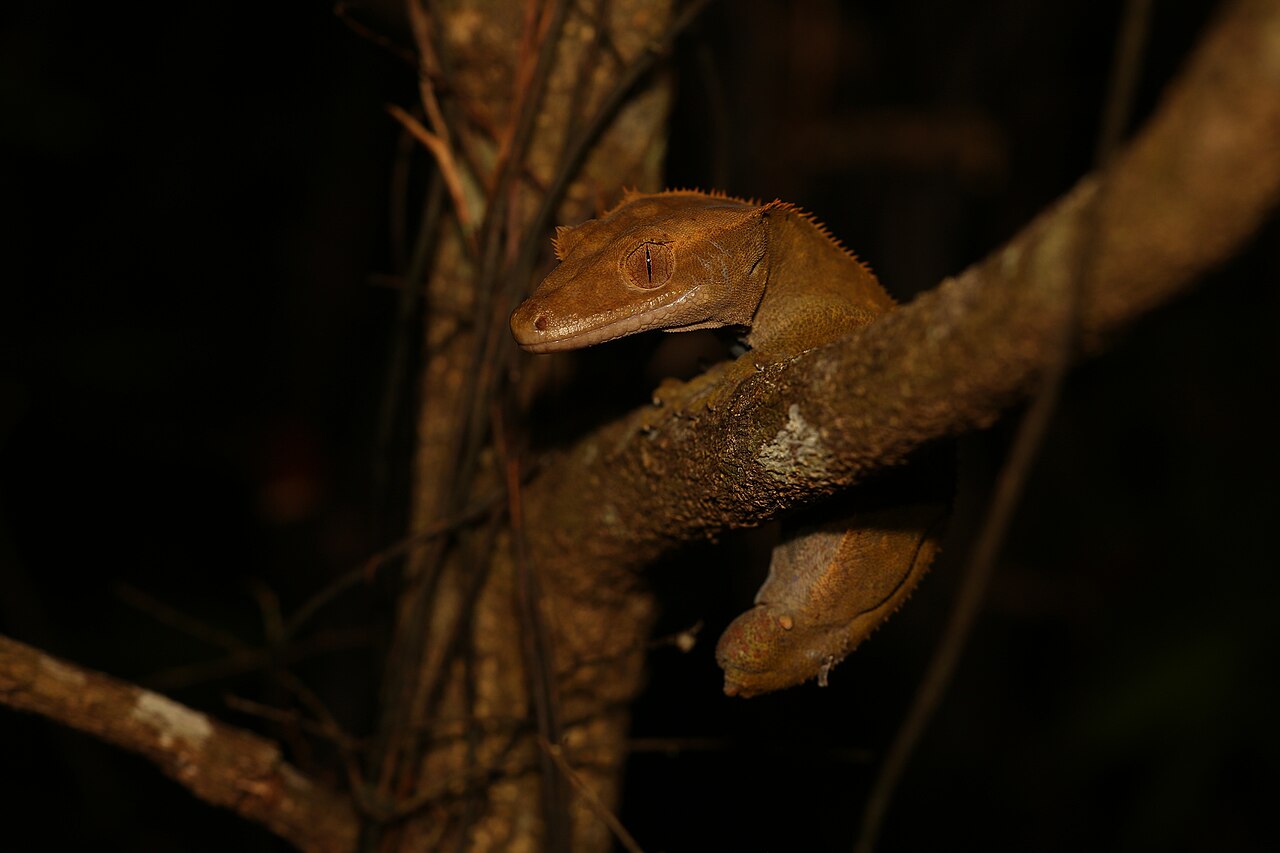
There are around 12 to 15 commonly recognized pattern morphs and 6 to 8 proven genetic traits, but no authority fixes the number. Breeders and marketplaces publish slightly different lists, and new combination names appear every year as traits are stacked on each other.
The stable pattern list includes patternless, bicolor, tiger, brindle, flame, harlequin, extreme harlequin, pinstripe, partial pinstripe, phantom pinstripe, dalmatian, super dalmatian, and halloween. The stable trait list includes Lilly White, Cappuccino, axanthic, phantom, empty back, and soft scale.
Combinations inflate the count fast. A Frappuccino is simply a Cappuccino crossed with a Lilly White, and a tricolor harlequin is a harlequin that shows three distinct colors. Neither is a new gene. When a seller quotes a name you have never seen, ask which of the two categories it belongs to and what its inheritance is.
Base Colors Under Every Crested Gecko Morph
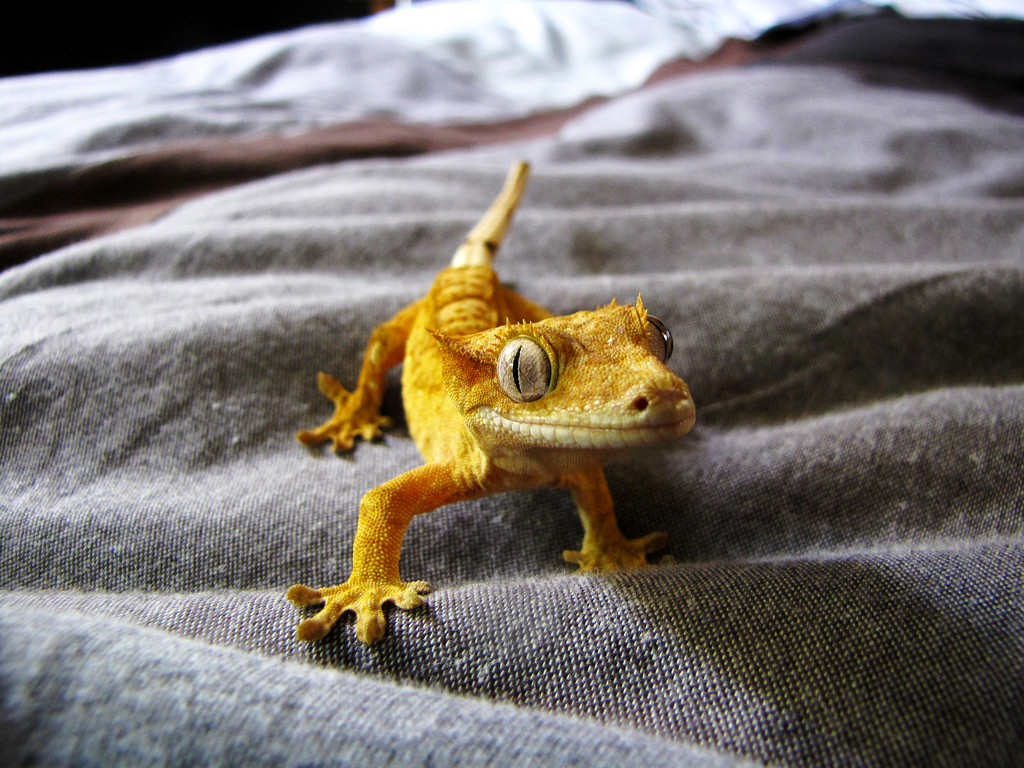
The base color is whatever the animal shows when its pattern is stripped away, and it ranges through olive, buckskin, brown, charcoal, yellow, orange, red, and cream. Olive and buckskin dominate wild type animals; the saturated reds and oranges are the product of three decades of selective breeding.
Base color is polygenic and improves gradually across generations, which is why a breeder can advertise a red line rather than a red gene. Two intensely red parents will produce offspring that lean red, but the shade varies across a clutch and takes six to nine months to settle.
Color also shifts hour to hour. Crested geckos fire up when active or stressed, darkening and saturating, and fire down when resting into a pale washed out version of themselves. A photograph of a fired down gecko can look like an entirely different morph from the same animal at night.
Flame, Harlequin, and Pinstripe Patterns

Flame, harlequin, and pinstripe are the three pattern morphs that account for most animals on the market. A flame has a cleanly contrasting dorsal stripe running from the neck to the tail base, with relatively plain sides and limbs. It is the baseline patterned gecko and the most affordable step above a bicolor.
A harlequin is a flame with the pattern spilling down onto the flanks and legs, producing bold cream or orange blotching. When that pattern covers more than about 60 percent of the sides, sellers use extreme harlequin. The grading is subjective and varies from breeder to breeder, so photographs matter more than the label.
A pinstripe carries raised cream scales along both dorsal ridges. Full pinstripes show an unbroken line on both sides; partial pinstripes show 20 to 80 percent coverage. Pinstriping is strongly heritable but not a simple gene, so pairing two full pinstripes raises the odds without guaranteeing the result. Keepers coming from other species will find this looser than the clean recessive systems behind leopard gecko morphs.
Tiger, Brindle, and Dalmatian Patterns

Tiger geckos show vertical bands of darker pigment across the back and sides, like brush strokes running down the body. Brindle is a heavier, messier version of the same idea, with the bands broken into irregular streaks. Both are polygenic and both intensify when the animal fires up.
Dalmatians carry discrete spots rather than bands. A standard dalmatian shows a scattering of black dots; a super dalmatian carries more than roughly 100 spots across the body. Spots can also come in red, which breeders market as red dals, and they multiply as the gecko matures, so a lightly spotted hatchling can end up heavily marked.
Two more names round out this group. A halloween is a high contrast animal with black or near black base and sharp orange pattern. A patternless or solid gecko shows no dorsal markings at all, which sounds plain but is the foundation many breeders use when they want a trait to show clearly without pattern noise on top.
Lilly White, Cappuccino, and Axanthic Traits

These three are genuine genetic traits with predictable inheritance, which is why they carry the highest prices. Lilly White appeared at a single breeding facility in 2012 and behaves as a co dominant trait: a single copy floods the sides and limbs with white, and the white coverage increases as the animal ages.
Cappuccino also behaves co dominantly and produces a soft, evenly toned brown body with a muted dorsal pattern. Its homozygous form, the super Cappuccino, is darker still and usually carries the soft scale trait, in which the scales are noticeably finer and the tail is often short or absent. Breeders disagree about how much of that is cosmetic and how much is structural.
Axanthic is a simple recessive that removes yellow and red pigment, leaving a black, grey, and white animal. Several independent axanthic lines exist and they are not all compatible with each other, meaning two axanthics from different lines can produce normal looking offspring. Ask which line an animal comes from before planning a pairing. This is the same line compatibility question that shows up in corn snake morphs.
Phantom, Empty Back, and Other Trait Names
Three more names come up constantly on sales pages. Phantom is a trait that mutes and darkens the dorsal pattern, often paired with pinstripe to produce the phantom pinstripe, where the ridge scales stay cream while the pattern between them washes out. Breeders treat it as heritable, though its exact inheritance is still argued.
Empty back, sometimes written E.B., describes a pinstripe with a clean unpatterned dorsal field between the two ridge lines. It is a visual grade layered on pinstripe genetics rather than a separate gene, and it commands a premium because the contrast reads well in photographs.
Soft scale is the odd one out. It arrived with the Cappuccino line and describes finer, less granular skin rather than any color or pattern. It travels with Cappuccino often enough that some sellers use the two words interchangeably, which they should not.
How Crested Gecko Morphs Change With Age
A crested gecko does not look the same at 8 weeks as it does at 12 months, and the change runs in a predictable direction. Hatchlings show high contrast that usually softens, dalmatian spots multiply rather than fade, and Lilly White coverage expands across the flanks year after year.
Pattern also migrates. Harlequin markings that sit low on the sides at hatching tend to creep upward, and a partial pinstripe can fill in or break apart. This is why serious breeders hold animals back for six to nine months before assigning a final morph label and a final price.
Daily color change sits on top of that. Fired up, a gecko is dark and saturated; fired down it is pale and faded, and the same animal can look like two morphs within one hour. Always compare photographs taken in the same state before deciding two geckos differ.
What Are the Best Crested Gecko Morphs?
For a first gecko, the best morphs are flame, harlequin, and dalmatian. They are widely available, cost 60 to 250 USD, and come from large breeding populations with good genetic diversity. Nothing about their care differs from an expensive animal, and the species is equally hardy across the price range.
For a keeper who wants visual impact, extreme harlequin and full pinstripe give the most pattern for the money, and a well bred red or orange base color lifts either one dramatically. Lilly White is the trait that most reliably makes a gecko look unusual across a room.
For someone planning to breed, the answer changes to whichever trait you can source cleanly documented. A 200 USD animal with a known lineage is worth more in a breeding project than a 700 USD animal with no paperwork. Whatever you choose, the enclosure requirements stay the same for every morph.
What Is the Rarest Morph of Crested Gecko?
The rarest widely accepted morph is the super Cappuccino combined with axanthic, sometimes marketed as a moonglow or a black and white super. Only a handful of breeders produce them, and clutch numbers stay low because crested geckos lay just two eggs at a time roughly every four weeks.
Homozygous Lilly Whites, called super Lilly Whites, are rare for a different reason. The super form produces a nearly all white animal, and breeders report elevated rates of eye and health problems in these animals. Some lines appear viable, others do not, and the community has not settled the question.
Genuine rarity is also a moving target. Lilly White was the rarest thing on the market in 2013 and is now in thousands of collections. Any trait that reproduces predictably becomes common within about a decade, so today’s rarity premium is a bet on how fast other breeders catch up.
What Is the Most Expensive Crested Gecko?
The most expensive crested geckos are proven adult combination animals carrying two or more genetic traits, and they change hands at 3,000 to 10,000 USD. Reported sales at the top of the market involve super Cappuccino axanthic Lilly White combinations held back from public sale by the originating breeder.
Price is driven by three things: how few breeders hold the trait, whether the animal is a proven producer, and how well documented its lineage is. A proven adult female routinely sells for twice what an unsexed juvenile of the same genetics brings, because she can start producing within weeks.
None of this affects the pet experience. A 10,000 USD gecko eats the same prepared diet, lives in the same 18 by 18 by 24 in (46 by 46 by 61 cm) enclosure, and has the same life expectancy of 15 to 20 years as an 80 USD one. The premium buys genetics, not quality of life.
How to Figure Out Your Crested Gecko’s Morph
Work through the three layers in order. First identify the base color with the animal fired down in daylight, since fired up color exaggerates saturation. Then identify the pattern by looking at the dorsal stripe, the flanks, and the ridge scales. Finally look for trait markers such as white flooding or fine scales.
Check the dorsal ridges for raised cream scales to separate a pinstripe from a flame. Check whether pattern reaches the legs to separate a harlequin from a flame. Count spots to decide between dalmatian and super dalmatian. If the sides carry irregular white that was not there at hatching, suspect Lilly White.
Wait until at least six months before settling on a label. Crested geckos change substantially through their first year, gaining dalmatian spots, losing juvenile contrast, and expanding Lilly White coverage. Honest breeders will tell you the same thing rather than selling a hatchling as a finished product.
How to Tell If You Have a Cappuccino Crested Gecko
A Cappuccino shows a uniform coffee brown body with a soft, blurred dorsal pattern rather than the crisp edges of a flame or harlequin. The pattern looks washed into the base color instead of sitting on top of it, and the overall impression is muted even when the animal is fully fired up.
The second marker is scale texture. Many Cappuccinos, and nearly all super Cappuccinos, carry soft scale, meaning the skin feels finer and looks less granular under good light. Super Cappuccinos frequently have a short, kinked, or missing tail, which is the clearest single tell.
The reliable answer, though, is paperwork. Because Cappuccino is co dominant and its visual signature overlaps with a well bred buckskin or phantom, appearance alone is not proof. Ask for the parents and their trait status. A seller who cannot produce that information is not selling a documented Cappuccino.
Crested Gecko Morphs to Avoid and Why
Avoid any animal sold as a morph whose inheritance the seller cannot explain, and avoid paying trait prices for pattern grades. The most common overcharge on the market is an ordinary flame advertised as a harlequin, or a partial pinstripe advertised as a full one, at a price gap of 100 USD or more.
Be cautious with super Lilly Whites until the viability question is resolved, and be cautious with any animal whose tail loss or scale irregularity is presented as a feature. Crested geckos do not regrow dropped tails, so a missing tail is permanent, though it is purely cosmetic and does not affect health.
It is also worth knowing the neighbors. New Caledonia holds several related geckos in the trade, including the giant Rhacodactylus leachianus and the sarasinorum gecko (Correlophus sarasinorum), which have their own morph vocabularies and much higher price floors. The species itself is listed as Vulnerable in the wild, and the current assessment is published by the IUCN Red List. Whichever morph you buy, the diet and husbandry stay identical.
Frequently Asked Questions
What is the rarest morph of crested gecko?
Super Cappuccino combined with axanthic is generally considered the rarest, produced by only a few breeders. Homozygous Lilly Whites are also uncommon, partly because breeders report health problems in that form. Rarity shifts every few years as traits spread through the hobby and prices fall.
How many morphs of crested geckos are there?
There are roughly 12 to 15 recognized pattern morphs and 6 to 8 proven genetic traits, with no official registry fixing the count. Combination names like Frappuccino and moonglow describe stacked traits rather than new genes, which is why published lists disagree with each other.
How to figure out crested gecko morph?
Identify the base color while the gecko is fired down, then the pattern on the back and flanks, then look for trait markers such as white flooding or fine scales. Wait until six to nine months of age, since pattern changes considerably through the first year.
What is the most expensive crested gecko?
Proven adults carrying multiple genetic traits, typically super Cappuccino axanthic Lilly White combinations, sell for 3,000 to 10,000 USD. Price reflects breeder scarcity, proven reproduction, and documented lineage, not care requirements or health, which are identical to an 80 USD flame.
Which gender of crested gecko is best?
Females are the usual recommendation for a single pet. Males develop a hemipenal bulge and can be kept alone without issue, but two males housed together will fight. Females can be housed singly or in small groups and do not require a male to stay healthy.
Do crested gecko morphs affect care or health?
Not for the standard morphs. Care, diet, temperature, and lifespan are the same across flames, harlequins, pinstripes, and dalmatians. The one open question is the homozygous Lilly White, where breeders report higher rates of eye and viability problems and have not reached agreement.