Pacman Frog
A Pacman frog is a stocky, round-bodied amphibian famous for its enormous mouth and its habit of ambushing anything that moves near it, whether that’s a cricket or another frog. Native to the grasslands and forests of South America, the name comes straight from the classic video game character, a nod to just how much of the frog’s body is dedicated to that single, gaping mouth.
Scientifically, most pet Pacman frogs belong to the genus Ceratophrys, and despite their comical, almost cartoonish appearance, they’re serious ambush predators with a surprisingly firm bite for such a sedentary animal that otherwise spends nearly all day sitting motionless in one spot.
| Quick Reference | Detail |
|---|---|
| Common Species | Ceratophrys ornata (Argentine horned frog) and relatives |
| Also Called | Horned frog, Argentine horned frog, ornate horned frog |
| Adult Size | 4 to 7 inches, occasionally up to 9 |
| Lifespan | 10 to 15 years in captivity |
| Diet | Crickets, roaches, earthworms, occasional pinkie mice |
| Temperament | Sedentary but bites readily; not venomous |
What Is a Pacman Frog?
Pacman frogs are stout, wide-mouthed amphibians native to the grasslands, forests, and marshy lowlands of South America, where they spend most of their time half-buried in loose soil or leaf litter waiting for prey to wander within striking distance. Their nickname comes directly from the 1980s video game character, a fitting comparison given how much of the frog’s silhouette is dominated by an enormous, gaping mouth relative to its compact body.
Because of their outsized mouth, Pacman frogs are classified as gape-limited predators, meaning they will attempt to eat essentially anything that fits inside their mouth and moves, regardless of whether it’s actually a sensible meal. This includes crickets and worms in captivity, but in the wild, adults have been documented eating other frogs, small rodents, and even the occasional small reptile, a genuinely aggressive appetite that stands in stark contrast to their otherwise motionless, almost statue-like daily routine.
Pacman Frog Species and Color Morphs
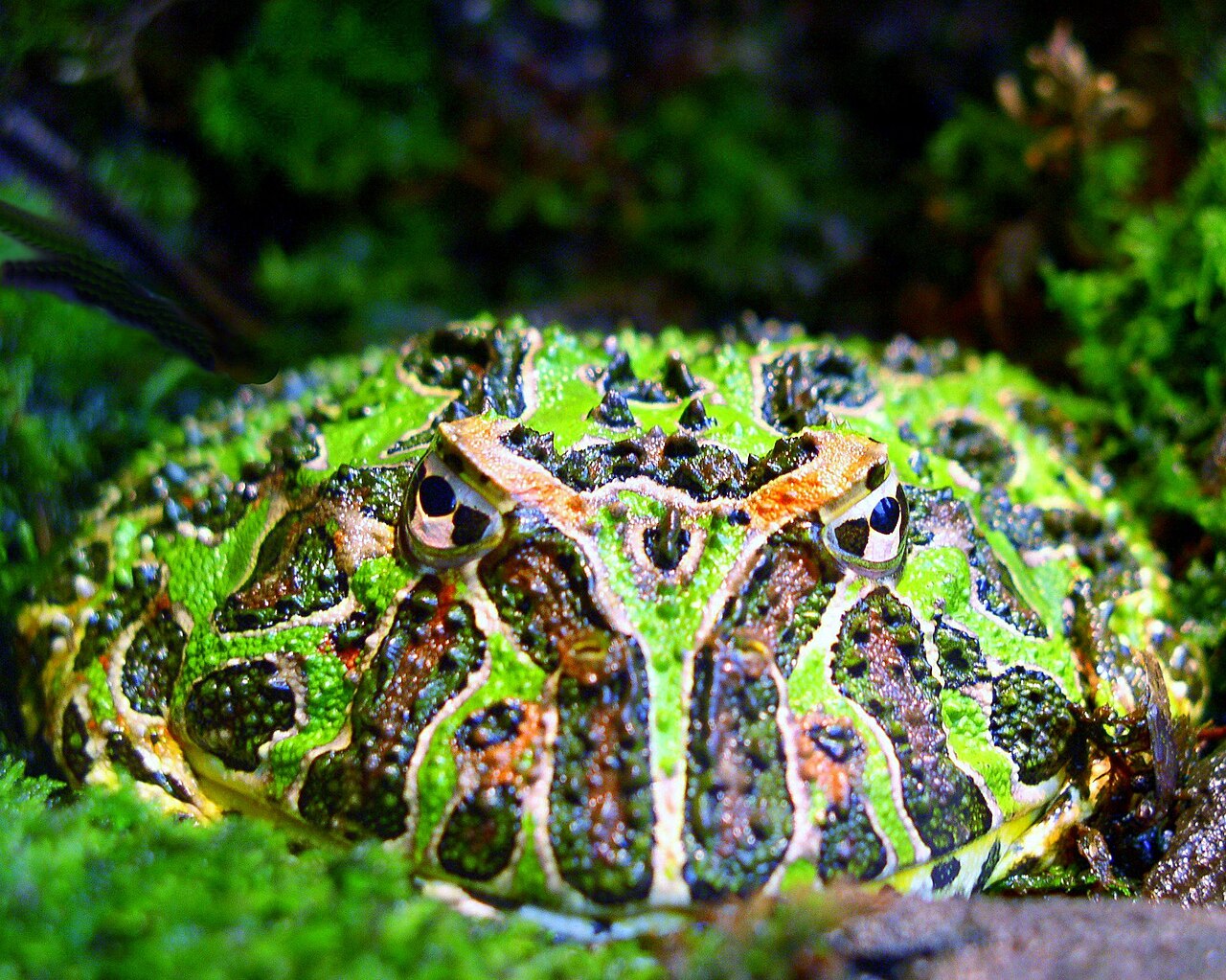
The Argentine horned frog (Ceratophrys ornata) is the species most commonly kept as a pet, prized for its vivid green base coloring accented with red or brown markings, though selective breeding has produced albino, translucent, and various other striking color morphs in the pet trade over the past several decades. Cranwell’s horned frog (Ceratophrys cranwelli), sometimes called the Chacoan horned frog, is a slightly smaller, hardier relative also popular with beginner keepers, generally considered a bit more forgiving of minor husbandry mistakes than its Argentine cousin.
Both species share the same basic body plan: a wide, flattened head, fleshy horn-like projections above the eyes, and a compact body built for sitting motionless rather than active foraging. Color and pattern vary considerably even within a single species, making individual Pacman frogs almost as visually distinctive as the specific color varieties bred into ornamental reptiles like the crested gecko, and serious hobbyist breeders continue to develop new morphs each year, from pastel greens to nearly solid oranges.
Do Pacman Frogs Bite? Are They Dangerous?
Yes, Pacman frogs bite readily and with surprising force for an animal that spends most of its life sitting still, a strength that often catches new keepers off guard the first time it happens. Their strike is a reflexive ambush response to anything that moves within range, including a keeper’s fingers during feeding or tank maintenance, and the bite itself, while not venomous or medically dangerous, can be firm enough to genuinely startle or even mildly hurt an unprepared handler.
As veterinarians at PetMD note, Pacman frogs are solitary, territorial animals that should always be housed alone rather than with tankmates, a behavioral trait closely tied to the same reflexive ambush instinct responsible for their bite in the first place. Because of this bite risk and their general dislike of handling, most keepers limit direct contact to only what’s necessary for enclosure maintenance, using tongs rather than fingers to offer food. Beyond the bite itself, Pacman frogs pose no venom or disease risk beyond the standard salmonella precaution that applies to handling any amphibian or reptile, meaning thorough handwashing after any contact with the frog or its enclosure.
What Do Pacman Frogs Eat?
A staple diet of gut-loaded crickets and roaches covers most of a Pacman frog’s nutritional needs, supplemented occasionally with earthworms, nightcrawlers, and, for larger juveniles and adults, an occasional pinkie mouse as a treat rather than a dietary staple fed too often. Feeder insects should be dusted periodically with a calcium and vitamin supplement, since Pacman frogs are prone to metabolic bone disease if their diet lacks adequate calcium over time.
Because they are gape-limited rather than selective eaters, portion size should scale with the frog’s own size: a small juvenile handles only correspondingly small crickets, while a full-grown adult can comfortably swallow an entire nightcrawler or adult roach in one motion. Overfeeding is a genuine risk with this species, since Pacman frogs rarely show restraint and will keep eating anything offered well past a healthy portion, a trait that has earned them an affectionate reputation among keepers as one of the most enthusiastic eaters in the entire amphibian hobby.
Pacman Frog Habitat and Terrarium Setup
A single adult does well in a 10 to 20 gallon glass terrarium, ideally wider than it is tall since Pacman frogs are ground-dwelling burrowers rather than climbers, unlike a semi-aquatic species such as the painted turtle that needs both land and water space to thrive. Deep, soft substrate, roughly one inch for juveniles and two to three inches for adults, lets the frog dig in and sit half-buried the way it would in the wild, with only its eyes showing above the surface, patiently waiting for the next meal to wander past.
A shallow water dish large enough for the frog to soak in, but not deep enough to pose a drowning risk, should stay clean at all times, and temperature and humidity need regular monitoring to keep the enclosure in a healthy range, typically in the mid-70s to low-80s Fahrenheit with humidity kept moderately high. A tight-fitting, well-ventilated lid is also worth the investment, since Pacman frogs are surprisingly capable of pushing against loose-fitting screens if something outside the tank catches their attention. Pacman frogs are strictly solitary and should never be housed together, since they will attack, and often cannibalize, any tankmate close to their own size, a territorial streak shared with several other reptiles and amphibians commonly kept alone, including the African bullfrog and even certain solitary snakes like the hognose snake.
How Pacman Frogs Survive the Dry Season
In the wild, Pacman frogs cope with seasonal drought through a remarkable survival strategy called aestivation, essentially a dry-season version of hibernation. As conditions dry out, the frog burrows deep into the soil and forms a thin, protective cocoon from its own shed skin, sealing in moisture and dramatically slowing its metabolism until rain returns to signal it’s safe to emerge again.
This adaptation allows Pacman frogs to survive months of unfavorable conditions that would otherwise dehydrate a less specialized amphibian, and it’s part of why maintaining stable humidity in captivity matters so much; a captive frog denied proper humidity may attempt to aestivate unnecessarily, which can stress an otherwise healthy animal and disrupt its normal feeding and growth patterns for weeks at a time.
Common Health Problems in Pet Pacman Frogs
Metabolic bone disease, caused by inadequate calcium intake or improper supplementation, is one of the most common health issues in captive Pacman frogs, showing up as a drooping jaw or an inability to properly grip prey during feeding attempts. Consistently dusting feeder insects with a calcium and vitamin D supplement before every feeding is the simplest way to prevent it, and catching the earliest signs makes a real difference in how fully a frog recovers over the following weeks.
A less commonly known issue, sometimes called “toxic out syndrome,” occurs when a frog sits for too long in dirty water or soiled substrate and absorbs toxins directly through its permeable skin, typically showing up as erratic jumping or stretched-out hind legs that look distinctly abnormal compared to the frog’s usual calm posture. Regular substrate changes and clean water are the most effective prevention, and either condition, left untreated, can escalate quickly in a species this sensitive to its immediate environment.
How Long Do Pacman Frogs Live?
With proper care, a pet Pacman frog can live 10 to 15 years, a genuinely long commitment for an animal many people first pick up on impulse because of its comical appearance. Prospective owners should weigh that lifespan seriously, alongside the frog’s low tolerance for handling and its very specific husbandry needs, before deciding a Pacman frog is the right pet for their household.
Reaching adult size typically takes 6 to 12 months with consistent feeding, after which growth slows considerably, and a well cared-for frog can remain a fixture in a household for well over a decade, longer than many small mammals commonly kept as pets, including a blue-tailed skink or similarly sized reptile, and easily outlasting several generations of shorter-lived feeder insects along the way.
Related reading: white tree frog.
Related reading: White Tree Frog.
Related reading: Baby Frog.
Related reading: Tomato Frog.
Related reading: Frog Sounds.
Related reading: Strawberry Pacman Frog.
Frequently Asked Questions
Do Pacman frogs bite?
Yes, they bite readily and with surprising force as an ambush response to movement, though the bite is not venomous or medically dangerous to people.
What do Pacman frogs eat?
A staple of gut-loaded crickets and roaches, supplemented with earthworms and occasional pinkie mice for larger frogs, covers most of their nutritional needs throughout adulthood.
How big do Pacman frogs get?
Most adults reach 4 to 7 inches in body length, with some particularly well-fed individuals growing as large as 9 inches depending on species, genetics, and overall diet quality throughout their early development.
Can you keep two Pacman frogs together?
No, they are solitary and territorial by nature, and will attack or cannibalize tankmates close to their own size, so each individual frog needs its own separate enclosure at all times.
How long do Pacman frogs live?
With proper long-term care, a pet Pacman frog typically lives 10 to 15 years, a genuinely significant long-term commitment for any prospective owner to consider.
Are Pacman frogs good pets for beginners?
They can be, thanks to relatively simple husbandry and low activity requirements, though their firm bite risk and general dislike of handling make them better suited to a patient, hands-off keeper rather than someone wanting an interactive pet.
Why is it called a Pacman frog?
The name comes from the frog’s enormous, rounded mouth relative to its body, a resemblance to the classic 1980s video game character that stuck as the animal’s most widely used common name.