Painted Turtle: Care, Diet & Lifespan Guide
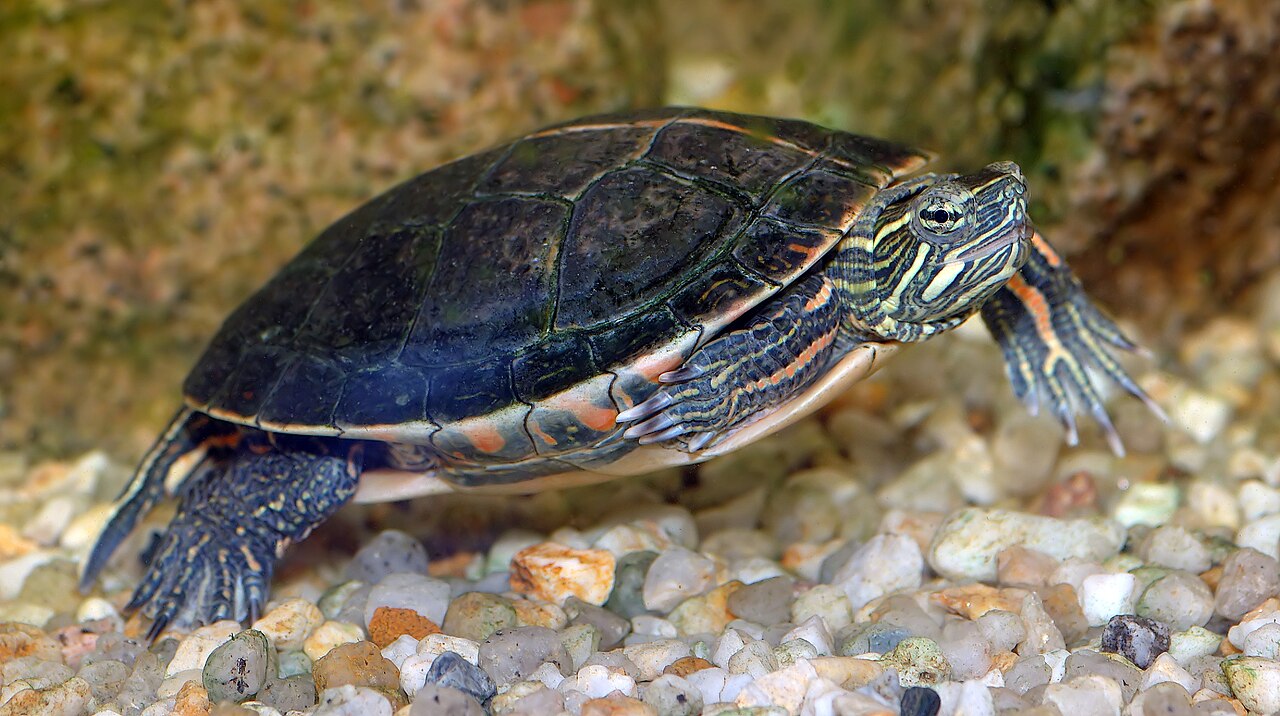
The painted turtle (Chrysemys picta) is the most widespread native turtle in North America, recognized by its smooth, dark olive-to-black shell edged in red and yellow stripes running along its neck, legs, and head. This guide covers the four recognized subspecies, realistic care requirements for anyone considering one as a pet, remarkable cold-tolerance adaptations, and the genuinely long lifespan commitment involved, since a well-cared-for painted turtle can outlive its owner’s expectations by decades.
| Detail | Value |
|---|---|
| Scientific name | Chrysemys picta |
| Size | 4 to 10 inches depending on subspecies and sex |
| Lifespan | 25 to 30 years typical; up to 50+ documented |
| Diet | Omnivore: aquatic plants, insects, small fish, carrion |
| Minimum tank size | ~10 gallons of water per inch of adult shell length |
Painted Turtle Subspecies and Identification
Four recognized subspecies make up the painted turtle complex, each showing subtle regional differences in shell pattern and size: the eastern painted turtle has a distinctive glossy black carapace often marked with red along the edges; the western painted turtle is the largest subspecies with the brightest, most striking plastron markings; the southern painted turtle is notably the smallest, reaching only about 5 inches; and the midland painted turtle occupies a range and appearance somewhere between the eastern and western forms. Despite these regional variations, all four subspecies share the species’ defining features: a smooth, low-domed shell without any pronounced keel, and vivid red and yellow striping across the neck, legs, and head that gives the species its common name.
Painted Turtle Size
Adult painted turtles range from about 4 to 12 inches depending on subspecies and sex, with females consistently growing larger than males across the species, a pattern also seen in many other turtle species. Western painted turtle females can reach roughly 10 to 12 inches, representing the upper end of the species’ size range, while the southern painted turtle tops out at just 5 inches even at full maturity, making subspecies identification genuinely useful information for anyone trying to predict how large a particular turtle will eventually grow.
Painted Turtle Lifespan
Painted turtles are a genuinely long-term commitment, typically living 25 to 30 years with proper care, and some of the oldest documented individuals have lived nearly 50 years in captivity, with wild individuals occasionally reported living past 55 years. This exceptional longevity means a painted turtle adopted as a young pet could realistically outlive the original owner’s living situation, career, or even household composition multiple times over, a genuinely serious consideration that any prospective owner should weigh carefully before acquiring one, comparable in commitment scale to other long-lived exotic pets like the African bullfrog.
Baby Painted Turtles
Hatchling painted turtles emerge from the nest in late summer or early fall, roughly 72 to 80 days after eggs are laid, and grow remarkably quickly during their first year, sometimes doubling in size within those first twelve months alone. Sexual maturity varies considerably by latitude and sex: males in most populations mature at 2 to 4 years old while females take longer, typically 6 to 10 years, though turtles at the northern edge of the species’ range mature even more slowly, with males reaching maturity around 7 to 9 years and females not until 11 to 16 years of age.
Painted Turtle Behavior and Basking
Painted turtles are diurnal, active during the day, and are frequently seen basking in groups on logs, rocks, or other surfaces exposed to direct sunlight, a behavior essential for regulating body temperature and supporting healthy shell and bone development through natural UV exposure. This basking behavior is so consistent and visible, not unlike a sunning lizard on a warm rock, that painted turtles are often the easiest native turtle species for casual observers to spot in ponds and lakes across their range, frequently seen stacked several individuals deep on a single favorable basking log during warm afternoons.
What Do Painted Turtles Eat?
Painted turtles are omnivores that eat a genuinely varied diet in the wild, including aquatic plants, algae, insects, small fish, and carrion, and captive turtles need a similarly balanced mix rather than a single staple food. A well-rounded captive diet includes commercial turtle pellets sized roughly to the turtle’s head, chopped vegetables sized to match the turtle’s shell, occasional protein like feeder fish or freeze-dried shrimp, and occasional fruit treats such as skinned apple, berries, or melon. Adult turtles should be fed only once every two to three days rather than daily, since more frequent feeding commonly leads to obesity, while juveniles actively growing need more frequent feedings to support their faster early growth rate.
Painted Turtle Habitat and Tank Requirements
Painted turtles need a genuinely spacious, semi-aquatic setup with far more swimming space than land area, since they are almost entirely aquatic in the wild, only leaving water to bask or nest. A widely cited sizing rule calls for at least 10 gallons of water per inch of the turtle’s anticipated adult shell length, meaning a full-grown 10-inch western painted turtle could ultimately need 100 gallons or more of swimming space alone. A dedicated basking area with a heat lamp and UVB lighting is essential for a captive turtle, since natural sunlight, freely available to wild turtles, must be replaced entirely indoors, and bulbs should be replaced roughly every six months as their UVB output degrades well before visible light output noticeably dims.
How Painted Turtles Survive Freezing Winters
Painted turtles possess a remarkable physiological adaptation for cold survival: hatchlings that emerge from nests in late summer or early fall can overwinter directly inside the underground nest itself, surviving genuinely freezing temperatures by supercooling their body fluids and tolerating a degree of ice formation in their tissues that would be fatal to most other vertebrates. Adult turtles brumate, a reptile equivalent of hibernation, by burying themselves in mud at the bottom of a pond or lake and dramatically slowing their metabolism for the winter, a survival strategy that has helped make this species one of the most successful and widely distributed turtles across a continent with genuinely harsh winter conditions in much of its range.
Are Painted Turtles Good Pets?
Painted turtles make reasonably good pets for both beginner and experienced keepers thanks to their generally docile temperament, but prospective owners should understand they are considerably more care-intensive than a typical small mammal and, given their decades-long lifespan, represent one of the more serious long-term pet commitments available. Turtles are not physically affectionate pets suited to regular handling the way a mammal might be, and are best kept largely hands-off, observed rather than interacted with directly; anyone drawn specifically to hands-on bonding may find a different species, such as a crested gecko, a better match for that particular expectation. Like nearly all reptiles, painted turtles can carry Salmonella, making thorough hand washing after any handling or tank maintenance a genuine, non-negotiable health precaution.
Painted Turtle Conservation Status
Painted turtles remain the most abundant turtle species in North America, and their ability to thrive even in human-disturbed environments has helped the species avoid the sharper population declines seen in some other freshwater turtles. Habitat loss remains the primary ongoing threat, according to university wildlife conservation research, including the draining of wetlands, removal of basking logs and rocks, and clearing of shoreline vegetation that increases predator access to nests, threats documented across many freshwater turtle species by wildlife agencies tracking regional population trends. Four US states, Colorado, Illinois, Michigan, and Vermont, have named the painted turtle their official state reptile, a reflection of just how widely recognized and culturally significant this species has become across its range.
Can Multiple Painted Turtles Live Together?
Painted turtles are not strictly social animals, but they are reasonably gregarious and can often cohabitate successfully with other painted turtles or even different species that share similar housing needs, provided adequate space and multiple basking and hiding spots are available. Both males and females can show dominant or territorial aggression at times, though this rarely escalates to serious injury when the enclosure is appropriately sized; persistent, ongoing aggression between specific individuals is the clearest sign that a larger habitat, or separating the offending turtles entirely, has become genuinely necessary.
Related reading: Baby Snapping Turtle.
Related reading: Snapping Turtle Bite.
Related reading: Baby Box Turtle.
Related reading: Baby Painted Turtle.
Related reading: Softshell Turtle.
Frequently Asked Questions
How big do painted turtles get?
Adult painted turtles range from about 4 to 12 inches depending on subspecies and sex, with females growing larger than males. Western painted turtle females reach the largest sizes, up to 10-12 inches.
How long do painted turtles live?
Painted turtles typically live 25 to 30 years with proper care, and some documented individuals have lived nearly 50 years in captivity, making them a genuinely long-term, multi-decade pet commitment.
What do painted turtles eat?
Painted turtles are omnivores eating a varied diet of commercial turtle pellets, chopped vegetables, occasional protein like feeder fish, and fruit treats. Adults should be fed only every two to three days to avoid obesity.
How do painted turtles survive freezing winters?
Hatchlings can survive freezing temperatures in their underground nest by supercooling their body fluids, while adults brumate by burying in pond mud and dramatically slowing their metabolism through winter.
What size tank does a painted turtle need?
A common guideline is 10 gallons of water per inch of the turtle’s adult shell length, meaning a full-grown 10-inch turtle could need 100 gallons or more of swimming space, plus a dedicated basking area.
Are painted turtles good pets for beginners?
They can be, given their docile temperament, but they are more care-intensive than typical small mammals and represent a decades-long commitment. They are best kept mostly hands-off rather than regularly handled.
Can painted turtles live with other turtles?
Yes, painted turtles are reasonably gregarious and can often cohabitate with other painted turtles or compatible species, provided the enclosure has adequate space and multiple basking and hiding areas.
Anyone considering a painted turtle should also compare its long-term care demands against other reptile options, such as a smaller lizard, to ensure the decades-long aquatic commitment genuinely fits their lifestyle before committing.
With the right setup and a genuine understanding of the decades-long time horizon involved, alongside the same upfront research any small companion pet deserves, a painted turtle can be a genuinely rewarding, low-drama companion animal for the right kind of patient, observation-minded keeper.
Reptile rescues, amphibian and turtle-specific forums, and local herpetological societies remain valuable additional resources for anyone new to painted turtle care beyond the basics covered in a single guide.
Whether kept as a lifelong pet or simply observed sunning on a log at a local pond, the painted turtle remains one of North America’s most genuinely enduring and recognizable native reptiles, alongside smaller, equally distinctive species like the jumping spider.