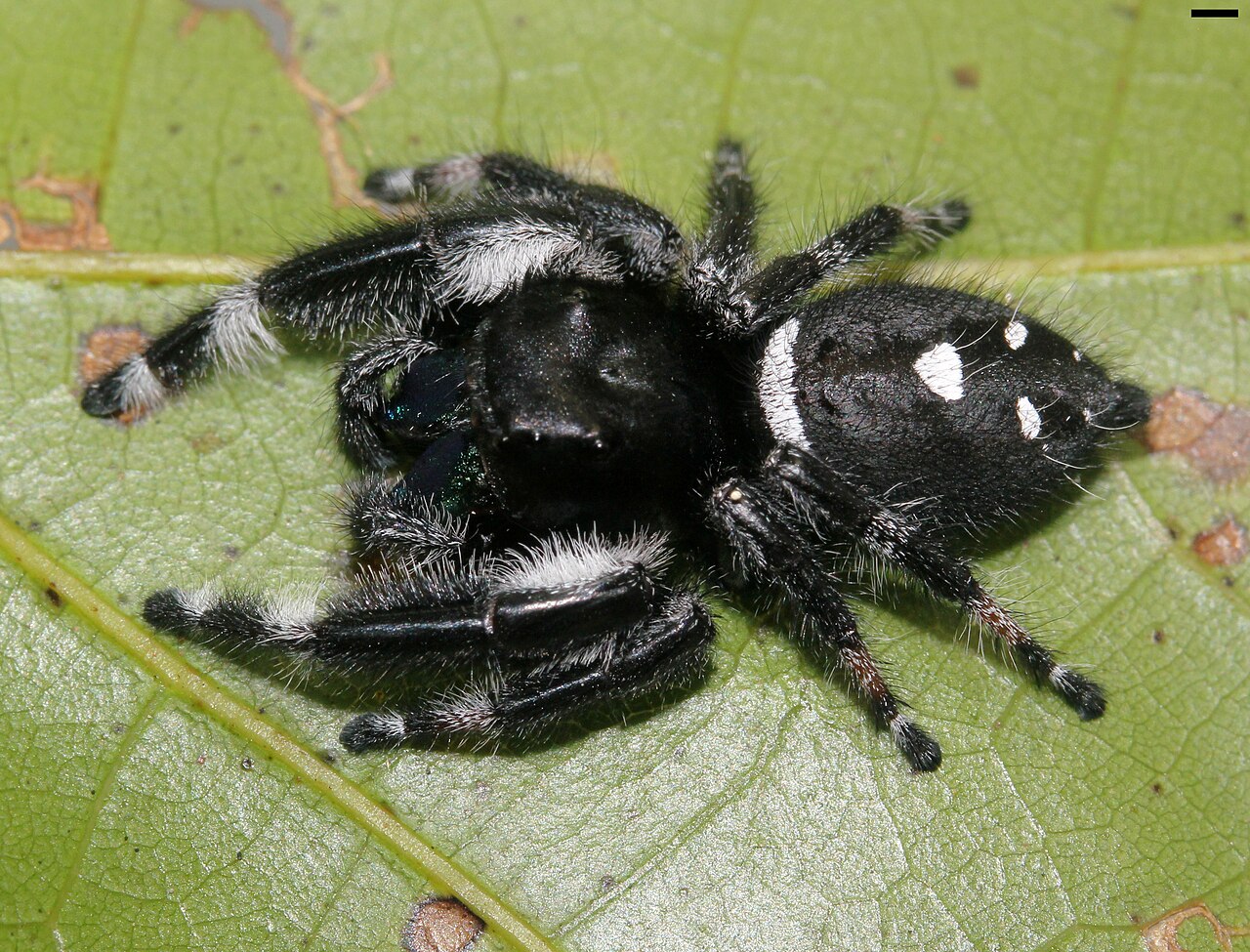
Jumping Spider Enclosure
A jumping spider enclosure should prioritize height over floor space, since these small arboreal hunters spend most of their time climbing rather than walking across the ground. Most adult pet jumping spiders do well in an enclosure roughly 4 by 4 by 6 inches to 4 by 4 by 8 inches, built from clear acrylic with secure ventilation and a front or bottom opening door rather than a lid on top.
Getting the enclosure right matters more for jumping spiders than for many other pet invertebrates, because these curious, intelligent little hunters are active during the day and rely on good footing, stable humidity, and enough vertical room to express natural climbing and hunting behavior.
| Quick Reference | Detail |
|---|---|
| Common Pet Genus | Phidippus (regal, bold, and other jumping spiders) |
| Adult Enclosure Size | 4x4x6 in to 4x4x8 in, taller rather than wider |
| Spiderling Enclosure | Small deli cup or 1 to 2 gallon container |
| Temperature | 68 to 80 degrees Fahrenheit, room temperature is usually fine |
| Humidity | 50 to 60 percent, maintained with misting every 2 to 3 days |
| Housing | One spider per enclosure; jumping spiders are cannibalistic |
| Lifespan | 1 to 2 years in the wild, sometimes longer in captivity |
What Size Enclosure Does a Jumping Spider Need?
Adult jumping spiders in the popular pet genus Phidippus generally do best in an enclosure around 4 by 4 by 6 inches, with larger females of species like the regal jumping spider sometimes more comfortable in a 4 by 4 by 8 inch space. The goal is not maximum volume, since an enclosure that is too large can actually make it harder for a spider to find and catch its food.
Spiderlings and young juveniles need far smaller quarters, often starting in a modified 32-ounce deli cup with a few ventilation holes poked into the lid. A tiny spiderling placed directly into an adult-sized enclosure may simply never encounter its prey, since the available space is too large relative to the spider’s hunting range at that stage.
As a spider grows through successive molts, its enclosure should be upgraded gradually rather than jumping straight to the final adult size. This step-by-step approach keeps the living space appropriately scaled to the spider’s current hunting ability at every stage of development.
Enclosure Shape and Ventilation
Because jumping spiders are arboreal hunters that climb constantly rather than crawling along the ground, a tall, narrow enclosure works far better than a wide, shallow one built for ground-dwelling species. Height should always be prioritized over floor space when choosing or building an enclosure.
Cross-ventilation on at least two sides is essential to keep air moving and prevent the kind of stagnant, overly humid conditions that encourage mold growth. At the same time, ventilation holes need to be small enough that tiny feeder insects like fruit flies cannot escape through them before the spider has a chance to hunt.
A front-opening or bottom-opening door is strongly preferred over a top-opening lid, since jumping spiders typically build their silk retreat, sometimes called a hammock or nest, near the top of the enclosure. Opening the enclosure from the top risks disturbing that retreat every time you perform routine maintenance or feeding.
Best Substrate for a Jumping Spider Enclosure
A thin layer of coconut fiber substrate, sometimes labeled coco fiber or eco earth, works well as a moisture-buffering base that helps maintain stable humidity without staying soggy. It is the same general substrate philosophy that works for other small invertebrate enclosures, from a banana spider setup to a home built for a potato bug, and a single rehydrated brick of this material typically provides enough substrate for well over a dozen enclosures.
Certain substrates should be avoided entirely. Cedar and pine shavings release aromatic resins and phenols that can harm small invertebrates, loose sand offers no humidity buffering and poses an ingestion risk during feeding, and potting soil with added fertilizers or large perlite chunks is not appropriate for a spider enclosure.
The substrate layer does not need to be deep since jumping spiders do not burrow the way some other spider species do. Its main job is buffering humidity and providing a stable, easy-to-clean floor beneath the climbing structures where most of the actual activity happens.
Climbing Structure and Décor
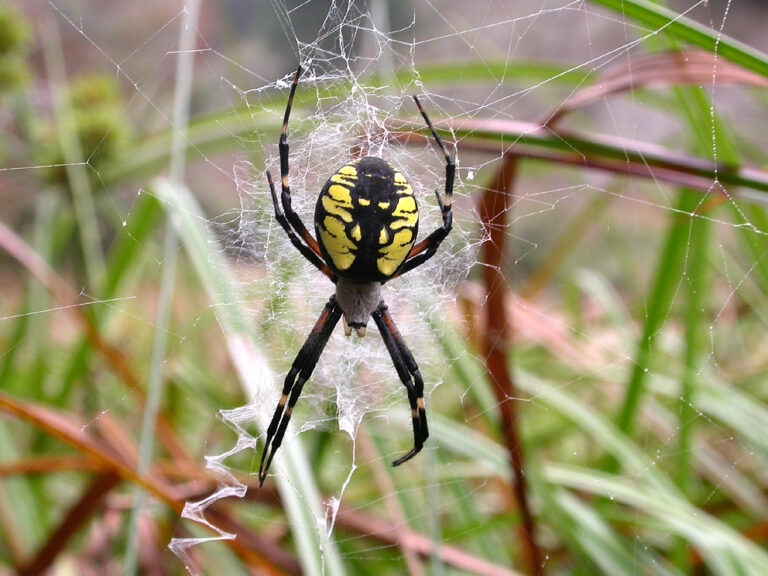
Since vertical movement defines how a jumping spider interacts with its enclosure, unlike the flat webs a grass spider might build low to the ground outdoors, décor should form a continuous climbing path from the substrate all the way up to the ceiling. Cork bark, twigs, and artificial foliage anchored at different heights let the spider move fluidly between levels rather than being stuck at the bottom.
A common mistake is piling all the decor on the floor with no pieces reaching the top, which forces the spider to climb bare enclosure walls to reach its preferred upper resting spot and wastes much of the enclosure’s usable vertical space. Stacking materials so there is always a connected surface from floor to ceiling makes far better use of the available height.
If you use hot glue, silicone caulk, or acrylic cement to anchor decor pieces in place, always allow a full 24 hours of curing time before introducing the spider. Uncured adhesive can off-gas chemicals that stick to a spider on contact and trap it, so décor assembled on one day should not have a spider moved in until at least the following day.
Temperature, Humidity, and Lighting
Ordinary room temperature between 68 and 80 degrees Fahrenheit is generally fine for most pet jumping spiders, and there is usually no need for a dedicated heat lamp. Some keepers report slightly more activity when temperatures run a bit warmer, but extremes in either direction should be avoided.
Humidity in the range of 50 to 60 percent, maintained with a light misting every two to three days, keeps a spider properly hydrated without oversaturating the enclosure. Jumping spiders will readily drink water droplets left on enclosure walls or décor after misting, so a dedicated water dish is optional rather than required.
A natural cycle of daylight and darkness works well for lighting, and most jumping spiders settle into their retreat to rest after roughly 12 to 14 hours of light each day. Placing the enclosure near a naturally bright window, without direct harsh sun that could overheat the space, is usually all the lighting a pet jumping spider needs.
Housing and Introducing Your Spider
Jumping spiders are solitary and cannibalistic by nature, so every individual needs its own separate enclosure without exception. Housing two together, even briefly, risks one spider killing and eating the other.
When a new spider first arrives, give it time to settle into its enclosure before attempting any handling. A spider that seems stressed, hides constantly, or refuses food in its first days is very likely just adjusting to a new environment rather than experiencing a genuine health problem.
Once acclimated, many pet jumping spiders tolerate gentle handling reasonably well, and some even seem curious about their owners, though sessions should stay brief and always proceed on the spider’s own terms rather than by grabbing or forcing interaction.
Feeding Setup Inside the Enclosure
Appropriately sized live prey is essential, since jumping spiders hunt visually and will largely ignore food that does not move in a way that triggers their prey response. Flightless fruit flies work well for spiderlings and small juveniles, while adults do well on pinhead crickets, small houseflies, or blue bottle flies sized to roughly match the spider itself.
Most keepers feed adult jumping spiders every two to three days, though appetite naturally varies with age, species, sex, and whether the spider is approaching a molt. Uneaten prey should be removed from the enclosure within 24 hours, since live insects left too long can stress a spider or, in some cases, damage it while it is vulnerable during a molt.
Occasional treats like small mealworms or waxworms can supplement the diet, though these should stay infrequent since they are higher in fat and lower in overall nutritional value than a spider’s regular feeder insects.
Common Enclosure Mistakes to Avoid
Choosing an enclosure that is too large for a young spiderling is one of the most frequent setup mistakes, since a tiny spider can struggle to ever encounter its prey in an oversized space. Matching enclosure size to the spider’s current stage, then upgrading gradually, avoids this problem entirely, a principle that applies just as much to small terrarium pets like a crested gecko or a blue-tailed skink as it does to a jumping spider.
A top-opening lid, decor piled only at the floor level, and skipped cure time on adhesives are three more common pitfalls that can undermine an otherwise well-intentioned setup. Poor ventilation that lets humidity stagnate is another frequent issue, often showing up as visible mold on substrate or décor within days of setup.
According to the American Arachnological Society, jumping spiders are considered one of the friendlier, more tolerant groups when it comes to gentle handling, but that tolerance does not extend to poor husbandry. A secure, well-ventilated, appropriately sized enclosure remains the foundation that determines whether a pet jumping spider actually thrives.
Related reading: Brown Recluse vs House Spider.
Related reading: Baby Jumping Spider.
Frequently Asked Questions
What size enclosure does an adult jumping spider need?
Most adult jumping spiders do well in an enclosure around 4 by 4 by 6 inches, with larger species or females sometimes better suited to a 4 by 4 by 8 inch space, always prioritizing height over floor area.
Can you keep two jumping spiders in the same enclosure?
No, jumping spiders are solitary and cannibalistic, so each individual needs its own separate enclosure to avoid one spider killing and eating the other.
What substrate is safe for a jumping spider enclosure?
Coconut fiber substrate, often labeled coco fiber or eco earth, works well because it buffers humidity without staying soggy. Cedar, pine shavings, loose sand, and fertilized potting soil should all be avoided.
How often should you mist a jumping spider enclosure?
Misting every two to three days is usually enough to maintain the 50 to 60 percent humidity range most pet jumping spiders prefer, allowing the spider to drink droplets from enclosure walls and décor.
Do jumping spiders need a heat lamp?
Generally no. Ordinary room temperature between 68 and 80 degrees Fahrenheit is sufficient for most pet jumping spiders, and a dedicated heat source is rarely necessary.
What is the best material for a jumping spider enclosure?
Clear acrylic enclosures are considered the gold standard among keepers, since they are lightweight, easy to clean, and allow good visibility, ideally with a front or bottom opening door rather than a top lid.
How do you know if a jumping spider enclosure has enough ventilation?
Good ventilation shows up as consistently dry, mold-free surfaces after misting, while poor ventilation often produces visible mold or a persistently damp substrate within days, signaling a need for more airflow.