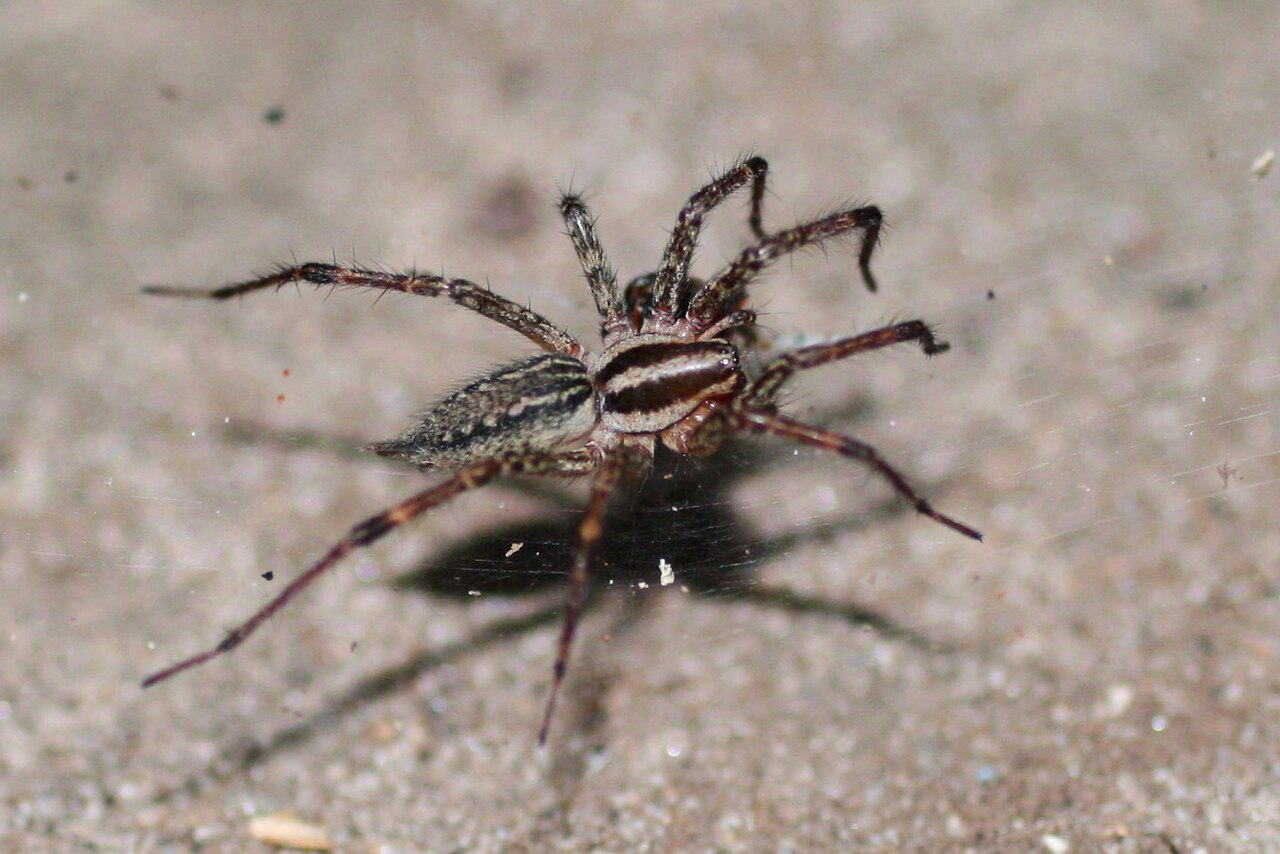
Grass Spider: Identification & Facts Guide
Grass spiders (genus Agelenopsis), also called funnel weavers, are the medium-sized, brown, fast-moving spiders responsible for the distinctive funnel-shaped webs commonly seen glistening with morning dew across lawns, shrubs, and building foundations. This guide covers how to identify a grass spider, why its non-sticky web still reliably traps prey, whether it is dangerous, and how it differs from spiders it is frequently mistaken for, including the wolf spider and the more medically concerning hobo spider.
| Trait | Detail |
|---|---|
| Genus | Agelenopsis (family Agelenidae, funnel weavers) |
| Size | Up to about 0.75 inch (19mm) body length |
| Web type | Horizontal sheet web with a funnel retreat, non-sticky |
| Venomous to humans? | Technically venomous but harmless; fangs rarely penetrate skin |
| Active season | Most visible summer through early fall |
How to Identify a Grass Spider
Grass spiders are moderately sized spiders, with females reaching a body length of about 0.75 inch and males somewhat smaller, typically brown in color though individuals may range toward gray, ivory, beige, or black depending on the specific species and region. A key identifying feature distinguishing them from many other similar-looking spiders is a pair of noticeably long spinnerets at the rear of the abdomen, clearly visible if the spider is examined closely. Grass spiders are frequently mistaken for wolf spiders due to overall similar brown coloring and body shape, and when found indoors, homeowners sometimes misidentify them as the more concerning brown recluse, though grass spiders share neither the recluse’s distinctive violin-shaped marking nor its medically significant venom.
The Distinctive Funnel Web
The grass spider’s web is genuinely one of its most recognizable features: a flat, horizontal sheet of silk, usually built low in tall grass, dense shrubs, or against building foundations, with a funnel-shaped retreat at one edge leading down into a hidden shelter like a rock crevice or thick vegetation. Unlike the sticky orb webs many people picture by default, a grass spider’s web has no adhesive quality at all, relying instead on its sheer physical density and the spider’s exceptional speed to capture prey rather than any sticky trap. These webs become particularly noticeable in the early morning, when dew collects on the silk and makes otherwise subtle webs glisten visibly across lawns and low vegetation throughout summer and into early fall.
How Grass Spiders Hunt Without Sticky Silk
A grass spider spends most of its time hidden inside the funnel retreat, waiting and sensing for vibrations transmitted across the connected sheet web above. When an insect lands on the web, the spider must react almost instantly, distinguishing a genuine prey vibration from a falling leaf or a larger, potentially dangerous animal, before dashing out at remarkable speed to deliver a venomous bite that subdues the prey. Because the web itself is not sticky, this speed is essential; the physical density and disorienting layout of the silk buys the spider just enough time to reach struggling prey before it manages to escape, making raw quickness rather than an adhesive trap the actual key to this species’ hunting success.
Are Grass Spiders Dangerous to Humans?
No, grass spiders pose no meaningful danger to people. Like virtually all spiders, they do possess venom, used specifically to subdue insect prey, but their fangs are quite small and generally have real difficulty penetrating human skin at all. Grass spiders are also naturally reluctant to bite, rarely doing so unless directly handled, trapped against skin, or otherwise provoked, and even in the rare event of an actual bite, symptoms are typically mild and limited to some localized redness and swelling rather than any serious medical concern.
Grass Spider Colors and Regional Variation
While brown remains the dominant color across most grass spider species, individuals can range toward gray, ivory, beige, or near-black depending on the specific species and local habitat conditions, a variation that likely helps individual populations blend more effectively into the particular vegetation and substrate colors common to their specific region. This regional color variation is one more reason relying solely on body color for identification is less reliable than checking for the combination of long spinnerets and the telltale funnel web structure, both of which remain consistent across the various color forms found throughout the genus.
Grass Spider Diet
Grass spiders prey on a wide range of small insects that stumble onto their sheet webs, including flies, ants, beetles, and other small crawling or flying invertebrates, delivering a quick venomous bite to subdue captured prey before dragging it into the funnel for safe consumption. This steady predation on common garden and lawn insects makes grass spiders a genuinely useful, if often unnoticed, form of natural pest control, working alongside other beneficial predators like jumping spiders, ground beetles, and the occasional larger invertebrate predator to help keep insect populations in check across a typical yard.
Grass Spider vs Hobo Spider: An Important Distinction
Grass spiders belong to the same broader funnel weaver family as the hobo spider (Eratigena agrestis), a species that gained a reputation in the United States for potentially causing necrotic skin wounds similar to a brown recluse bite, though this claim has since been challenged, and the CDC does not list hobo spiders among medically significant venomous species in the US. Crucially, hobo spiders and grass spiders cannot be reliably distinguished by color alone, and genuine identification typically requires closer examination by an expert or diagnostic lab rather than a casual visual check, so anyone in a region where hobo spiders are established and specifically concerned about which funnel weaver they are looking at should seek professional identification rather than relying on appearance alone.
Grass Spider vs Wolf Spider
Despite frequent confusion between the two, a few features help separate grass spiders from wolf spiders. Wolf spiders are generally bulkier and more robust-bodied, actively hunt prey on the ground without building any web at all, and often carry their egg sacs attached directly to their spinnerets, a behavior grass spiders do not share. Grass spiders, by contrast, are reliably associated with their distinctive funnel-and-sheet web structure, a feature no wolf spider produces, making the presence or absence of that telltale web one of the most reliable, easy distinguishing clues available even without close physical examination of the spider itself.
Where Do Grass Spiders Live?
Grass spiders are common throughout most of North America, building their funnel webs in tall grass, heavy ground cover, dense shrubs, woodpiles, and along building foundations, particularly in darker, more sheltered spots like flower beds and secluded corners. They occasionally wander indoors, especially into basements and other dark, quiet rooms, typically in search of prey or a mate rather than actively seeking out human structures as permanent habitat, similar to how other spiders like larger web-building species sometimes end up indoors incidentally rather than by deliberate choice, according to university extension entomology resources covering common household spider encounters.
Grass Spider Life Cycle
Grass spiders follow a fairly typical spider life cycle: females lay eggs in a silk sac in late summer or fall, and these egg cases overwinter through the cold months before spiderlings hatch the following spring. Once hatched, the young spiders spend the growing season eating, molting several times, and maturing, with mating and egg-laying continuing through late summer as temperatures allow. As fall temperatures drop and eventually freeze, adult metabolism slows and most individuals die, leaving the overwintering egg cases to restart the entire cycle again the following spring, a pattern shared broadly with many other spider species active through a single growing season.
Are Grass Spiders Beneficial to Have Around?
Yes, genuinely so. Grass spiders play a valuable ecological role controlling insect populations in gardens and lawns, and pest control professionals generally consider them beneficial rather than a genuine pest requiring treatment. The main practical downside to having grass spiders around is a purely cosmetic and maintenance-related one: since these spiders molt several times before reaching adulthood, cast-off skins can accumulate around a home over time, and cleaning up webs and shed skins, along with reducing habitat clutter around a foundation, is generally a more appropriate response than any chemical treatment for a spider that poses no real threat to people.
Related reading: Orange Ladybug.
Related reading: Brown Recluse vs House Spider.
Frequently Asked Questions
Are grass spiders dangerous?
No, grass spiders pose no meaningful danger to humans. Their fangs are small and rarely penetrate skin, they rarely bite unless directly provoked, and any bite typically causes only mild, localized redness and swelling.
How can you identify a grass spider?
Look for a brown, medium-sized spider (up to 0.75 inch) with noticeably long spinnerets at the rear of the abdomen, along with its distinctive funnel-shaped web built low in grass, shrubs, or against foundations.
Why isn’t a grass spider’s web sticky?
Grass spider webs lack adhesive, relying instead on the spider’s remarkable speed to reach prey before it escapes. The web’s density and the spider’s quick reaction to vibrations make up for the lack of sticky silk.
What is the difference between a grass spider and a wolf spider?
Grass spiders build the distinctive funnel-and-sheet web they’re named for, while wolf spiders don’t build webs at all and hunt actively on the ground, often carrying egg sacs attached to their spinnerets.
Is a grass spider the same as a hobo spider?
No, though they belong to the same funnel weaver family and can look similar. Hobo spiders gained a reputation for potentially harmful bites, though this is now disputed, while grass spiders are considered harmless.
Are grass spiders beneficial to have in a yard?
Yes, they help control insect populations and are generally considered beneficial rather than pests. The main downside is cosmetic, since shed skins from molting can accumulate around a home over time.
When are grass spiders most noticeable?
Their webs become especially visible in early morning during summer through early fall, when dew collects on the silk and makes the horizontal sheet webs glisten noticeably across lawns and low vegetation.
The next time morning dew reveals a delicate, funnel-shaped web across the lawn, it is worth pausing to appreciate the speed and precision at work rather than reaching for pesticide on a genuinely harmless, beneficial spider.
Understanding this species removes one more common source of unnecessary fear around backyard spiders, replacing it with genuine appreciation for a fast, effective natural pest controller working quietly alongside other misunderstood allies like a passing centipede moving through the same patch of lawn.