Black Beetle Identification: Species Guide
“Black beetle” describes dozens of unrelated species rather than one specific insect, and the correct identification, and the right response, depends entirely on which one has actually turned up. A shiny, fast-moving beetle on a patio is likely a beneficial ground beetle, while a tiny oval beetle near a windowsill is more likely a carpet beetle capable of damaging fabric. This guide breaks down the most common black beetles found in homes and yards, how to tell them apart, and which ones actually warrant concern.
| Type | Where found | Concern level |
|---|---|---|
| Ground beetle | Patios, soil, under debris | Beneficial predator, harmless |
| Carpet beetle | Windowsills, closets, baseboards | Can damage fabric/carpet |
| Darkling beetle | Under soil, debris, mulch | Harmless decomposer |
| Click beetle | Gardens, near lights | Harmless, makes clicking sound |
| Asian longhorned beetle | Hardwood trees | Invasive, report to authorities |
Why There Are So Many Kinds of Black Beetles
Beetles make up the order Coleoptera, the single largest and most diverse group of animals on Earth, with roughly 400,000 described species and beetles having existed for over 270 million years, giving them ample evolutionary time to diversify into an enormous range of habitats, diets, and appearances. Black or dark coloration appears across nearly every beetle family, from predatory ground beetles to fabric-feeding carpet beetles to invasive wood-borers, which is precisely why “black beetle” alone is never a specific enough description to identify what is actually being observed without additional details about size, location, and behavior.
Ground Beetles: The Beneficial Black Beetle
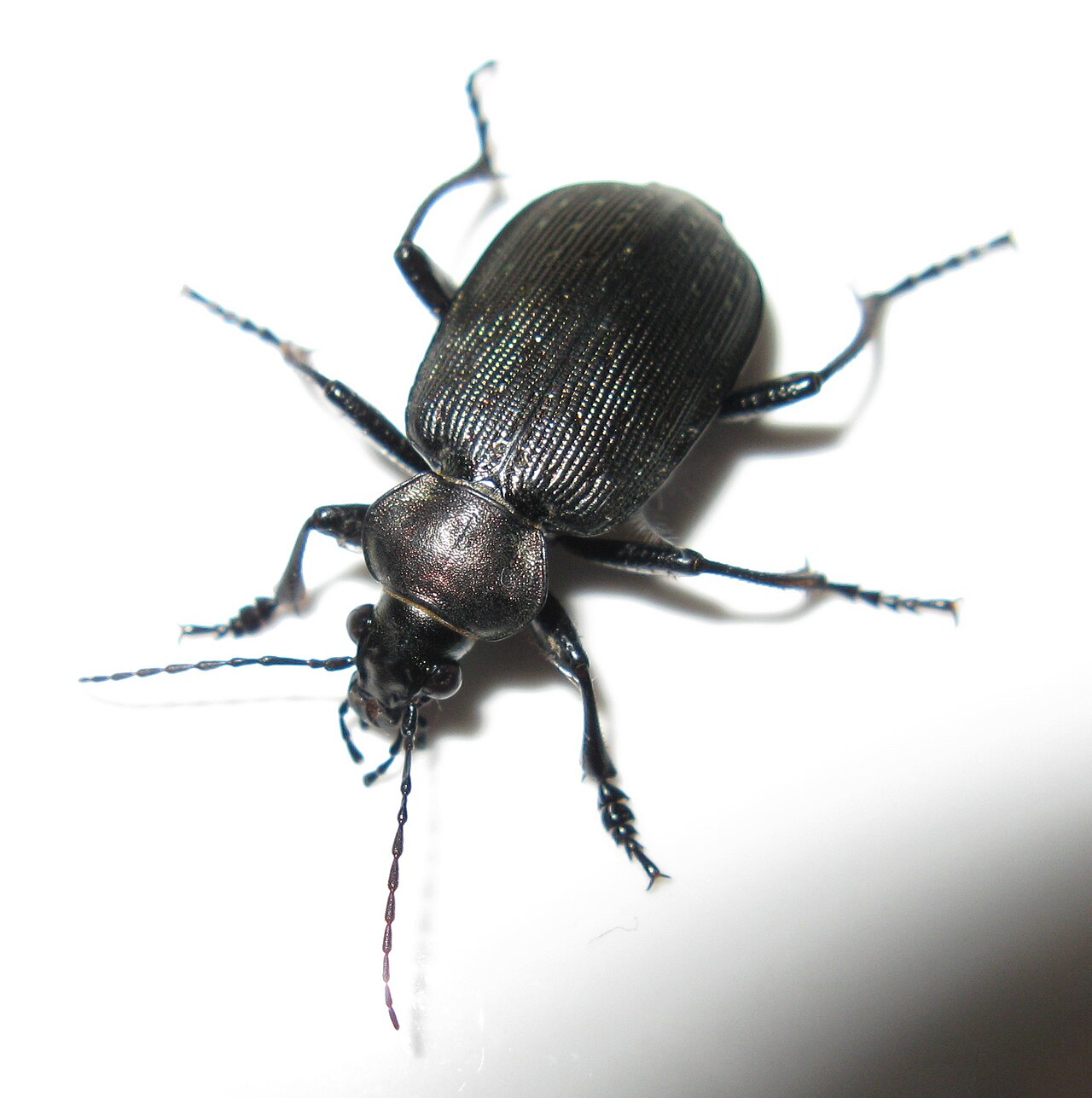
A shiny, flattened, fast-running black beetle spotted darting across a patio or garden path is very likely a ground beetle, one of over 2,000 species found in North America. Ground beetles have hard, ridged wing covers and are almost always beneficial predators, feeding on small insects, slugs, caterpillars, and other soft-bodied garden pests rather than on plants or fabric. Their tough exoskeleton produces a distinct crunching sound if accidentally crushed, and some species release a mild, foul-smelling defensive liquid when disturbed, but they pose no meaningful threat to people, pets, or property and are generally considered a beneficial presence in a garden rather than a pest.
Carpet Beetles: The Black Beetle That Damages Fabric
Small, oval black beetles found near windowsills, baseboards, closets, or air vents are frequently carpet beetles, typically under a quarter inch long and sometimes mottled rather than solid black depending on the specific species. Unlike ground beetles, carpet beetles pose a genuine risk to belongings: their larvae, not the adults, are responsible for feeding on wool, natural fibers, pet hair, and stored fabric, causing real damage to carpets, clothing, and upholstery over time if a population goes unaddressed. Since carpet beetle larvae are also responsible for a common skin rash people mistake for bites, this species carries relevance well beyond fabric damage alone.
Darkling Beetles and Other Yard Beetles
A dull, black beetle discovered under soil, mulch, or garden debris is commonly a darkling beetle, part of a large family of ground-dwelling decomposers that feed on decaying organic matter rather than living plants or stored fabric. These beetles are essentially harmless to people and property, playing a genuinely useful ecological role in breaking down dead plant material and cycling nutrients back into soil, not unlike the decomposing role played by snails in the same garden habitats, according to university entomology extension programs that study soil-dwelling decomposer insects. Click beetles, recognized by the audible clicking sound they make when righting themselves after landing on their backs, are another common, harmless black beetle found in gardens, sometimes displaying distinctive eye-like spots on the head in certain species.
How to Identify a Black Beetle by Behavior
Behavior offers a genuinely useful shortcut when visual identification alone is inconclusive. A beetle that is shiny, flattened, and moves quickly across open ground is very likely a predatory ground beetle. A small, slow-moving oval beetle discovered specifically near natural fiber materials, wool sweaters, area rugs, or upholstered furniture, points toward a carpet beetle instead. A beetle that snaps audibly and flips itself upright when placed on its back is characteristic of the click beetle family specifically, a distinctive behavior that few other common black beetles share. For a closely related question, see our guide to red and black beetle. For a closely related question, see our guide to black and white beetle.
Fireflies: A Beloved Exception to the Black Beetle Rule
Not every beetle discussion focuses on unwanted pests; fireflies, technically a type of beetle themselves, are among the most beloved insects many people encounter in a backyard. When not glowing, fireflies show a reddish-orange thorax paired with black wing casings rather than being solid black, and their larvae are actually predatory, feeding on snails, slugs, and other small invertebrates, similar to how larger predatory arthropods help control garden pest populations in their own ecological niche, and a nightly reminder of just how much beneficial insect activity happens in a yard largely unnoticed, alongside pollinators drawn to the same nectar and plant resources.
Are Black Beetles Dangerous?
The overwhelming majority of black beetles pose no danger to people at all. While beetles are technically capable of biting with their mandibles, they rarely target humans and generally only become defensive when directly handled or threatened, and even then, a bite typically amounts to no more than a minor, brief pinch rather than any genuine injury. The real practical concern with black beetles is property damage from certain species, particularly carpet beetle larvae feeding on natural fibers, rather than any direct physical threat from the adult insects themselves.
Black Beetles That Invade Homes vs Yard Species
A useful general pattern: black beetles found specifically indoors tend to run smaller than the ones commonly encountered outdoors in a yard or garden. Indoor black beetles are frequently pantry pests or fabric-feeding species like carpet beetles, small enough to exploit tiny entry points and thrive on stored food or textiles, while larger black beetles like ground beetles and darkling beetles are primarily outdoor species that only occasionally wander indoors by accident rather than actively seeking out a home’s interior as habitat.
When to Be Concerned About an Invasive Species
One species genuinely warrants a different level of concern: the Asian longhorned beetle, an invasive wood-boring pest capable of causing significant damage to hardwood trees. It is identifiable by a large, shiny black body with distinctive white spots and unusually long, banded antennae, typically found on or near hardwood trees rather than indoors or in typical garden settings. Because this species is subject to regulatory action in affected regions, any beetle matching this description found on hardwood trees should be checked against official state or USDA agricultural extension resources rather than assumed to be one of the many harmless black beetle species covered above.
Black Beetle Diet: What Do They Eat?
Diet varies enormously by species, consistent with beetles being one of the most diverse insect orders on Earth. Predatory ground beetles primarily hunt other insects, slugs, and larvae, while darkling beetles and dung beetles function as decomposers, feeding on decaying organic matter and animal waste to help recycle nutrients back into soil. Carpet beetle larvae specifically feed on keratin-rich materials like wool, fur, and feathers rather than anything typically considered plant matter, and pantry-invading species like sawtooth grain beetles feed directly on stored dry goods, a dietary range nearly as broad as the diversity of the beetle order itself, which includes roughly 400,000 described species worldwide.
How to Get Rid of Unwanted Black Beetles Indoors
For carpet beetles or other small black beetles found indoors, thorough vacuuming of carpets, baseboards, and closet corners removes larvae and shed skins, while washing or dry-cleaning susceptible wool and natural-fiber clothing addresses the food source driving an infestation. Sealing obvious entry points around windows and doors reduces new arrivals, and keeping stored dry goods in sealed containers removes a food source for pantry-invading species specifically. For beneficial outdoor species like ground beetles found occasionally indoors, simple removal by hand or gently guiding them back outside is generally sufficient, since these beneficial predators pose no threat and are best left to continue their genuinely useful pest-control role in the garden rather than being treated as a problem to eliminate.
Related reading: Carpet Beetle Bites.
Related reading: Hercules Beetle.
Related reading: Black Caterpillar.
Related reading: Black and White Butterfly.
Related reading: Black Bumble Bee.
Frequently Asked Questions
What is the shiny black beetle I keep seeing on my patio?
This is very likely a ground beetle, one of over 2,000 beneficial species in North America. They are fast-moving predators that eat small insects, slugs, and caterpillars, and pose no threat to people or property.
What is the small black beetle near my window or closet?
This is commonly a carpet beetle, typically under a quarter inch long. Its larvae, not the adults, can damage wool, natural fibers, and stored clothing, making it worth addressing if found regularly indoors.
Are black beetles dangerous to humans?
No, the vast majority pose no real danger. While beetles can technically bite with their mandibles, they rarely target people and any bite typically amounts to a brief, minor pinch rather than a genuine injury.
What black beetle makes a clicking sound?
This is characteristic of click beetles, which snap their bodies to flip upright if placed on their back, producing an audible clicking noise. Some species also display distinctive eye-like spots on the head.
How do I get rid of carpet beetles indoors?
Vacuum carpets, baseboards, and closets thoroughly, wash or dry-clean susceptible wool and natural-fiber clothing, and seal entry points around windows and doors to reduce new arrivals.
What black beetle has long antennae and white spots?
This description matches the invasive Asian longhorned beetle, a serious wood-boring pest found on hardwood trees. Any sighting matching this description should be checked against official agricultural extension resources.
Is it safe to just release a black beetle found indoors outside?
For beneficial species like ground beetles, yes, gently guiding them back outside is the best approach since they pose no threat and help control other garden pests. Carpet beetles found repeatedly indoors warrant closer attention instead.
Whatever the specific species turns out to be, taking a moment to actually identify a black beetle before reacting almost always leads to a better outcome, whether that means leaving a beneficial predator alone or addressing a genuine fabric pest at its source.
Understanding this range, from garden allies to genuine fabric pests to a handful of regulated invasive species, turns a vague, slightly unsettling “black beetle” sighting into a specific, actionable identification instead, no different from the careful process used to sort out a similarly ambiguous small insect sighting.