7 Bugs That Look Like Cockroaches and How to Tell Them Apart
Most bugs that look like cockroaches are harmless beetles, crickets or wood roaches that wandered in, and three checks separate them from a real infestation: wing covers, antennae and the way the insect moves. Only two of the common lookalikes bite people at all, the bed bug and the giant water bug, and neither one is a cockroach. Nothing on this list stings, and none of them are venomous.
The mix up is so common because a brown, flat, fast insect on a basement floor at night gives you half a second of information. Cockroaches have whip like antennae as long as the body, overlapping leathery wings and a sprinting gait. Beetles have hard wing covers that meet in one straight seam and short antennae, and crickets have long folded hind legs.
Ground beetles, June beetles, field crickets, camel crickets, wood roaches, bed bugs and giant water bugs are the insects most often mistaken for cockroaches. Check three things: a straight seam down a hard back means beetle, long folded hind legs mean cricket, and thread thin antennae longer than the body mean cockroach.
Cockroach or Lookalike? The Three Checks That Settle It
Look at the back first. A hard shell split by one straight line down the middle is a beetle, because beetle wing covers meet edge to edge like a closed book. Cockroach wings overlap and look leathery rather than armored, and the shield behind the head often hides the head completely when seen from above.
Then check antennae and legs. Cockroach antennae are thread thin, constantly sweeping, and at least as long as the body. Beetle antennae are short and often beaded or clubbed. Long, folded hind legs mean a cricket, and a hop settles it, because cockroaches never jump.
Movement is the third check and the most reliable at night. A cockroach dashes in a straight line and freezes against a baseboard. A ground beetle runs steadily and squeezes under the nearest object. A June beetle flies noisily into the light. The same sorting logic works for insects confused with silverfish, where body outline does most of the work.
| Trait | Cockroach | Ground beetle | Cricket |
|---|---|---|---|
| Back | Overlapping leathery wings | Hard covers, straight center seam | Short wings, humped body |
| Antennae | Thread thin, body length or longer | Short, beaded | Long and thin, plus long palps |
| Hind legs | Even length, built for running | Even length, built for running | Long, folded, built for jumping |
| Movement | Fast dash, then freeze | Steady run, hides under objects | Hops |
| Where found | Kitchens, drains, warm voids | Door thresholds, garages, under lights | Basements, crawl spaces |
| Bites people | Rarely | No, but can spray an irritant | No |
Ground Beetles (Carabidae)
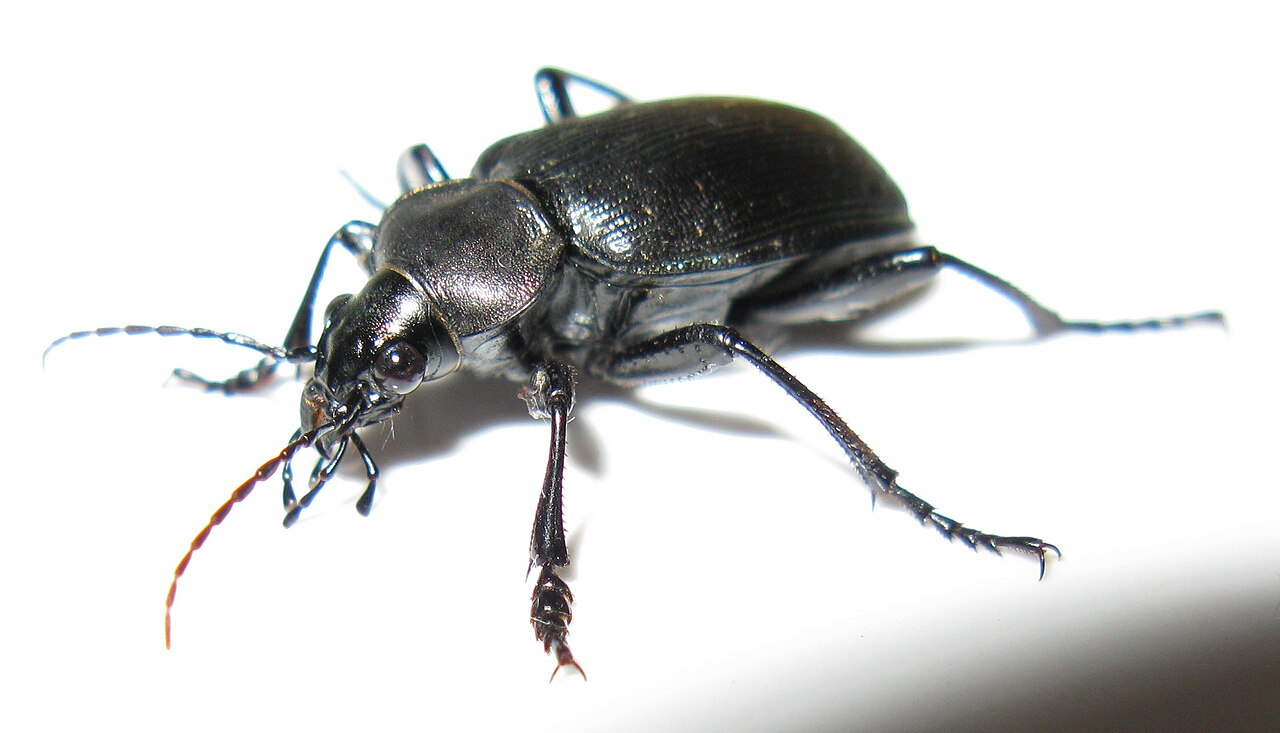
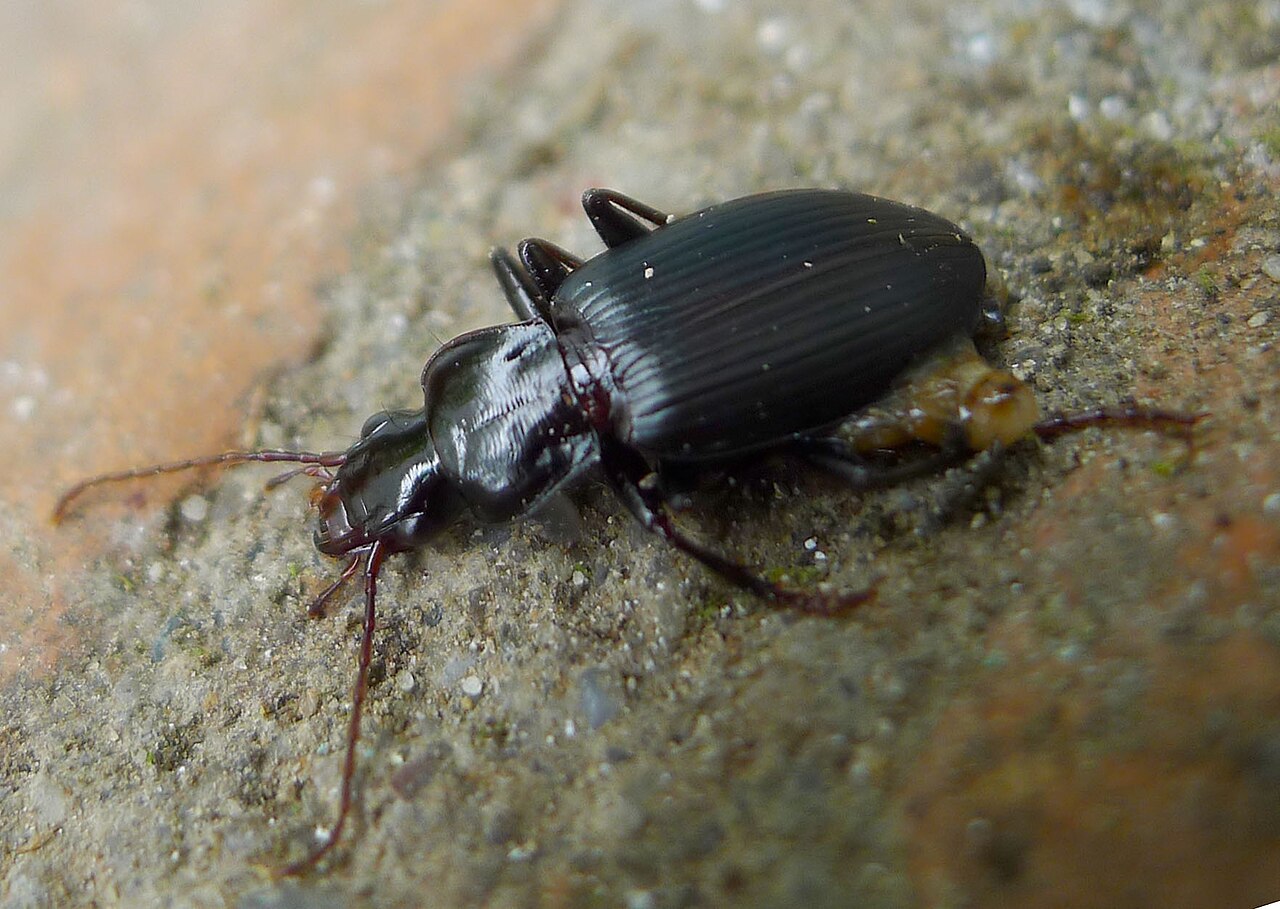
Ground beetles are the number one false alarm in American homes. The family runs from 1/8 to 1 in (3 to 25 mm), most species dark brown to black with a faint shine, and they come in through door sweeps and garage gaps, usually one at a time from midsummer into fall. They do not bite, do not breed indoors and do not feed on anything in a kitchen.
They are also on your side. Ground beetles hunt caterpillars, slugs, cutworms and fly larvae at night, which puts them in the same role as the animals that keep crawling pests in check. Several species, including bombardier beetles, discharge a hot defensive chemical that can sting skin or eyes, so move them with a sheet of paper rather than bare fingers.
The quick field mark is the seam. Hold a flashlight at an angle and a single straight line runs from behind the head to the tip of the abdomen. No cockroach has that line, and no ground beetle has antennae longer than its own thorax.
June Beetles (Phyllophaga species)
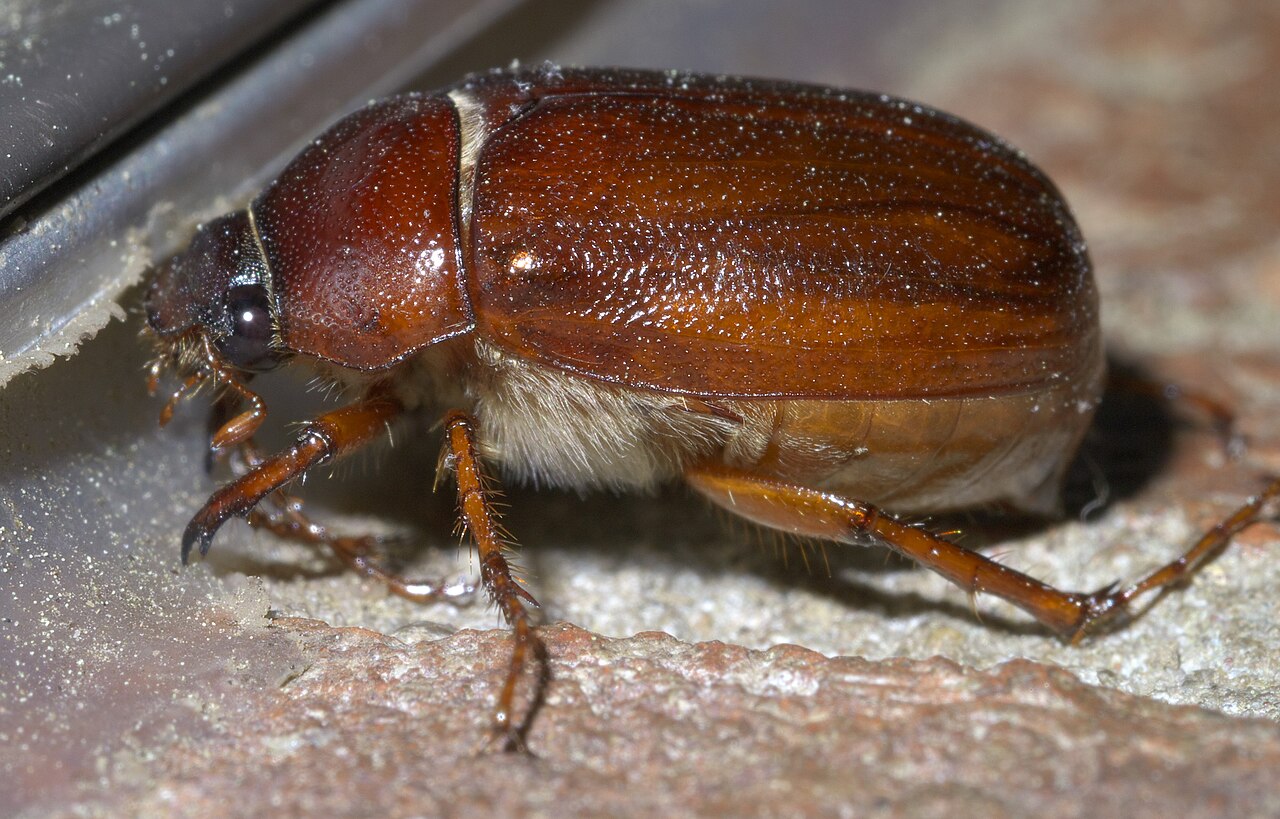
June beetles, also called May beetles, are heavy reddish brown insects 1/2 to 1 in (12 to 25 mm) long that appear at porch lights from late May through July across the eastern and central states. They are rounded rather than flat, fly loudly, and crash into screens and windows, behavior no cockroach performs.
Indoors they are a one night accident, drawn through an open door by light. The larvae are white C shaped grubs that feed on grass roots and can thin a lawn in patches, which is the only real damage the species does. Adults are harmless to people and pets, though a dog that eats several may vomit.
Confusion with the oriental cockroach happens because both are dark, glossy and about an inch long. The June beetle has a rounded dome shaped body, clubbed antennae and spiny front legs built for digging, while an oriental cockroach is flattened with long sweeping antennae. Beetles of this size are also a staple food for the birds that patrol lights at dusk, much like the birds that hunt shield shaped bugs.
Field Crickets (Gryllus species)
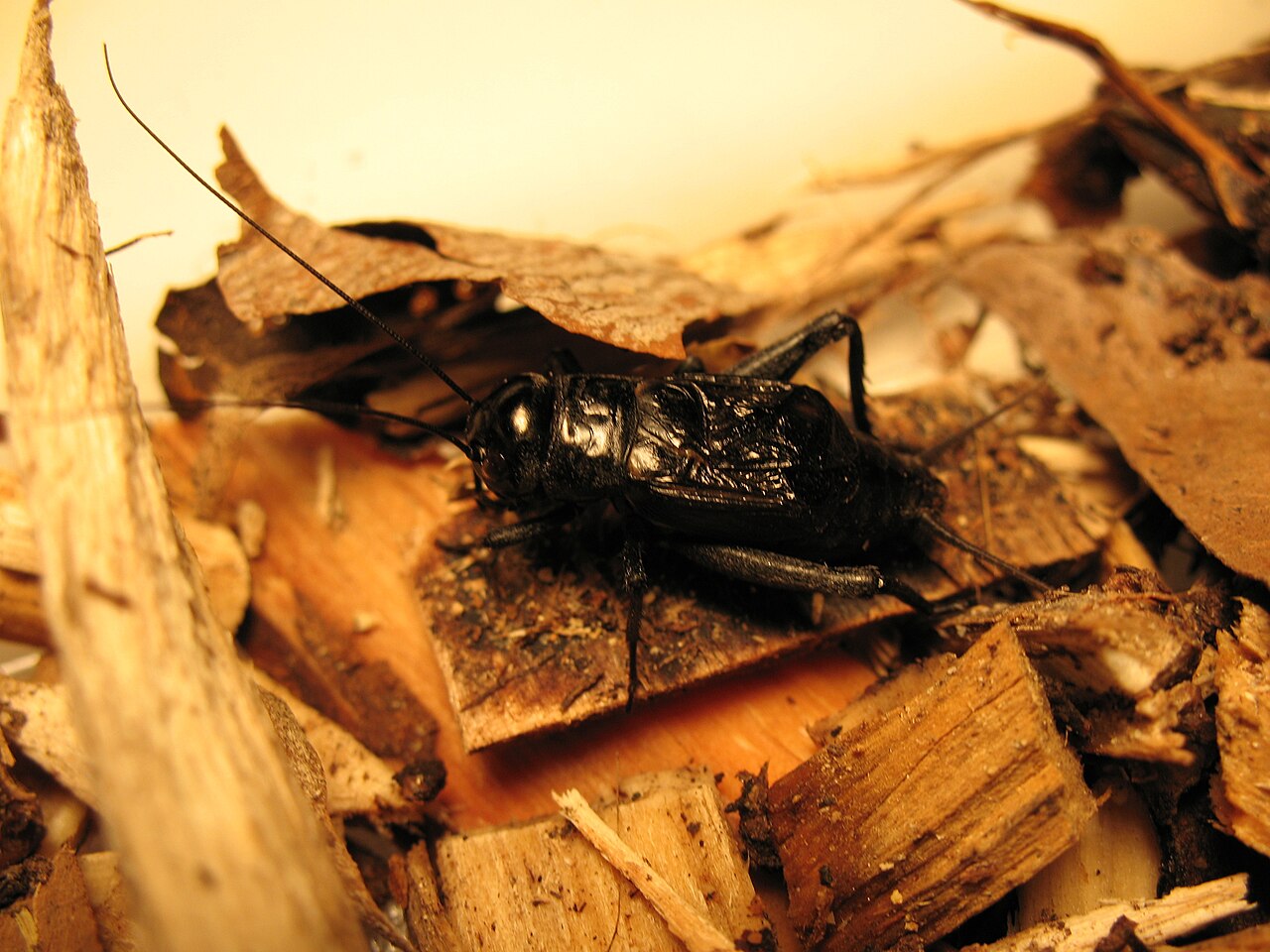
Field crickets such as the fall field cricket (Gryllus pennsylvanicus) are black to very dark brown, 3/4 to 1 in (18 to 25 mm) long, with long thin antennae and heavy hind legs. Males chirp by rubbing their wings, and a cricket indoors usually announces itself before anyone sees it. They are found nationwide and enter homes in late summer and fall.
They do not bite or carry disease. Indoors they chew paper, fabric and occasionally stored food, but they rarely survive long and they do not reproduce in a house in meaningful numbers. The giveaway is the jump: a cricket flees in arcs, a cockroach sprints flat along a wall.
Camel Crickets (Ceuthophilus species)
Camel crickets, also called cave crickets or spider crickets, are the lookalike that frightens people most. They run 1/2 to 1.5 in (13 to 38 mm), are tan with dark mottling, humpbacked, wingless and completely silent, with antennae and hind legs far longer than the body. Damp basements, crawl spaces and garages are their habitat, and they jump toward whatever startles them, including you.
No bite, no venom, no disease. They do chew cardboard, paper, stored fabric and houseplant roots in persistently damp rooms, so a dehumidifier and sealed foundation cracks work better than any spray. A silent, wingless, humpbacked insect that jumps is never a cockroach.
Bed Bugs (Cimex lectularius)
Bed bugs are the one lookalike on this list that feeds on people. Adults are about 1/4 in (5 to 7 mm), flat, oval and reddish brown, with short antennae, no wings and no long legs, and they stay within a few feet of where someone sleeps rather than in kitchens or drains.
Young cockroaches get reported as bed bugs constantly, and the error runs both ways. German cockroach nymphs are darker, carry two stripes behind the head, have antennae as long as the body and move fast. Bed bugs crawl slowly and flatten into mattress seams and headboard joints. The full side by side comparison is in the bed bug and baby cockroach guide.
Evidence separates them better than the insect does. Bed bugs leave rust colored smears on sheets, pale shed skins in seams and bites in clusters on exposed skin. Cockroaches leave pepper fleck droppings in cabinet corners and a musty smell in heavy infestations.
Giant Water Bugs (Lethocerus americanus)
Giant water bugs are the largest insects in this group, 2 to 2.5 in (5 to 6 cm), flat, brown and oval, which is exactly the outline people expect from a huge cockroach. They live in ponds and slow streams, breathe through a short tail siphon, and fly to streetlights and pool lights in summer, which is why they are also called electric light bugs.
This one deserves respect. A giant water bug stabs with a piercing beak when handled and the bite is genuinely painful, enough to earn the name toe biter, though it is not medically dangerous and the insect is not venomous in the sense a spider is. Do not pick one up. Scoop it into a container and return it to water.
Confusing it with a cockroach is understandable but harmless once you look at the front legs, which are thickened into grasping hooks for catching tadpoles and small fish. No cockroach has raptorial front legs, and no cockroach swims.
Wood Roaches (Parcoblatta species)
Wood roaches are a special case, because they are true cockroaches that behave nothing like pest species. The Pennsylvania wood roach (Parcoblatta pennsylvanica) is light brown, 3/4 to 1 in (18 to 25 mm), with pale edges along the wings, and it lives under loose bark, in woodpiles and in leaf litter across the eastern United States.
Males fly and are strongly drawn to porch lights in May and June, which is when they turn up indoors. They cannot establish inside: they need damp decaying wood, they do not feed on pantry items, and the population dies out without any treatment. Finding one or two in spring near a wooded lot is a seasonal event, not an infestation.
Palo Verde Beetles and Other Large Brown Beetles
In Arizona and the Sonoran Desert, the palo verde beetle (Derobrachus hovorei) produces the most dramatic false alarms of all. Adults reach 3 to 3.5 in (8 to 9 cm), are dark brown to black, have long antennae and a spiny collar behind the head, and fly heavily at night during the summer monsoon from June through August.
They can pinch with strong jaws if grabbed, but they do not bite defensively, do not sting and do not enter homes to stay. The larvae spend two to four years feeding on roots of palo verde and other trees. Owls, bats and roadrunners take the adults in numbers, the same kind of opportunists listed among animals that eat stinging insects.
Flat Brown Bugs: Seed Bugs and Stink Bugs
Two true bugs account for most fall sightings. The western conifer seed bug (Leptoglossus occidentalis) is 3/4 in (16 to 20 mm), brown, flat and narrow, with flared plates on the hind legs, and it pushes into houses in October to overwinter. Brown marmorated stink bugs are shield shaped, about 1/2 in (14 to 17 mm), and arrive the same way.
Neither bites or breeds indoors, and both release a sharp smell when crushed or vacuumed, so a jar and a window beat a shoe. The flat brown outline is what triggers the cockroach guess, and the tell is the beak: these insects carry a stiff sucking tube folded under the head for plant sap, not chewing jaws. Misleading looks are the rule in the insect world, as the caterpillars that mimic snake heads show.
When It Really Is a Cockroach
Four species cause nearly all indoor cockroach problems in the United States: German, American, oriental and brown banded. The signals are different from a wandering beetle. You see them at night in kitchens and bathrooms, you find them in more than one room, numbers climb week over week, and droppings the size of ground pepper collect in cabinet corners and under appliances.
Egg cases settle the question. A German cockroach egg case is a tan, ridged capsule about 1/4 in (6 to 8 mm) that the female carries until hatching, and finding shed cases behind a refrigerator means breeding indoors. Identification keys and control guidance from University of Minnesota Extension sort the household species by size and markings.
Related reading: Bugs That Look Like Ducks.
Related reading: bugs that look like stink bugs.
Related reading: Bugs That Look Like Spiders.
Related reading: Animals That Look Like Ferrets.
Related reading: bugs that look like mosquitoes.
Related reading: bugs that look like termites.
Related reading: bugs that look like boxelder bugs.
Frequently Asked Questions
What looks like a cockroach in the house?
Ground beetles, June beetles, camel crickets, field crickets, wood roaches and bed bugs account for nearly all indoor false alarms. Beetles show a straight seam down a hard back, crickets have long jumping legs, and bed bugs stay flat, slow and oval near beds rather than in kitchens.
What bugs can be mistaken for cockroaches?
Ground beetles and June beetles are the most frequent, followed by camel crickets, field crickets, wood roaches, giant water bugs, bed bugs, seed bugs and, in the Southwest, palo verde beetles. Palmetto bug is not a lookalike at all, since the name refers to real cockroach species.
What are the small, light brown bugs I found in my house?
Light brown and under 1/4 in usually means carpet beetles, drugstore beetles, bed bugs or cockroach nymphs. Check antennae and location: pantry beetles cluster near dry food, bed bugs near mattress seams, and cockroach nymphs run fast with antennae as long as the body.
What bug is in my bed but not bed bugs?
Bat bugs, swallow bugs, carpet beetle larvae, spider beetles and booklice all show up in bedding. Carpet beetle larvae are bristly and worm like, spider beetles look like tiny shiny spiders, and bat bugs are nearly identical to bed bugs but trace back to a roost in the attic.
What do very tiny cockroaches look like?
Cockroach nymphs are 1/8 to 1/4 in (3 to 6 mm), dark brown to nearly black, wingless, with antennae already as long as the body. German cockroach nymphs carry two dark stripes behind the head. The long antennae and the fast dash separate them from bed bugs and beetle larvae.
Why should you not squish a cockroach?
Crushing one spreads gut bacteria and allergen rich body fragments, a documented asthma trigger in homes, and a female may leave an egg case behind. Fragments and droppings also attract more cockroaches. Vacuum or trap them instead, then empty the canister into an outdoor bin.