Do Sugar Ants Bite? Yes, and Here Is What It Looks Like
Sugar ants do bite, but the pinch is so small that most people never feel it happen. The ants Americans call sugar ants are tiny kitchen foragers built for hauling crumbs, not for defense, and their jaws usually cannot break adult skin. When one does manage a bite, it stings for a second and leaves a red dot that fades the same day.
The more useful question is usually what that trail is doing on your counter, and whether the itchy mark on your arm came from an ant at all.
Sugar ants bite but are close to harmless. The bite feels like a brief pinch and leaves a small red dot with no puncture and no welt, and the irritation is usually gone within a few hours. No ant commonly called a sugar ant in the United States carries venom strong enough to cause a medical reaction.
| Question | Short answer |
|---|---|
| Do they bite? | Yes, but rarely, and mostly when trapped against skin |
| Do they sting? | No true sting in the common US species |
| Pain level | 1 out of 10, a pinprick that stops at once |
| Mark left | Red dot 1 to 3 mm wide, no blister, no puncture |
| How long it lasts | Minutes to a few hours, a day if scratched |
What Do Sugar Ant Bites Look Like?
A sugar ant bite looks like a plain red dot smaller than a pencil eraser, with no puncture in the middle and no fluid-filled center. There is no raised white welt of the kind a fire ant leaves, and no cluster pattern. Most fade within a few hours.
If you are searching for sugar ant bite pictures because a mark lasted overnight, that alone is a hint it came from something else. Bites that swell, blister, or appear in tight rows point to another insect.
Which Ants Get Called Sugar Ants?

“Sugar ant” is a kitchen nickname, not a species. In most of the United States it means the odorous house ant (Tapinoma sessile), a 2.5 mm brown ant that smells faintly of rotten coconut when crushed. The Argentine ant (Linepithema humile) carries the same label across the South and in California.
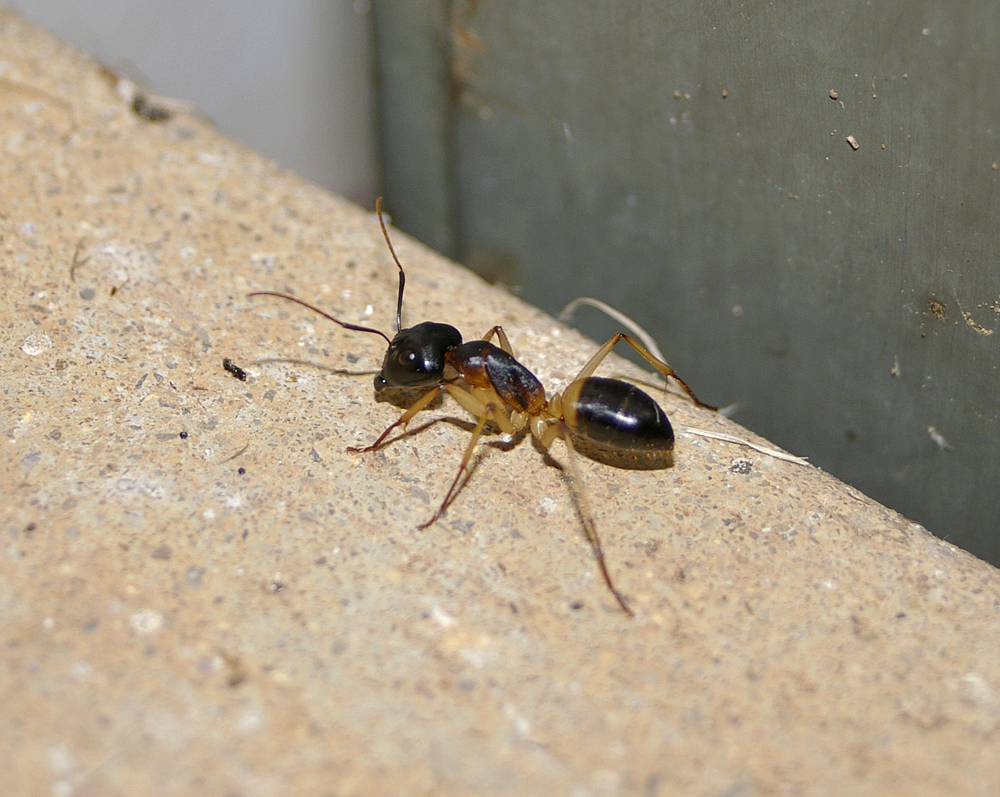
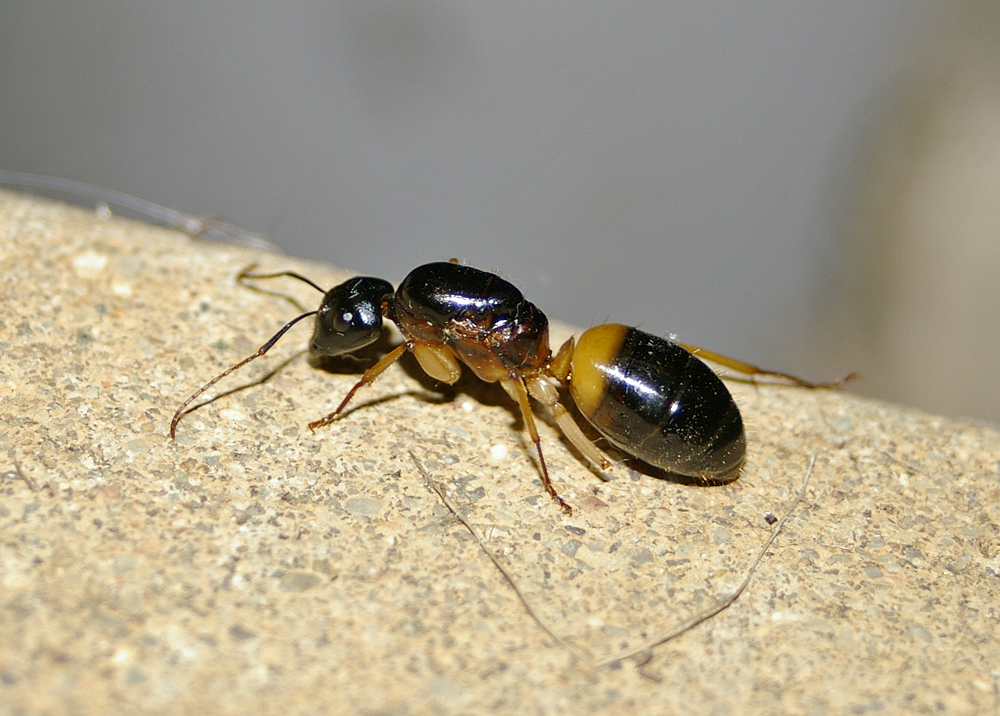
The true banded sugar ant (Camponotus consobrinus) is Australian and much larger. It shares a genus with American carpenter ants, which bite hard enough to notice and can spray formic acid into the wound. If the ant on your counter is over 6 mm long and dark, read what a carpenter ant bite feels like instead.
Do Sugar Ant Bites Itch, and How Long Do They Last?

Mild itching is normal and short. Ants this small deliver almost no venom, so the reaction comes from the mechanical pinch rather than a chemical load. Cold water and a dab of hydrocortisone settle it faster than anything else.
If the itch is still building on day two, the culprit is probably not an ant. Marks that itch for days in a row of three or four usually belong to bed bugs, while dozens of tiny dots around ankles and waistbands are the signature of chiggers or fleas. Ants leave one mark where one ant was.
Anyone with a known insect sting allergy should still watch for spreading hives or breathing trouble, as the Mayo Clinic advises for any insect bite, though such reactions to sugar ants are very rare.
Do Sugar Ants Carry Disease?
Not in any way that matters in a normal household. Ants crossing a counter can carry bacteria picked up from a drain or a trash can on their feet, and hospital studies have found Staphylococcus on foraging ants. That is contamination, not transmission through the bite.
Wash any surface the trail crossed and throw out food the column reached. The bite itself injects nothing worth worrying about, unlike a tick or mosquito bite.
Do Sugar Ants Bite Dogs and Cats?

They can, though fur makes it unlikely. Pets get bitten on the bare spots: paw pads, the nose, and the belly of a dog that lay down on a trail. The animal licks the spot for a minute and forgets it.
The real pet problem is the food bowl. Ants colonize kibble left out overnight, and a cat walking away from an occupied bowl is rejecting the ants, not the food. Set the bowl inside a shallow dish of water and feed on a schedule.
What Causes Sugar Ants in Your House?

Sugar ants come indoors for two reasons: a sweet or greasy food source, and moisture. A scout that finds syrup residue on a shelf lays a pheromone trail, and the column you see an hour later is that trail being used.
Colonies also move inside after heavy rain floods their nests, and again in hot dry spells. They are not the only insects that arrive on cue: earwigs follow damp weather indoors, ladybugs pile into warm walls in fall, and carpet beetle larvae stay year round once they reach a pantry.
Frequently Asked Questions
Should I squish sugar ants?
Squishing a few is harmless but pointless. Crushed ants release alarm pheromones that draw nestmates to the spot, and the odorous house ant releases its coconut smell. Soapy water works better, because it removes the chemical path the rest of the colony is following.
Will ants leave if I keep killing them?
Usually not. Killing foragers removes a small fraction of a colony that may hold thousands of workers inside a wall void, and the colony simply sends more. Bait carried back to the queen is the only thing that ends a trail rather than thinning it.
What smell do sugar ants hate?
Peppermint oil, white vinegar, cinnamon, and citrus oils all disrupt the scent trail. Vinegar is the most reliable because it also cleans away the residue the ants were following. Treat these as trail erasers, not as a way to kill a colony.
How do you get rid of sugar ants permanently?
Combine a slow-acting sugar bait with exclusion. Leave the bait undisturbed for one to two weeks so workers carry it to the queen, then seal gaps around pipes, window frames, and door sweeps. Most kitchens clear in seven to fourteen days.
What time of year do sugar ants come out?
Outdoor colonies wake as soil warms in March and April, peak from May through September, and slow in late fall. Indoor sightings happen in any month, because a heated kitchen with crumbs and condensation looks like summer to a colony nesting in a wall.
How long does it take to get rid of sugar ants?
Seven to fourteen days with bait, longer with a large colony or several satellite nests. Expect more ants in the first two days, not fewer, because the bait is attracting them. That surge means it is working, so leave the stations in place.