Carpenter Ant Bite: What It Feels Like and What It Means
A carpenter ant bite is a sharp pinch that leaves a small red mark and stings briefly, usually fading within a few hours to a day. Carpenter ants have strong mandibles capable of breaking skin, and some species spray formic acid into the wound, which produces a burning sensation out of proportion to the size of the insect.
They do not sting. Carpenter ants have no stinger, so any pain is from the bite plus acid rather than venom injection, and there is no medical significance to a bite in most people. The more important thing a carpenter ant bite tells you is that there is a colony nearby, and carpenter ants nest in damp or damaged wood, often inside a structure. This guide covers the bite, identification, damage, and what to do.
A carpenter ant bite is a brief sharp pinch leaving a small red mark, sometimes with a burning sensation from sprayed formic acid. They do not sting and have no venom. Bites fade within hours to a day and need only washing and a cold pack. Finding carpenter ants indoors usually means a nest in damp wood nearby.
| Feature | Carpenter Ant Bite |
|---|---|
| Sensation | Sharp pinch, sometimes burning |
| Appearance | Small red mark, mild swelling |
| Duration | Hours to about a day |
| Sting | None; no stinger exists |
| Cause of burning | Sprayed formic acid |
| Treatment | Wash, cold pack, avoid scratching |
| Ant size | Quarter to five-eighths of an inch |
What Does a Carpenter Ant Bite Feel Like?
Like a hard pinch with a brief sting. Carpenter ants are among the larger ants in North America and have correspondingly large mandibles, and a major worker can pierce skin easily. The initial sensation is mechanical rather than chemical, followed in some cases by a burning feeling.
The burning comes from formic acid. Ants in the subfamily Formicinae, which includes carpenter ants, spray formic acid from the tip of the abdomen as a defence, and if that lands in a fresh bite it stings noticeably. Some people describe the effect as similar to a paper cut with lemon juice on it.
What it does not feel like is a wasp or fire ant sting. Those inject venom through a stinger and produce lasting throbbing pain, blistering, and in the case of fire ants a characteristic white pustule after a day or two. Carpenter ant bites leave none of that. The bullet ant guide covers the other end of the ant pain scale.
What Does the Bite Look Like?
A small red mark, sometimes with a tiny break in the skin where the mandibles closed, and mild localised swelling. It looks much like any minor insect bite and is often less impressive than it felt.
Two puncture marks close together are occasionally visible, since the mandibles work like pincers rather than a single point. That is one of the few ways to distinguish a carpenter ant bite from a mosquito or midge bite after the fact.
Most fade within a few hours and are gone within a day. Persistent redness spreading outward, warmth, pus, or increasing pain after 48 hours suggests secondary infection from scratching rather than anything the ant did, and that warrants medical attention. Allergic reactions to carpenter ant bites are rare but possible, and any difficulty breathing, swelling of the face or throat, or widespread hives is an emergency.
How Do You Treat It?
Wash with soap and water, apply a cold pack for ten to fifteen minutes, and leave it alone. That is the whole treatment for the overwhelming majority of bites, and the main risk is turning a minor bite into an infected one by scratching.
For itching, an over-the-counter antihistamine or hydrocortisone cream helps, and a paste of baking soda and water is a reasonable home option for neutralising residual formic acid on the skin surface. Keep the area clean and covered if it has broken the skin.
No antivenom, antibiotic, or specific treatment exists or is needed. Carpenter ants do not transmit disease to humans, and the frequent question of whether you can get sick from them has a straightforward answer: not from a bite. The health concern with carpenter ants is structural, not medical. The carpet beetle bites guide covers another commonly misattributed skin reaction.
How Do You Identify a Carpenter Ant?
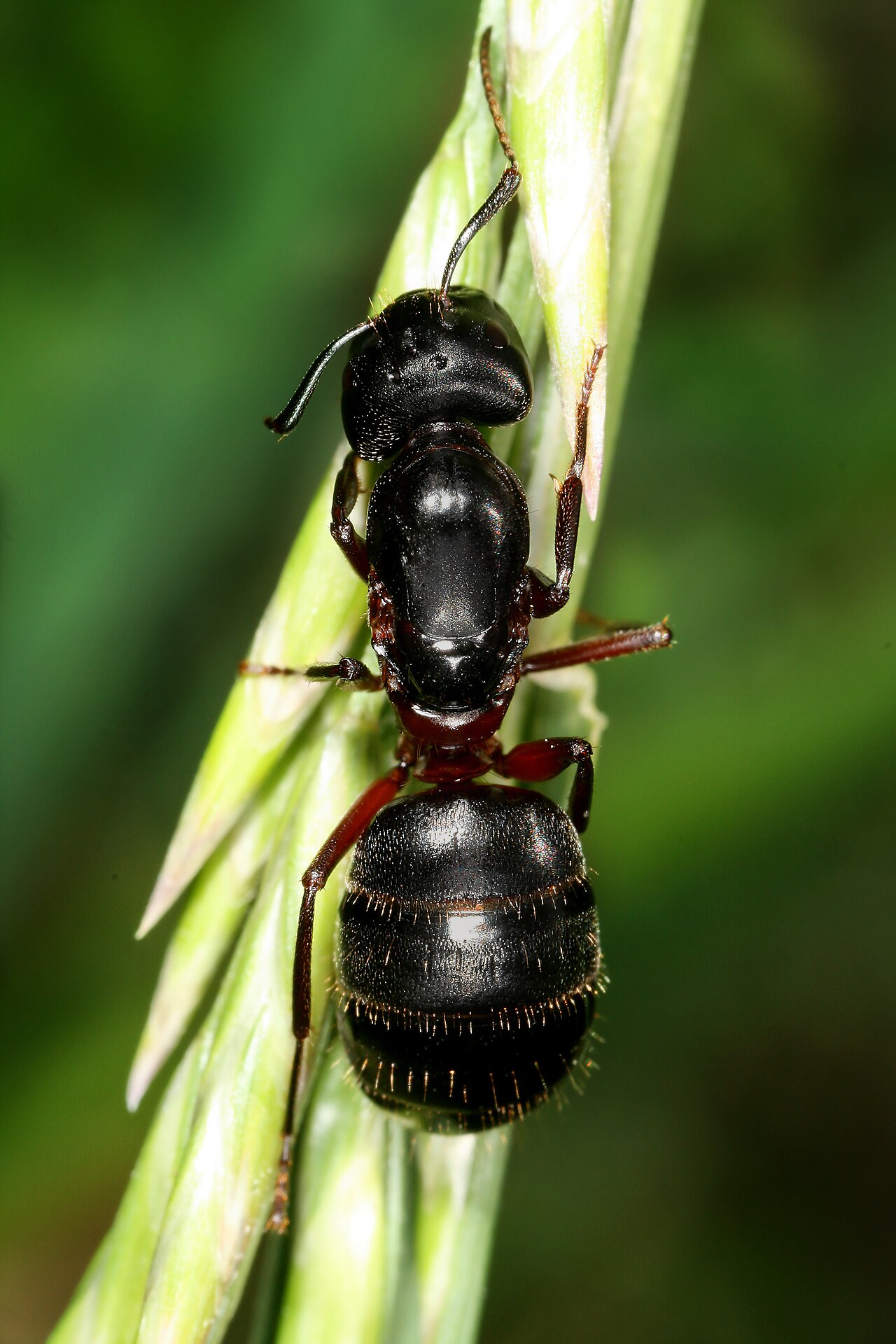
Size first. Carpenter ants are large, a quarter to five-eighths of an inch, with major workers at the top of that range, and within a single colony workers vary noticeably in size, which is itself a clue since many ant species are uniform.
Shape settles it. Carpenter ants have a single node between thorax and abdomen, an evenly rounded thorax with no spines or dips when viewed from the side, and elbowed antennae. Most are black, though some species are red and black or brown.
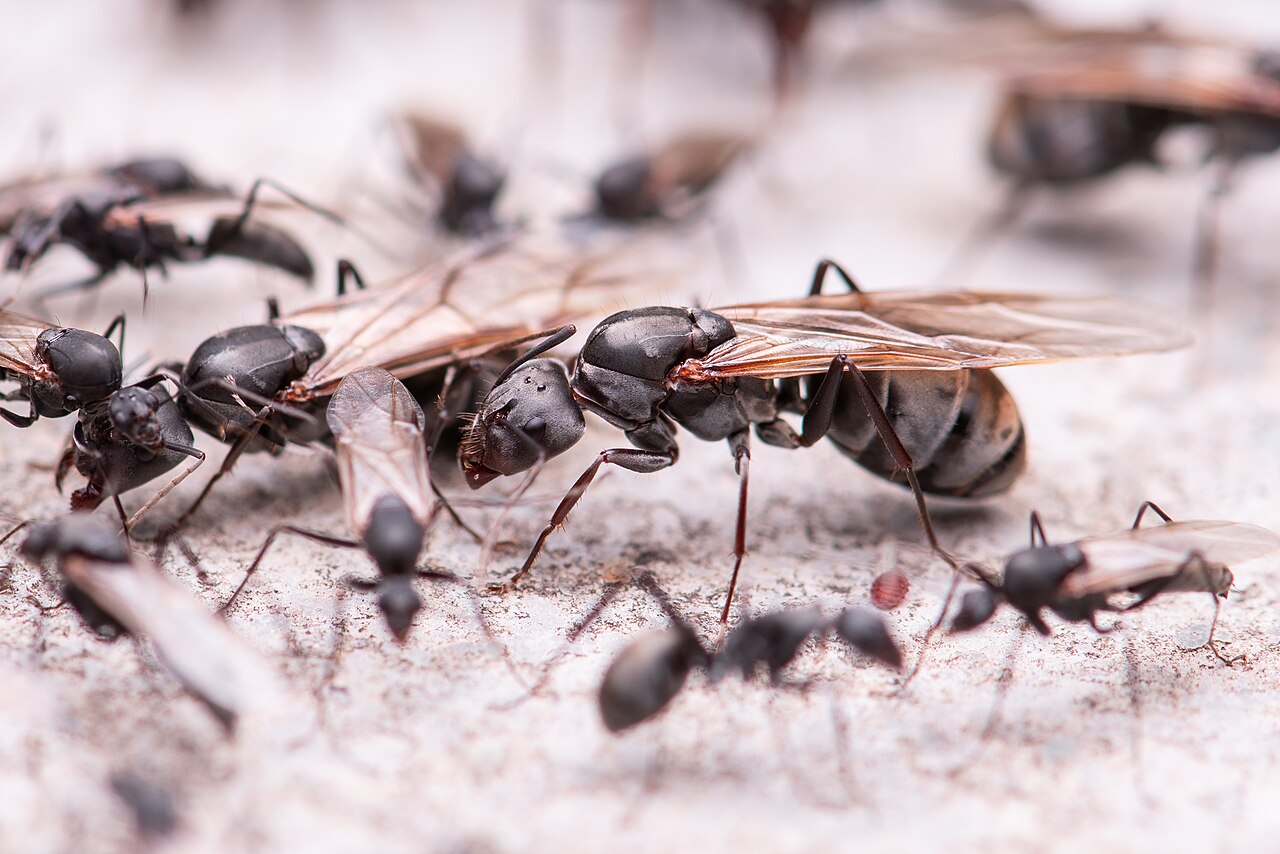
The confusion is with termites, and the differences are clear once known. Termites have straight bead-like antennae, a broad waist with no pinch, and wings of equal length on the swarming forms. Ants have elbowed antennae, a narrow pinched waist, and forewings noticeably longer than hindwings. Getting this right matters because the treatment and the damage differ completely, and the baby centipede guide covers another household invertebrate people misidentify. The guide to what ants eat covers the group more broadly.
Do Carpenter Ants Damage Wood?
Yes, but differently from termites and more slowly. Carpenter ants do not eat wood and gain no nutrition from it. They excavate galleries to nest in, hollowing out chambers and connecting tunnels, and they prefer wood that is already damp, decayed, or damaged.
The galleries look different from termite work. Carpenter ant tunnels are smooth, clean, and almost sanded in appearance, with no mud or soil inside, while termite galleries are packed with mud and debris. That is one of the clearest ways to identify which insect made a void found during repairs.
Damage accumulates over years rather than months, so a mature colony can weaken structural timbers but rarely causes the rapid destruction associated with termites. The bigger message is what the ants indicate: carpenter ants nesting indoors almost always mean a moisture problem, whether a leaking roof, a failed window seal, a plumbing leak, or wood in contact with soil.
Where Do They Nest?
In damp or decayed wood, and colonies often have a main nest outdoors plus satellite nests indoors. The parent colony with the queen is typically in a dead tree, a stump, a log pile, or a rotting fence post, while satellites hold workers and older brood and can be inside a building.
Indoors, the usual sites are exactly where moisture collects: around leaking windows and doors, in bathroom and kitchen walls, under sinks, in roof voids near failing flashing, behind dishwashers, in hollow doors, and in insulation. They also nest in sound wood once established.
Access is often via a bridge from vegetation. Branches touching a roof, shrubs against siding, firewood stacked against a wall, and mulch piled against the foundation all give carpenter ants a route in, and removing those contact points is one of the more effective preventive measures. Extension programmes such as Penn State (psu.edu) publish detailed inspection guidance.
How Do You Get Rid of Them?
Find and fix the moisture first, because a colony that keeps finding damp wood will keep coming back regardless of treatment. Repair leaks, improve ventilation in crawl spaces and roof voids, replace decayed timber, and move firewood and mulch away from the structure.
Baiting works better than spraying for a colony you cannot reach. Carpenter ants share food by trophallaxis, so a slow-acting bait taken back to the nest reaches the queen and brood, while a contact spray kills the foragers and leaves the colony intact and often triggers it to split into more satellites.
Locating the nest is the other half of it. Following foraging trails at night, when carpenter ants are most active, and listening for a faint rustling in walls on a quiet night both help. For a large or inaccessible colony, particularly in a wall or roof void, a professional with an inspection camera is the realistic route. The guide to birds that eat ants covers the natural predators that limit outdoor colonies.
What Is Mistaken for a Carpenter Ant?
Termite swarmers are the consequential confusion, and the three checks are antennae, waist, and wings: termites have straight bead-like antennae, no waist pinch, and four wings of equal length, while ants have elbowed antennae, a narrow waist, and forewings clearly longer than the hindwings.
Among ants, field ants are the usual mix-up. They are similar in size and often black or bicoloured, but the thorax is uneven in profile with a distinct dip, whereas a carpenter ant’s thorax curves in a single smooth arc. Field ants nest outdoors in soil mounds and do not excavate wood.
Acrobat ants and pavement ants are smaller with two nodes at the waist rather than one, and acrobat ants raise the abdomen over the body when disturbed, which is unmistakable once seen. Getting the identification right determines whether you are looking for a moisture problem in a wall or a nest under a paving slab.
When Are They Most Active?
Spring and summer, with the highest indoor activity from March through July in most of the United States. Carpenter ants overwinter in a dormant state and become active as temperatures rise, which is why the first sighting of large black ants indoors is a classic early spring event.
Foraging peaks at night. Workers leave the nest around dusk and forage through the night, returning before dawn, which is why a kitchen can appear ant-free during the day and busy at midnight. That timing also makes night the best moment to trace a trail back to the nest.
Winged ants indoors in spring are the significant sighting. Swarmers emerging inside a building mean a mature colony has been established within that structure for several years, since colonies do not produce reproductives until they are well developed. Winged ants outdoors are normal and mean nothing about your house.
Related reading: Carpenter Ant Queen.
Frequently Asked Questions
What does a carpenter ant bite feel like?
A sharp pinch, sometimes followed by a burning sensation where sprayed formic acid enters the wound. It is brief and much less severe than a wasp or fire ant sting.
Do carpenter ants sting?
No. They have no stinger and no venom. Any burning comes from formic acid sprayed from the abdomen, which stings on broken skin but does nothing lasting.
What does the bite look like?
A small red mark with mild swelling, occasionally with two puncture points close together from the mandibles. It usually fades within hours and is gone within a day.
How do you treat a carpenter ant bite?
Wash with soap and water, apply a cold pack, and avoid scratching. Antihistamine or hydrocortisone cream helps with itching. Spreading redness or pus after two days suggests infection.
Can you get sick from carpenter ants?
Not from bites; they transmit no disease to people. The genuine concern is structural, since indoor nests indicate a moisture problem and cause slow damage to timber.
Do carpenter ants eat wood?
No, they excavate it to nest and push the shavings out. Their galleries are smooth and clean, unlike termite tunnels which are packed with mud, and damage accumulates over years.
What time of year are carpenter ants most active?
March through July in most of the US, with foraging peaking at night. Winged ants appearing indoors in spring indicate a mature colony has been in the structure for several years.

Similar Posts
What Is a Group of Bats Called? Colony and Cauldron
A group of bats is called a colony, or a cauldron in flight. Where cauldron came from, how bat colonies are organized, and why 15 million bats share one Texas cave.
What Is a Female Deer Called? Doe, Hind, and Cow
A female deer is called a doe, or a hind in large species and a cow in elk and moose. The full vocabulary by species, how to sex a deer without antlers, and what a mother deer does.
Red Butterfly: Which Species Are Actually Red
Most red butterflies are really orange. The red admiral comes closest in North America. Which species qualify, why true red is rare, and what a sighting means.
How to Get Rid of Earwigs?
Earwigs look intimidating but are harmless to people. Here is how to identify them, why they invade homes and gardens, and the safest ways to get rid of them for good.
Groundhog Poop: Why You Almost Never See It
Groundhog poop is rare to find because groundhogs use dedicated underground latrines. What it looks like, how to tell it from rabbit and deer droppings, and what a find means.
Milk Snake
Milk snakes are harmless, non-venomous constrictors whose bold banding mimics venomous coral snakes. Here is how to identify them and what they actually eat.