Carpenter Ant Queen: How to Identify One and What It Means
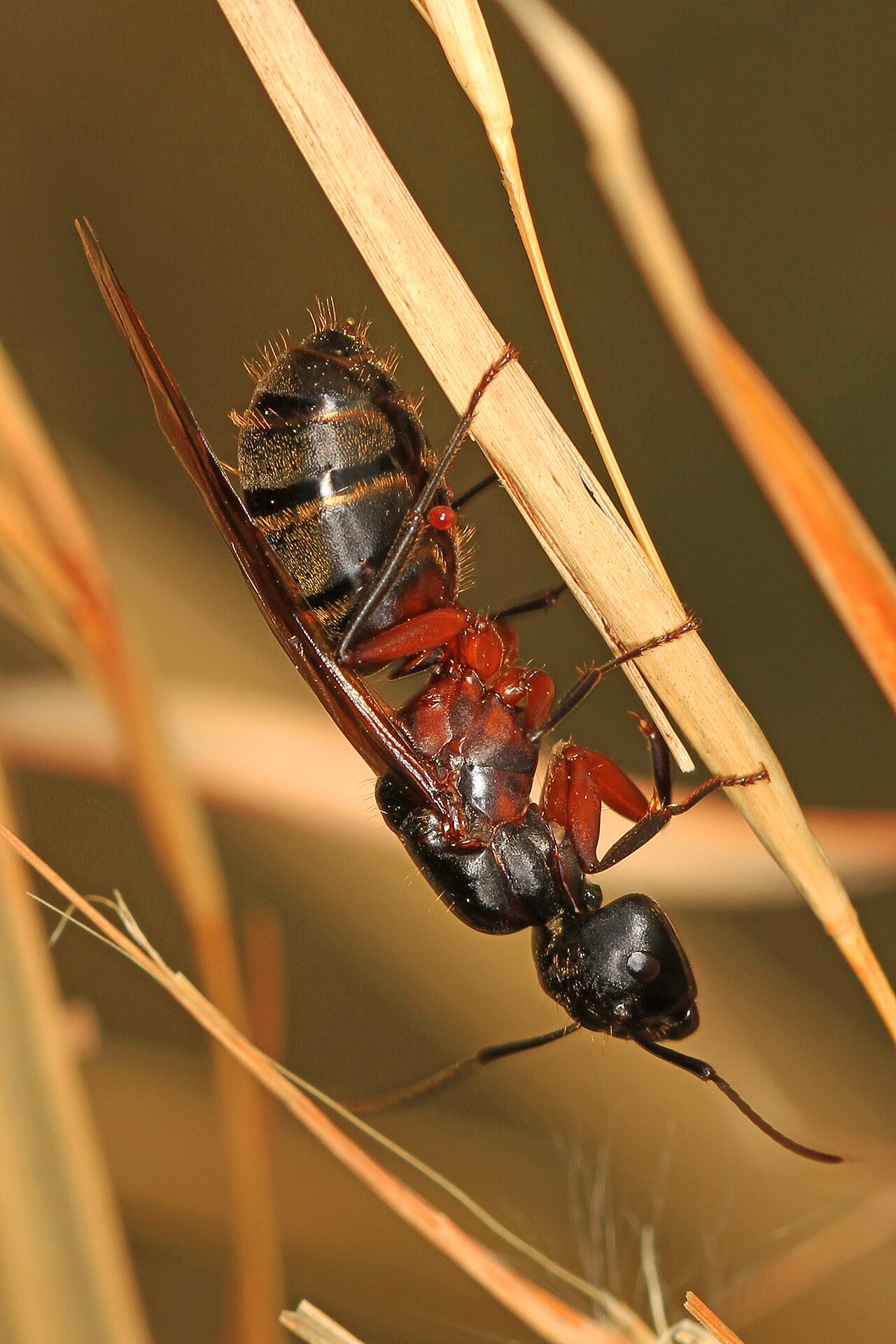
A carpenter ant queen is the single egg laying female that founds and sustains a colony, and she is unmistakable once you know the proportions: roughly twice the length of the largest worker, with a bulky thorax and, in her first weeks, four wings. In the black carpenter ant (Camponotus pennsylvanicus), the common species of the eastern United States, a queen runs 0.6 to 0.75 in (15 to 19 mm).
Finding one indoors in spring means something specific, and it is not the same as finding workers on a countertop. This covers how to identify a queen, whether she ever leaves the nest, and what happens to a colony after she dies.
A carpenter ant queen is the reproductive female of the colony, about 0.6 to 0.75 in (15 to 19 mm) long, twice the size of a worker, with a broad thorax and wing scars or intact wings. She mates once, sheds her wings, and can lay eggs for well over a decade inside a single nest.
| Feature | Queen | Worker |
|---|---|---|
| Length | 0.6 to 0.75 in (15 to 19 mm) | 0.25 to 0.5 in (6 to 13 mm) |
| Wings | Four, shed after mating; scars remain | None at any stage |
| Thorax | Deep and boxy, packed with flight muscle | Slim, evenly curved in profile |
| Lifespan | Often 10 years or more | Several months to about a year |
| Role | Lays all eggs in the colony | Forage, excavate, tend brood |
| Seen outdoors | Only during the mating flight | Constantly, on foraging trails |
How Do You Tell if a Carpenter Ant Is a Queen?
Size and thorax shape settle it faster than color. A queen is noticeably larger than even the biggest major worker, and her thorax is deep and blocky in profile because it once housed flight muscles. Workers have a slim, smoothly arched thorax. Both share the single waist node and evenly rounded upper back that separate carpenter ants from other house invading species.
Wings are the second tell. A queen caught during a mating flight still has four, the front pair longer than the rear. After mating she breaks them off, leaving small dark stubs visible with a hand lens. A large winged ant indoors is usually a queen or a male, which is why an emergence often gets mistaken for a flying ant problem rather than a nest.
Carpenter Ant Queen vs Worker: What the Size Difference Means
Carpenter ant workers are polymorphic, meaning one colony produces minors around 0.25 in (6 mm) and majors up to 0.5 in (13 mm). That range is why size alone confuses people: a major looks enormous next to a minor, yet still falls short of the queen.
The difference is functional. Majors defend the nest and cut wood with heavy mandibles, which is why a carpenter ant bite from a large worker can break skin. The queen does none of that work and has no defensive role, unlike the small aggressive foragers people notice when sugar ants show up indoors. For a closely related question, see our guide to valley carpenter bee.
Does the Queen Carpenter Ant Ever Come Out?
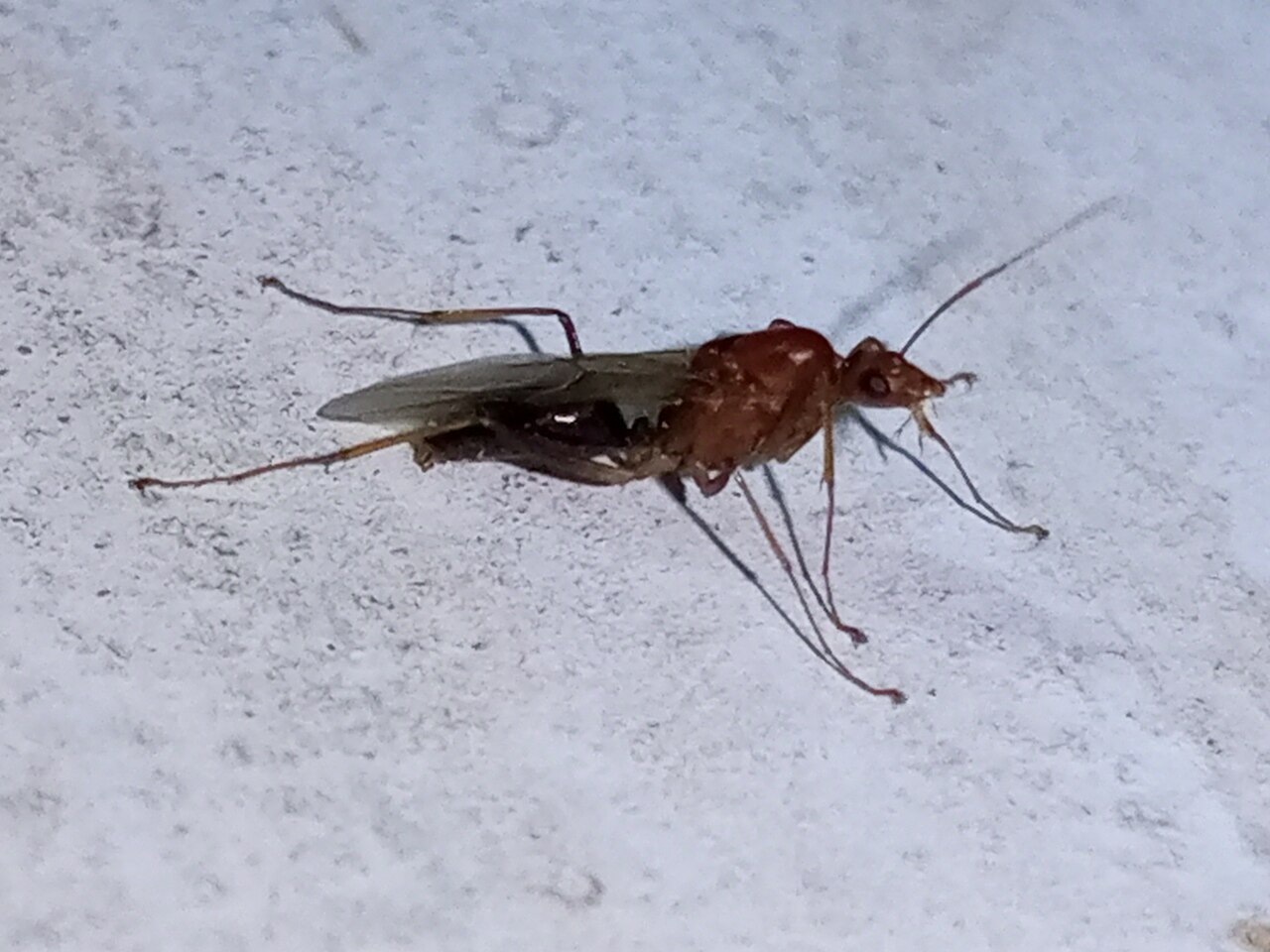
Once, and only once. Winged reproductives leave the parent colony in a synchronized mating flight, typically from May through July in the northern United States and earlier in the South, often on a warm still evening after rain. Males die within days. The mated female lands, sheds her wings, and searches for a cavity in damp or decaying wood.
After that she does not forage again. She seals herself into a small chamber and raises the first brood on her own reserves, metabolizing the flight muscles she no longer needs. Most queens fail at that stage. Once workers emerge they take over foraging, which is when the colony diet shifts to honeydew, insects, and kitchen spills.
What to Do if You Find a Queen Carpenter Ant
Note where and when you found her, because that answers more than the ant itself does. A winged queen at a window in late spring either flew in from outside or emerged from a nest already in the structure. Repeated winged ants indoors, especially in winter, point to an established colony in the walls.
Check for the real evidence: coarse sawdust mixed with insect fragments, called frass, below baseboards or window frames, plus a faint rustling in wall voids at night. Carpenter ants excavate wood but do not eat it, and they favor moisture damaged framing. Repairing that damage matters more than spray, and the same logic applies to any indoor ant problem.
What Happens When a Carpenter Ant Queen Dies?
The colony does not collapse immediately, and it does not raise a replacement. Carpenter ant workers cannot mate, so no new queen appears inside the nest. Existing workers keep foraging and tending the remaining brood, and the colony winds down as they age out, usually over several months to a year.
A large colony may also run satellite nests holding workers and brood but no queen, which is why activity continues in one part of a house after another nest is treated. Outdoors, declining colonies become easy prey for the many birds that specialize in ants. The University of Minnesota Extension publishes identification guidance for carpenter ants and their queens.
Carpenter Ant Queen vs Male: Telling Swarmers Apart
Both sexes fly, and only one of them matters afterward. Males are slender, roughly worker sized at about 0.3 in (8 mm), with a small head, large eyes, and oversized wings. Queens are heavy bodied and unmistakably bigger. A window sill full of winged ants usually holds far more males than females.
Males die within days of mating, so dead winged ants indoors in early summer are typically spent males. The queens that survive disappear into wood and are not seen again. Counting swarmers therefore tells you nothing about colony size, only that a mature colony is nearby.
Related reading: Carpenter Ant Frass.
Related reading: Carpenter Ant Damage.
Related reading: Sugar Ants.
Related reading: Carpenter Ant Identification.
Frequently Asked Questions
Is it okay to squish a queen carpenter ant?
Yes, it is harmless to you and it removes one potential colony founder. Killing a queen indoors changes nothing about an existing nest, though, since that colony already has its own queen sealed in a wall void. Treat a squished queen as a clue, not a solution.
How many ants does a queen lay in a day?
Her first brood is tiny, often 15 to 20 eggs total. A mature colony of two to three thousand workers takes three to six years to build, so sustained output is measured in dozens of eggs per day at peak rather than the hundreds some species manage.
How long does an ant colony last after the queen dies?
Usually several months to about a year. Workers live from a few months up to roughly a year and cannot produce replacement females, so the colony shrinks as they die off. Egg laying stops at once, brood finishes developing, and no new generation follows.
What kills carpenter ants permanently?
Only reaching the queen ends a colony, which is why slow acting bait carried back to the nest outperforms contact spray on visible workers. Pair baiting with the actual fix: replace moisture damaged wood, correct leaks, and trim branches that bridge the roofline.
Can a carpenter ant colony have more than one queen?
Most established colonies run a single queen, though founding females sometimes cooperate at first before one survives. Large colonies spread into satellite nests holding workers and brood but no queen, which is why treating one nest often fails.
What is an ant’s worst enemy?
Other ants, above all. Territorial fights between neighboring colonies kill more ants than anything else, and invasive species displace natives outright. Beyond that, woodpeckers, flickers, and antlions take heavy numbers, while parasitic fungi and phorid flies target individual foragers.