Fisher Sounds: Every Call, and Why the Scream Is Not One
Fisher sounds are mostly quiet: soft chuckles, low grunts, hisses and snarls, plus the thin mewing of kits near a den tree. The famous scream that gets posted every spring as a “fisher cat” almost always belongs to a red fox or a barred owl. Fishers (Pekania pennanti, long listed as Martes pennanti) are large forest weasels that communicate at close range, so most of their calls carry only 20 to 50 ft (6 to 15 m).
That matters if you are standing on a porch in New Hampshire at 2 a.m. trying to name a noise. Below is each fisher call, what it sounds like in plain words, the season and time of day you hear it, and the animal it gets confused with.
Fishers make short chuckles and grunts during normal movement, hisses and growls when threatened, and chattering or wailing calls around the late winter mating season. Kits mew like kittens from March to May. Fishers do not routinely scream; recordings labeled “fisher cat scream” are usually red foxes or barred owls.
| Sound | How it reads | When you hear it | Often mistaken for |
|---|---|---|---|
| Chuckle, “huff huff” | Soft repeated puffing, almost a laugh | Moving through cover, female near kits | Squirrel chatter |
| Grunt | Short, low, pig-like | Feeding, climbing, mild stress | Raccoon |
| Hiss | Sharp burst of air, snake-like | Cornered, at a den entrance | House cat |
| Growl and snarl | Rough, rising, wet | Fights over food or mates | Bobcat |
| Chatter and wail (rare) | Long, high, uneven | Mating season, February to April | Red fox vixen, barred owl |
| Kit mew | Thin, kitten-like whine | March to May, from a tree cavity | Young raccoons |
Do Fishers Make Sounds?
Yes, but far fewer than their reputation suggests. Fishers are solitary and territorial, so they have little use for long distance calls; they mark with scent instead and save their voice for contact at a few body lengths. Field researchers who have handled hundreds of trapped fishers describe mostly hisses, growls and chuckles.
The practical consequence is that a loud, carrying call in the woods is usually something else. Owls, foxes and coyotes all project; a fisher rarely needs to.
The Chuckle: The Sound You Are Most Likely to Hear
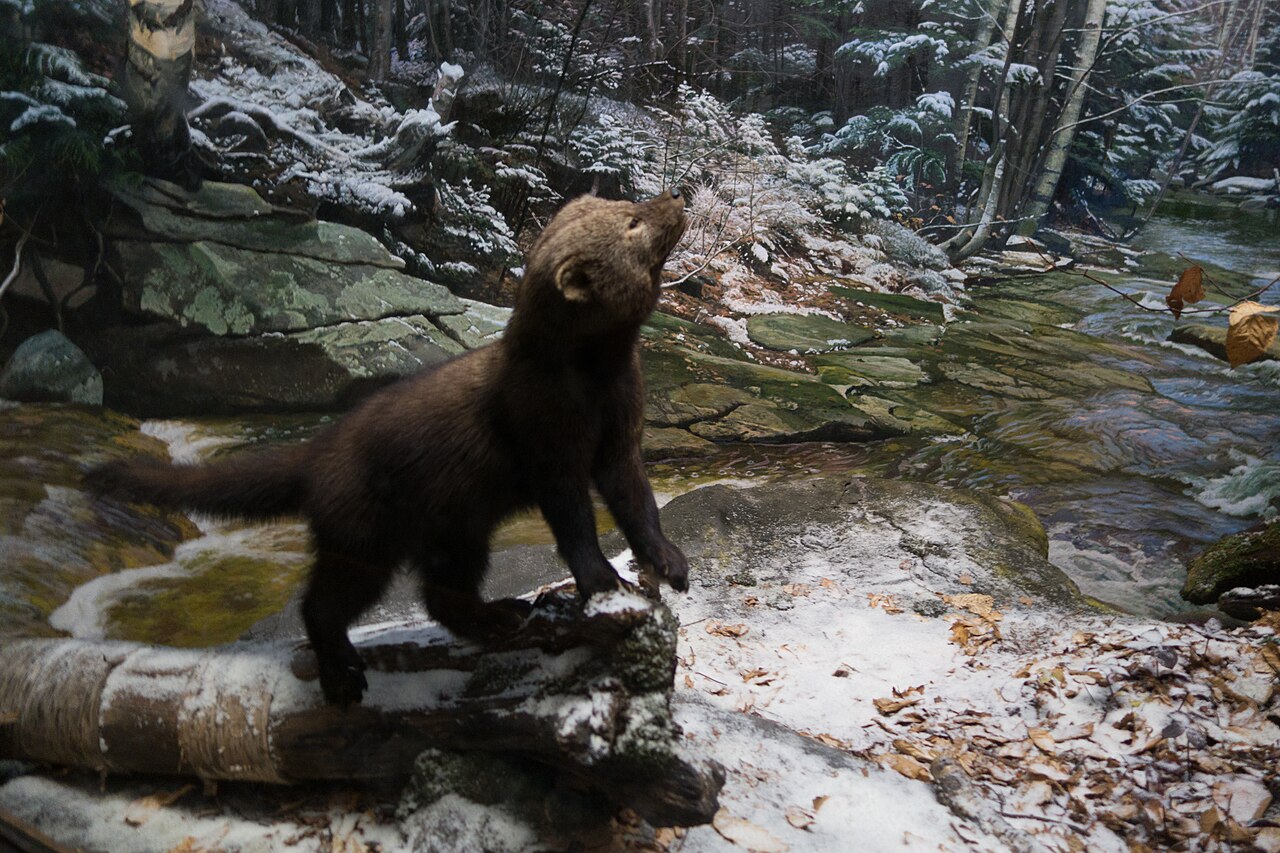
The chuckle is a soft, repeated “huff huff huff” made while a fisher moves or works a food source. It is quiet enough that you need to be within about 30 ft (9 m) on a still night, which is why trail camera microphones catch it more often than people do. Mothers use a version of it around their kits.
If the sound is a dry, scolding rattle from high in a tree, you are more likely hearing a red squirrel defending a cache.
Grunts and Chuffs While Feeding
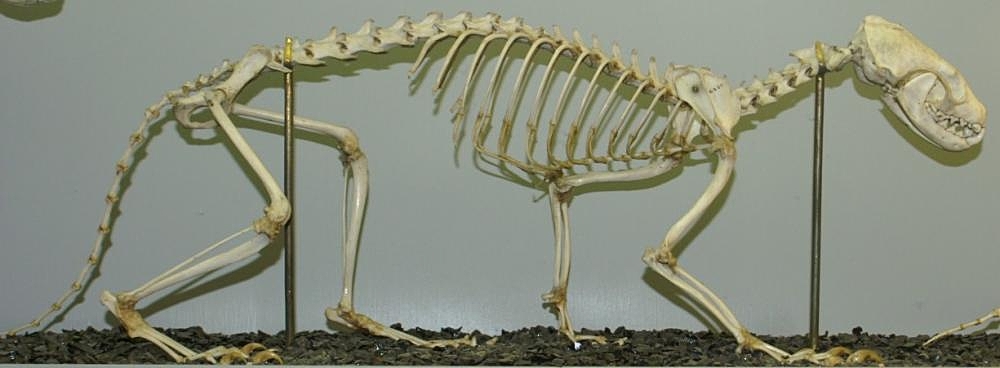
Feeding fishers grunt. The sound is low, short and pushed out between bites, and it comes with the other noises of a carcass being worked: dragging, scraping, the snap of small bones. Fishers are one of the few predators that routinely kill porcupines, and a porcupine kill site is noisy and messy.
Raccoons make a similar grunt, so the tiebreaker is usually the tracks and the mess left behind, not the voice.
Hisses, Growls and Snarls: The Warning Sounds

A hiss means a fisher feels trapped. It is a flat burst of air, close to a house cat warning a dog off, and it is what people hear when they open a shed door or corner an animal under a deck. A growl follows if the fisher cannot leave, and a snarl comes with an open mouth and visible teeth.
Treat all three as an instruction to back away and give the animal a clear exit. A fisher that has room will take it.
Fisher Sounds in the Mating Season
Late winter is the only time fishers get loud. Mating runs roughly from late February into April, and during those weeks males travel widely and meet rivals, which produces chattering, extended wails and the growling scuffles that generate most “what was that” posts. Because of delayed implantation, females give birth about a year later, in the same late winter window.
Anything recorded in July that sounds like a scream is almost certainly not a fisher courting. The season is the strongest filter you have.
What Fisher Kits Sound Like
Fisher kits mew. They are born blind in a tree cavity in March or April, and for the next several weeks a den tree can produce faint, kittenish whines when the female returns. Hikers sometimes report an abandoned kitten in the woods and are hearing this.
Leave the tree alone. The female is foraging and will come back, and the same advice applies to the young bobcat calls people mistake for distressed pets.
Fisher Cat Screech: Real or Urban Legend?
Mostly legend. Nearly every viral “fisher cat scream” clip that has been checked against known recordings turns out to be a red fox vixen in January or February, or a pair of barred owls working through their caterwauling duet. Wildlife agencies in New England have been correcting this for years, and the U.S. Fish and Wildlife Service species accounts describe a quiet animal.
Fishers can produce harsh, loud noise in a fight. What they do not do is sit in one spot and scream on a schedule, which is exactly what a fox does.
Fisher Cat Sound vs Fox: How to Tell Them Apart
A red fox scream is a single harsh syllable, repeated on a steady beat, often three to ten times with pauses, and it carries a quarter mile or more. A fisher’s loudest output is irregular, shorter and local, and it usually comes with scuffling. Foxes also scream from open edges, lawns and fields; fishers stay in cover.
Coyotes add yips and group howling, which no fisher does.
Night Sounds That Are Not a Fisher at All
Barred owls are the biggest source of confusion. Their monkey-like duet is loud, bizarre and thoroughly nocturnal, and it is the single most common answer to “something screamed in my woods.” Screech owls add a trill, and raccoons fighting sound genuinely violent. Compare recordings of the barred owl call and the barn owl shriek before you settle on a mammal, and remember that bat calls around a roof are mostly too high to hear.
What Time of Day Do Fisher Cats Come Out?
Fishers are active day and night, with peaks around dawn and dusk. They are not strictly nocturnal, and in winter they often hunt in daylight, which is when most people actually see one crossing a road or a stone wall. Activity bouts last two to five hours and alternate with rest in a hollow log, a rock crevice or a tree.
So a daytime sighting does not mean a sick animal, unlike with some other carnivores.
Noises in the Attic or Wall: Is It a Fisher?
Almost never. Fishers den in trees and rock piles and avoid buildings; a steady pattern of thumping, scratching and chewing above a ceiling is squirrels, raccoons, mice or bats. Fishers will visit a yard for chickens, rabbits in hutches and pet food, so the realistic conflict is outdoors at the coop, not in the insulation.
Secure the run with half inch hardware cloth and a buried apron. A fisher climbs well and digs adequately, and chicken wire stops neither.
Did I See a Mink or a Fisher?
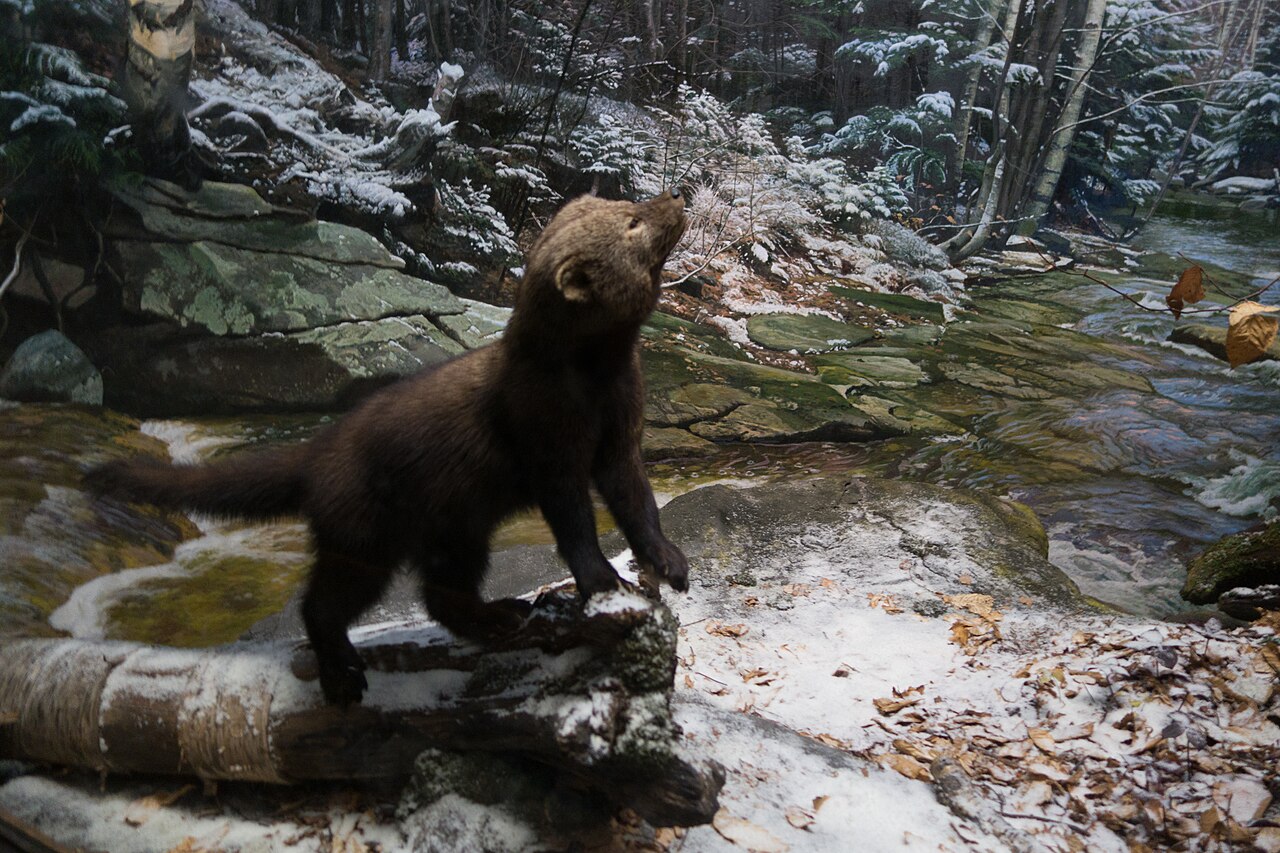
Size and water settle it. A mink is 1 to 3 lb (0.5 to 1.4 kg), slim as a tube sock, uniformly dark with a small white chin patch, and it is almost always within a few steps of a stream, pond or shoreline. A fisher is 4 to 13 lb (2 to 6 kg), 30 to 47 in (76 to 119 cm) including a thick bushy tail, with grizzled gold or silver shoulders, and it belongs to continuous forest.
An American marten (Martes americana) sits between them, with an orange throat patch and a lighter build. If the animal bounded across a road with a long tail streaming behind it, in woods, think fisher.
What States Are Fishers Found In?
Fishers live across northern New England, New York, Pennsylvania, West Virginia, the Great Lakes states, the northern Rockies, Washington, Oregon and parts of California, plus most of forested Canada. Trapping nearly erased them from the eastern United States by 1930; reintroductions and forest regrowth brought them back, and in some suburbs of Massachusetts and Connecticut they are now routine.
Southern and plains states have no fishers, which makes every “fisher cat” report from Florida or Texas something else: a bullfrog, an owl, or a neighbor’s cat.
Frequently Asked Questions
How fast can a fisher cat run?
Estimates for short bursts run around 10 to 15 mph (16 to 24 km/h), and sources disagree because few clean measurements exist. Speed is not really the point: fishers are built for agility, climbing head first down trunks and following prey through brush piles and snow tunnels rather than running anything down in the open.
Is a fisher aggressive to humans?
No. There are no documented predatory attacks on people, and fishers retreat when given space. A cornered, trapped or rabid animal will hiss, growl and bite like any wild carnivore, so never reach toward one. The real risk is to free roaming cats, poultry and caged rabbits.
How rare is it to see a fisher?
Uncommon but not remarkable in good habitat. Fishers hold large home ranges of 3 to 15 square miles, move constantly and avoid open ground, so sightings tend to be brief road crossings. Trail cameras set on a scent lure in mature forest pick them up far more reliably than any amount of waiting.
What can be mistaken for a fisher?
American marten, mink, river otter, a large dark house cat seen at distance, and young black bears get reported as fishers. The decisive details are tail shape, body length and habitat: a thick tapering tail nearly a third of total length, in forest, away from water, points to a fisher.
What is the sound of a fish called in words?
Fish calls have no standard name, so English falls back on onomatopoeia such as splash, plop, blub and glug for the noise at the surface. Underwater, many species really are vocal: drum and croaker grunt with their swim bladders, and toadfish hum loudly enough to be heard through a boat hull.
Do fishers make noise when they fight?
Yes, and it is the loudest thing they do. Two fishers disputing a carcass or a mate produce growls, snarls, screeches and a lot of scuffling in leaf litter, usually for under a minute before one leaves. Compare that short, chaotic burst with the steady, patient repetition of a bald eagle or an owl calling from a perch.