Bison Tracks: How to Identify Them in Snow, Mud and Sand
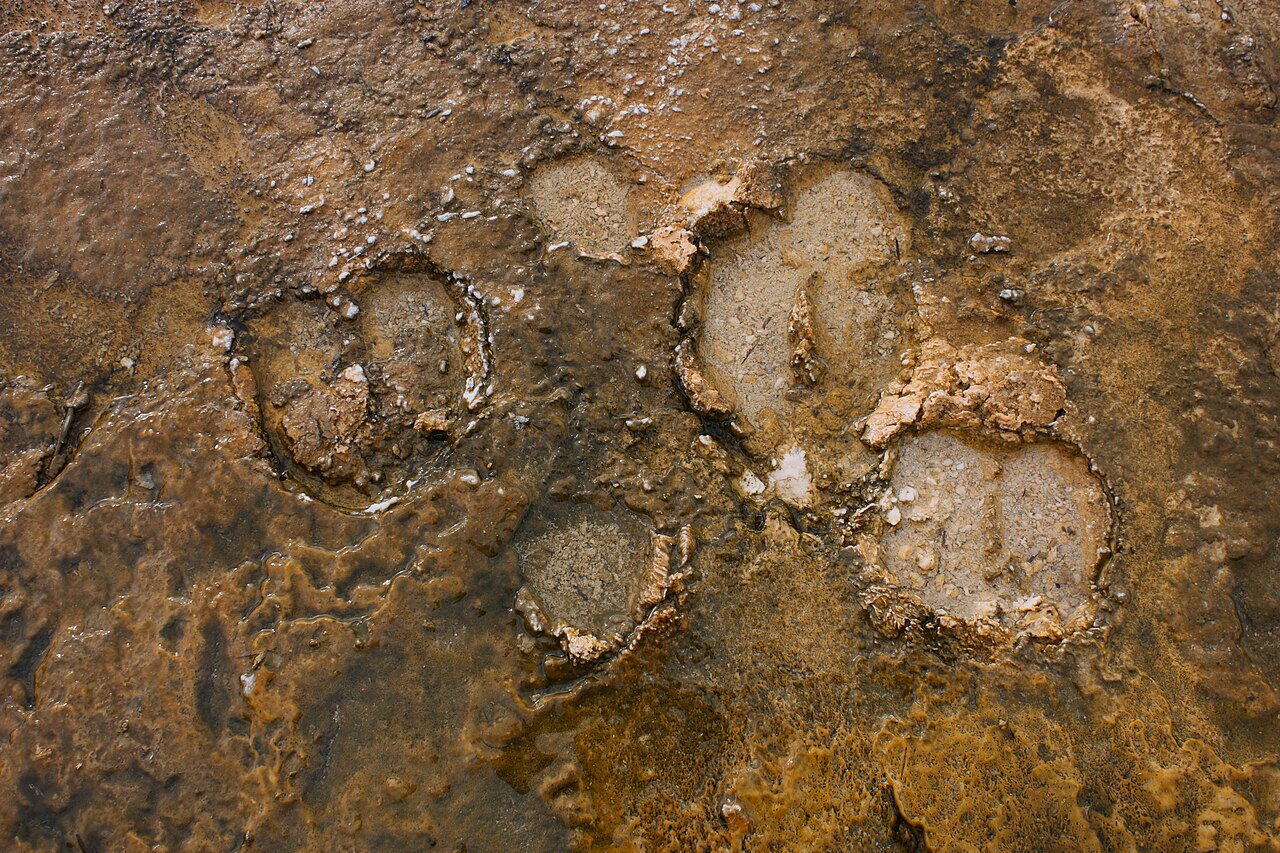
A bison track is the roundest large hoofprint in North America. Two blunt crescent toes form a print 4.5 to 6 inches (11 to 15 cm) long and nearly as wide, so the outline reads almost circular instead of the heart shape a deer or elk leaves. That roundness, plus a very wide straddle, separates bison from everything else sharing the same ground.
Winter is the best time to work them out. Snow holds the dewclaws, the drag marks and the full stride pattern that mud and sand lose, and a bison trail through deep snow is readable from a quarter mile away.
Bison tracks are cloven, two toed prints that look nearly round, 4.5 to 6 inches (11 to 15 cm) long and 4 to 6 inches (10 to 15 cm) wide, with blunt rather than pointed toe tips and no claw marks. Front tracks run slightly larger than hind. Walking stride is 20 to 30 inches (50 to 76 cm) with a straddle of 10 to 14 inches (25 to 36 cm), far wider than any deer.
| Feature | Bison | Cattle | Elk | Moose |
|---|---|---|---|---|
| Length | 4.5 to 6 in (11 to 15 cm) | 3.5 to 4.5 in (9 to 11 cm) | 4 to 4.75 in (10 to 12 cm) | 5 to 7 in (13 to 18 cm) |
| Outline | Nearly round, blunt tips | Oval, slightly pointed | Heart shaped, pointed | Long teardrop, very pointed |
| Width vs length | Almost equal | Clearly narrower | Narrower | Much narrower |
| Toe gap | Narrow, often closed | Often splayed | Narrow | Wide when splayed |
| Walking stride | 20 to 30 in (50 to 76 cm) | 18 to 26 in (46 to 66 cm) | 24 to 36 in (61 to 91 cm) | 30 to 45 in (76 to 114 cm) |
| Straddle | 10 to 14 in (25 to 36 cm) | 8 to 12 in (20 to 30 cm) | 7 to 10 in (18 to 25 cm) | 8 to 12 in (20 to 30 cm) |
What Do Bison Tracks Look Like?
American bison (Bison bison) are even toed ungulates, so each foot lands as two hoof halves that together print a broad, rounded shape. There are two functional toes in front and two behind, plus two small dewclaws set high on the back of each foot that register only when the animal sinks in. No claw marks ever appear, which rules out every large carnivore immediately.
The defining characteristic of a bison track is the ratio of width to length. Deer family tracks are consistently longer than wide; a bison print is close to square, and in a bull it can be wider than long. The toe tips are rounded off rather than drawn to a point, and the inner edges of the two halves often stay pressed together instead of splaying.
Weight shows up as depth. A mature bull weighs 1,800 to 2,000 pounds and sinks visibly where an elk leaves a surface scuff. For the contrast in shape, our deer track guide shows the pointed version of the same two toed print.
Bison Track Size: Front Versus Hind
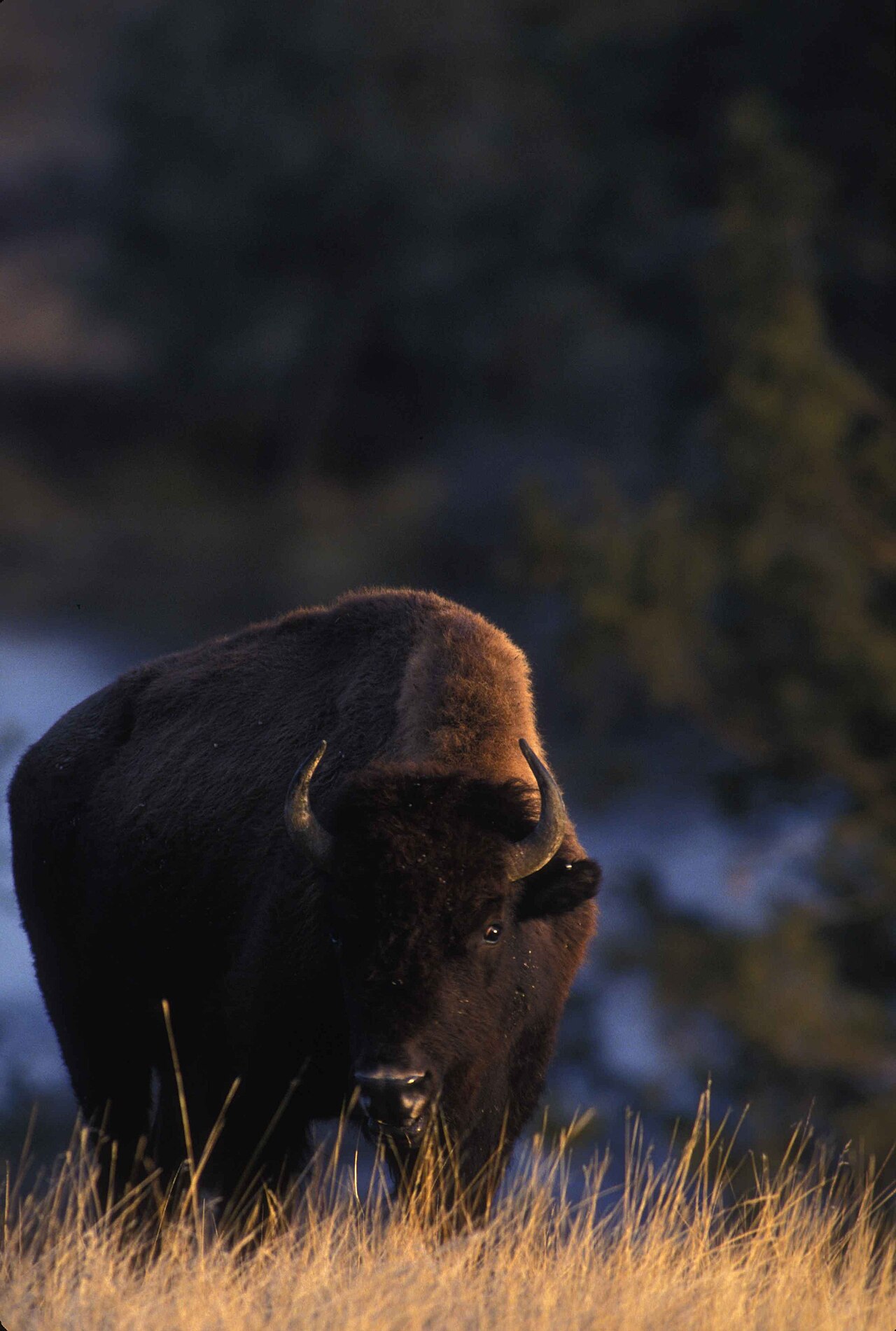
Front tracks are larger. A bison carries most of its mass over the shoulders and hump, so front hooves measure roughly 5 to 6 inches (13 to 15 cm) long on a bull and 4.5 to 5 inches (11 to 13 cm) on a cow, with hind tracks about half an inch shorter and slightly narrower.
In a normal walk the hind foot lands near or partly over the front print, producing overlapping prints at each step. Pulling the two apart is the key skill, because a double registered track looks far longer than the animal’s actual foot and leads people to call a bison a moose. Calf tracks run 2.5 to 3 inches (6 to 8 cm) and are still distinctly round.
Reading Bison Tracks in Snow
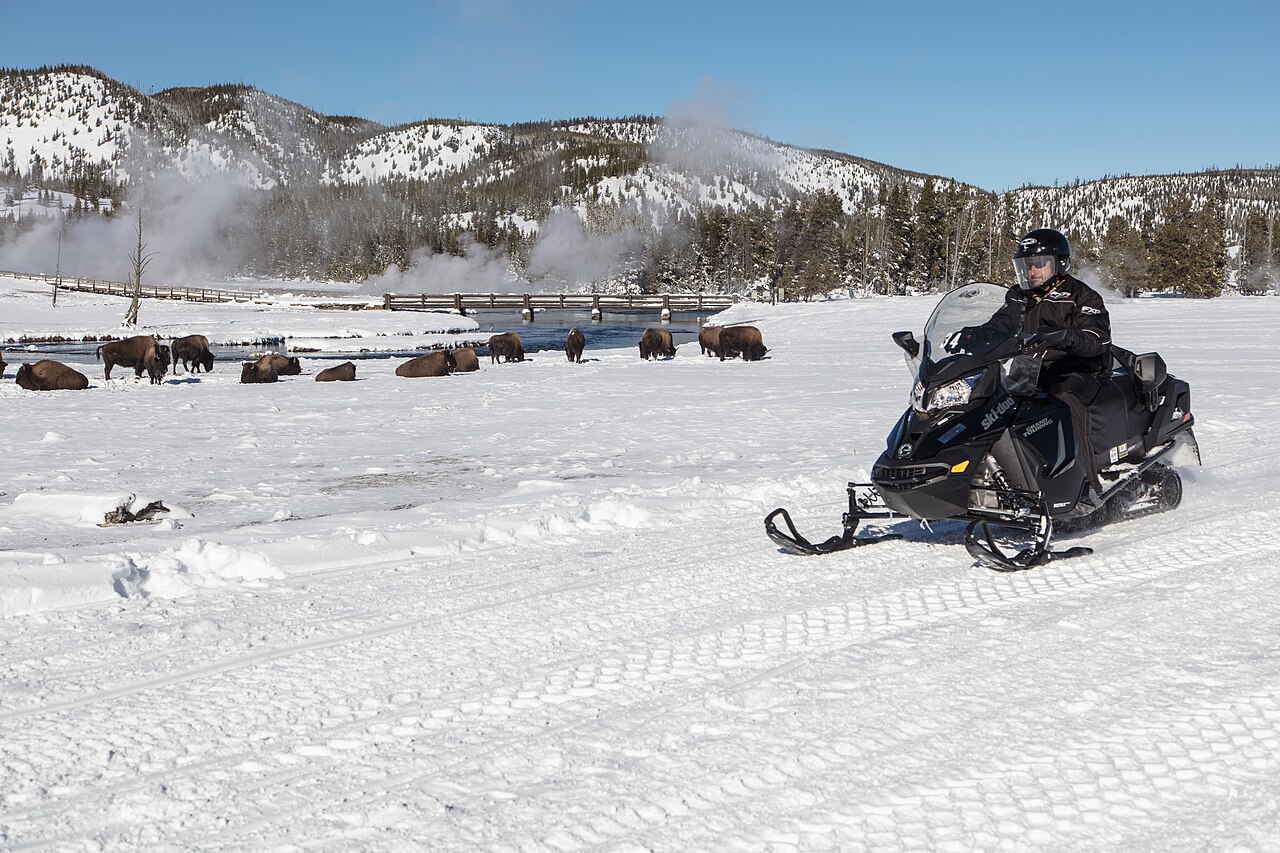
Snow is the best substrate, and winter is when most people find them. In 2 to 6 inches (5 to 15 cm) of fresh snow the print holds crisp edges, the dewclaws punch in behind the main hooves, and drag marks between prints show direction of travel without guesswork. A bison dragging its feet through deeper snow leaves a connected furrow rather than separate tracks.
Deep snow changes behavior in a readable way. Bison plow with their heads, sweeping snow aside to reach grass, which leaves bare oval craters 2 to 4 feet (0.6 to 1.2 m) across with hoof prints clustered at one end. A line of those craters across a meadow is unmistakable bison sign even when the trail between them has drifted over.
Herds break single file trails through deep snow and reuse them for weeks. Age a snow track by the rim: sharp vertical walls mean hours, rounded glazed walls mean days.
Bison Tracks in Mud
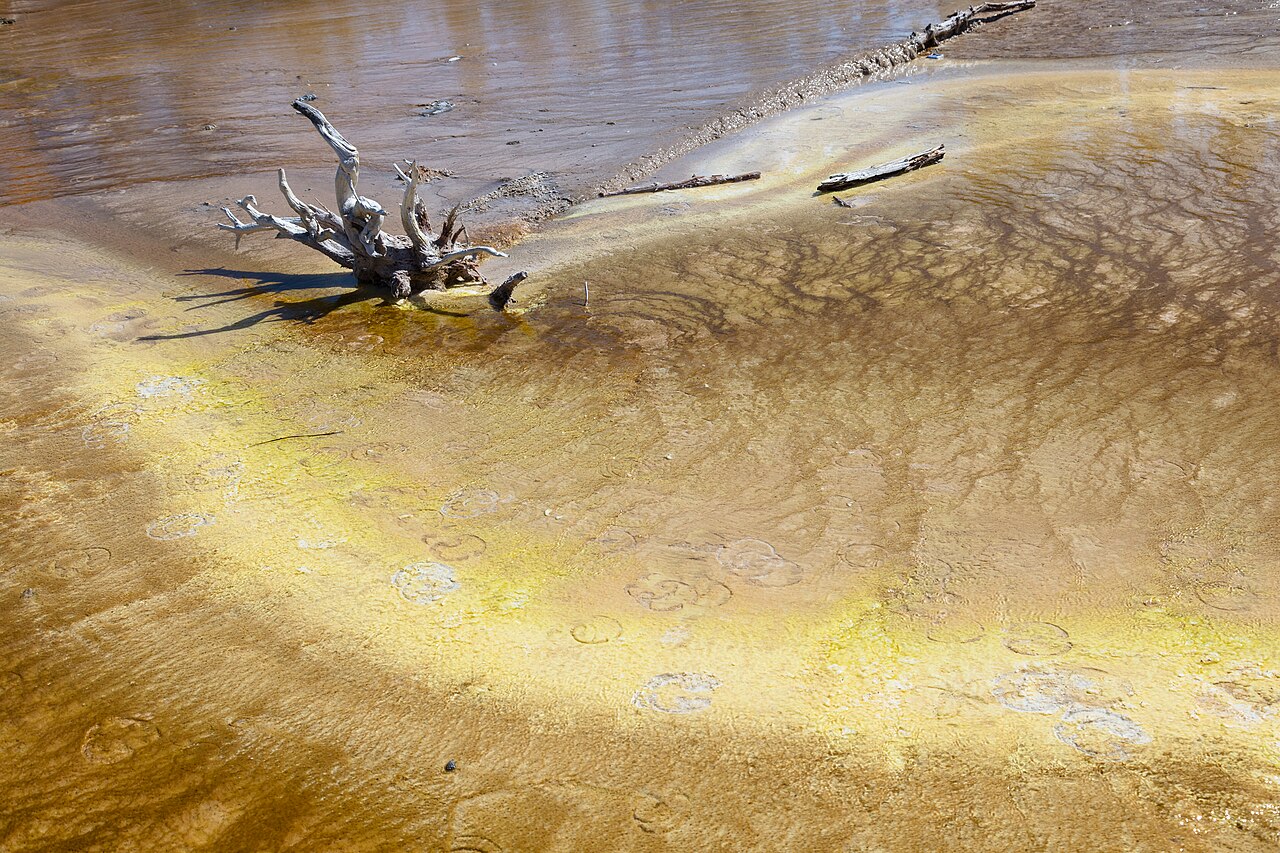
Mud gives the most detail and the most distortion at once. Soft wet margins around rivers, hot springs and stock ponds record the full hoof wall, the toe tips and both dewclaws, and in very soft mud the two toes splay apart and the print can measure an extra inch in width.
Account for that spread before you measure. Take the firmest, shallowest print in a trail rather than the deepest one, and read length down the center of one toe rather than across the splayed pair. Soft margins also collect the tracks of every other species in the area, so expect coyote tracks and raccoon prints in the same stretch of mud.
Bison Tracks in Sand and Dust
Dry sand is the hardest surface to read. The grains collapse inward as the foot lifts, so a bison print in loose sand becomes a round crater with soft sloping walls and no visible toe cleft. What survives is the size and the gait pattern, which is often enough given how few animals leave a 6 inch round track.
In damp sand along river bars, especially on the Niobrara, the Platte and the sandy drainages of the Badlands, the cleft reappears and the print can be as sharp as one in mud. Early morning is best, before wind rounds the edges.
Stride, Straddle and Gait Patterns
Bison walk with a diagonal gait, moving the front foot on one side with the hind foot on the other, which produces two roughly parallel lines of prints. Walking stride is 20 to 30 inches (50 to 76 cm) from one print to the next on the same side.
The straddle is the giveaway. Bison are built wide through the chest and hips, so the two lines of prints sit 10 to 14 inches (25 to 36 cm) apart, visibly broader than the near single file line a walking deer leaves.
At a trot the prints fall in tighter pairs with stride lengthening past 40 inches (102 cm). A galloping bison, capable of 35 mph, groups all four hooves in clusters with gaps of 6 to 10 feet (1.8 to 3 m) between them and throws turf or snow backward. Fresh gallop sign means the herd was pushed by something, worth knowing before you follow it.
Bison Versus Cattle Tracks
Cattle are the serious confusion, because the two animals are closely related and often use the same rangeland. A cow print is narrower relative to its length, more oval, with toe tips that come to a blunt point, and the toes splay apart more readily.
Context resolves most cases. Cattle trails run to water tanks, gates and salt, and the prints concentrate in corridors along fences. Bison trails cut across country, ignore fence lines or go through them, and leave coarse brown hair snagged on wire at 3 to 4 feet (0.9 to 1.2 m) high.
That overlap is also why cattle ranchers and bison managers have a long running conflict. Free ranging bison leaving Yellowstone compete for forage, damage fencing, and carry brucellosis, a disease that can cause cattle to abort and triggers costly herd testing. The disease risk, not the animal itself, drives most of the opposition to expanding wild herds.
Bison Versus Elk and Moose Tracks
Elk (Cervus canadensis) share almost all bison range in the Rockies. Elk tracks run 4 to 4.75 inches (10 to 12 cm) and look like a broad heart, clearly longer than wide and pointed at the front. Elk also walk with a narrow straddle, so the trail is a tight line rather than two wide lanes.
Moose (Alces alces) leave the only hoofprint consistently larger than a bison’s, at 5 to 7 inches (13 to 18 cm), but the shape is the opposite: a long, narrow, sharply pointed teardrop with a deep cleft and dewclaws that register often. Moose range into willow bottoms and wetlands that bison mostly avoid.
If you are unsure whether a round depression is a hoof or a paw, compare it against bear tracks, bobcat prints and fox tracks: all three show toe pads and a central pad, which a hoof never does.
Other Bison Sign: Scat, Wallows and Rubs
Bison scat, the original buffalo chip, is a flat circular patty 10 to 12 inches (25 to 30 cm) across, dark and soupy on spring grass and drier and more layered in late summer. It is nearly identical to cattle manure, so it confirms a large bovine rather than the species.
Wallows are the clearest sign of all: bare, dust filled depressions 10 to 15 feet (3 to 4.6 m) across and several inches deep, created by bulls rolling to shed insects and hair. Some prairie wallows have been in use for more than a century, and you will usually find dense tracks on the approach.
Look also for rubs, smooth hair caked patches on fence posts, boulders and lone trees at shoulder height. Shed hair in sagebrush during the May and June molt is a reliable seasonal marker.
Where to Find Bison Tracks in the United States
Yellowstone National Park is the easiest place in the country to find them, with reliable tracks along the Lamar and Hayden valleys and through the geyser basins year round. Grand Teton, Theodore Roosevelt National Park in North Dakota, Wind Cave and Custer State Park in South Dakota, the Tallgrass Prairie Preserve in Oklahoma and the National Bison Range in Montana all hold free ranging herds.
Winter concentrates the opportunity, since herds drop to lower elevation and thermal ground and snow records everything. Spring mud around water is the next best window. Check closures before you go, as several parks restrict approach near calving and rut areas, and the National Park Service publishes herd locations and seasonal guidance for each unit.
Safety When the Tracks Are Fresh
Fresh tracks mean the animal is close, and bison are the most dangerous animal most visitors will stand near. They weigh up to a ton, run three times faster than a person, turn sharply and can clear a 6 foot (1.8 m) fence. The Park Service requires visitors to stay at least 25 yards (23 m) away, and that minimum assumes a calm animal.
Read the animal, not just the trail. A bison that raises its tail, swings its head side to side, snorts, paws or stops feeding to face you is already giving warning, and the tail going fully vertical is the last signal before a charge. Back away the way you came and put distance or a solid object between you. Follow fresh tracks only where you have clear sightlines.
Frequently Asked Questions
Are there bison near the Grand Canyon?
Yes. A herd of several hundred bison lives on the Kaibab Plateau on the North Rim, inside Grand Canyon National Park and the adjacent national forest, descended from animals brought to House Rock Valley in the early 1900s. Tracks and wallows are common in the North Rim meadows.
Where is the largest bison herd in North America?
Yellowstone National Park holds the largest free ranging wild herd, generally 4,000 to 6,000 animals, and it is the only place where bison have lived continuously since prehistoric times. Larger commercial herds exist on private ranches, but they are managed livestock rather than wild populations.
What is the main predator of bison?
Wolves are the main predator, taking mostly calves, old animals and individuals weakened by winter. Grizzly bears kill calves and claim carcasses. Healthy adult bulls are nearly immune to predation, and a defensive herd circle around calves usually ends a wolf attempt.
What should you do if a bison chases you?
Run, and get a solid barrier between you: a vehicle, a large tree, a boulder or a sturdy fence. Do not play dead, which is advice for bears and will get you gored. Bear spray has stopped charges in documented cases, and most charges are short bluffs.
Can a bison flip a car over, and what happens if you honk at one?
Bison routinely dent panels, break mirrors and crack windows, and bulls have rammed and pushed small vehicles, but a verified flip of a passenger car is not on record. Honking is a bad idea: it can provoke a charge against the car instead of moving the animal.
How many people have died from bison attacks?
Deaths are rare, with a small number recorded in Yellowstone over the park’s history, but injuries are not. Bison gore and throw more visitors there than any other animal, with roughly one to three incidents in a typical year. Nearly all involve people approaching inside the 25 yard limit.