Baby DeKay’s Brown Snake: ID and Why It Is Harmless
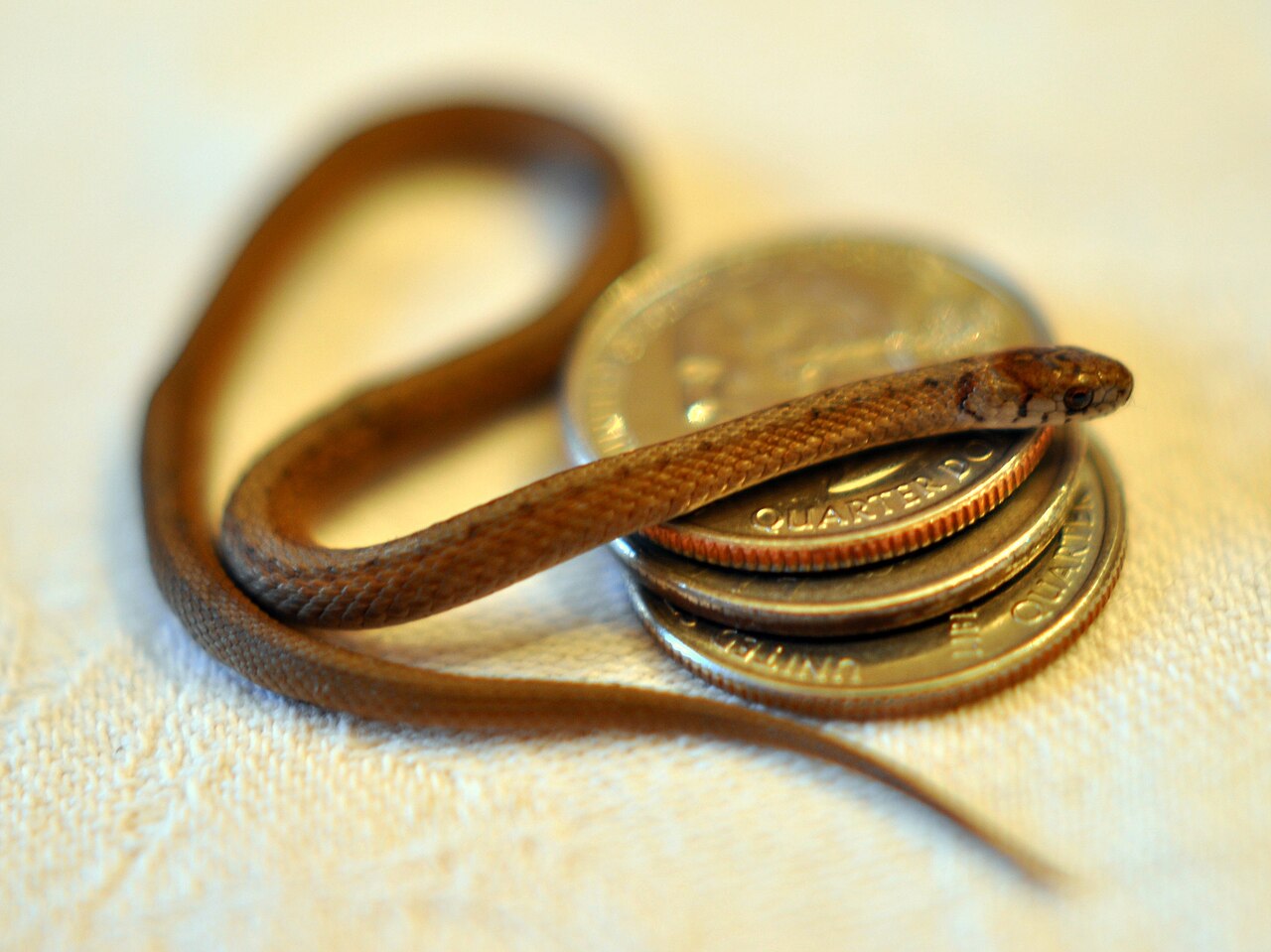
A baby DeKay’s brown snake is a tiny, harmless snake about three to four inches long at birth, dark gray to brown with a distinctive pale collar just behind the head, and it is one of the most commonly found snakes in American yards and gardens. The pale neck ring is the feature that causes most confusion, because it makes hatchlings look like a different species from the plain brown adults and gets them mistaken for ring-necked snakes.
DeKay’s brown snakes are among the few reptiles that thrive in cities, living under mulch, boards, flower pots, and paving stones and feeding almost entirely on slugs and earthworms. They are completely harmless, effectively never bite, and are one of the most useful animals a gardener can have. This guide covers identification, what separates them from ring-necked snakes and young venomous species, what they eat, and what to do if you find one.
A baby DeKay’s brown snake is 3 to 4 inches long, gray-brown with a pale collar behind the head and two rows of dark spots down the back. It is completely harmless and non-venomous, eats slugs and earthworms, and is one of the most common snakes in gardens and city yards. The pale collar fades as the snake matures.
| Feature | Baby DeKay’s Brown Snake |
|---|---|
| Length at birth | 3 to 4 in |
| Adult length | 9 to 13 in |
| Colour | Gray to brown, pale collar behind head |
| Pattern | Two rows of dark spots down the back |
| Venomous | No, completely harmless |
| Diet | Slugs, snails, earthworms, soft insects |
| Birth | Live young, 10 to 20 per litter |
What Does a Baby DeKay’s Brown Snake Look Like?
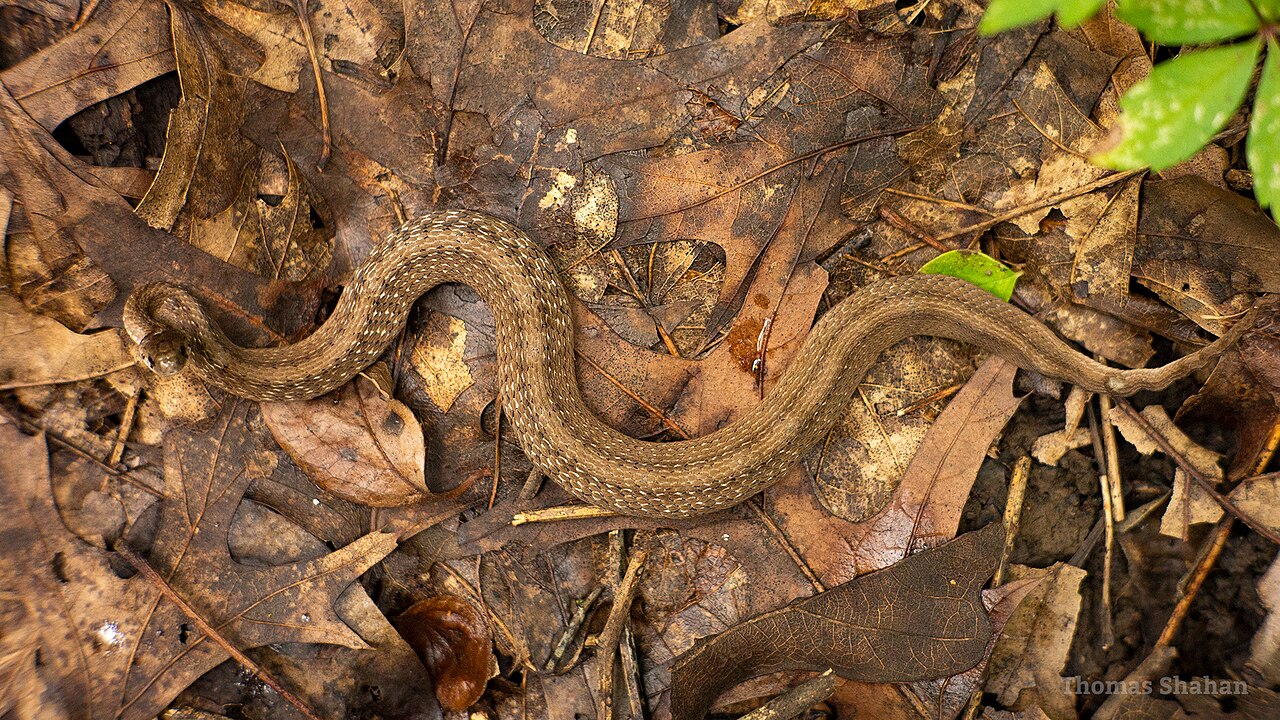
A newborn DeKay’s brown snake is three to four inches long and no thicker than a pencil lead, dark gray to brownish gray, with a conspicuous pale yellow or cream collar encircling the neck just behind the head. Down the back run two parallel rows of small dark spots, sometimes joined by faint crossbars, and the belly is pale pink or cream.
The collar is the source of most identification confusion, because adults lose it. As the snake grows, the pale ring fades and the body lightens to the plain tan or reddish brown that gives the species its name, retaining only the paired rows of dark dots. A hatchling and an adult of the same species genuinely look like different animals, which is why so many people report finding a ring-necked snake when they have actually found a young brown snake.
Adults reach only nine to thirteen inches, making DeKay’s brown snake one of the smallest snakes in North America. The scales are keeled, giving the body a slightly rough texture rather than a smooth glossy one, and the head is barely wider than the neck. There is no rattle, no hood, and no pattern resembling any venomous species at any life stage.
Is a Baby Brown Snake Venomous?
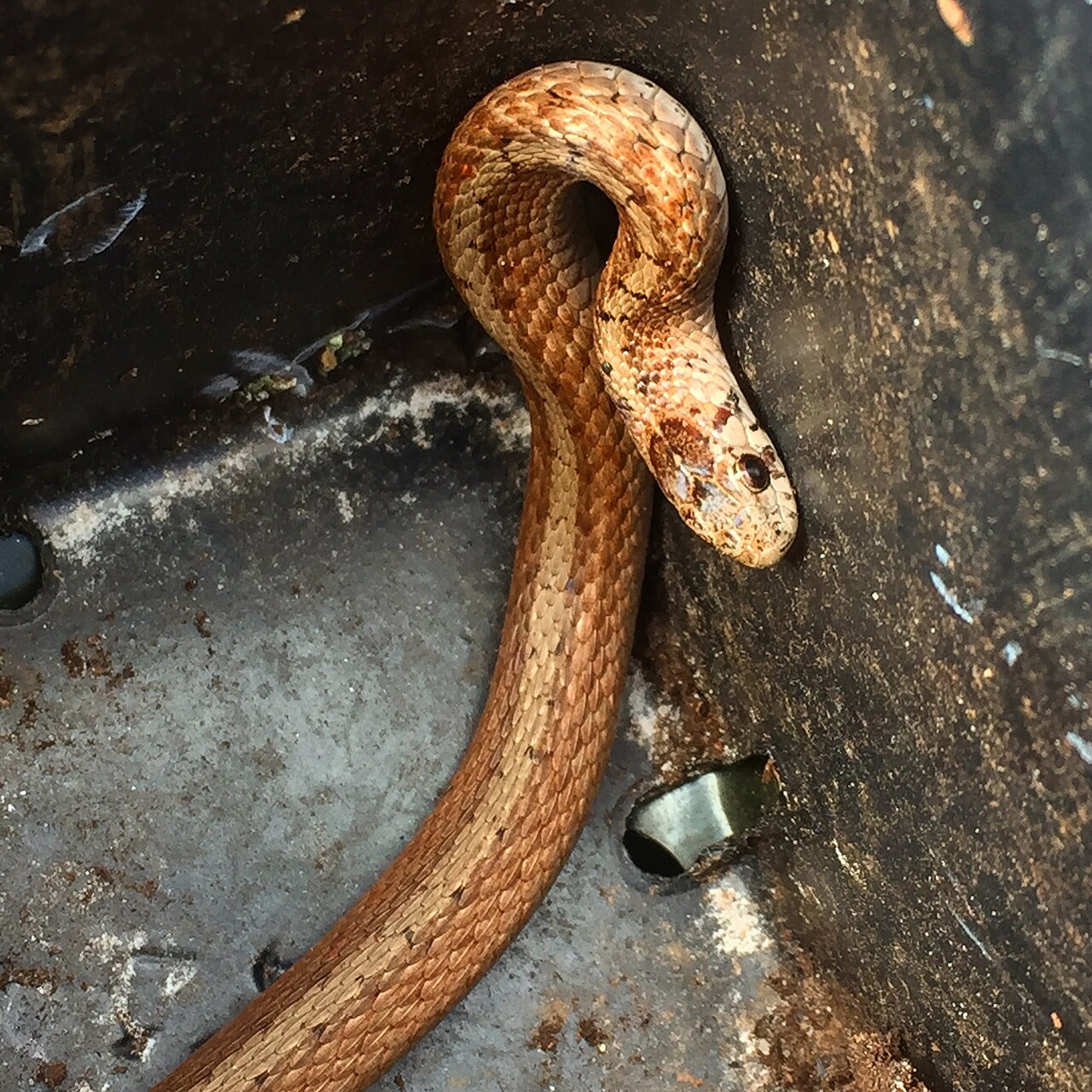
No. DeKay’s brown snake is completely non-venomous and harmless to people and pets. It has no fangs capable of injecting venom, and adults are so small and so reluctant to bite that most people who handle them never experience even an attempted bite. The species is among the most inoffensive snakes in North America.
The name causes genuine alarm because Australia has a group of extremely dangerous elapids called brown snakes, including the eastern brown snake, which is among the most venomous land snakes in the world. There is no relationship whatsoever: the Australian species belong to the genus Pseudonaja and the North American species is Storeria dekayi, a small colubrid. Searches for brown snake return frightening results that have nothing to do with the animal in an American garden.
When threatened, a DeKay’s brown snake flattens its body, may release a foul-smelling musk from glands near the vent, and occasionally makes a bluff strike with a closed mouth. Some individuals go limp. None of this is dangerous. The species is far more likely to simply freeze and hope not to be noticed, which is why they are so often found sitting still under a lifted board.
How Do You Tell It From a Ring-Necked Snake?
The belly settles it instantly. Ring-necked snakes have a brilliantly coloured belly, bright yellow, orange, or red, and they display it by curling the tail into a corkscrew when threatened. A baby DeKay’s brown snake has a plain pale pink or cream belly with no bright colour anywhere.
Body colour differs too. A ring-necked snake is uniformly slate gray to nearly black above with a smooth glossy sheen and no dorsal pattern at all, and its scales are smooth rather than keeled. A young brown snake is browner and duller with visible paired rows of dark spots down the back and a slightly rough texture.
Both are small, harmless, and found in similar places, so the distinction is a matter of curiosity rather than safety. The baby ring-necked snake guide covers the other species in detail. Young garter snakes are the other frequent confusion, and those are separated easily by their bold longitudinal stripes, which no brown snake has.
Could It Be a Baby Venomous Snake?
No, and this is worth stating clearly because the fear drives a great many needless snake killings. Baby copperheads have bold hourglass-shaped crossbands, a bright yellow-green tail tip, a distinctly triangular head, and vertical pupils, and they hatch at seven to ten inches, roughly twice the length of a newborn brown snake. Nothing about the two is similar in good light.
Baby rattlesnakes have a button on the tail rather than a taper, along with a blocky triangular head and heat-sensing pits between eye and nostril. Baby cottonmouths have broad dark bands, a bright tail tip, and the same heavy head shape. All of these are considerably thicker-bodied than a brown snake, which is essentially the diameter of a shoelace.
The reliable general principle is size and build. A three-inch gray-brown snake as thin as a pencil lead with a pale neck ring found under a flower pot in a suburban yard is a brown snake, a ring-necked snake, or a young garter snake, and none of them can hurt you. The baby copperhead guide covers the species people most fear, and the coral snake vs king snake guide covers the one genuine lookalike problem in North America.
What Do Baby DeKay’s Brown Snakes Eat?
Baby brown snakes eat slugs, snails, earthworms, and soft-bodied insect larvae from the moment they are born, and the diet barely changes as they mature. They are specialists on soft invertebrates and lack the gape to take anything substantial, so they pose no threat to anything in a garden that a gardener would want to keep.
Snail feeding is genuinely specialized. Brown snakes and their relatives have adaptations for extracting snails from shells, using the lower jaw to hook into the aperture and pull the body free, and some populations feed heavily on snails where they are abundant. This makes them an unusually effective natural control for exactly the pests that damage hostas, lettuce, and seedlings.
They hunt at night and after rain, when slugs and worms are active at the surface, and spend the day under cover. Because their prey is entirely soft and their venom nonexistent, they simply seize and swallow. A brown snake population in a garden is one of the more effective slug controls available, and it costs nothing.
Where Do You Find Them?
DeKay’s brown snakes are found under almost any flat object on damp ground: boards, paving slabs, flower pots, mulch, leaf litter, discarded carpet, and sheets of plywood. They are one of the few snakes genuinely at home in urban and suburban settings, occurring in vacant lots, city parks, cemeteries, and small gardens well inside major cities across their range.
The range covers most of the eastern and central United States, from southern Maine and Quebec west to the Dakotas and south through Texas and Florida, extending into Mexico and Central America. Population densities can be remarkable: studies in urban parks have found dozens of individuals under a single small area of debris, and the species is among the most abundant snakes in parts of its range despite being rarely noticed.
Winter is spent below the frost line in communal hibernacula, often shared with garter snakes, ring-necked snakes, and other small species, in ant mounds, old foundations, rock crevices, and mammal burrows. Emergence in spring can produce a sudden appearance of many snakes at once in a small area, which occasionally alarms homeowners who have never noticed them before.
Do They Give Birth to Live Young?
Yes. DeKay’s brown snakes are viviparous, giving birth to live young rather than laying eggs, and litters typically contain 10 to 20 neonates born in late summer, usually August. Live birth is common among snakes in cooler climates because the female can move her developing young to warm basking spots rather than committing eggs to a fixed nest at the mercy of weather.
The newborns are independent immediately and receive no parental care, dispersing within hours. They reach breeding size in about two years, and lifespan in the wild is estimated at around seven years, though most individuals do not approach that given the number of predators that take them: birds, larger snakes, cats, shrews, and toads all eat brown snakes.
Domestic cats are a significant source of mortality in suburbs, and a brown snake brought in by a cat is one of the more common ways people first encounter the species. If the snake is uninjured, releasing it in a sheltered part of the garden is the appropriate response; if visibly hurt, a licensed wildlife rehabilitator is the right call, though small snakes rarely survive cat injuries because of bacterial infection.
What Should You Do if You Find One?
Leave it alone. A DeKay’s brown snake in a garden is doing free pest control and poses no risk to anyone. If it is somewhere genuinely inconvenient, it can be gently scooped onto a piece of cardboard or a dustpan and moved a short distance to a mulched bed or under a shrub, and it will not attempt to bite.
If one gets indoors, it will die of dehydration within a day or two, so removing it promptly is doing it a kindness. Sliding a sheet of paper under it and lifting it into a container works, or a damp towel laid on the floor near it will often attract it to shelter underneath, after which the whole towel can be carried outside.
Do not use glue traps, which cause prolonged suffering and catch far more non-target animals than snakes, and do not buy snake repellent, which has been repeatedly shown to be ineffective. Keeping a snake as a pet is a poor idea for this species: they are difficult to feed in captivity because of the slug and worm diet, and several states protect native reptiles from collection. The baby snake guide covers what finding any small snake actually indicates.
Frequently Asked Questions
What does a baby DeKay’s brown snake look like?
It is 3 to 4 inches long, gray to brown with a pale cream collar behind the head and two rows of dark spots down the back. The collar fades as the snake matures into the plain brown adult.
Is a DeKay’s brown snake poisonous?
No. It is completely non-venomous and harmless. The name causes confusion with Australian brown snakes, which are highly venomous elapids in a different genus and are unrelated to this small North American species.
What do baby DeKay’s brown snakes eat?
Slugs, snails, earthworms, and soft insect larvae from birth. They are specialists on soft invertebrates and have adaptations for extracting snails from their shells, making them useful garden pest controllers.
Can I pick up a DeKay’s brown snake?
Yes, they almost never bite and cannot hurt you if they try. They may flatten the body, release musk, or go limp when handled. Wash your hands afterward as with any reptile because of Salmonella.
How do you tell it from a ring-necked snake?
The belly. Ring-necked snakes have a bright yellow, orange, or red belly and smooth glossy slate-gray backs. Baby brown snakes have a plain pale belly, keeled scales, and paired rows of dark spots.
How big do DeKay’s brown snakes get?
Adults reach only 9 to 13 inches, making them one of the smallest snakes in North America. Newborns are 3 to 4 inches long and about as thick as a pencil lead.
Are DeKay’s brown snakes good to have around?
Yes. They eat slugs and snails, are harmless to people and pets, and thrive in gardens and city yards. They are among the most beneficial and least troublesome animals a gardener can host.