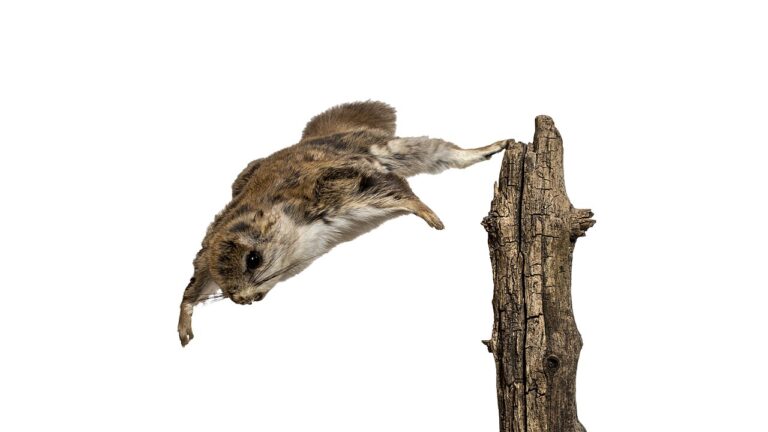
Porcupine Symbolism: What Seeing One Means in 5 Traditions
Seeing a porcupine carries one core message across almost every tradition that mentions it: defend what matters to you without going on the attack. The porcupine spiritual meaning turns on a simple contradiction in the animal itself. It is a slow, nearsighted, plant eating rodent that cannot chase anything, cannot throw its quills, and would rather climb a tree than fight. Yet almost nothing in the forest wants to touch it.
That combination is why the North American porcupine (Erethizon dorsatum) shows up in Plains quillwork, in Japanese psychology, in dream interpretation and in the ordinary question people ask after one waddles across the driveway at midnight. The sections below separate what specific traditions actually teach from what modern spiritual writers have added, and they cover the situations people search for most: a porcupine in the yard, at night, in daylight, repeatedly, dead on the roadside, or in a dream.
A porcupine is a symbol of self protection, boundaries and quiet confidence. In folk and spiritual belief, seeing one is read as a sign to guard your peace without aggression, to trust your own defenses, and to stay open and curious with the people who approach you gently.
| Situation | Common interpretation | Practical note |
|---|---|---|
| Porcupine in your yard or garden | A boundary near your home needs attention | Check for salt, wood, fruit trees and pet food |
| Porcupine at night | Normal behavior, read as protection during a vulnerable time | Porcupines are nocturnal, so this is the usual sighting |
| Porcupine in daylight | Treated as the stronger omen because it is unusual | Can also mean a sick, cold or displaced animal |
| Repeated sightings | A message you keep postponing | Often one resident animal on a fixed feeding route |
| Dead porcupine | The end of a defensive phase, armor no longer needed | Quills stay sharp, so never handle a carcass |
| Porcupine in a dream | Fear of being hurt by closeness | Note who in the dream tried to touch it |
| White porcupine | Rare sighting, read as purity or a spirit messenger | Usually a leucistic or albino individual |
What Is a Porcupine a Symbol Of?
A porcupine is a symbol of protected innocence. It keeps the habits of a harmless animal, feeding on bark, buds and twigs, climbing slowly, sleeping in hollow logs, and it survives anyway because its defense works without malice. Roughly 30,000 quills cover its back and tail. Each one is a modified hair with microscopic barbs at the tip, and each one detaches on contact rather than being thrown.
That is the whole symbolic engine. The animal does not hunt, threaten or pursue. It turns its back, raises its quills, chatters its teeth, releases a sharp odor, and lets the attacker make the mistake. Writers on animal symbolism almost always land on the same cluster of ideas: boundaries, self defense, humility, patience and the right to be left alone.
The second theme is trust. A porcupine that is not threatened stays relaxed and even approachable, which is why it appears in stories about staying soft on the inside. Compare that with the aggressive guardianship people read into the bear as a symbol, and the difference is clear: one defends by advancing, the other by simply existing.
Porcupine Symbolism in Native American Traditions
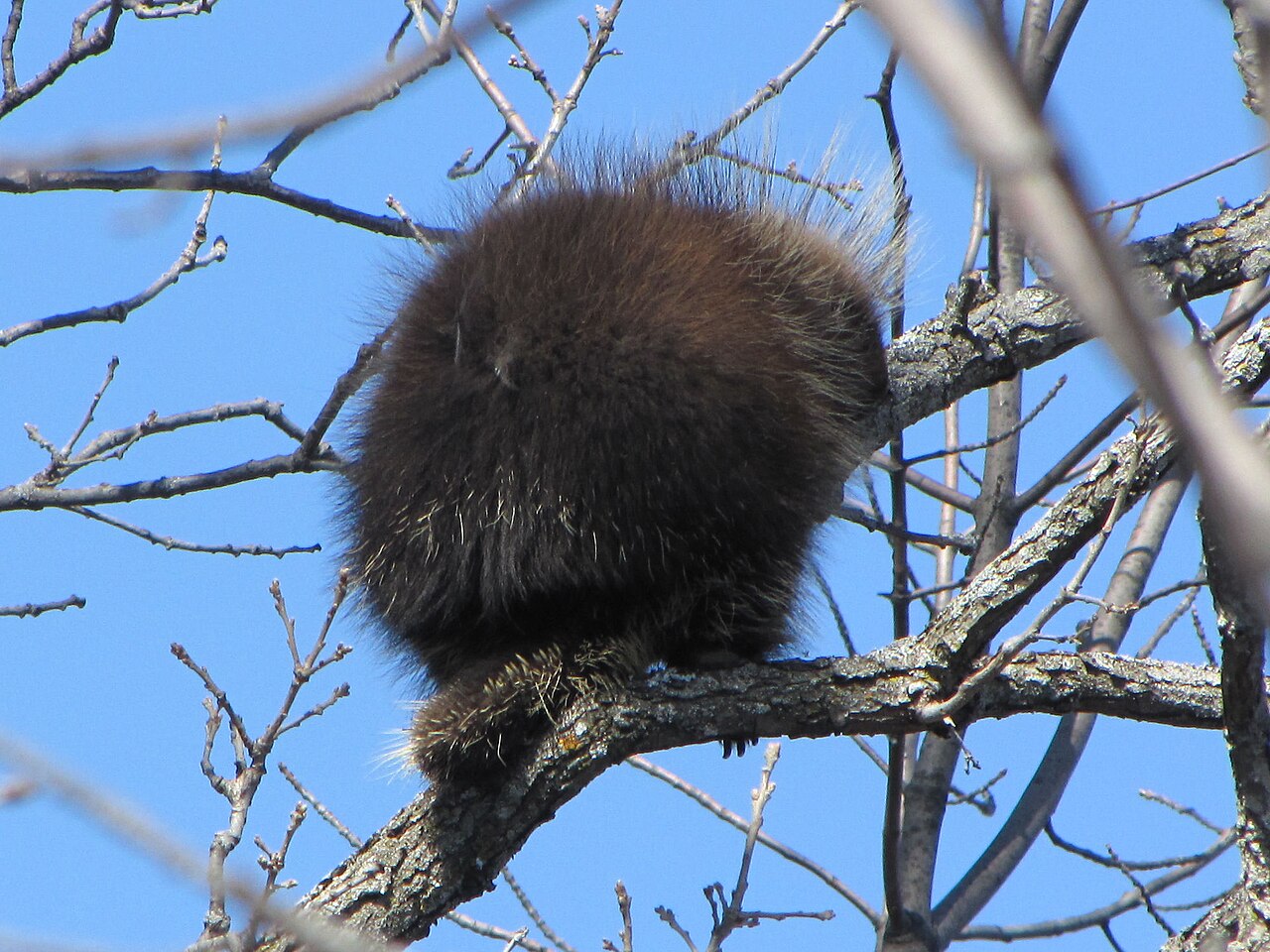
In many Plains and Woodlands cultures, the porcupine’s cultural weight comes less from omens than from craft. Porcupine quill embroidery was a major art form long before glass beads arrived through trade. Lakota, Dakota, Cheyenne and Ojibwe artists sorted quills by size, softened them, dyed them and worked them into robes, moccasins, pipe bags and cradle covers. Among the Lakota, quillwork was a respected women’s art with its own societies and standards of excellence.
Because of that, the porcupine is often spoken of as a provider rather than a predator or a trickster. Harvesting quills does not require killing the animal, which supports a reading of generosity given without violence. In some Anishinaabe accounts, the porcupine received its quills to protect itself from animals that had been bullying it, a story usually told to explain why defense is legitimate and why cruelty invites consequences.
Contemporary spiritual writing often summarizes all of this as “porcupine medicine” standing for innocence, humility and faith. That phrase comes from twentieth century card decks and books rather than from any single tribal tradition, and the hundreds of Native nations do not share one meaning. The honest version is this: in Lakota and Ojibwe practice the porcupine is valued as a gift bearer, and the modern keywords grew out of that respect.
Porcupine Meaning in Christian and Biblical Thought

The porcupine has no settled place in the Bible, and that is the most useful thing to know about it. The Hebrew word qippod appears in Isaiah 14:23, Isaiah 34:11 and Zephaniah 2:14, and translators have rendered it as bittern, hedgehog and porcupine depending on the version. In every one of those passages the animal occupies ruins. It lives where a proud city used to stand.
So where the word is translated as porcupine, the biblical symbolism is desolation and the reversal of human pride, not personal protection. A reader who searches for a porcupine spiritual meaning in the Bible and finds a verse about armor or courage is almost certainly reading a modern devotional rather than the text.
Later Christian commentary picked up a gentler reading. Because the animal wounds only what presses against it, writers used it as an image of righteous self defense and of guarding the conscience against temptation. Both readings can be held at once: the scriptural image is ruin, and the devotional image is vigilance.
The Porcupine in Celtic Symbolism

Celtic tradition has no native porcupine, and any source that offers a detailed Celtic porcupine omen is filling a gap. Porcupines are not found in Ireland, Britain or Brittany. What those cultures did know was the European hedgehog, and its folklore carried the same spiky logic: a creature that curls up, protects its soft belly and endures.
Where the porcupine does appear in insular and medieval European imagery is heraldry. The crowned porcupine was a badge of Louis XII of France, and the motto attached to it warned that the bearer would wound those nearby and those at a distance. Medieval bestiaries, following classical authors, repeated the mistaken claim that the animal shoots its quills, which is where that threat language comes from.
For anyone working within a Celtic framework, the practical approach is to use the hedgehog’s symbolism of self containment and seasonal retreat and to say plainly which animal is being drawn on. Honest sourcing matters more here than a tidy answer, the same way it does with the folklore around the blackbird in Celtic story.
Porcupine Meaning in East Asian Traditions
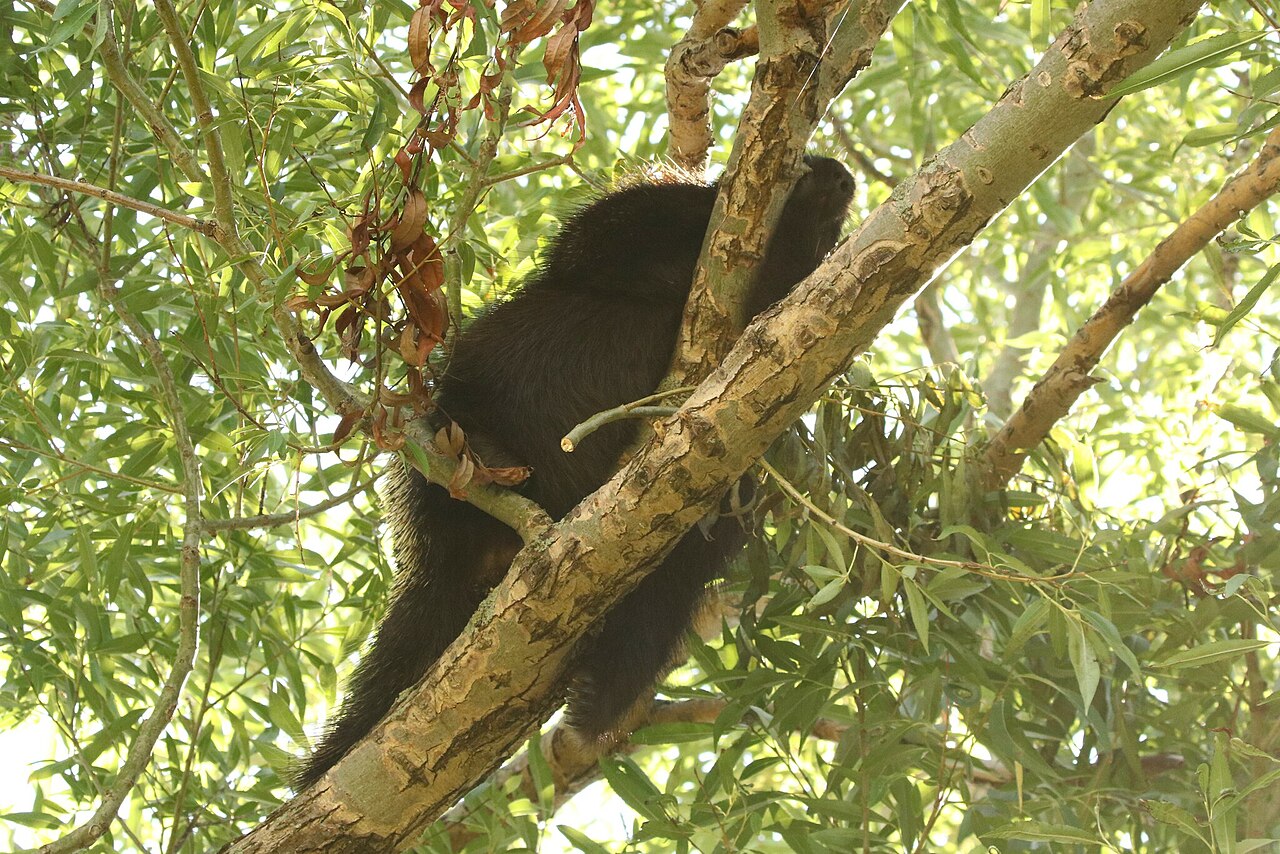
East Asia offers the sharpest porcupine idea of all. In Japanese the animal is yamaarashi, and yamaarashi no jirenma, the porcupine’s dilemma, is a standard term in popular psychology. Two porcupines in the cold need each other’s warmth, but the closer they move, the more their quills hurt. The image comes from a parable by Schopenhauer, was taken up by Freud, and became widely known in Japan through psychology writing and later through anime.
That makes the porcupine a symbol of intimacy and distance rather than of defense alone. The question it poses is how close you can get to someone before your own protective habits start to injure them. Many people who search for a porcupine spiritual meaning in love or around a twin flame connection are circling exactly this dilemma.
In Chinese tradition the animal is recorded mostly in materia medica and in agricultural writing as a crop raider, rather than as a zodiac or omen animal. There is no classical Chinese porcupine omen to cite, so a reading drawn from the Japanese dilemma is the better supported one.
Porcupine Spiritual Meaning in Love and Twin Flame Readings

In love readings the porcupine is the animal of the guarded heart. The interpretation follows directly from the porcupine’s dilemma: a person who has been hurt builds a defense, the defense works, and then it keeps working against the people they actually want near them. Readers typically take a porcupine sighting during a relationship question as a prompt to ask which quills are still useful and which are habit.
Twin flame and soulmate readings use it the same way, usually to describe a connection that feels charged but keeps producing small injuries on contact. The traditional advice attached to the symbol is not to remove the defenses but to learn the distance at which warmth still reaches.
For couples the symbol has a second, kinder reading. Porcupines mate successfully despite the obvious problem, which folk commentary treats as proof that care and caution can coexist. Nothing about having boundaries makes closeness impossible.
What Does It Mean When a Porcupine Visits You?

When a porcupine visits you, the standard interpretation is that something in your life needs a boundary rather than a battle. The animal arrives slowly, does nothing, and leaves. Read that way, the visit asks what you are overexplaining, who you keep letting get too close, and where a quiet no would settle the matter better than an argument.
A second reading focuses on protected curiosity. Porcupines investigate new things with their nose, and because their defense is reliable they can afford to be curious. The visit is then taken as encouragement to stay open without being careless.
There is also a plain explanation worth holding alongside the symbolic one. A porcupine on your property is following food and salt. If the visits continue, both readings can be true at the same time: something nearby is attracting the animal, and something nearby is asking for your attention.
Porcupine as a Spirit Animal
As a spirit animal, the porcupine is usually assigned to people who are gentle by nature but tired of being taken advantage of. The lesson attached to it is that protection does not require becoming hard. The quills sit on the back, the soft belly stays soft, and both are part of the same animal.
Practitioners typically describe three traits. First, measured pace: the porcupine does not outrun anything and does not need to. Second, non pursuit: it never initiates, so any wound is the result of someone else’s choice. Third, retained wonder, the ability to keep approaching life with interest rather than suspicion.
People who work with animal guides often contrast this with the industrious, infrastructure building energy they read into beaver symbolism. The beaver changes the landscape to suit itself. The porcupine changes nothing and is still safe, which is a useful corrective for anyone who believes safety has to be built.
Porcupine Totem and Omen Meanings
The words totem, spirit animal and omen get used interchangeably online, and they are not the same thing. A totem, in the narrow sense, is a kinship emblem belonging to a clan or lineage, not a personality type a reader selects. Many Native nations have clan systems, and borrowing that vocabulary loosely is one reason Native writers object to the popular usage.
An omen is different: a single event read as a sign. In folk tradition across much of North America, a porcupine omen points to defense, persistence and warning rather than luck or disaster. Unlike the dense death and rebirth imagery around the bat as an omen, porcupine omens are consistently low drama.
A practical reading keeps the categories separate. If the porcupine feels like a lifelong companion animal, that is a personal guide. If it was one unusual encounter at a turning point, that is an omen, and it should be read once and then left alone.
Seeing a Porcupine in Your Yard or Garden
A porcupine in the yard is almost always a food visit. These animals crave sodium, and they chew plywood, outhouse boards, tool handles, canoe paddles, and anything that has absorbed road salt or sweat. They also take fallen apples, garden greens, clover and the inner bark of ornamental trees. What attracts porcupines to your yard is usually salt treated wood, fruit on the ground, a vegetable bed or an untended woodpile.
Symbolically, a yard sighting is read as the most domestic of all porcupine messages, because the boundary in question is the edge of your own space. The animal appears where your household meets the woods, which spiritual writers interpret as a question about who you are letting in.
If the visits are unwelcome, the response is exclusion rather than conflict. A wire cylinder around a young tree trunk, hardware cloth skirting on a deck, and removing fallen fruit will usually end the pattern within a week or two. Dogs that confront one come away with a jaw full of barbed quills and a veterinary bill, so keep pets in at night while the animal is around.
Seeing a Porcupine at Night or During the Day
Porcupines are nocturnal, so a night sighting is ordinary behavior. They leave their dens near dusk, feed through the dark hours and return around dawn. Traditional readings of a night sighting emphasize protection during a vulnerable stretch, the idea being that something is watching the perimeter while you are not able to.
Seeing a porcupine during the day is treated as the stronger omen for the simple reason that it is unusual. In winter especially, a porcupine may sit in a conifer for hours in plain sight, feeding on bark and needles when nothing else is available. Daylight sightings are also more common during the autumn breeding season, roughly September to November, when males travel and vocalize.
There is a welfare reading too. A porcupine moving slowly in the open in summer heat, or one that appears disoriented, may be sick or injured. The symbolic and the literal reading do not compete here. Note the omen if you want to, then leave the animal a wide path and call a licensed wildlife rehabilitator if something looks wrong.
Repeated Porcupine Sightings and Dead Porcupines
Repeated sightings usually mean one resident animal. Porcupines keep small home ranges, often under 50 acres, and they reuse the same dens and feeding trees for years. The folk reading holds that a message repeats until it is acted on, which fits the behavior neatly: the animal will keep walking its route whether or not you have drawn a conclusion.
A dead porcupine, particularly on a road, is read as the end of a defensive season. The armor is set down. People in a long conflict or a long period of self protection often take it as permission to stop bracing. Roadkill is common because porcupines move slowly and are drawn to road salt in late winter, so the sighting is frequent rather than rare.
Practically, do not handle a carcass. Quills remain sharp and barbed after death and work deeper into skin with movement. If the animal is on your property and needs moving, use a shovel and gloves, and keep dogs away from it entirely.
Porcupine Dreams and White Porcupine Sightings
In dream interpretation, a porcupine commonly stands for a part of you that wants closeness and expects to be hurt by it. The detail that matters is the contact. Being pricked while reaching for the animal is usually read as a fear of rejection. Holding one safely is read as having learned to be near someone difficult without taking damage. A porcupine blocking a path is read as a boundary you are being asked to respect, possibly your own.
A white porcupine is reported now and then and is given extra weight in folk belief, which is true of white animals generally. Biologically these are leucistic or albino individuals, a pigment variation rather than a separate kind of animal. Traditional readings tie white animals to purity, ancestors or a message that should not be ignored, much as they do with the color symbolism people read into a black butterfly sighting.
Claims about red porcupines are different: there is no red color morph of the North American porcupine. Sun bleached guard hairs can look rust colored in low light, which is the likely source of the reports.
Porcupine and Hedgehog Symbolism Are Not the Same
The two animals get swapped constantly, and the meanings drift together as a result. They are not related. Porcupines are rodents, hedgehogs belong to a separate order of insect eating mammals, and their defenses work differently. Porcupine quills detach and stay in the attacker. Hedgehog spines do not detach, and the animal rolls into a ball instead of turning its armored back.
That difference matters symbolically. The hedgehog’s lesson is withdrawal: curl up, wait, let the threat pass. The porcupine’s lesson is presence: stay upright, stay where you are, and let the consequence belong to whoever pushes. Anyone drawing on European folklore is almost always working with hedgehog imagery, since no porcupine lives there.
If the animal you actually saw was a hedgehog, the behavior reads differently too, including its vocal signals, which we cover in our guide to hedgehog sounds.
Frequently Asked Questions
How rare is it to see a porcupine?
Less rare than most people assume, and harder than it sounds. Porcupines are common across Canada, the northern United States and the western mountains, but they are nocturnal, slow and well camouflaged in trees. Many residents of porcupine country see one or two a year, usually at night or as roadkill in late winter.
What should you do if you see a porcupine?
Stop, give it room and let it move on. A porcupine cannot throw its quills and will not charge, but it may turn its back and raise them if you crowd it. Keep dogs leashed, keep at least 10 to 15 ft (3 to 5 m) of distance, and never try to move one by hand.
What time of day do porcupines come out?
Mostly from dusk until dawn. They leave their dens in the evening, feed through the night and return in the early morning. In winter they often stay in a single feeding tree for a day or more, which is when daytime sightings are most likely.
What month are porcupines most active?
Activity peaks in autumn, roughly September through November, during the breeding season, when males range widely and vocalize. Late winter brings a second peak of visible activity as animals seek road salt and feed on bark, which is also when roadkill numbers rise.
What smells do porcupines hate?
Capsaicin based repellents and predator urine products are the ones commonly recommended, and both wash off and need reapplying. Scent alone rarely solves a porcupine problem. Physical exclusion, such as wire wrapped around trunks or hardware cloth under a deck, works far more reliably than any odor.
What is a porcupine’s favorite food?
Inner bark and conifer needles carry them through winter, with hemlock, pine and sugar maple among the favorites. In spring and summer they shift to buds, leaves, clover, aquatic plants and fallen fruit. They also seek out sodium, which is why salt treated wood and road salt draw them in so consistently.
For range maps and basic natural history on North American mammals, the Smithsonian’s National Zoo keeps species pages at nationalzoo.si.edu/animals. Reading the animal’s actual habits alongside the symbolism tends to make both more interesting, which is also true of the large mammal traditions behind bison symbolism.