Beaver Spirit Animal: Symbolism, Traits and What a Sighting Means
Seeing a beaver means it is time to build something, and to build it with other people. The beaver spirit animal stands for patient, unglamorous work that changes an entire landscape, which is exactly what the animal does: a single family of North American beavers (Castor canadensis) can turn a shallow stream into a wetland that supports hundreds of other species. Beaver symbolism is almost always read as a prompt to start, finish or repair, not as a warning.
That practical reputation is old and well earned. Beaver lore across Native American nations, medieval Europe and modern personality systems lands on the same handful of traits: industry, cooperation, home-building and stubbornness. Where the traditions differ is how they treat the dam. Some see mastery over water; others see a creature that blocks a flow and must know when to let it run.
The beaver symbolizes industrious work, home-building, teamwork and the power to reshape circumstances through steady effort. As a spirit animal it marks builders and providers. Its shadow side is overwork and control: damming every flow, including the ones that should be left alone.
What Is the Symbolism of a Beaver?
Five meanings carry nearly all beaver symbolism. Industry, because beavers work nightly and visibly. Home, because the lodge is the most elaborate dwelling built by any North American mammal besides us. Family, because beavers mate for life and the yearlings help raise the next litter. Transformation, because the animal physically rebuilds its environment instead of adapting to it. And persistence, because a breached dam is rebuilt the same night.
The transformation reading is the one most people miss. A beaver does not find good habitat, it manufactures it, flooding a valley floor until the water is deep enough to hide in. In symbolic terms that is the difference between looking for the right conditions and creating them, which is why the beaver totem is given to founders and renovators rather than to seekers.
Against other North American animals, the beaver is the engineer. The bear stands for strength and solitude and the bison for abundance and endurance, but neither builds. That niche belongs to the beaver alone.
Beaver Meaning by Situation
How you encounter a beaver shifts the reading. The table gives the traditional interpretation of each common sighting alongside what the animal was actually doing, since beavers are nocturnal and most daylight encounters have a plain cause.
| Encounter | Traditional meaning | What is going on |
|---|---|---|
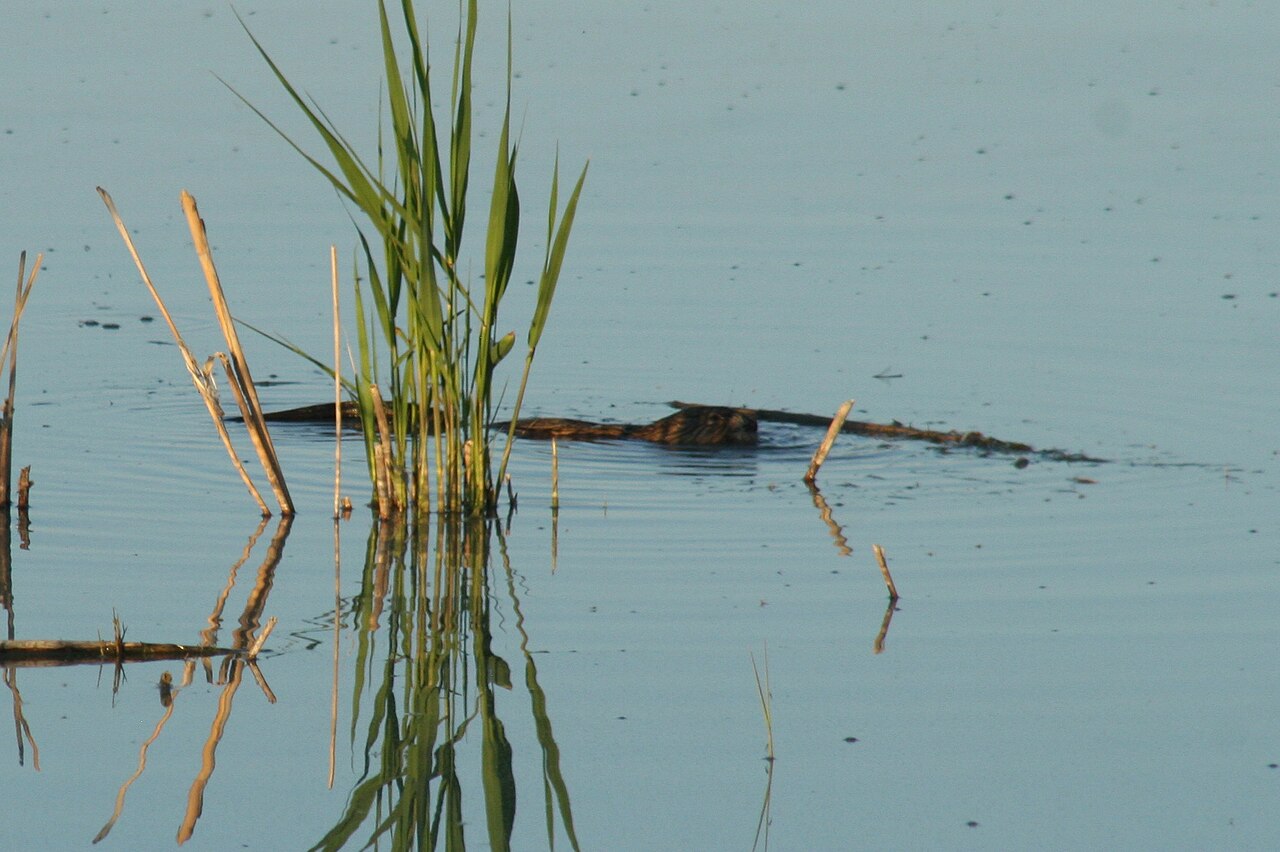
| Swimming at dusk on a pond | Work beginning, a project finding its shape | Normal foraging start, the usual sighting |
| Seen in broad daylight | Something hidden coming into the open | Spring kits, high food pressure or a displaced animal |
| Slapping its tail at you | A warning to back off a boundary | Alarm signal to its family, you are too close |
| On a road or far from water | A move, a change of household, dispersal | A two year old leaving to found its own colony |
| Working the same site repeatedly | A task you have been putting off | An active colony maintaining its dam nightly |
| Found dead or an abandoned lodge | A chapter closing, effort that has run its course | Trapping, predation, or the colony ate out the site |
| In a dream | Building, home, or work you cannot put down | Often follows a move, a renovation or a new job |
Beaver as a Spirit Animal, Totem and Power Animal
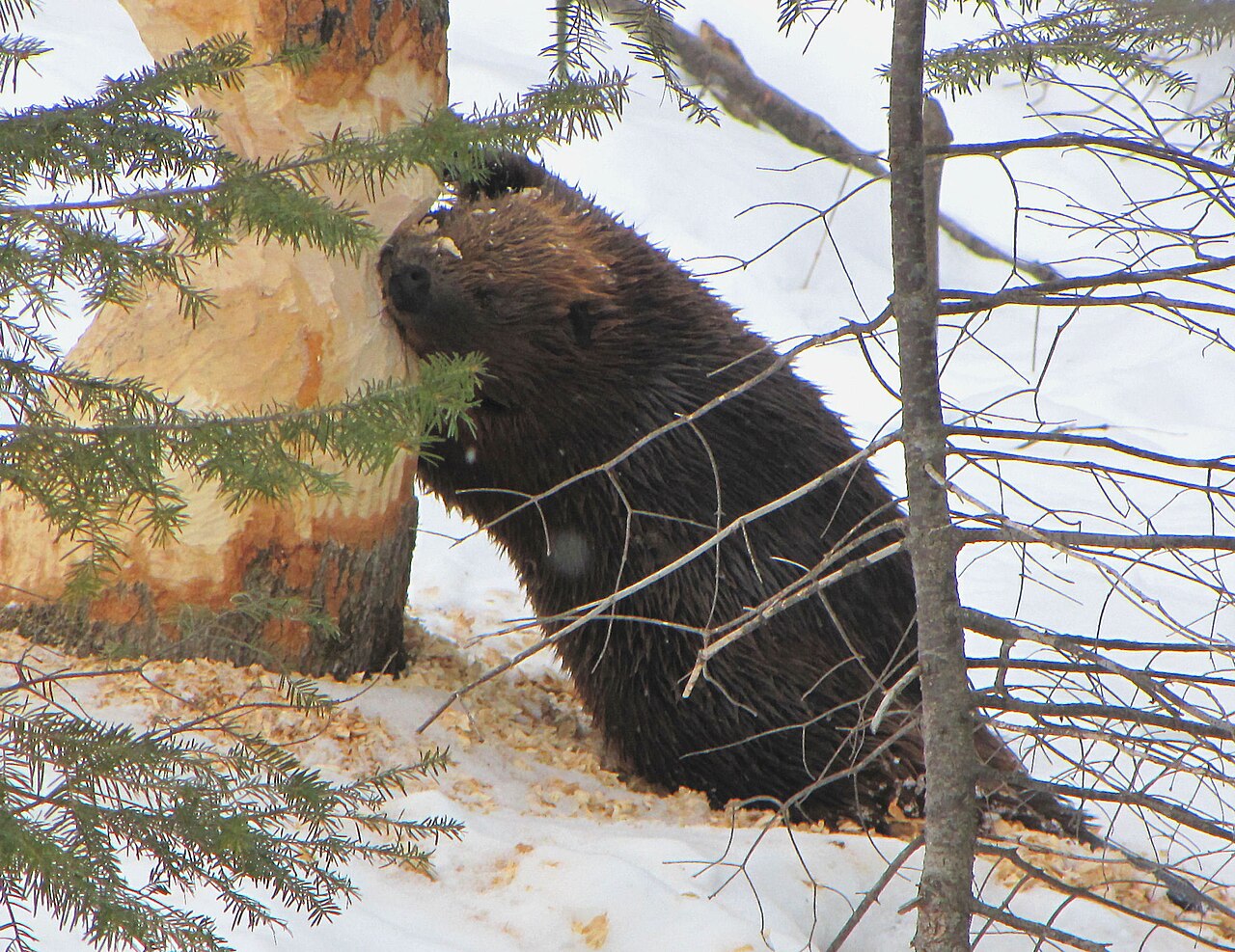
As a spirit animal the beaver belongs to people who build the thing rather than talk about it. The classic reading is that the beaver arrives when you have a plan you have not started, or a structure in your life that needs repair before it fails. The instruction is practical: pick the work, do it in small nightly increments, involve your household.
As a totem, in the sense of a lifelong animal identification, the beaver marks providers. Builders, tradespeople, parents running a complicated home, anyone whose contribution is infrastructure that other people stand on without noticing. The beaver totem is rarely described as spiritual or visionary, and that is part of the point.
As a power animal called on for a specific task, the beaver is invoked for projects that need endurance rather than inspiration. Shamanic writing in the North American tradition gives it to people facing long rebuilds after loss, since the animal’s defining trait is rebuilding the same dam as many times as the water takes it out.
What Are the Personality Traits of a Beaver?
The traits attributed to beaver people are consistent across sources: diligent, loyal, practical, detail-oriented, quietly stubborn, uncomfortable with idleness and strongly attached to home. They finish things. They would rather fix than replace, and they measure a day by what got built.
The listed weaknesses are the same traits under pressure. Workaholism, difficulty delegating, resistance to plans they did not design, and a tendency to keep building past the point where the structure is good enough. Beaver people are also described as slow to trust but hard to lose once they commit.
The animal supports the reading more literally than most totems. Beavers are physically compelled to gnaw, their incisors grow continuously and they must wear them down, and the sound of running water triggers damming behavior whether or not a dam is needed. Researchers have recorded beavers damming loudspeakers playing water sounds.
What Is a Beaver Personality Type, and What Are the Four Personality Animals?

The beaver personality type comes from the four-animal model popularized by Gary Smalley and John Trent, which maps the older DISC framework onto animals. The four personality animals are the lion, the otter, the golden retriever and the beaver.
The lion is the driver: decisive, blunt, goal-first. The otter is the influencer: social, enthusiastic, scattered. The golden retriever is the steady supporter: loyal, patient, conflict-averse. The beaver is the analyst, matching the C in DISC: careful, systematic, high-standards, uneasy with vagueness and quick to spot the flaw in a plan. Beavers want the spreadsheet before the decision.
Worth noting that this is a popular personality framework, not a clinical instrument, and it has no connection to the Native American or European animal traditions. People searching for beaver symbolism frequently land here by accident, which is why the two are worth keeping apart.
Beaver Symbolism in Native American Traditions
Beliefs vary by nation and no single Native American meaning exists, but the beaver is unusually consistent in holding a respected, practical role. In Blackfoot tradition the Beaver Bundle is among the oldest and most important ceremonial bundles, and the beaver is credited with teaching people medicine and ritual. That is a teacher role, not a trickster role.
Several Anishinaabe and Cree accounts credit the beaver with helping shape the land after a flood, and Haida and Tlingit art of the Northwest Coast uses the beaver as a prominent clan crest, identifiable by the cross-hatched tail and two large incisors. Northeastern nations connected the animal with wealth and obligation long before the fur trade, and with the trade it became the economic center of the continent for two centuries.
The common thread is competence rewarded with respect. Where the bat is ambiguous in many traditions, the beaver generally is not.
Beaver in Christian and Biblical Symbolism
The beaver is not mentioned in the Bible. The animal is Eurasian and American, and the Eurasian beaver (Castor fiber) was absent from the Near East, so the biblical animal lists do not include it. Christian beaver symbolism comes instead from medieval bestiaries.
Those bestiaries told a grim story. The beaver, pursued by hunters for castoreum, was said to bite off its own testicles and throw them to the hunter to escape. The moral drawn from it was that a Christian should cast off vice to escape the devil. The anatomy was wrong and the behavior never happened, but the fable was repeated for centuries and gave the beaver a reputation for self-sacrifice and renunciation in European Christian art.
In modern Christian devotional use, the beaver appears mainly as an image of diligent stewardship, usually paired with Proverbs 6:6 on the ant and with passages on building a house on rock.
Celtic and Old European Beaver Lore
Beavers once lived across Britain and Europe and were hunted out, which left the lore thinner than it should be. Place names preserve what the stories lost: Beverley in Yorkshire, Bièvres in France, Biberach in Germany, all beaver names from periods when the animal was still common. In Welsh tradition the beaver, llostlydan, appears in medieval law texts valued for its pelt above almost any other animal.
Where Celtic material does mention the beaver, it sits with water deities and with healing springs, and castoreum was a standard ingredient in European medicine into the 1800s. The beaver’s extinction across most of Europe by the 1600s is the main reason its symbolism survived in North America rather than in the Old World.
Beaver Beliefs in East Asia and Siberia
Beavers are absent from China, Japan and Korea, so classical East Asian symbolism has no beaver at all. The animal that occupies the industrious-builder slot in Chinese tradition is the ant, and in Japanese tradition the diligent worker image goes to the bee and the ox.
Siberian and Mongolian traditions are different, since Eurasian beavers persisted in the Yenisei and Ob basins. Among several Siberian peoples the beaver was treated as a water spirit’s animal and subject to hunting taboos, and in parts of Mongolia beaver castoreum remains a traditional medicine. Anyone who reads “East Asian beaver symbolism” online is almost certainly reading an invention.
What Is a Beaver Dream?
Beaver dreams are read as being about work and home, in that order. A beaver building in a dream is traditionally a project that will succeed if you keep at it. A dam that holds is security achieved; a dam that breaks is a structure in your life that is under more pressure than you have admitted.
Dreaming of a beaver gnawing a tree is read as patient progress on something very large. A beaver trapped or struggling in a dream points to overwork, specifically effort that is no longer producing anything. Seeing a baby beaver is connected to a new household, a dependent, or a project in its first fragile weeks.
The ordinary explanation deserves a mention: beaver dreams cluster around moves, renovations, new jobs and new children, which are the exact life events the symbolism describes.
Seeing a Beaver in the Wild, at Night or Again and Again
A beaver at dusk on open water is the normal sighting and is read as work beginning. The animal is nocturnal and crepuscular, so a dawn or evening encounter is simply the animal’s schedule, which is why most traditions treat it as confirmation rather than as a special sign.
A beaver in full daylight is read as something concealed coming into the open, and it does have a real cause. Daylight activity rises in spring when kits are in the lodge and food demand is high, during ice-out, and when a colony has eaten out its site. Seeing the same beaver repeatedly means you have found an active colony, which maintains its dam nightly and follows the same channels for years.
A tail slap is the one unambiguous message in the encounter. It is an alarm to the rest of the family, and it means you have come inside the animal’s tolerance. Back off 30 to 50 ft and it will usually resurface within ten minutes.
Finding a Dead Beaver or an Abandoned Lodge
Neither is read as a curse. A dead beaver is interpreted as effort that has run its course, and traditionally as a prompt to check whether you are still building something that has already served its purpose. An abandoned lodge carries the gentler version: a finished chapter, a house you have outgrown.
Abandonment is routine ecology rather than misfortune. A colony strips the aspen, willow and cottonwood around its pond, then moves upstream or downstream and starts again, and the drained meadow it leaves behind becomes some of the richest habitat in North America. Learning what beavers eat explains the whole cycle. Do not handle a dead beaver without gloves, and report clusters of dead animals to your state wildlife agency.
What Is a Beaver’s Weakness? The Shadow Side of the Totem
On land the beaver is slow, nearly blind at distance and almost defenseless, which is why wolves, coyotes, bears and in the Southeast the occasional alligator take them when they leave the water. That physical weakness is the basis of the symbolic one: the beaver is formidable only inside the system it built.
Read as a totem, the shadow side is a person who cannot function outside their own structure. Overwork presented as virtue, control dressed up as responsibility, and a refusal to leave the pond even when the food is gone. The traditional corrective is the dam itself: a beaver that dams every sound of running water will eventually block a flow it needed. Knowing which water to let run is the lesson the animal does not learn on its own. The Smithsonian’s National Zoo keeps a useful plain account of American beaver biology for anyone who wants the animal behind the symbol.
Frequently Asked Questions
What is special about beavers?
They are the only North American mammal besides humans that significantly reengineers its habitat. Beavers build dams, lodges, canals and food caches, mate for life, and their ponds create wetlands that support fish, amphibians, waterfowl and moose. A single colony can change the hydrology of a whole valley floor.
How do beavers show love?
Through shared work and close contact. Pairs bond for life, groom each other, sleep in contact in the lodge and build and repair together. Yearlings stay a second year and help raise the new kits. Beavers also vocalize a great deal inside the lodge, including whines and soft churring between family members.
Is seeing a beaver good luck?
It is treated as favorable in nearly every tradition that mentions it, usually as a signal that work will pay off or that a home is secure. No major tradition reads a beaver as a bad omen. The closest thing to a warning is the tail slap, and that is a boundary message rather than bad luck.
What does it mean when a beaver slaps its tail at you?
Symbolically it is read as a boundary being drawn and a warning to stop pushing. Behaviorally it is an alarm signal: the beaver has detected you and is warning its family before diving. The sound carries a long way underwater. Step back 30 to 50 ft and stay quiet.
Which zodiac sign is the beaver?
Modern astrology blogs most often pair the beaver with Taurus, on the grounds of patience, stubbornness and home-building, and some assign it to Capricorn for the same reasons. Neither pairing comes from a traditional system. The Native American and Celtic animal calendars circulating online are twentieth century inventions.
What does a beaver tattoo mean?
Usually industry, family and self-built success, and for Canadians and Oregonians a direct national or state identity. Northwest Coast formline beaver designs carry clan meaning and should not be copied casually. Some wearers choose it for the rebuilding reading, marking recovery after a loss rather than ambition.