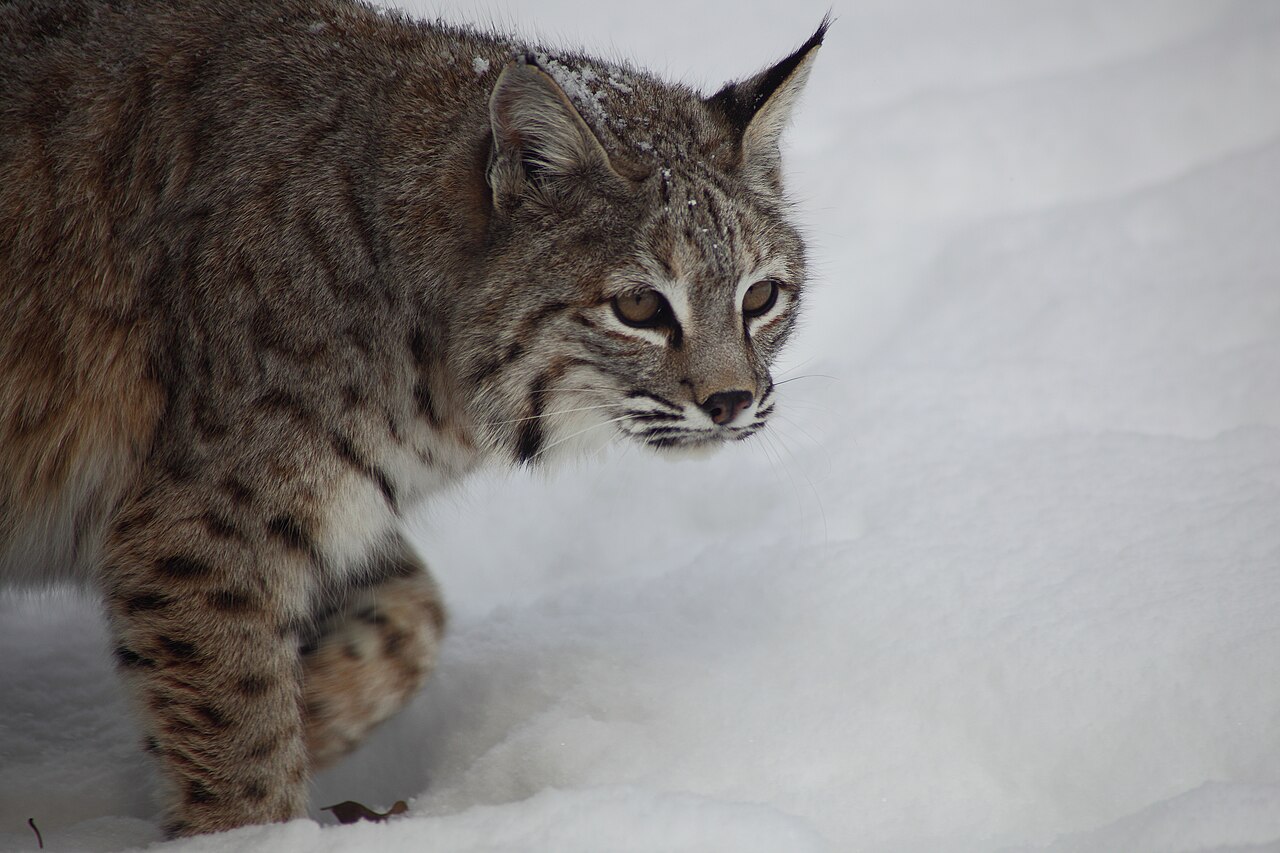
Bobcat Symbolism: 7 Meanings and What Seeing One Signals
Seeing a bobcat is read in most traditions as a message about patience, boundaries, and what you are keeping to yourself. The animal is built for silence and ambush, it watches long before it moves, and people who encounter one almost always say the same thing: it saw them first. That is the core of bobcat symbolism, and nearly every situational meaning below grows out of it.
The bobcat (Lynx rufus) is a solitary, crepuscular cat native only to North America, which matters for interpretation. It appears in the oral traditions of many Indigenous nations of this continent, it does not appear in the Bible, in Celtic lore, or in East Asian folklore, and the readings attached to it from those traditions are modern transfers from other cats. The sections below keep the sources separate and say which is which.
In popular symbolism, seeing a bobcat signals that you are being watched or tested, and that silence serves you better than speech right now. It is associated with patience, independence, boundary setting, and hidden knowledge. A daytime sighting is usually read as a call to act on something you already know, and a repeated sighting as a message you have ignored once.
What Does Seeing a Bobcat Signify?
The standard reading is a warning to hold your tongue and your position. Because bobcats hunt by waiting rather than chasing, people interpret a sighting as confirmation that the timing is not yet right, or that someone nearby is observing a situation more closely than you realize. In books on animal symbolism this is usually phrased as a lesson about secrecy and discretion.
A second common reading is about boundaries. Bobcats defend home ranges of 1 to 20 square miles (2.6 to 52 sq km) and avoid confrontation when they can, which is why writers connect them to the idea of a quiet, firm limit rather than an argument. Someone who has just been overextending themselves tends to receive the sighting that way.
None of this is a prediction. Beliefs about animal omens are beliefs, and the same encounter means something different in a Lakota account, a modern spirituality book, and a wildlife biologist’s field notes. What follows is organized by tradition so the difference stays visible.
Bobcat Meaning by Situation
| Situation | Common interpretation |
|---|---|
| In your yard | A boundary at home needs stating; something domestic is being watched |
| At your window | A message you have been avoiding is close and personal |
| Crossing your path | Pause before a decision; the route you planned is not the one to take |
| At night | Work with what is hidden; trust instinct over explanation |
| In daylight | Unusual and read as urgency; act on what you already know |
| Repeatedly | A lesson ignored the first time, usually about silence or limits |
| Found dead | The end of a period of secrecy or self-protection |
Bobcat Symbolism in Native American Traditions
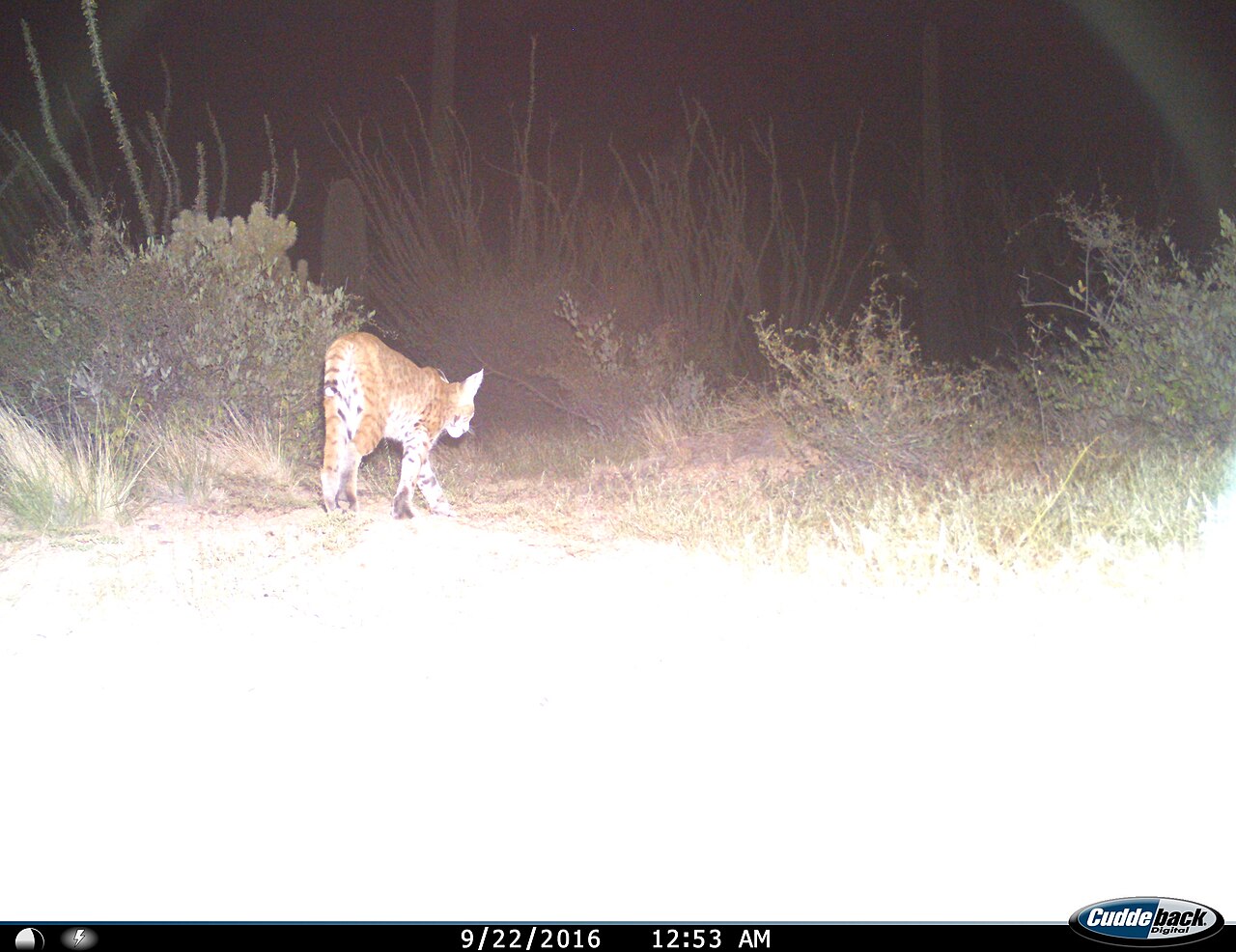
There is no single Native American meaning for the bobcat, and treating hundreds of distinct nations as one tradition is the most common error in articles on this topic. The bobcat and its stories differ by region, language, and clan, and in many cases the stories are not public.
In several documented Southwestern and Great Basin story cycles, Bobcat appears as a counterpart to Coyote, the restrained figure against the impulsive one, and in some versions the two trade tails or fates. In Mohave and Shoshone accounts the bobcat is a hunter whose value lies in accuracy rather than speed. Zuni tradition places felines among directional guardians, with the bobcat or wildcat associated with the south in some tellings.
Bobcat pelts and claws appear in regalia and medicine bundles in a number of nations, and where they do, the animal is generally understood as a protector of knowledge that is not spoken aloud. The responsible way to say it: in these traditions the bobcat is a serious figure, the details belong to the communities that hold them, and the Smithsonian’s National Museum of the American Indian is a better starting point than a symbolism blog. Readers comparing continental traditions often look at bear symbolism alongside it.
Bobcat Symbolism in Christian and Biblical Readings
The Bible never mentions a bobcat, because the species lives only in North America. What biblical texts do mention are wild cats of the Near East, including the lion, the leopard, and in some translations the wildcats and desert creatures of Isaiah 34:14, which describe places emptied of people and reclaimed by animals.
Christian readers who apply a meaning to a bobcat sighting usually draw on two themes from those passages. The first is vigilance: 1 Peter 5:8 warns that an adversary prowls, which turns a silent stalking cat into a reminder to stay spiritually alert. The second is wilderness as the place of testing, so an encounter at the edge of settled land is read as a season of trial rather than punishment.
In folk Christianity in the American South, a cat crossing the path at night carried a general ill omen, and bobcats inherited part of that reputation. This is a regional folk belief, not church teaching, and it sits closer to the superstitions attached to bats than to any doctrine.
Bobcat Symbolism in Celtic Lore

Celtic tradition has no bobcat either, but it has strong cat lore, which is where the transferred meanings come from. The Scottish cat sìth was a large black cat believed to steal the souls of the unburied dead, and the Irish and Welsh tales treat wildcats as guardians of thresholds and of the otherworld.
The Eurasian lynx (Lynx lynx) gives the second thread. The name lynx traces to a Greek root tied to light and seeing, and classical and later European writers credited the animal with sight that pierced walls, which became a symbol of seeing through deception. Modern writers apply that directly to the bobcat as the closest American relative.
Taken together, the Celtic-derived reading of a bobcat is an animal standing at a boundary between what is known and what is concealed. It is a reasonable transfer, but it is a transfer, and it belongs to European wildcats in the original sources.
Bobcat Symbolism in East Asian Traditions
East Asian folklore is rich in cat symbolism and silent on bobcats. Japanese tradition has the bakeneko and nekomata, shapeshifting cats whose age grants them power, and the maneki-neko, the beckoning cat of good fortune. Chinese tradition associates the leopard cat and the tiger with protection, courage, and the driving off of harm, with tiger imagery placed at doorways and on children’s clothing.
Where a bobcat gets an East Asian reading, it is usually borrowed from the tiger: solitary strength, territorial authority, and protection of the household. The Japanese thread adds patience and the sense that an animal seen rarely has been present all along, which fits the bobcat’s actual behavior well.
Say it as belief, not fact. In these traditions it is the tiger and the domestic cat that carry the meaning, and the bobcat is a modern stand-in for an American audience.
Bobcat as a Spirit Animal
People who identify the bobcat as their spirit animal typically describe themselves as private, observant, and slow to commit, with a sharp response once they decide. The traits attached to it in contemporary animal spirituality are patience, self-reliance, discretion, and a low tolerance for being managed by others.
The shadow side is part of the same package. A bobcat pattern taken too far reads as isolation, withholding, and watching a situation so long that the moment passes. Writers who work with these archetypes treat the arrival of the bobcat as a prompt to check which of the two is currently running.
The Bobcat Totem and Power Animal
Totem and power animal are not interchangeable words, although popular usage blurs them. A totem, in the anthropological sense, is a kinship emblem belonging to a clan or lineage, and in Native American contexts it is inherited and communal, not chosen from a book. A power animal, in modern neoshamanic practice, is an individual helper encountered in meditation or journeying.
In that modern practice the bobcat totem is called on for situations needing restraint: negotiations, boundaries with family, work you do not want discussed yet. Practitioners pair it with crystals and quiet rituals, and crystal shops often list it alongside protective stones. Treat the first sense as belonging to specific peoples and the second as a contemporary personal practice. Other solitary animals such as the beaver carry very different totem associations around work and construction.
Seeing a Bobcat in Your Yard or at Your Window
A bobcat in the yard is the most frequently reported encounter, and symbolically it is read as a domestic message: a limit inside the household needs saying out loud, or something at home is being observed more closely than you think. Because yards hold pets and children, the reading usually carries an undertone of protection.
At a window the interpretation tightens. A cat looking in is traditionally read as a message that has become personal and immediate, no longer about circumstances but about you. People commonly report it as unsettling rather than frightening, which is consistent with how the sighting gets interpreted.
Practically, a yard bobcat is usually hunting rabbits or rodents and has little interest in you. Bring small pets inside, remove ground-level food, and let it move on. Eagle sightings get read as messages from above in the same literature, where the bobcat is read as a message from close by.
Seeing a Bobcat at Night or Crossing Your Path
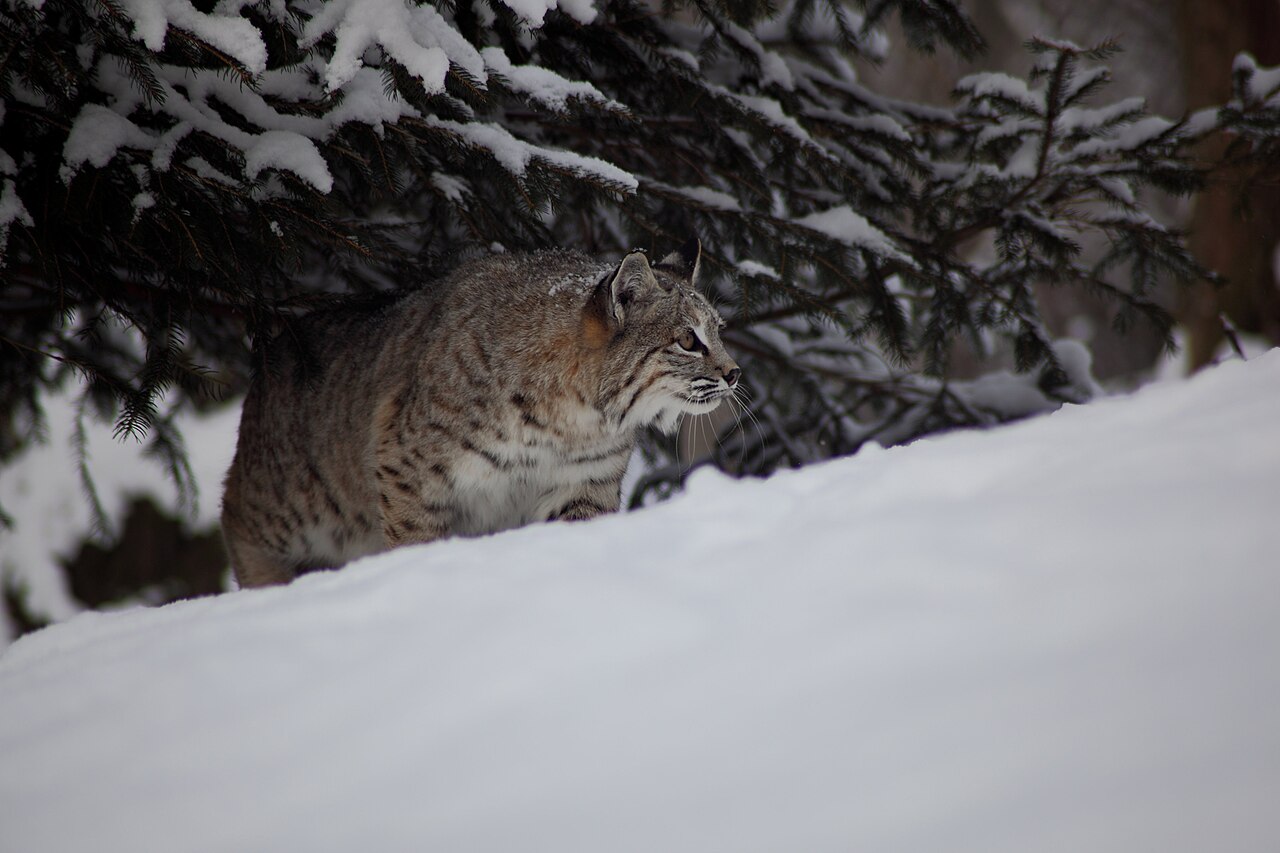
Bobcats are most active at dawn and dusk, so a low-light sighting is the normal case rather than a special sign. In symbolic terms night encounters are linked to instinct and to information you have not put into words yet, the reading being that you already know the answer and are waiting for proof.
A bobcat crossing your path has its own tradition, inherited partly from black cat folklore. The common interpretation is a pause signal: not a bad omen, but a reason to slow a decision that was about to be made quickly. Some regional folk beliefs do treat it as unlucky, which is worth naming rather than smoothing over.
Seeing a Bobcat Repeatedly, or Finding One Dead
Repeated sightings get the strongest reading in this literature. The standard interpretation is that the first message was ignored, and writers advise identifying what you avoided saying or deciding between the sightings. In wildlife terms the explanation is simpler: you are inside one animal’s home range and it uses the same routes.
A dead bobcat, usually a roadkill, is read as the close of a protective or secretive phase, the end of needing to hide something rather than a death omen about a person. Some traditions regard handling the remains as inappropriate, and in most states possessing parts of a furbearer without a permit is also illegal, so photograph it and leave it.
Dreaming About a Bobcat
Dream dictionaries read a bobcat as a part of yourself that is watchful and not fully tame. A calm bobcat in a dream is generally interpreted as confidence in your own judgment, while a stalking or attacking one points to a situation where you feel watched, or to anger you are holding back rather than expressing.
The details carry the meaning in these systems. Being followed is read as unresolved pressure, a bobcat in the house as a boundary issue at home, a bobcat with kittens as protectiveness, and a caged one as restraint that has turned into suppression. Dream symbolism is self-interpretation with an image attached, which is why the same cat means opposite things to two people. Black butterfly readings work the same way in the dream literature.
Frequently Asked Questions
Had a dream about a bobcat, what does it mean?
Most dream interpreters read a bobcat as your own guarded, observant side. A peaceful bobcat suggests trust in your instincts, while one that stalks or attacks is usually tied to feeling watched or to anger you are not voicing. The setting matters more than the animal: a bobcat inside the house points to boundaries at home.
What should you do if you see a bobcat in your yard?
Keep your distance, bring pets and poultry inside, and do not corner or feed it. Make yourself large and loud if it does not leave, since bobcats avoid people and attacks are extremely rare. Remove the rabbit and rodent attractants, and call your state wildlife agency if the animal appears sick, injured, or unafraid in daylight.
What is a brown bobcat’s spiritual meaning?
Nearly all bobcats are some shade of brown to reddish tan with dark spots, so a brown bobcat is simply the usual coat and carries the general meaning of patience, boundaries, and hidden knowledge. Writers who assign a separate reading to brown tie it to grounding and the earth element. Rare black or very pale individuals get the heavier interpretations.
What is the bobcat spiritual meaning in love?
In relationship readings the bobcat is interpreted as a call to protect your own space inside a partnership and to be honest about what you have been withholding. A sighting during a new relationship is read as a prompt to move slowly, and during a long one as a nudge to say the thing you keep deciding not to say.
What is special about bobcats?
They are the most widespread wild cat in North America, present in 48 states, yet most people living beside them never see one. They weigh only 15 to 35 pounds (7 to 16 kg) but take prey up to deer size, jump 10 feet (3 m), and hold territories they patrol on fixed routes. That mix of commonness and invisibility is why the symbolism centers on being watched. Bison symbolism by contrast grew out of an animal nobody could miss.
Is a bobcat a good or bad omen?
Most modern sources treat it as neutral to positive, a message about timing and discretion rather than a warning of harm. Regional folk traditions that inherited black cat superstitions read a bobcat crossing the path as unlucky, and some Indigenous accounts treat it as a serious figure whose meaning depends on context. The honest answer is that it depends entirely on which tradition you are standing in.