Do Groundhogs Hibernate? 4 Months at 40 Degrees
Groundhogs (Marmota monax) are true hibernators, and among the most extreme in North America. A denning groundhog drops its body temperature from about 99 F (37 C) to roughly 40 F (4 C) and its heart rate from 80 beats per minute to 4 or 5. It breathes about twice a minute.
That makes the Groundhog Day tradition slightly absurd. A wild groundhog in Pennsylvania on February 2 is normally still underground, sealed in a winter chamber, and will not emerge on its own for several more weeks. Punxsutawney Phil lives in a climate-controlled enclosure and does not hibernate on the wild schedule at all.
Yes, groundhogs are true hibernators. They enter hibernation in October or November and emerge in February or March, spending 3 to 5 months underground. Body temperature falls to about 40 F (4 C), heart rate drops to 4 or 5 beats per minute, and they lose 30 to 50 percent of their body weight.
| Measure | Active groundhog | Hibernating groundhog |
|---|---|---|
| Body temperature | 99 F (37 C) | 38 to 43 F (3 to 6 C) |
| Heart rate | 80 to 100 bpm | 4 to 5 bpm |
| Breaths per minute | 15 to 25 | about 2 |
| Weight change | gains through summer | loses 30 to 50 percent |
| Arousal bouts | n/a | every 5 to 8 days |
| Duration | n/a | 3 to 5 months |
Do Groundhogs Hibernate, or Just Sleep Through Winter?
They hibernate in the strict sense, unlike bears. A groundhog’s body temperature tracks the burrow rather than staying near normal, which is the textbook definition biologists use to separate true hibernation from winter lethargy. Touch a hibernating groundhog and it feels cold.
The animal cannot simply wake up and run. Rewarming from 40 F takes one to three hours and burns a significant share of the fat reserve, which is why a disturbed groundhog is in real danger. Compare that with bears, which stay near 90 F and can be on their feet within minutes.
Groundhogs share this pattern with their close relatives. Chipmunks and ground squirrels use the same deep torpor, and so do bats, though bats hang rather than curl in a sealed chamber.
How Long Do Groundhogs Hibernate, and At What Temperature?

Most groundhogs den from October or November until February or March, a span of 3 to 5 months. Northern animals in Maine or Ontario may stay under for five months or more, while groundhogs in Virginia and the Carolinas often hibernate for only two to three months.
The trigger is not a single temperature. Hibernation onset follows body condition and shortening daylight more than a thermometer reading, and a groundhog that has not reached its fat target will keep feeding into cold weather. Once underground, the chamber holds steady between 38 and 47 F (3 to 8 C) regardless of what the surface does.
That stability is the point of digging deep. Winter chambers sit 3 to 6 ft (1 to 2 m) down, below the frost line, in a separate tunnel from the summer den and usually on a slope with good drainage.
Do Groundhogs Hibernate Together?
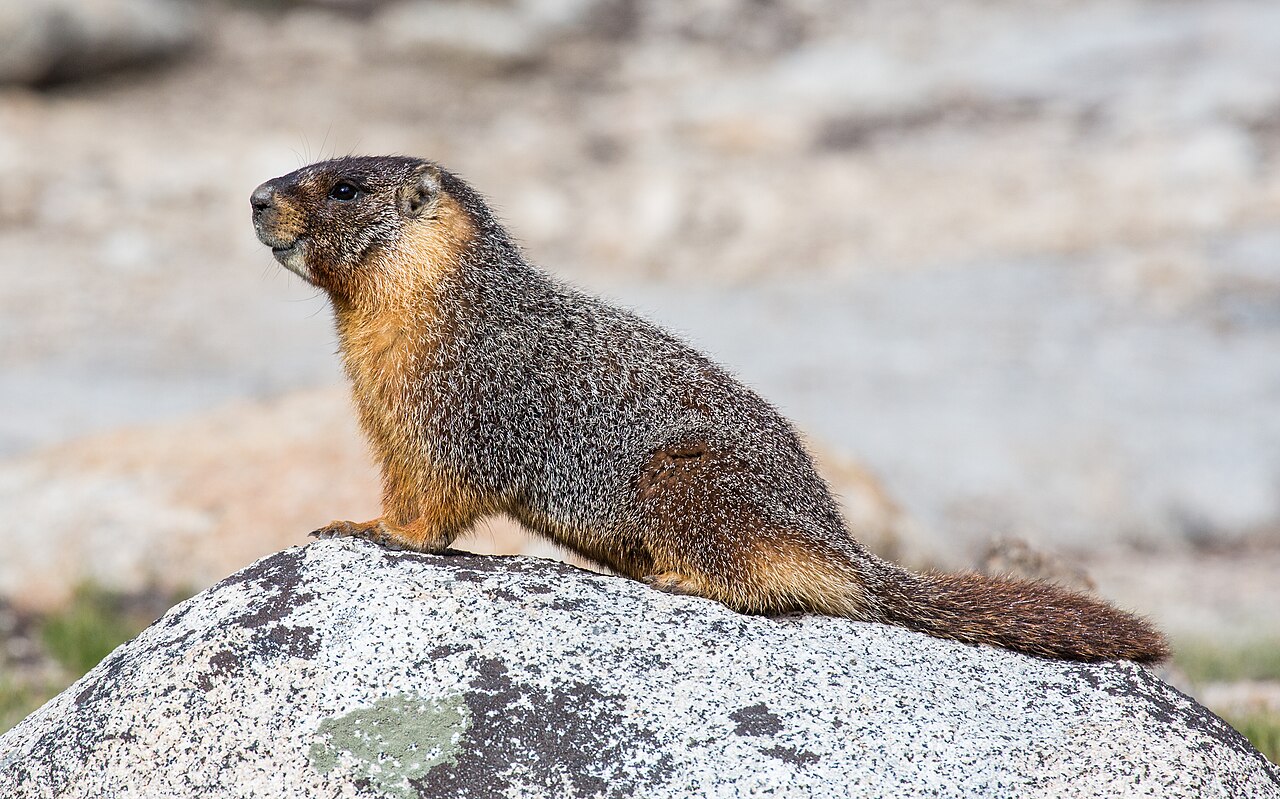
Almost never. Groundhogs are the least social of the marmots, and adults hibernate alone in individual chambers that they plug with soil behind them. Yellow-bellied marmots and alpine marmots huddle in family groups, but Marmota monax does not.
The exception is a mother with late-season young, which may share a burrow system through their first winter without sharing a chamber. Male groundhogs sometimes emerge early, in late January or February, to visit female burrows and establish breeding access before the females are fully awake.
Solitary hibernation costs more energy than huddling, which is part of why groundhogs lose such a large share of their weight. A 9 lb (4 kg) autumn animal can emerge at 5 lb (2.3 kg) in March.
What Happens Inside the Burrow
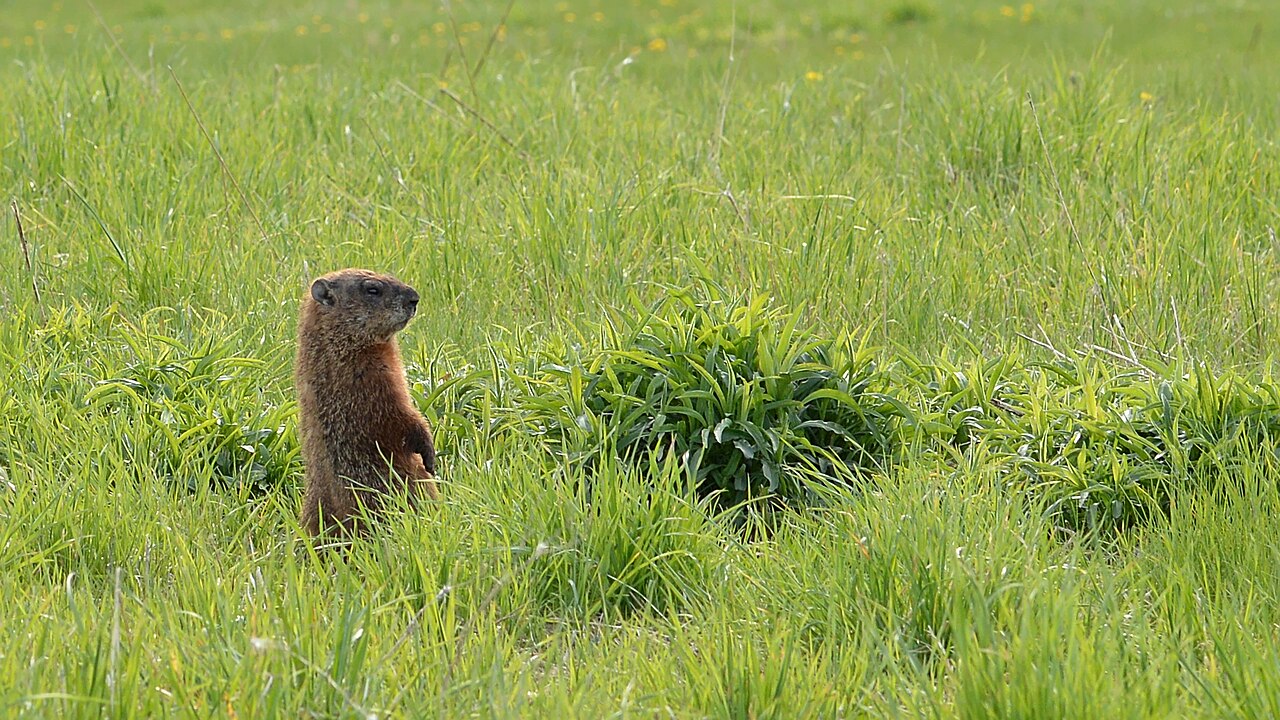
Hibernation is not one long shutdown. Groundhogs rouse every 5 to 8 days, warm briefly to near normal temperature, shift position, and then sink back into torpor. These arousal bouts consume most of the winter energy budget even though they occupy a small fraction of the time.
Nothing is eaten during the winter. Unlike chipmunks, groundhogs store no food cache and run entirely on body fat built during late summer, when an adult feeds heavily on clover, alfalfa, grasses, and garden vegetables. You can read the seasonal diet directly in groundhog droppings, which disappear from the yard once hibernation begins.
Waste is handled by a latrine chamber off the main tunnel, used during arousal bouts. That separate room, along with multiple escape holes, is one reason groundhog burrow systems run 25 to 45 ft (8 to 14 m) long.
When Do Groundhogs Emerge and Have Babies?
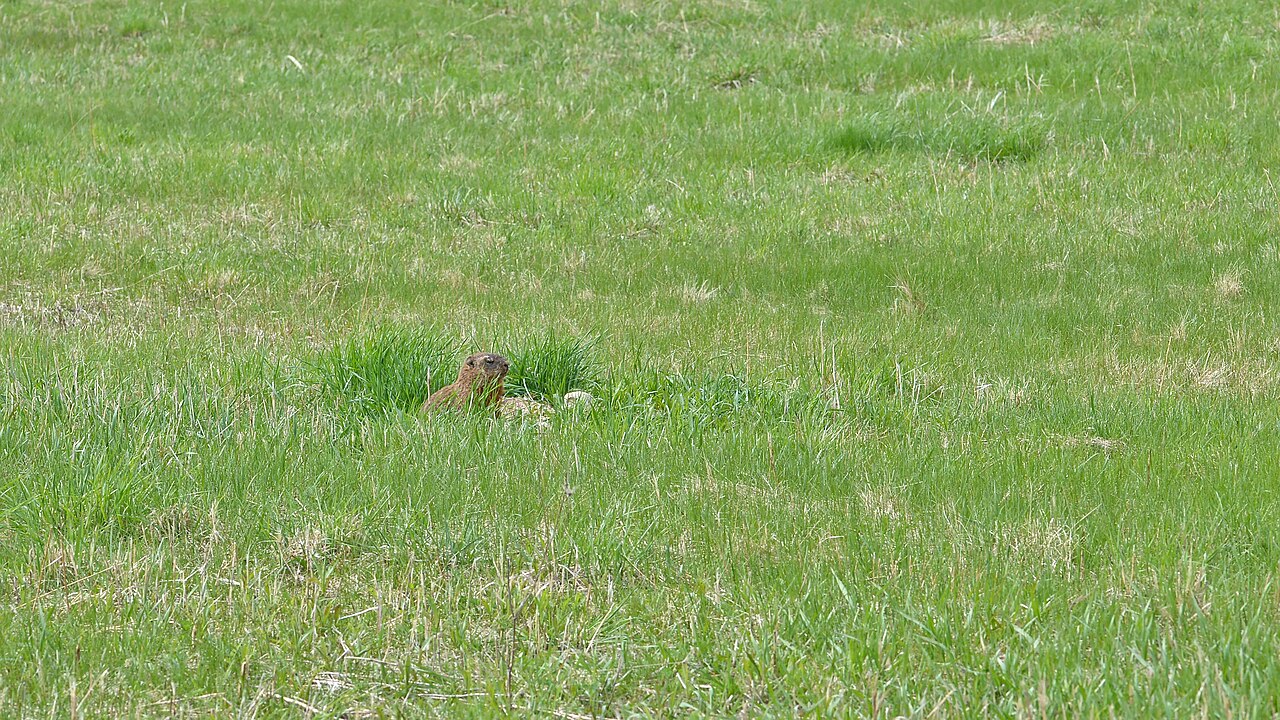
Adult males emerge first, typically in early February in the mid-Atlantic and March farther north, and spend several weeks moving between female burrows. Females follow in late February or March, and breeding happens within days of their emergence.
Gestation runs about 32 days, so a litter of 2 to 6 pups arrives in late March or April. The young stay below ground for roughly a month, appear above ground in May, and disperse by July. A baby groundhog weighs about an ounce at birth and is blind and hairless.
That timeline explains the spring behavior people notice: a groundhog seen in daylight in February is a male on the move, not an animal that woke up hungry. Whether those animals pose any risk is covered in are groundhogs dangerous.
Frequently Asked Questions
What is the lifespan of a groundhog?
Wild groundhogs average 3 to 6 years, though most die in their first two winters from predation or insufficient fat reserves. In captivity they reach 10 to 14 years. Hibernation itself is a major filter: a juvenile that enters winter underweight rarely survives to spring.
What is the natural enemy of groundhogs?
Coyotes are the primary predator across most of the range, followed by foxes, bobcats, large hawks, and domestic dogs. Historically wolves and cougars filled that role. Young groundhogs are also taken by weasels and snakes that enter the burrow system directly.
What do groundhogs absolutely hate?
Groundhogs avoid open ground with no escape cover, strong vibration, and the scent of predator urine. Home remedies such as Irish Spring soap, coffee grounds, and Epsom salt are widely repeated but show no reliable effect in testing. A fence buried 12 in (30 cm) deep with an outward apron works.
What are the benefits of having a groundhog in your yard?
Their burrows aerate and turn soil, and abandoned systems shelter foxes, rabbits, skunks, and salamanders across whole landscapes. Groundhogs also eat large volumes of weedy plants. The trade-off is structural: burrows under sheds, patios, and foundations can undermine footings over several seasons.
State-level guidance on burrow exclusion and wildlife conflict is published by the US Fish and Wildlife Service and by cooperative extension offices in most eastern states.