What Eats Hawks? Predators of Eggs, Chicks and Adults
What eats hawks is a short list that gets shorter with age. Eggs and nestlings are taken by raccoons, crows, ravens, rat snakes and larger raptors, while a healthy adult hawk has only one regular predator in North America: the great horned owl. Everything else that kills hawks, from coyotes to bobcats, is usually taking a bird that was already grounded, injured or very young.
Hawks sit near the top of their food chain, so predation on them is rare enough to be newsworthy among birders. The real pressure comes from the nest and from people. Roughly half of all young hawks never reach their first birthday, and the causes stack up in a predictable order by life stage: nest raiders first, rival raptors second, vehicles and poisons third.
Great horned owls are the main predator of adult hawks in the United States. Eggs and nestlings are eaten by raccoons, crows, ravens, rat snakes, squirrels and other hawks. Eagles, bobcats, foxes and coyotes take hawks opportunistically, usually injured or grounded birds. Vehicles, poisoned rodents and collisions kill more hawks than predators do.
| Predator | Stage taken | US region | How often |
|---|---|---|---|
| Great horned owl | Eggs, nestlings, adults | Nationwide | Common, the main threat |
| Raccoon | Eggs, nestlings | East, Midwest, South | Common at low nests |
| Crows and ravens | Eggs, small nestlings | Nationwide | Common |
| Rat snakes and other climbers | Eggs, nestlings | Southeast, Midwest | Regular in warm months |
| Other hawks and eagles | Nestlings, fledglings, adults | West, open country | Occasional |
| Bobcat, fox, coyote | Fledglings, grounded adults | Nationwide | Opportunistic |
| Fisher and marten | Nestlings | Northern forests | Local |
What Eats Hawks: The Short List
Fewer than a dozen North American animals regularly kill hawks, and most of them are after eggs or chicks rather than adults. The reliable predators are great horned owls, raccoons, corvids, climbing snakes, and larger or more aggressive raptors including golden eagles, bald eagles and other hawk species. Mammals such as bobcats, foxes and coyotes take hawks only when circumstance hands them one.
Which of these matters depends entirely on where the nest sits. A Cooper’s hawk nesting 35 ft up in a suburban conifer faces raccoons and crows. A ferruginous hawk nesting on a prairie outcrop faces coyotes and golden eagles instead. Diet works the same way in reverse, which is covered in what hawks eat.
Hawk Eggs: Who Raids the Nest
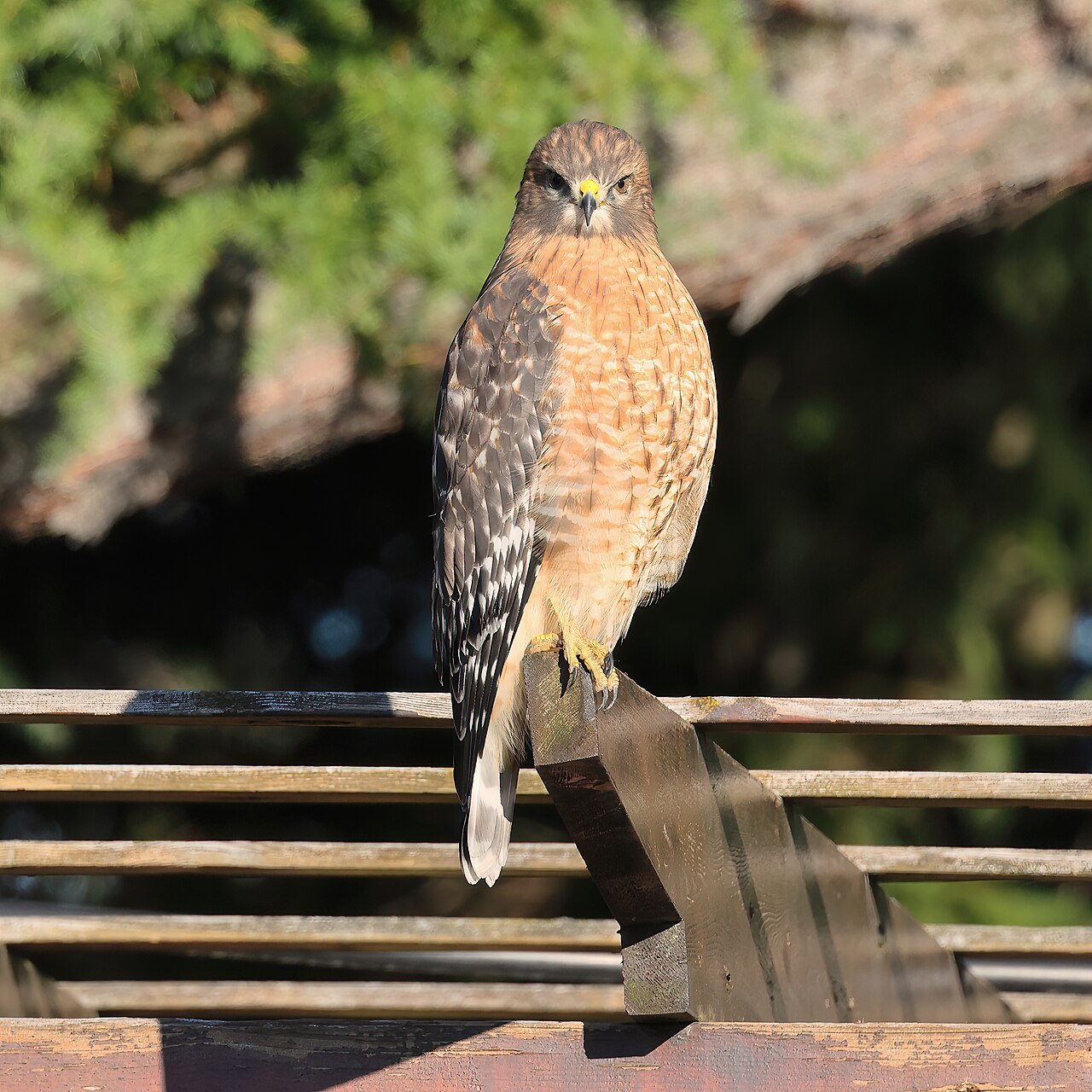
Eggs are the easiest meal in the hawk’s life cycle and attract the widest set of predators. Raccoons are the biggest offender east of the Rockies because they climb well and search methodically. Crows, ravens and jays find exposed nests from the air and will return until the clutch is gone. In the Southeast, rat snakes account for a steady share of losses by climbing trunks at night.
Incubating females rarely leave the clutch, which is the main defense. Nests fail most often when the female is forced off by human disturbance near the tree, giving a watching crow the gap it needs. Shell fragments and a splash of whitewash below a tree are often the first sign that something happened overnight.
Nestlings and Fledglings: The Most Dangerous Weeks
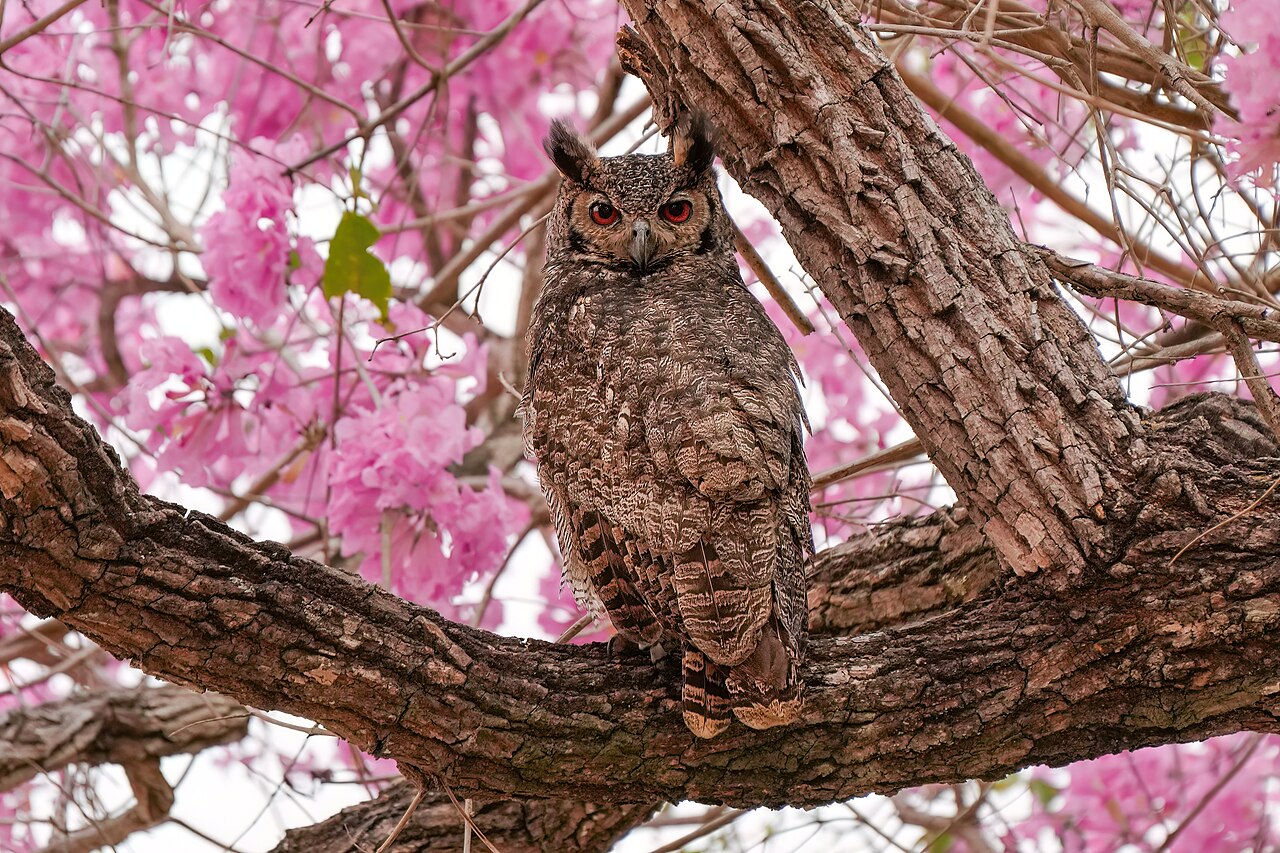
The riskiest stretch runs from hatching through the first month out of the nest. Chicks are loud, immobile and visible, and a brood of three draws attention that a clutch of eggs does not. Great horned owls hit nests after dark, when adult hawks see poorly and cannot defend. Raccoons and fishers work the same shift.
Fledglings make it worse for themselves. New flyers land badly, spend hours on low branches and sometimes end up on the ground for a full day, which puts them within reach of foxes, bobcats and free-roaming dogs and cats. Survival through the first year sits near 50 percent for most US hawk species, and this period accounts for much of the loss.
Adult Hawks: One Real Predator
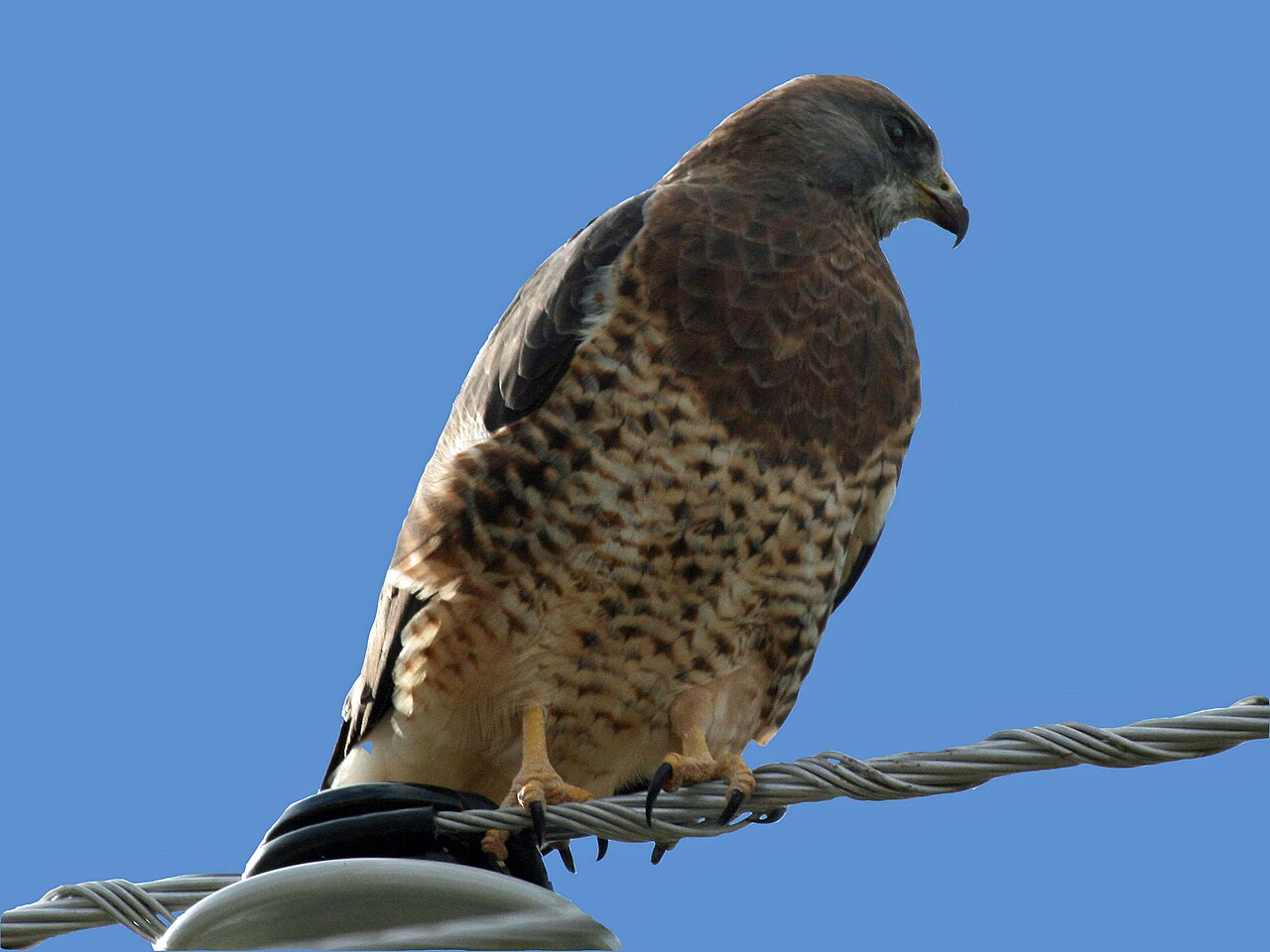
A grown red-tailed or broad-winged hawk is a formidable animal, and almost nothing hunts it deliberately. The exception is the great horned owl (Bubo virginianus), which weighs about the same but hunts in darkness, strikes silently and has a crushing grip. Owls kill roosting adult hawks, evict them from nests and have been documented taking red-tailed hawks outright.
The second exception is other raptors. Golden eagles kill buteos in open western country, and bald eagles will kill or rob hawks around water. Accipiters attack smaller raptors in disputes that occasionally end fatally. These events are uncommon but they are not freak occurrences; hawk on hawk aggression is a documented cause of adult death.
What Is a Hawk’s Biggest Enemy?
If the question means wild predators, a hawk’s biggest enemy is the great horned owl, by a wide margin and at every life stage. No other animal threatens eggs, chicks and adults alike. Birders call it the night shift version of the same niche, and hawks that nest within an owl territory lose nests at measurably higher rates.
If the question means mortality overall, the answer is people. Vehicle strikes along highway corridors, where hawks hunt the mowed verge, kill large numbers of birds. Secondary poisoning from rodenticide-killed rats, window collisions, electrocution on power poles and illegal shooting add up to more dead hawks each year than every natural predator combined.
Predators by Habitat: Forest, Prairie, Desert, Suburb
In eastern woodlands the threat set is raccoons, rat snakes, great horned owls and barred owls. On the prairies it shifts to coyotes, badgers and golden eagles, because many nests there are low, on rock, or in isolated trees a mammal can reach. Desert nests on saguaro and cliff ledges lose chicks to ravens and to heat as often as to mammals.
Suburbs look safe and are not. Raccoon densities run far higher in neighborhoods than in forest, and crows are abundant. What suburban hawks gain is fewer owls and eagles, which is part of why accipiters have moved into towns so successfully. Telling the local players apart starts with red-tailed versus red-shouldered hawk.
What Animals Are Hawks Afraid Of?
Hawks show clear avoidance of great horned owls, golden eagles and bald eagles, and they will abandon a hunting perch rather than share airspace with one. They are also wary of humans at the nest, which is why most states enforce buffer distances around active raptor nests during breeding season.
Then there is mobbing, which is harassment rather than fear. Crows, blackbirds, kingbirds and mockingbirds gang up on a perched hawk and drive it off, sometimes dozens at a time. The hawk is almost never hurt, but it leaves. A sudden uproar of crows overhead is one of the most reliable ways to locate a hawk, along with the calls in hawk sounds.
Hawks Around Homes and Yards: What Owners Can Do
A hawk hunting a backyard is responding to easy prey: songbirds crowded at a feeder, free-ranging bantams, or a rodent population in the compost. The fix is to remove the concentration rather than the bird. Pull feeders for two weeks and the hawk usually moves on, a tactic detailed in keeping hawks off bird feeders.
For poultry keepers, physical cover beats every deterrent on the market. Netting over the run, pallets or shrubs for the flock to dive under, and a rooster or guard goose all reduce losses. Reflective tape and owl decoys work for a few days at most, since hawks habituate quickly to objects that never move or threaten.
Why Hawk Populations Hold Up Anyway
Despite heavy losses of eggs and young, most US hawk populations are stable or increasing. Red-tailed hawks have expanded along highways, and Cooper’s hawks now breed in cities that had none 40 years ago. Long adult lifespans do the work: an adult that survives its first year often lives 10 to 15 years and nests repeatedly, so each pair can absorb several failed broods.
The recoveries also track policy. Protection under the Migratory Bird Treaty Act and the ban on DDT reversed mid-century declines, and the US Fish and Wildlife Service still regulates every form of take. Detailed life history for individual species is maintained by All About Birds.
Related reading: what eats owls.
Related reading: what eats birds.
Related reading: what eats frogs.
Frequently Asked Questions
What is a hawk’s biggest enemy?
The great horned owl is a hawk’s biggest natural enemy. It takes eggs, nestlings and adult birds, hunts at night when hawks are nearly blind, and will take over a hawk nest for its own brood. Counting all causes of death, however, human-related losses such as vehicle strikes and rodenticide exceed every predator combined.
Do owls eat hawks?
Yes. Great horned owls regularly kill and eat hawks, including red-tailed hawks of similar body weight, and barred owls take smaller accipiters. Attacks almost always happen at night at a roost or nest. Smaller owl species do not hunt hawks and are themselves prey for the larger ones.
Do eagles eat hawks?
Occasionally. Golden eagles kill hawks in open western habitat, and bald eagles kill or rob them around lakes and coastlines. Neither species specializes in hawks, since both prefer larger or easier prey, but a hawk that challenges an eagle over food or territory risks the encounter ending badly.
What animals are hawks afraid of?
Hawks avoid great horned owls, golden eagles and bald eagles, and they retreat from humans near the nest. They are also routinely mobbed by crows, blackbirds, kingbirds and mockingbirds, which chase them out of an area in noisy groups. Mobbing rarely injures the hawk, but it moves it along.
Is it good to have a hawk in your yard?
For most households, yes. A resident hawk suppresses rats, mice, voles, squirrels and snakes at no cost and without poison. The trade-off is risk to backyard poultry, pigeons and very small pets. Netting runs and shelter structures resolve nearly all of the conflict without touching a protected bird.
What does it mean if a hawk hangs around your house?
Practically, it means your property has food or a good perch: a feeder, a rodent population, or a tall exposed tree over open ground. Hawks are territorial and will reuse a productive spot for years. The symbolic readings people attach to these visits are collected in hawk symbolism.
Explore more: What Eats What: The Backyard Food Chain Explained