Green Sea Turtle: 12 Facts on Size, Diet, Lifespan and Status
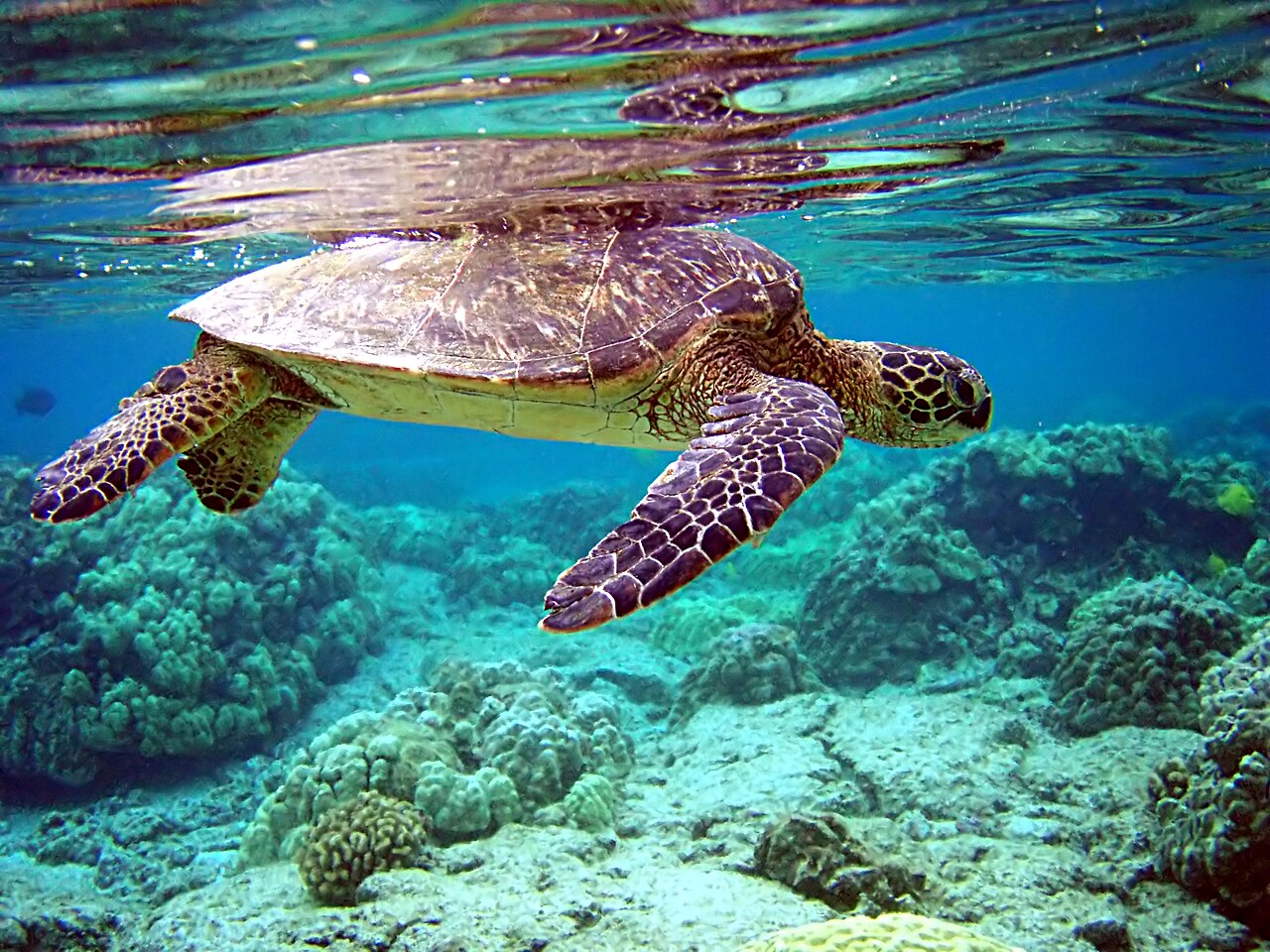
The green sea turtle (Chelonia mydas) is the only sea turtle that switches to a plant based diet as an adult, and that habit is what made it green on the inside and famous on the outside. Adults reach 3 to 4 ft (0.9 to 1.2 m) of shell length and 300 to 400 lb (136 to 181 kg), graze on seagrass meadows and algae, and travel thousands of miles between feeding grounds and the beach where they hatched. They are found in warm coastal waters worldwide, including Florida, Hawaii, Texas, and the US Caribbean.
They are also one of the clearest conservation stories in the ocean. Nesting numbers at major US beaches have climbed steeply since legal protection began in 1978, while the species still faces boat strikes, fishing gear, and a tumor disease that scars whole populations. This guide covers identification, range, diet, lifespan, nesting, current protected status, and what to do if you meet one in the water.
The green sea turtle is a large marine turtle reaching 3 to 4 ft (0.9 to 1.2 m) and 300 to 400 lb (136 to 181 kg) that lives in tropical and subtropical coastal waters worldwide. Adults are the only herbivorous sea turtle, feeding mainly on seagrass and algae. They live 60 to 90 years, and all US populations remain protected under the Endangered Species Act.
| Quick Facts | Green Sea Turtle |
|---|---|
| Scientific name | Chelonia mydas |
| Adult size | 3 to 4 ft (0.9 to 1.2 m) carapace length |
| Adult weight | 300 to 400 lb (136 to 181 kg) |
| Lifespan | 60 to 90 years, maturity at 20 to 40 years |
| Diet | Seagrass and algae as adults, omnivorous as juveniles |
| US status | Threatened or endangered depending on population segment |
| Key ID marks | One pair of prefrontal scales, serrated jaw, smooth shell edge |
What Is a Green Sea Turtle?
The green sea turtle is a large marine reptile in the family Cheloniidae, distributed through tropical and subtropical oceans between roughly 30 degrees north and 30 degrees south. Its shell is smooth edged, oval, and colored in olive, brown, and black, often with a radiating or mottled pattern that varies by region. The name comes from the green tinted body fat, not from the shell.
Scientists recognize distinct population segments rather than treating the species as one unit, because turtles from different nesting regions rarely interbreed. In US waters that includes the North Atlantic segment nesting in Florida, the Central North Pacific segment in Hawaii, and East Pacific animals along the California and Mexico coast. Each has its own trend, and lumping them together hides both recoveries and declines.
Green sea turtles are highly migratory. Individuals move between open ocean foraging as juveniles, shallow coastal seagrass beds as adults, and nesting beaches that may be more than 1,000 miles (1,600 km) away. That range is what makes them hard to protect: one animal passes through many jurisdictions in a single year.
What Are 5 Facts About Green Sea Turtles?
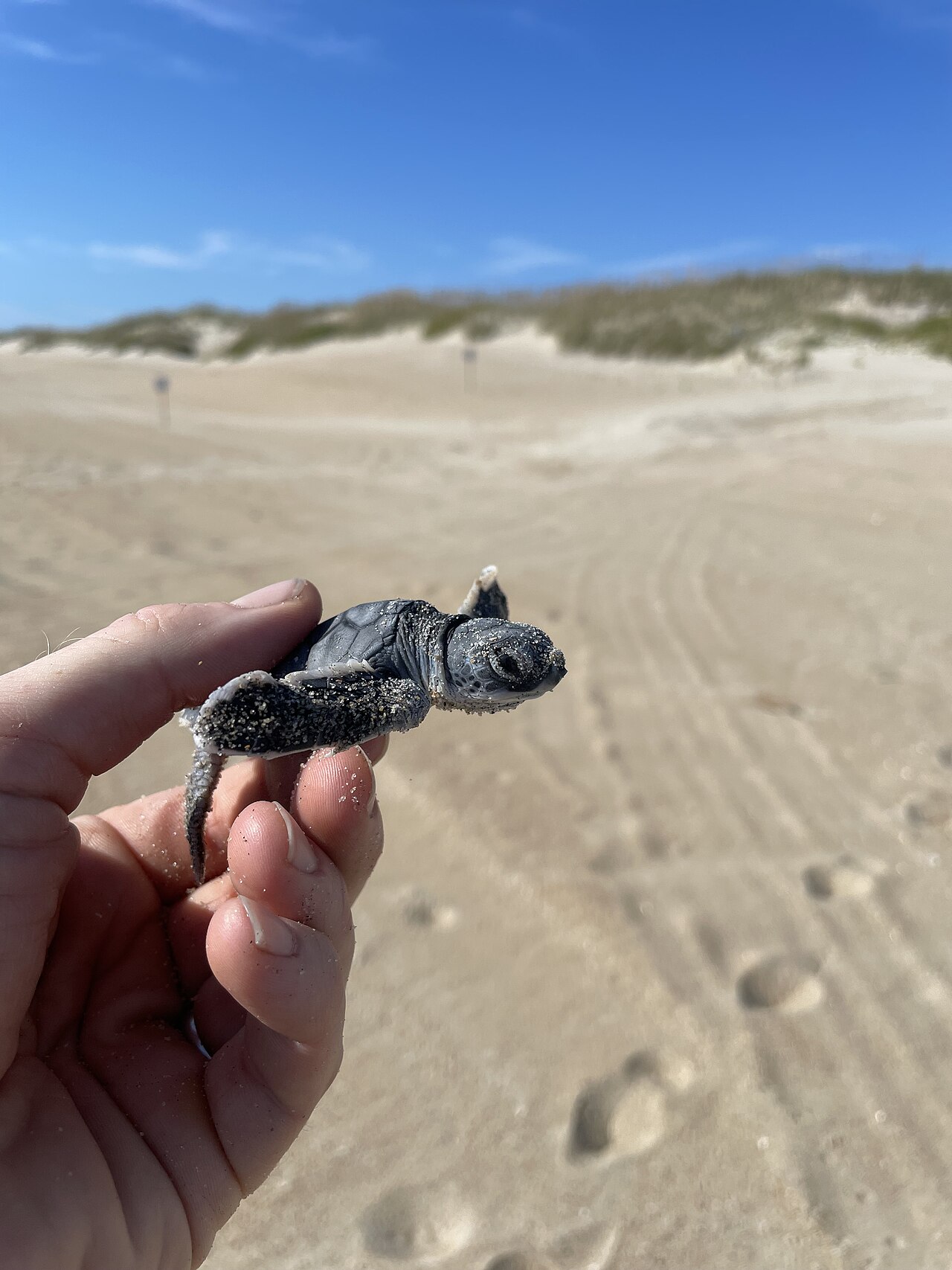
First, adults are the only herbivorous sea turtles, grazing seagrass and algae while every other species stays carnivorous for life. Second, they are the largest hard shelled sea turtle, exceeded in size only by the soft shelled leatherback. Third, their green fat, not their shell, gives them their name.
Fourth, females return to nest on or near the beach where they themselves hatched, navigating back across open ocean after decades away using the earth’s magnetic field. Fifth, the sex of the hatchlings is set by the temperature of the sand during incubation, with warmer nests producing females and cooler nests producing males.
That last fact is the one with the sharpest edge. On some warming beaches, nearly all hatchlings now emerge female, which changes the arithmetic of population recovery long before adult numbers reflect it. Sex determination by temperature appears across many turtle groups, including the freshwater species covered in our eastern painted turtle guide.
How to Tell a Green Sea Turtle From a Hawksbill
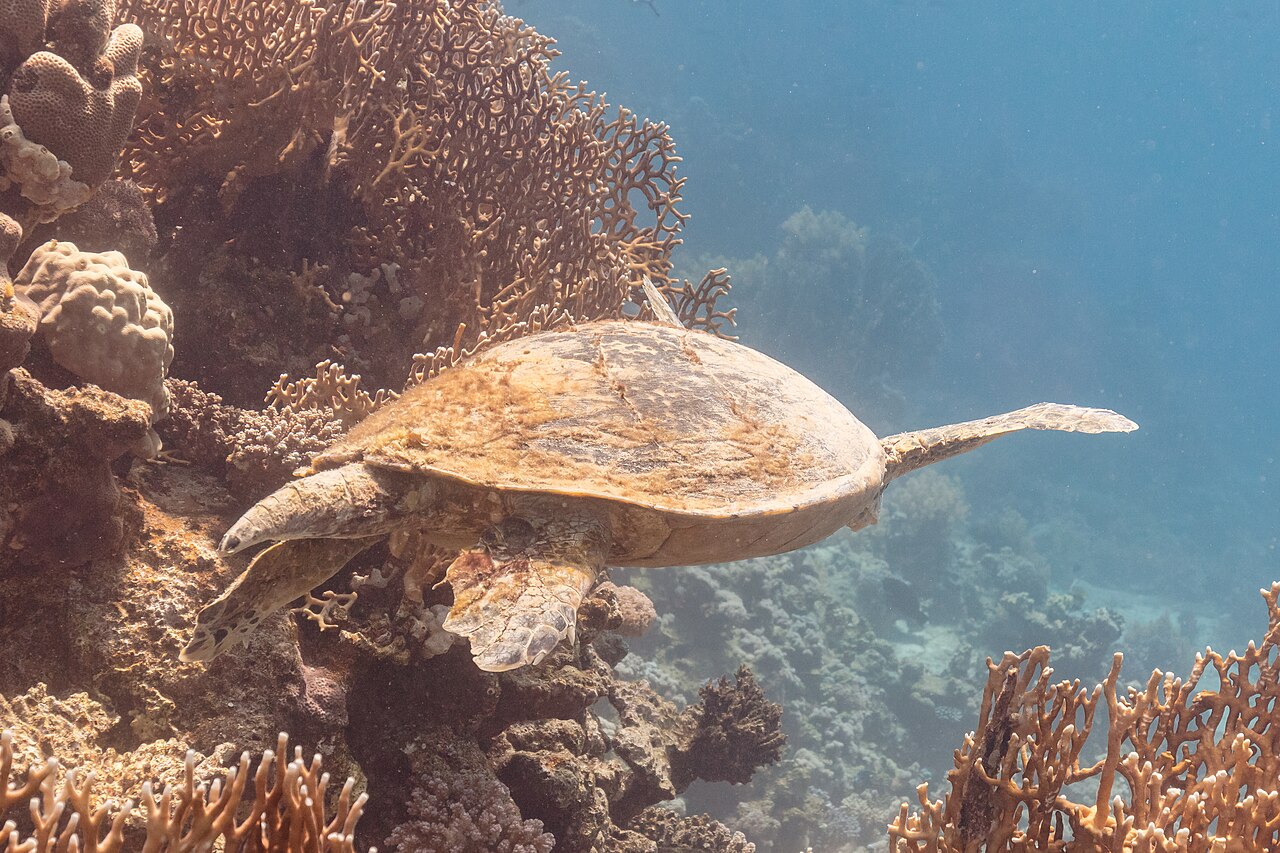
Look at the scales between the eyes. A green sea turtle has one pair of prefrontal scales, while a hawksbill has two pairs, and this single mark separates them reliably at any age. The head shape backs it up: the green turtle has a short, blunt, rounded snout, and the hawksbill has the narrow pointed beak it is named for.
The shell edge is the next check. A green sea turtle’s carapace scutes lie flat and edge to edge with a smooth outline, while a hawksbill’s overlap like roof tiles and give the rear margin a distinctly serrated, saw toothed look. Size helps too, since hawksbills rarely pass 2.5 ft (76 cm) and 150 lb (68 kg).
Behavior and habitat add context. Hawksbills work reef crevices for sponges, while adult green turtles graze open seagrass flats and algae covered rock, so a large turtle cropping a seagrass meadow is almost certainly a green. Careful scale counting is the standard method across turtle identification, much as it is for the eastern box turtle on land.
Where Green Sea Turtles Live
Green sea turtles live in warm coastal waters around the world, concentrated where seagrass meadows and algae covered reefs occur. In the United States they nest along the Atlantic coast of Florida, in the Gulf, in Hawaii, Puerto Rico, and the US Virgin Islands, and they forage as far north as Massachusetts in summer and along the southern California coast.
Life stages use different habitats. Hatchlings swim offshore into open ocean and spend years drifting in floating mats of sargassum, where they eat small animals and plant matter. Once their shells reach roughly 8 to 14 in (20 to 36 cm), they recruit to shallow coastal foraging grounds and stay largely herbivorous from then on.
Adults show strong site fidelity. A turtle that settles onto a particular seagrass bed may use it for decades, returning to the same few acres between migrations. That predictability is useful for researchers and dangerous for the animals, since it concentrates them in exactly the shallow, heavily boated waters where strikes happen.
What Green Sea Turtles Eat
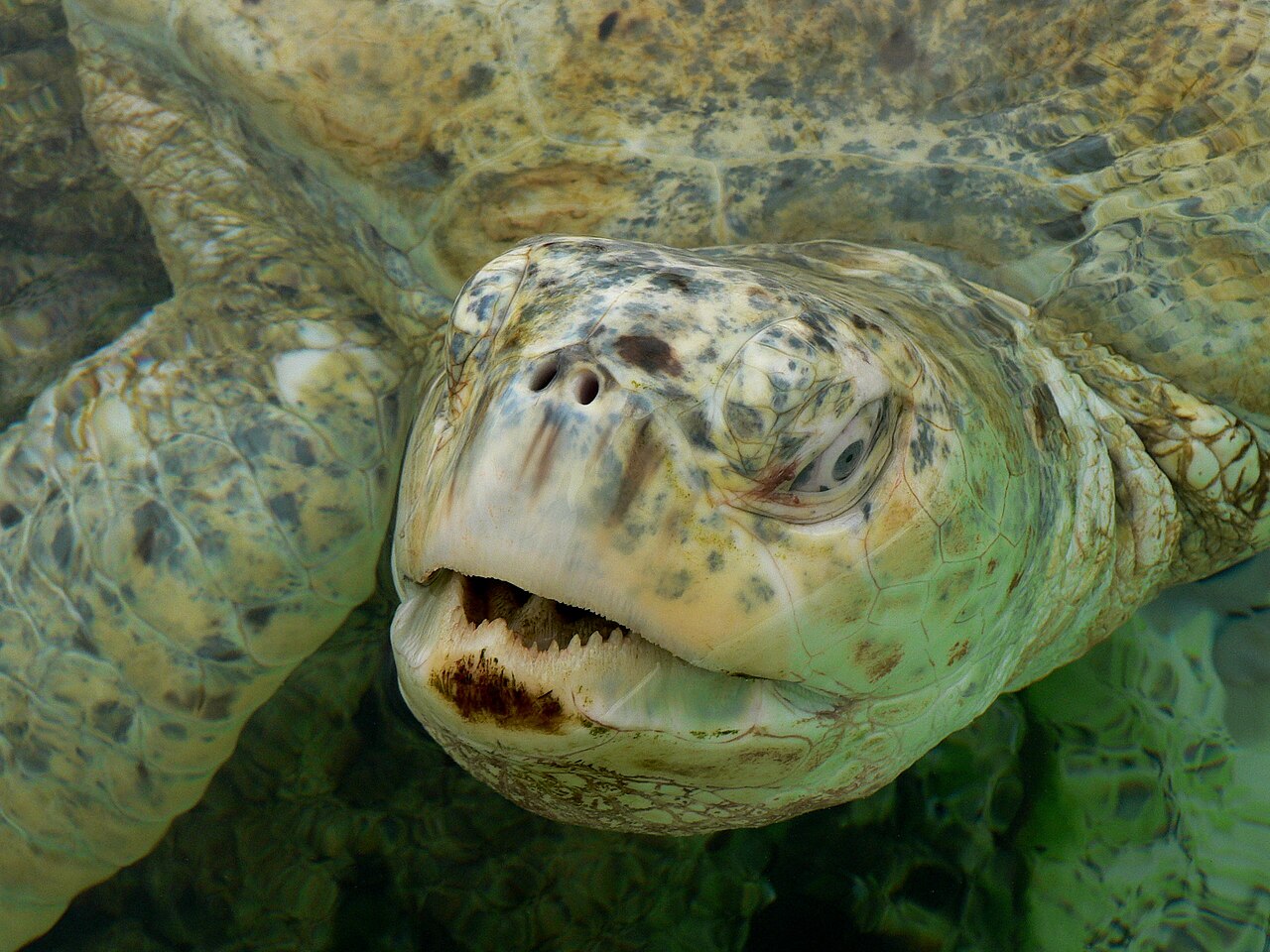
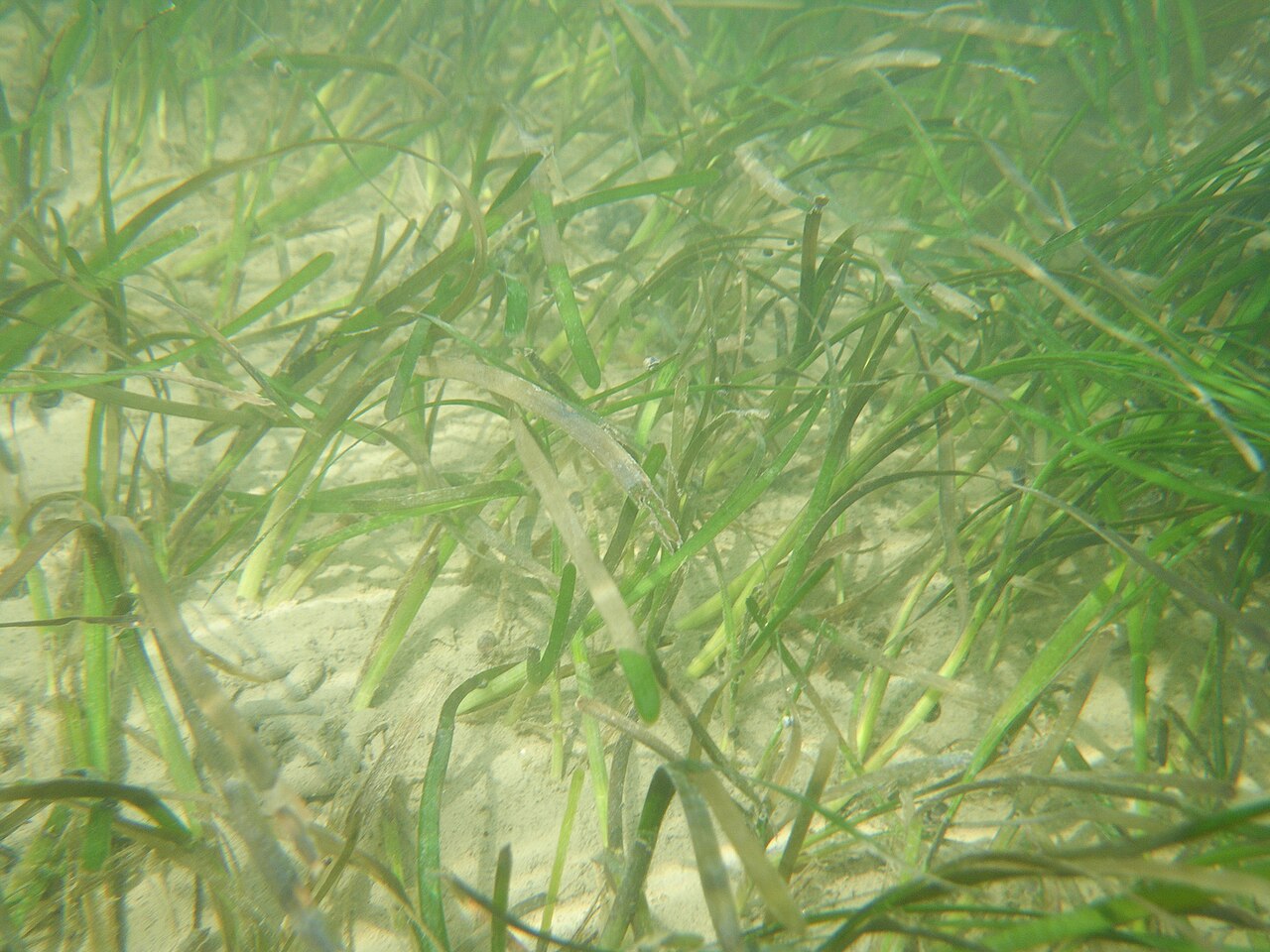
Adult green sea turtles eat seagrass and marine algae, with turtle grass (Thalassia testudinum), manatee grass, and eelgrass dominating the diet where those meadows exist. Their finely serrated jaw edges are built for cropping vegetation, and a large adult can consume around 4 lb (1.8 kg) of plant material a day.
Juveniles are omnivores. During the oceanic years they take jellyfish, small crustaceans, fish eggs, and floating plant matter, and the shift to plants happens gradually as they move into coastal habitat. That dietary switch changes their gut flora permanently, which is one reason rehabilitated adults are difficult to feed correctly in captivity.
Grazing has an ecological effect worth knowing. By cropping seagrass repeatedly, green turtles keep meadows productive and prevent blades from growing long, shading out, and decaying, much as grazing mammals maintain grassland. Losing the turtles degrades the meadow, and losing the meadow starves the turtles.
How Long Do Green Turtles Live?
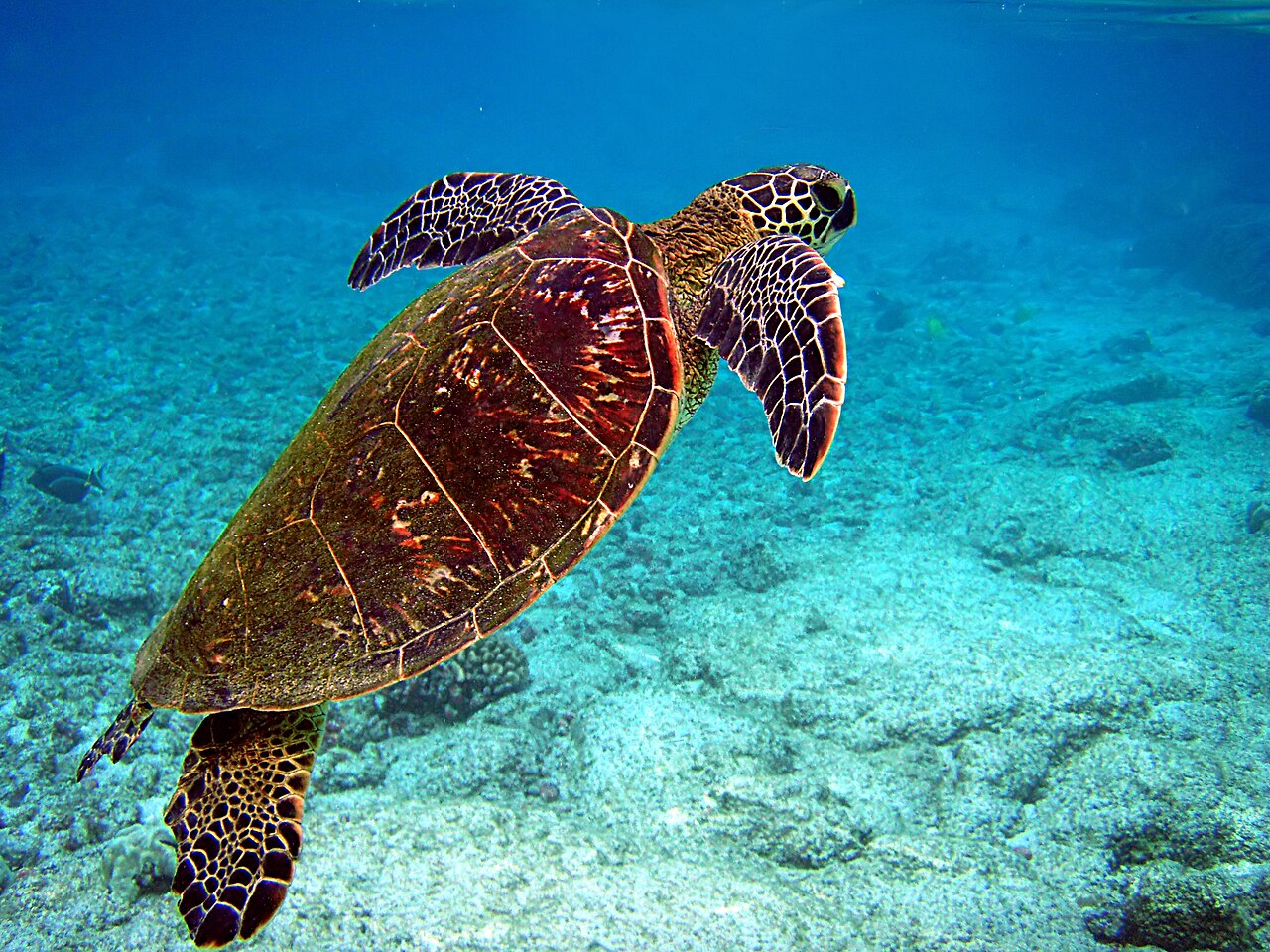
Green sea turtles live 60 to 90 years in the wild, and some researchers consider a century plausible for individuals that survive to adulthood. Sexual maturity comes extraordinarily late, typically between 20 and 40 years depending on the population, which makes the species slow to recover from any loss of breeding adults.
Mortality is concentrated at the start. Roughly one hatchling in a thousand reaches adulthood, with the rest taken by crabs, gulls, frigatebirds, and fish during the run to the water and the first oceanic years. Once a turtle passes about 3 ft (0.9 m) of shell length, it has few natural predators besides large sharks.
The late maturity is why conservation results arrive decades after the policy that caused them. Florida’s steep rise in green turtle nests through the 2010s and 2020s reflects hatchlings protected in the 1980s and 1990s finally coming back to breed. Long lives are common across turtles, and our discussion of whether turtles hibernate covers how slow metabolism supports that in colder relatives.
Nesting and Hatchlings
Female green sea turtles nest every 2 to 4 years, laying 3 to 5 clutches in a season with roughly 100 to 120 eggs each. Nesting happens at night, above the high tide line, and the female digs a body pit and an egg chamber with her rear flippers before covering the nest and returning to the water. The whole process takes one to three hours.
Incubation runs 45 to 75 days depending on sand temperature. Hatchlings emerge together, usually after dark, and orient toward the brightest low horizon, which on a natural beach is the reflective ocean. Artificial lighting from roads and buildings reverses that cue and draws whole nests inland, a problem coastal counties address with lighting ordinances during nesting season.
Once in the water, hatchlings swim continuously for a day or more to reach offshore currents. They are entirely on their own from the moment they leave the nest. The first weeks of life are covered in more detail in our baby sea turtle guide.
How Rare Is the Green Sea Turtle?
Green sea turtles are not rare in the sense of being nearly gone, but their numbers are far below historic levels and vary enormously by region. Global estimates put nesting females somewhere between 85,000 and 90,000, spread across more than 100 nesting countries, with a handful of beaches in Costa Rica, Australia, and Florida carrying a large share.
Florida shows what recovery can look like. Green turtle nest counts on index beaches rose from a few hundred in the late 1980s to more than 30,000 in recent peak years, an increase of more than an order of magnitude. Hawaii’s population has grown similarly since protection began.
Other populations are still in trouble. Several Southeast Asian and Indian Ocean nesting groups continue to decline under egg harvest, bycatch, and coastal development, and the global picture is best read as a patchwork rather than a single trend. Regional stock assessments are published by NOAA Fisheries at fisheries.noaa.gov.
Are Green Sea Turtles Still Endangered?
Yes. All green sea turtles in US waters remain protected under the Endangered Species Act, listed as threatened or endangered depending on which distinct population segment an animal belongs to. The 2016 revision replaced a single global listing with eleven segments, and that structure is still in force.
The North Atlantic and East Pacific segments, which include Florida and the US West Coast, are listed as threatened and are the ones showing the strongest recovery. The Central West Pacific and Mediterranean segments are listed as endangered. The IUCN classifies the species globally as Endangered, though it has been reassessed upward in parts of its range.
Threatened status does not loosen the rules for the public. Harassing, harming, capturing, or possessing a green sea turtle, its eggs, or its parts is a federal offense regardless of which segment it comes from, and state laws in Florida, Hawaii, and Texas add their own penalties.
What Is the Number One Cause of Death for Sea Turtles?
Fisheries bycatch is the leading human caused killer of sea turtles worldwide, with turtles drowning after being caught in trawls, gillnets, and longlines. Turtle excluder devices in shrimp trawls cut those deaths sharply in US waters, but enforcement and gear standards vary widely across the world’s fisheries.
Boat strikes rank next in the United States and are the dominant cause in heavily used coastal waters such as southeast Florida. Green turtles surface to breathe and graze in shallows, and propeller injuries are among the most common findings in stranded animals. Ingested plastic, fishing line entanglement, and cold stunning events in Texas and New England add substantial mortality.
Disease matters for this species in particular. Fibropapillomatosis, a herpesvirus associated condition that produces cauliflower like tumors around the eyes, mouth, and flippers, affects a high share of green turtles in some Florida and Hawaii foraging grounds and can blind or starve them. Its prevalence correlates with polluted, nutrient loaded nearshore water.
Why Can’t Sea Turtles Be Touched?
Sea turtles cannot be touched because they are federally protected and because contact genuinely harms them. Touching, chasing, or blocking a sea turtle counts as harassment under the Endangered Species Act and the Marine Turtle Protection Act in Florida, with fines that run into thousands of dollars.
Beyond the law, handling interrupts resting and feeding, drives animals off the seagrass beds they depend on, and can force a resting turtle to surface early. Their skin carries a protective biofilm that human hands disturb, and people can transfer pathogens in both directions. A turtle resting on a Hawaiian beach is not stranded and should be left alone at a distance of at least 10 ft (3 m).
If you encounter one while swimming, hold position and let it move past. Turtles often approach on their own terms, and staying still gives you a longer and closer look than chasing ever does. Report injured, entangled, or clearly sick animals to the state stranding hotline rather than intervening yourself.
Can You Keep a Green Sea Turtle as a Pet?
No. Keeping a green sea turtle as a pet is illegal in the United States under federal law, and no permit exists for private ownership. Possession of a live turtle, a shell, eggs, or any product made from one carries civil and criminal penalties, and the prohibition covers animals found already dead on a beach.
Practicality reinforces the law. An adult needs a saltwater system measured in hundreds of thousands of gallons, a controlled diet of seagrass and algae, and veterinary care that only accredited marine facilities can provide. Even large public aquariums treat green turtles as a major institutional commitment rather than a display animal.
Anyone who wants to keep a turtle should look at legal captive bred freshwater or terrestrial species instead, where care is genuinely achievable at home. Our guides to the box turtle and the mud turtle cover two species that can be kept responsibly and legally.
Related reading: Leatherback Sea Turtle.
Related reading: Sea Turtle Habitat.
Frequently Asked Questions
Are green sea turtles safe now?
Not fully, though several populations are far safer than they were. Florida and Hawaii nesting numbers have risen sharply since protection began in 1978, while Central West Pacific and Mediterranean populations remain endangered. Boat strikes, bycatch, plastic ingestion, fibropapillomatosis, and warming sand that skews hatchling sex ratios all remain active threats.
Why are green sea turtles called green?
The name comes from the greenish color of their body fat and cartilage, a tint produced by the seagrass and algae they eat as adults. Their shells are usually olive, brown, or nearly black, often with mottled or radiating patterns, so the outside of the animal rarely looks green at all.
Do green sea turtles return to the beach where they hatched?
Yes. Females show natal homing and return to nest on or near their hatching beach, often after 20 to 40 years and migrations of more than 1,000 miles (1,600 km). Research indicates they navigate using the earth’s magnetic field, imprinting on the magnetic signature of the natal beach as hatchlings.
How big do green sea turtles get?
Adults typically reach 3 to 4 ft (0.9 to 1.2 m) in carapace length and weigh 300 to 400 lb (136 to 181 kg), making them the largest hard shelled sea turtle. Exceptional individuals have exceeded 5 ft (1.5 m) and 700 lb (317 kg). Only the leatherback, which has a leathery rather than bony shell, grows larger.
What should I do if I find a stranded or injured sea turtle?
Call your state stranding hotline or the Coast Guard immediately and keep back while you wait. In Florida the number is the FWC Wildlife Alert line, and Hawaii, Texas, and the Caribbean territories each run their own network. Do not push the animal into the water, pour water on it, or remove hooks and line yourself.
Are green sea turtles dangerous to humans?
Green sea turtles are not dangerous and do not attack people. They are herbivorous, non aggressive, and generally indifferent to swimmers. A cornered or handled turtle can deliver a hard bite with its serrated jaws and a strong flipper blow, which is one more reason the legal distance rules exist for the animal’s sake and yours.