Turtle Dream Meaning: 7 Scenarios and What Each One Says
To dream of turtles is traditionally read as a message about pace: something in your life is moving slowly, and the dream says the slowness is protection rather than failure. Across almost every tradition that interprets dreams, the turtle is one of the few animals with a consistently favorable reading, which is why a turtle dream rarely wakes people in alarm the way a snake or a spider dream does.
What varies is the detail. A turtle swimming in open water, a turtle inside your house, a single turtle you cannot reach and a yard full of hatchlings are read as four different messages, and biblical, Native American, Islamic and East Asian interpretations each add their own layer. Here is what each version is actually said to mean.
Dreaming of turtles usually means steady progress, patience and protection. The turtle is read as a reminder that you are further along than you feel and that your defenses are working. A turtle hiding in its shell points to withdrawal from a situation, while a turtle moving forward in water is taken as a sign that slow effort is about to pay off.
| Dream scenario | Common interpretation | Usual tone |
|---|---|---|
| Turtle swimming in clear water | Emotional progress you cannot yet measure | Favorable |
| Turtle hiding in its shell | You are protecting yourself from something | Cautionary |
| Turtle inside your house | Home, family and security are the real subject | Favorable |
| Many turtles at once | Several slow projects maturing together | Favorable |
| Baby turtles or hatchlings | A new effort that needs shelter early on | Hopeful |
| Turtle on its back | Stuck through circumstance, not through fault | Difficult |
| Dead turtle | A protection you no longer need | Transitional |
What Does It Mean to Dream of Turtles?
The core reading is endurance. Dream interpreters treat the turtle as the animal that carries its home with it, which makes the dream a statement about self sufficiency: whatever is happening, you have what you need to withstand it. The shell adds a second theme, the ability to close yourself off at will.
Context shifts the reading. A turtle you are watching is usually about your own pace, while a turtle you are carrying or caring for points to responsibility for someone slower than you. Compare this with the way snake dreams are read, where the animal is almost always about change rather than about time.
Is It Good to See a Turtle in a Dream?
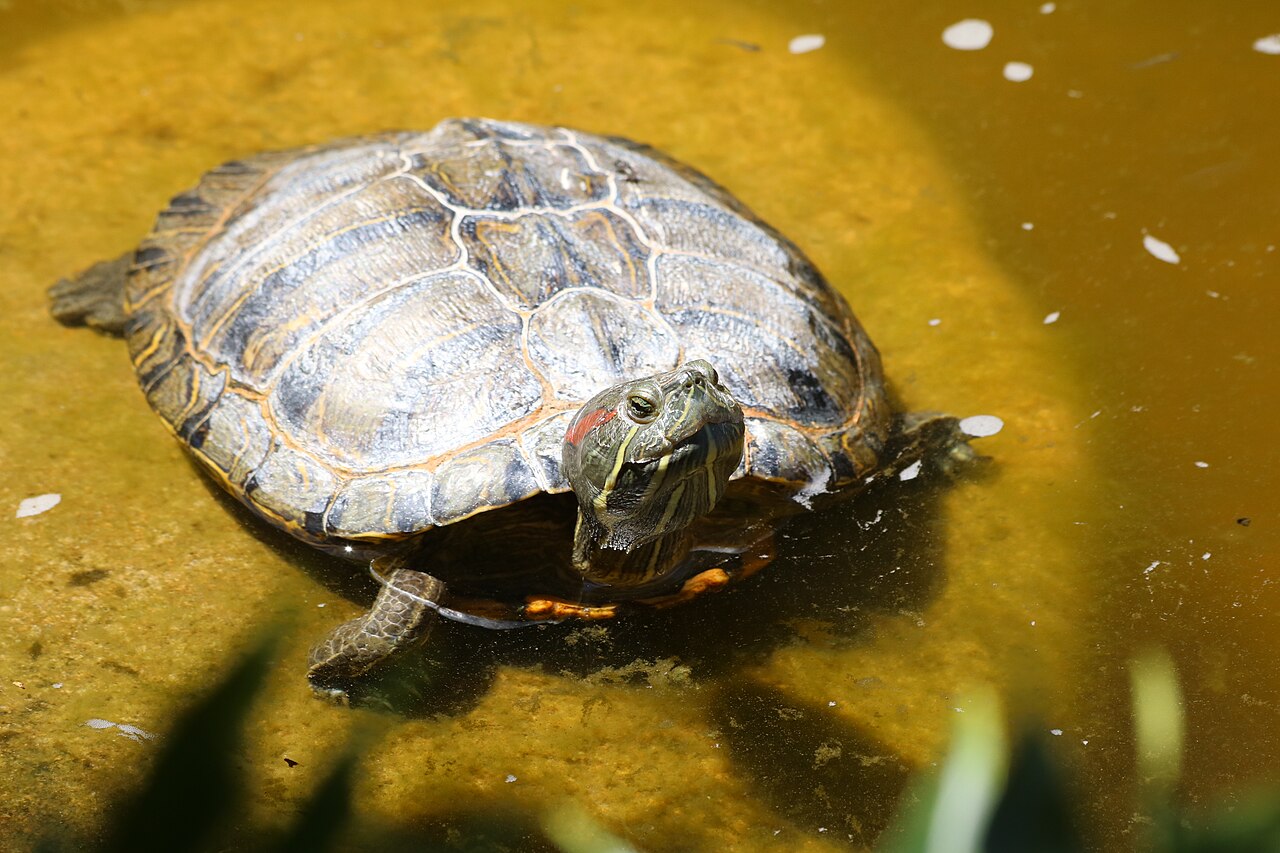
Yes, in nearly every tradition. The turtle is one of the few dream animals with no widely held negative baseline, and sources from classical dream dictionaries to modern interpretation treat it as a positive sign of longevity, stability and protection.
The exceptions are situational rather than symbolic. A turtle in distress, flipped over or unable to reach water, is read as a warning about being stuck, and an aggressive snapping turtle shifts the dream toward a defensive reaction that has gone too far. The animal itself stays favorable; the scene is what changes.
Dreams About Turtles in Water

Water is where the turtle stops being slow. In the sea or a pond it moves with ease, and interpreters read this as the clearest positive version of the dream: in your natural element, the effort that looks laborious to others costs you very little.
The clarity of the water is the part most readings hang on. Clear water is associated with emotional honesty and with progress you can see, murky water with a decision made without enough information. A turtle diving out of sight is read as a part of yourself that has gone quiet for a while and will surface again.
Dreaming About a Turtle in Your House
A turtle indoors moves the dream from your pace to your home. The common reading is that security, family or the household itself is the real subject, and that something slow and steady is protecting it. Finding a turtle in a room you rarely use is often read as a forgotten resource.
Some interpreters add a caution. A turtle that cannot get out of the house is said to mirror a person who has made their home so safe that nothing new gets in, which is the same withdrawal theme that attaches to spider dreams set indoors.
Seeing Many Turtles in a Dream
Seeing many turtles in a dream is usually read as abundance arriving on a slow schedule. Where one turtle is about a single effort, a group is taken to mean several things maturing at once, often after a long period when none of them seemed to move.
A line of turtles heading in one direction carries a more specific reading about joining a group effort, while turtles scattered in all directions points to attention divided across too many slow projects. Large numbers also appear in dreams after real exposure to them, which is worth ruling out first.
Dreaming About Baby Turtles
Hatchlings are the most hopeful version of this dream and also the most fragile. The standard interpretation is a new beginning that is viable but needs shelter, since baby turtles in the wild face long odds on their first journey to the water. Dreams of protecting them are read as protecting an early idea.
Many people have this dream after a real encounter or a documentary, and the imagery often comes straight from the nesting beaches where sea turtle hatchlings make that run. The dream still reads as fragile beginnings, with the personal detail mattering more than the symbol.
Biblical Meaning of Dreaming of Turtles
There is no turtle in most English Bible translations. The phrase “turtle” in older translations such as the King James refers to the turtledove, which is why searches for what God says about turtles return bird verses from Song of Solomon and Leviticus. That distinction matters for anyone taking the biblical meaning literally.
Christian dream interpretation therefore works by analogy rather than by text. Turtles are read as patience, endurance and shelter under protection, themes drawn from psalms about refuge. Some writers also link the shell to the armor passage in Ephesians, which is an application rather than a scriptural reference to the animal.
Turtle Dreams in Native American, Islamic and East Asian Traditions
In many Native American traditions, particularly Lenape, Iroquois and Anishinaabe tellings, the turtle carries the world on its back, and North America is called Turtle Island. A turtle dream in these frameworks is read as a message about foundation and about responsibility to what comes after you.
In Islamic dream interpretation, the turtle is commonly associated with a pious, patient and knowledgeable person, and some classical readings connect it to a scholar or a devout neighbor. In Chinese tradition the turtle is one of the four celestial animals, tied to longevity, the north and steady accumulation, which is where most of the luck and money associations come from.
Turtle as Spirit Animal, Totem and Omen
As a spirit animal, the turtle describes someone who is deliberate, hard to rush and difficult to provoke, with a strong instinct for withdrawal when pressured. The shadow side is avoidance: the same shell that protects can become a reason never to engage.
As an omen, a turtle crossing your path is read as a sign to slow down rather than speed up, the opposite of the urgency that rat dreams are said to carry. People who already pay attention to dream messages from birds often find the turtle reading unusually calm by comparison, which is part of why it is remembered so clearly.
Frequently Asked Questions
Is a turtle a good omen?
In nearly every tradition, yes. Turtles are associated with longevity, patience and protection rather than with warning, and both Eastern and Western folk belief treat a turtle sighting as favorable. The one widely shared exception is a turtle in distress, which is read as a sign of being stuck rather than as bad luck.
Why are turtles considered lucky, and does a turtle attract money?
The luck association comes mainly from Chinese tradition, where the turtle’s long life and slow steady movement became symbols of accumulated wealth and stability. Feng shui practice places turtle figures in the north or at the back of a home for support. The belief is about patient saving, not sudden gain.
Which color turtle is lucky?
Green is the most commonly cited lucky color, tied to growth and renewal, while black turtles carry the strongest traditional weight in Chinese symbolism through the Black Tortoise of the north. Gold or yellow turtles appear in modern prosperity practice. These are cultural conventions, not shared across all traditions.
What does it mean to see a turtle in a dream in Islam?
Classical Islamic dream interpretation generally reads the turtle as a devout, patient and learned person, sometimes a scholar or a righteous neighbor. Some interpreters extend it to steady lawful earnings. As with all dream interpretation in this tradition, the reading depends on the dreamer’s own circumstances.
What are the spiritual meanings of turtles?
The recurring themes are longevity, patience, protection, groundedness and self sufficiency, since the turtle carries its shelter with it. Secondary meanings include ancient wisdom and the connection between water and earth. Turtles are also used as a symbol for respecting natural pace over forced progress.
Do real turtles behave the way dream symbolism suggests?
Partly. Turtles really are long lived, with some box turtles passing 50 years, and they really do retreat into the shell under threat. They are not slow in water, where sea turtles cruise at several miles per hour. Conservation details for US species are published by the US Fish and Wildlife Service. For a large freshwater example, see the alligator snapping turtle.