Skunk Symbolism: What It Means to See One, Plus Omens and Dreams
Seeing a skunk is traditionally read as a message about boundaries: the animal carries a warning that it rarely needs to use, and folk belief across North America treats that confidence as the lesson. People who ask about skunk spiritual meaning are usually reacting to a specific moment, a skunk crossing the driveway at dusk, a visitor under the deck, or a dream that stayed with them in the morning.
The striped skunk (Mephitis mephitis) lives in every state in the lower 48, so these encounters are common, and the beliefs attached to them are older than the country. This guide separates what different traditions actually say, what the skunk means as a spirit animal, totem and omen, and what each kind of sighting is said to point to, without dressing belief up as fact.
In most North American folk traditions, seeing a skunk symbolizes self respect, quiet confidence and the power to set a boundary without a fight. It is generally read as a good omen that asks you to stop apologizing and stand your ground, though a skunk that sprays or appears repeatedly is often taken as a warning about a situation you have tolerated for too long.
| Situation | Common symbolic reading | Usual tone |
|---|---|---|
| Skunk in the yard or garden | Your personal space needs a clearer edge | Gentle warning |
| Skunk crossing your path at night | Trust what you sense but cannot yet see | Favorable |
| Skunk seen repeatedly | A boundary you keep refusing to set | Insistent |
| Skunk that sprays near you | A conflict you can no longer avoid | Difficult |
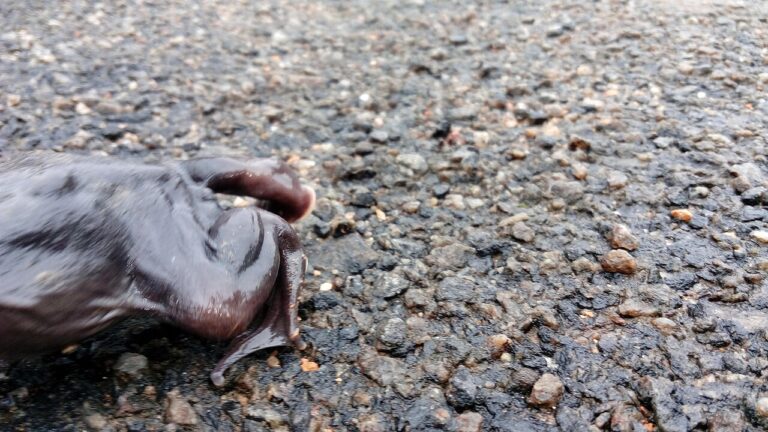
| Dead skunk found or seen on the road | The end of a defensive habit you outgrew | Transitional |
| Skunk in a dream | Something you want others to keep their distance from | Reflective |
| Skunk with kits | Protection of family and reputation | Favorable |
What Does the Skunk Symbolize?
The skunk symbolizes earned confidence. Its defense works so well that a healthy adult rarely has to use it, and folk interpretation has long fixed on that restraint rather than on the smell. The animal stamps, raises its tail and gives a clear warning first, which is why the skunk is read as a teacher of warning before force.
A second strand of meaning is reputation. Everyone knows what a skunk can do, and that knowledge alone buys the animal space. Symbolically, this is read as the value of being known for something, and as a caution that a reputation protects you and limits you at the same time. Compare this with the trickster reading of the coyote, which earns its room through cleverness instead of deterrence.
Skunk Symbolism in Native American Traditions

Beliefs vary widely between nations, and no single Native American meaning exists. In several Plains and Woodlands traditions the skunk is associated with self assurance and with medicine that works through respect rather than aggression. In some Lakota tellings the animal is spoken of as one that walks without hurry because nothing needs to be feared.
Other accounts are more cautious. Among some Southeastern peoples the skunk’s scent was linked to sickness and to driving off harmful influences, and skunk essence appears in historical records of protective practice. These are documented beliefs held by specific communities, not a pan tribal symbol system, and they are best cited as such.
Christian and Biblical Meaning of Seeing a Skunk
The skunk is not named in the Bible, since it is a New World animal, so there is no direct scriptural meaning. Christian folk readings instead place it among creatures considered unclean under Levitical categories and treat an encounter as a prompt toward honesty about what has been hidden.
A more common devotional reading is gentler. The skunk is described as proof that God gives even small and mocked creatures a dignity that larger animals must respect, which turns the sighting into a reminder about humility and about not judging worth by size. Similar readings attach to the bat in Christian folklore, another animal whose reputation outruns its behavior.
Celtic and European Folklore Parallels
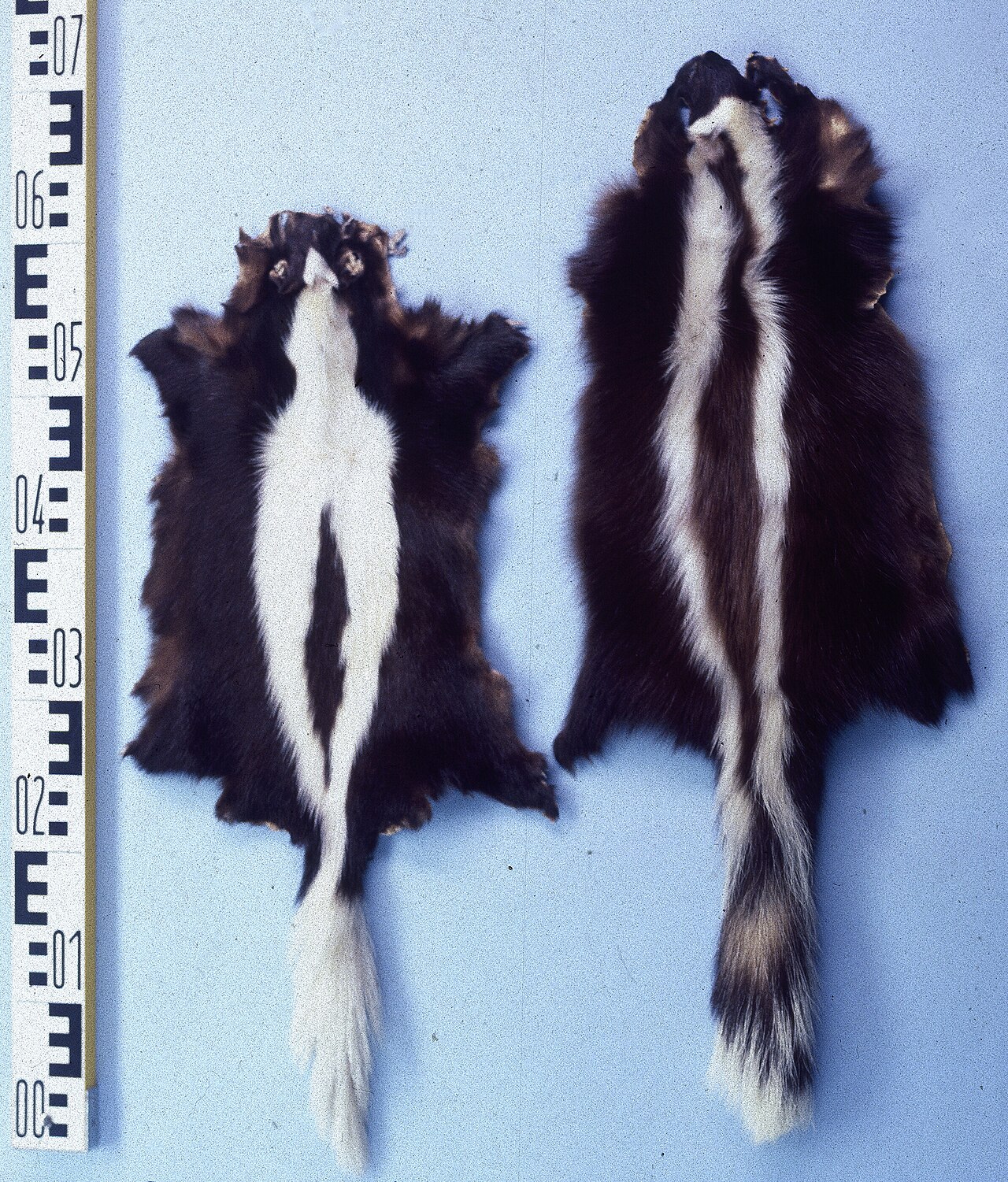
Celtic tradition has no skunk, so meanings transfer from the polecat and the European badger, both of which carry scent based defenses and strong boundary associations. In Irish and Scottish folk belief the badger stands for the keeper of the home ground, the animal that will not be moved from its own territory.
When modern writers apply Celtic frameworks to skunks, they are borrowing that territorial meaning. It is a reasonable transfer, and worth naming as a transfer rather than an inherited belief, because it explains why so much English language skunk symbolism sounds like badger symbolism in different fur. The same borrowing happens with eagle symbolism, where Old World and New World meanings have blended into one modern reading.
East Asian Readings and the Skunk’s Closest Symbolic Cousins
East Asian symbolism also has no native skunk, and the closest figures are the weasel and the ferret, both of which appear in Chinese and Japanese folk belief as cunning animals that bring either small fortune or small mischief. In Japanese tradition the itachi, the Siberian weasel, is said to cross a path as a sign to postpone a journey.
Imported skunk symbolism in these cultures tends to follow that weasel logic, reading the animal as a sign to pause rather than to press on. Where a Western reading says stand your ground, the borrowed East Asian reading more often says wait a day.
Skunk as a Spirit Animal
People who identify with the skunk spirit animal are usually described as calm under pressure and slow to anger, with a line that is absolute once it is crossed. The spirit animal reading emphasizes presence over volume: you do not need to be loud if your boundary is real.
The shadow side matters here too. A skunk spirit animal is also said to describe someone who uses a single devastating response instead of many small honest ones, which keeps people away but leaves the underlying conflict untouched. That pattern is the part the reading asks you to work on.
Skunk Totem and Power Animal Meaning
As a totem, the skunk is associated with family and reputation, since females raise their kits together and defend a shared den. People who claim it as a totem animal often connect it to protecting a household’s name rather than protecting a person.
As a power animal, the skunk is called on for situations that require a firm no: a negotiation, a family conversation that has been postponed, or a workplace boundary. The invocation is for composure, not for retaliation, which is the distinction most sources draw between skunk energy and predator energy.
Is Seeing a Skunk a Good Omen or a Bad One?
Most folk sources treat the skunk as a favorable omen, on the grounds that it does no harm unless provoked and that the encounter ends well for anyone who keeps their distance. The sighting is read as confirmation that a boundary you recently set was the right call.
The reading turns negative in two cases: when the animal sprays and when a skunk appears in a place that makes no ecological sense, such as inside a building. Both are read as signs that something has been pushed past its limit. For the opposite case, where a sighting is almost always read as reassurance, see the cardinal in North American folk belief.
What It Means to See a Skunk in Your Yard or Garden
A skunk in the yard is the most common encounter and the most practical one. Symbolically it is read as a message about your own threshold: something or someone has been coming closer than you are comfortable with, and the animal is said to arrive as a mirror of that.
The ordinary explanation is grubs. Skunks dig shallow cone shaped holes in lawns hunting beetle larvae, and a yard with a grub problem will attract them for weeks. Both readings can sit side by side, and the practical one is worth acting on first.
Seeing a Skunk at Night or Repeatedly
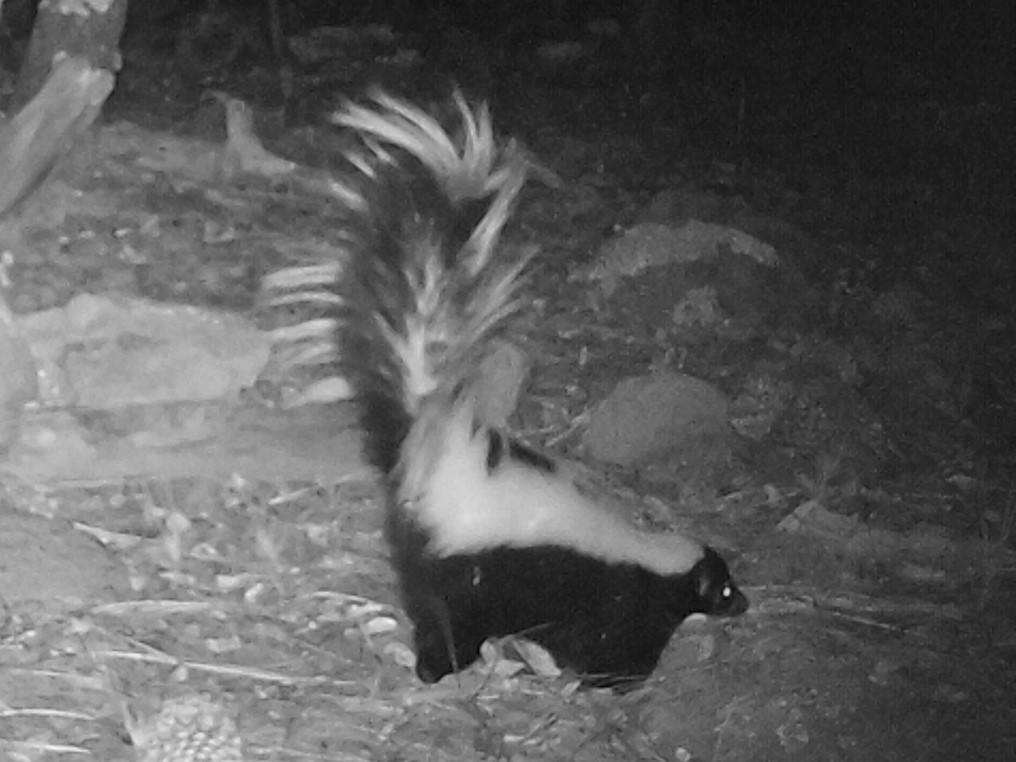
Skunks are crepuscular and nocturnal, so a night sighting is normal and is usually read as a sign to trust intuition over evidence, the knowledge you have before you can prove it. A daytime skunk is treated as more pointed, and is also worth noting practically, since it can indicate a nursing female or a sick animal.
Repeated sightings are where folk belief is most consistent. Three or more encounters in a short span are read as an unanswered message, the same idea that attaches to repeated crow sightings: the symbol is said to keep returning until the boundary it points at is actually drawn.
Dead Skunks, Skunks in Dreams and Skunk Spray
Finding a dead skunk, most often on a road, is generally read as the end of an old defense rather than as a bad omen. The traditional interpretation is that a protective habit you built years ago has stopped serving you, which parallels the transitional reading of a dead bird found near the home.
Dreaming of a skunk is read as something you want kept at a distance, often a truth about yourself. Being sprayed in a dream points to exposure and embarrassment, while watching a skunk calmly walk away is the reassuring version of the same dream. The smell itself is the clearest symbol in the set: it lingers, which is exactly what reputational harm is said to do.
Frequently Asked Questions
Is a skunk animal harmful?
A skunk is not aggressive and will not chase a person, but it can spray accurately to about 10 ft (3 m) and it is a rabies vector species in the United States. Keep pets and children back, give the animal an exit, and never corner one. Harm comes from provoking it, not from its presence.
What do skunks eat?
Skunks are omnivores. Most of the diet is insects and grubs, especially beetle larvae, plus small rodents, eggs, amphibians, fruit and whatever people leave accessible. Grub rich lawns and open garbage are the two things that keep a skunk returning to the same yard night after night. The US National Park Service treats food access as the main driver of repeat visits.
Do skunks recognize people, and can skunks get attached to humans?
Wild skunks learn to recognize individual humans by scent and routine, and they clearly distinguish a familiar neighbor from a stranger. Attachment in the pet sense only develops in captive raised skunks, which can be affectionate with their keepers. A wild skunk that tolerates you is habituated, not bonded.
How can you tell if a skunk is near you?
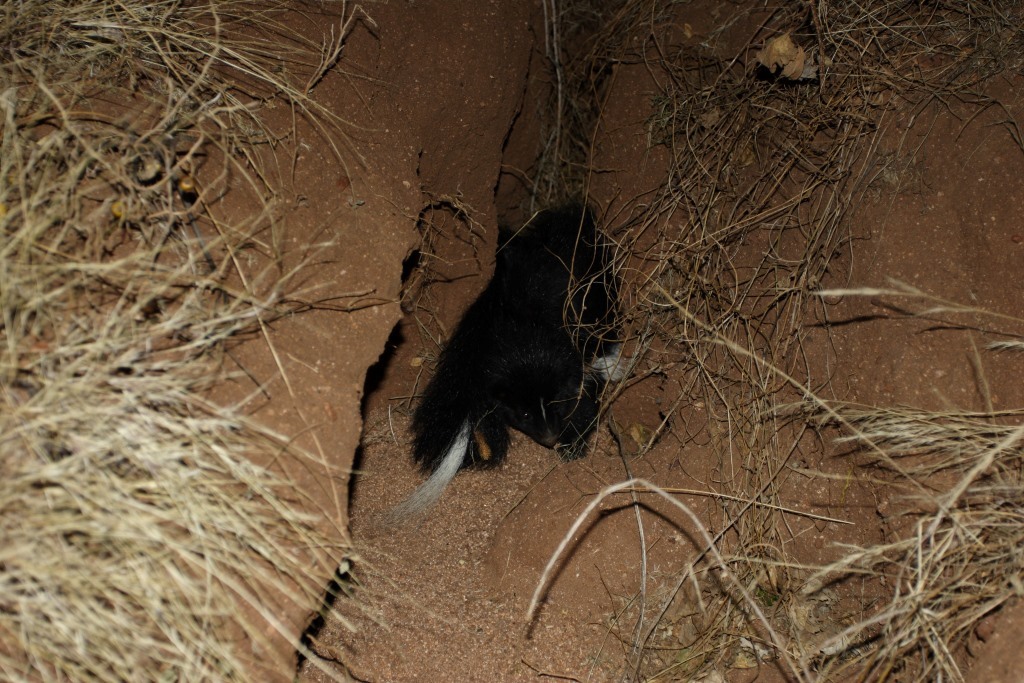
The first sign is usually a faint musky smell with no spray event, since skunks leave scent as they move. Look for shallow cone shaped digs in the lawn, overturned mulch, tracks with five toes and visible claw marks, and a low den entrance under a deck, shed or porch.
What month are skunks most active, and how far away can a human smell a skunk?
Activity peaks in February and March during the breeding season, when males roam widely, and again in late summer when young skunks disperse. A full spray is detectable by people at roughly 1 mi (1.6 km) downwind under the right conditions, and dogs register it far beyond that.
What do skunks absolutely hate?
Skunks avoid bright light, loud sudden noise, open ground without cover, and strong citrus or ammonia smells near a den entrance. They also dislike losing their escape route, which is why a cornered skunk sprays and a skunk with a clear path almost never does.