Rabbit Poop: Identification, Safety, and the Fertilizer Bonus
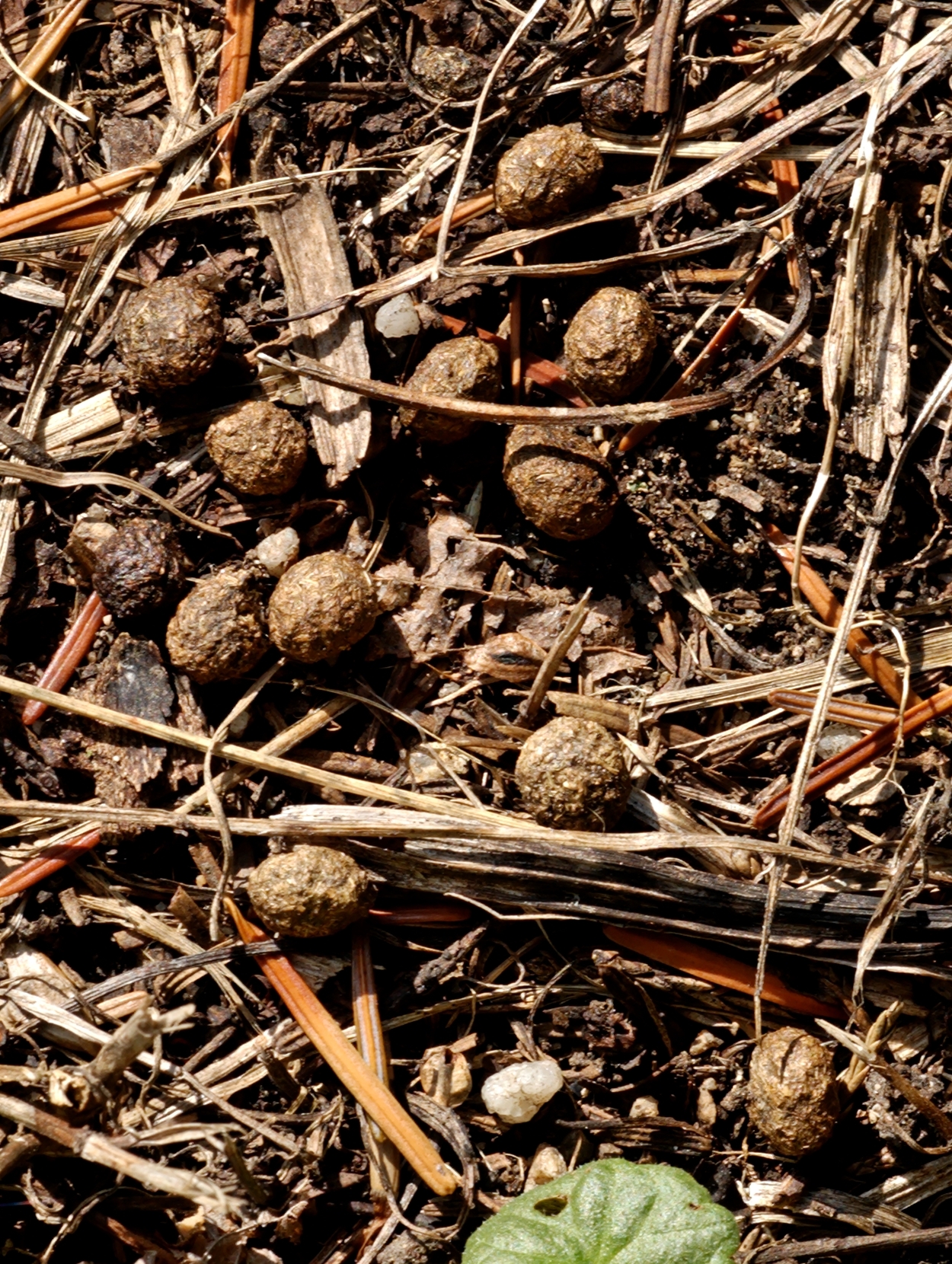
Rabbit poop is the easiest scat identification in the backyard: small, round, pea-sized pellets, 1/4 to 1/2 inch across, uniform in size, dry and fibrous like compressed sawdust, and dropped in loose scatters or generous piles on lawns and garden edges. No other common yard animal produces perfectly spherical pellets, so a handful of tiny brown marbles under your shrubs is a rabbit verdict before you bend down for a closer look.
What the pellets tell you is more interesting than the identification: how many rabbits are working your yard, whether they are the ones beheading your tulips, whether the droppings are safe around kids, dogs, and vegetable beds, and, for gardeners, why rabbit poop happens to be one of the best free fertilizers in North America. This guide covers all of it, plus the strange two-poop digestive system that explains why you only ever find one kind.
| Feature | Rabbit Poop |
|---|---|
| Size | 1/4 to 1/2 inch, pea-sized |
| Shape | Round spheres, slightly flattened |
| Color | Medium brown to greenish, fades tan |
| Texture | Dry, fibrous, crumbles to plant matter |
| Placement | Scattered on lawns, feeding areas, piles at rest spots |
| Volume | 200 to 300 pellets per rabbit per day |
What Rabbit Poop Looks Like
A rabbit pellet is a small sphere of compressed plant fiber, 1/4 to 1/2 inch in diameter, with wild cottontails at the smaller end of that range. Fresh pellets are medium brown with a greenish cast from chlorophyll and slightly moist; within days they dry to light brown or tan, and crushing an old one between gloved fingers reveals nothing but packed grass and bark fragments, like a tiny bale of hay.
Uniformity is the family signature. Because rabbits eat an almost pure plant diet processed by a highly efficient gut, every pellet comes out nearly identical, round, same size, same texture, unlike the variable, content-studded droppings of omnivores. A scatter where every dropping could be swapped for any other is herbivore work, and at pea size, that means rabbit.
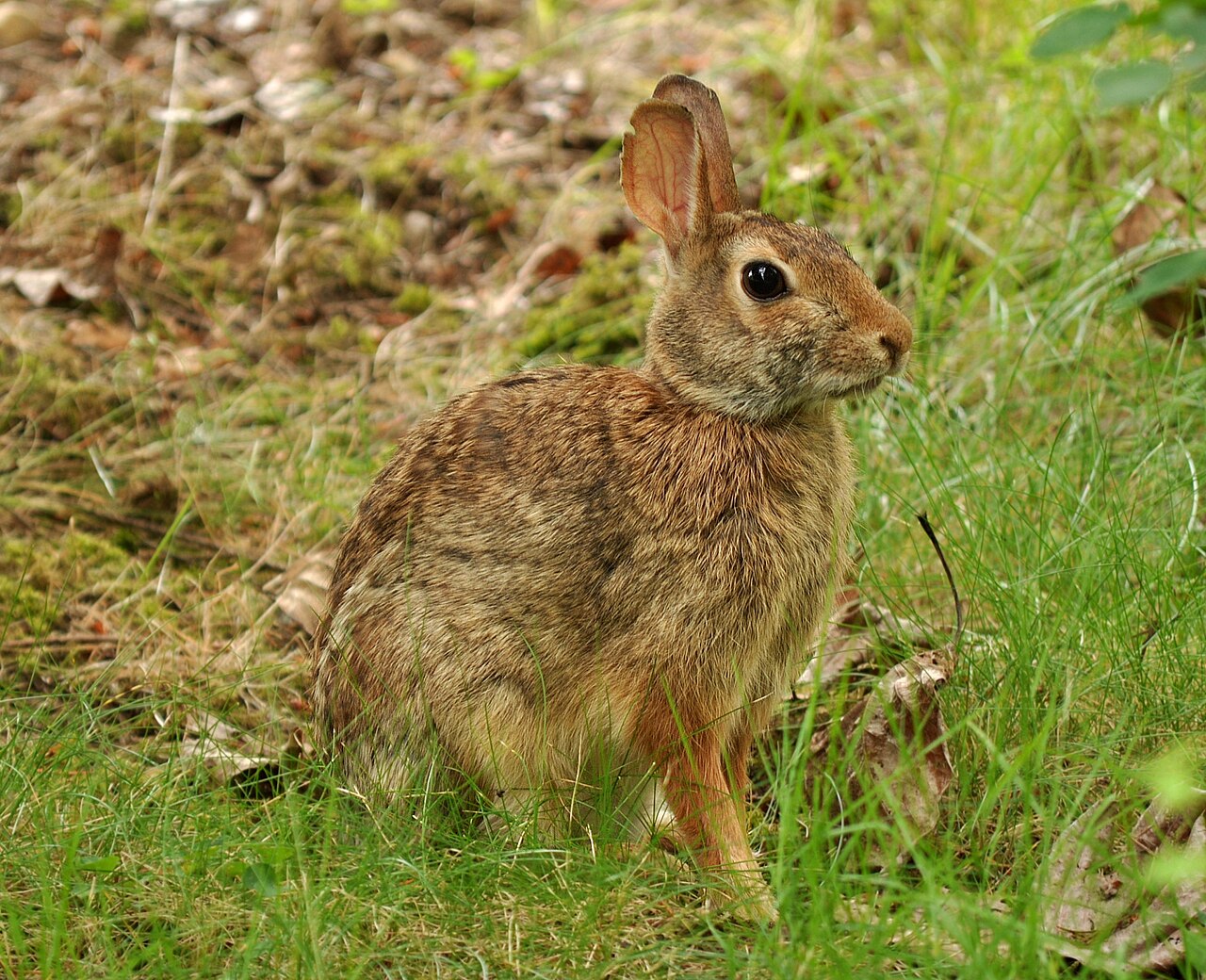
Volume surprises people: a single cottontail produces 200 to 300 pellets per day, distributed as it feeds. A modest scatter across the lawn each morning can therefore be one busy rabbit, not a colony, while genuine accumulations concentrate at favored rest spots, under low shrubs, beside brush piles, and along the fence-line runways rabbits reuse nightly.
The Two-Poop System (and Why You Only Find One)
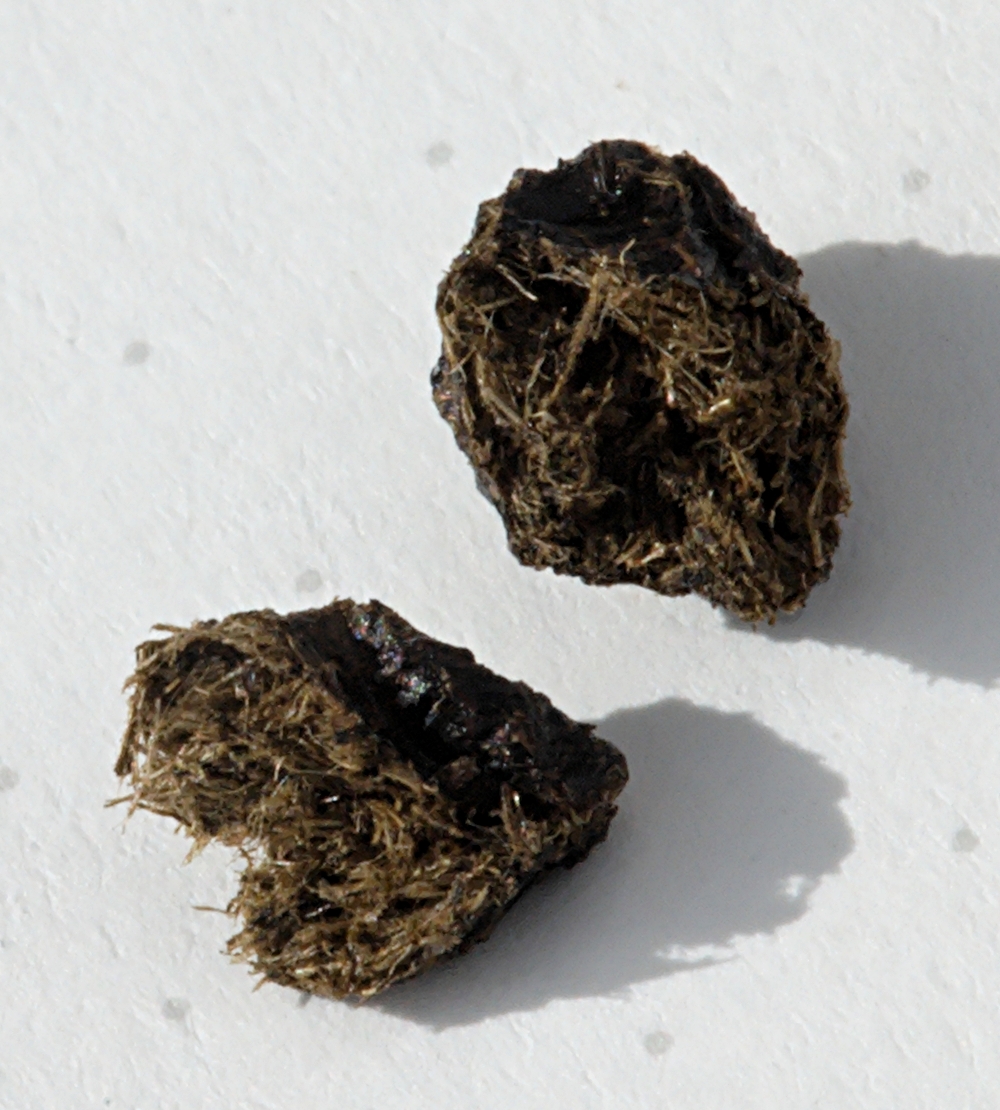
Rabbits actually produce two completely different droppings, and understanding this explains everything odd about the pellets you find. The round dry pellets on your lawn are the finished waste. The other kind, cecotropes, are soft, dark, glossy clusters like tiny blackberry bunches, produced in the cecum and packed with vitamins, protein, and beneficial microbes, and rabbits eat them directly, usually at rest in cover, to run their fibrous diet through digestion a second time.
This re-ingestion, called cecotrophy, is why wild rabbits extract a living from grass, bark, and twigs that would starve most mammals, and why the pellets you find are so dry and nutrient-stripped: they are round two of digestion, with everything valuable already reclaimed. You almost never find cecotropes outdoors because healthy rabbits consume them immediately.
The practical payoff of this system for identification: rabbit pellets contain no fur, bone, seeds, or insect parts, ever. Any small round dropping with visible prey remains or berry seeds belongs to a different animal, which is the single fastest way to rule rabbits out when a pellet pile looks ambiguous.
Rabbit Poop vs Deer Poop
Deer produce the only common droppings genuinely confusable with rabbit pellets, and two features split them cleanly. Shape: deer pellets are oval to bullet-shaped, often with a dimple on one end and a point on the other, while rabbit pellets are true spheres. Size: deer pellets run 1/2 to 3/4 inch, noticeably larger than the rabbit’s peas.
Deposition style seals it. Deer release pellets in concentrated clumps of 50 to 100 while standing or walking, leaving tight piles, and in spring on lush grass, deer droppings often merge into soft clumps entirely unlike anything a rabbit produces. Rabbit pellets scatter more loosely as the animal feeds, with piles building only over repeated visits to one rest spot; our deer poop guide shows the full comparison.
Context votes too: droppings beside browsing damage above two feet high (clean-snipped twigs at deer-mouth height) point to deer, while pellets around damage below 18 inches, with the 45-degree razor cuts of rabbit incisors, point to rabbit. The height of the damage is often more decisive than the droppings underneath it.
Rabbit Poop vs Squirrel, Rat, and the Rest
Squirrel droppings are the next-closest size but the wrong shape: rounded cylinders, little barrels rather than balls, usually scattered near trees and feeders instead of open lawn. Rat droppings are darker, shiny when fresh, and pointed at one or both ends, spindles, not spheres, and cluster along walls and runways rather than open grass; the full separation logic lives in our squirrel poop vs rat poop guide.
Groundhog droppings are rarely seen at all, since woodchucks usually deposit in latrine chambers underground, so abundant surface pellets next to a burrow still favor rabbit. Chipmunk droppings resemble tiny rat pellets and stay near their burrow entrances. And for completeness on the predator side, the twisted fur-filled ropes of fox poop and coyote poop share nothing with a rabbit’s tidy spheres except a lawn.
One genuinely tricky case: goat and sheep pellets, for rural readers, are near-twins of large rabbit pellets, slightly more oval and typically in bigger heaps. Absent livestock, though, the backyard rule holds nationwide: perfect little spheres of plant fiber mean rabbit, and every lookalike fails on shape, contents, or placement.
Is Rabbit Poop Dangerous?
Rabbit droppings are among the lowest-risk wildlife waste in the yard. The parasites rabbits carry are largely rabbit-specific, and the diseases people worry about with rabbits, notably tularemia, transmit through handling infected animals or tick and fly bites, not through contact with pellets. The CDC (cdc.gov) does not flag rabbit feces as a significant human disease pathway, a real contrast with raccoon or rat waste.
Basic hygiene still applies, mostly for the low-grade bacterial reasons that cover all animal waste: gloves or a scoop for cleanup, hand-washing after gardening where pellets are common, and covered sandboxes as a general wildlife rule. Pellets in a vegetable bed are not a crisis; washing produce, which you were doing anyway, addresses it.
Dogs eating rabbit pellets is the question most owners actually have, and the honest answer is that it is gross but usually harmless: the rabbit-specific coccidia in droppings do not establish in dogs, and the main risks are an upset stomach and, rarely, tapeworm exposure via droppings contaminated by other means. Discourage the habit, keep deworming current, and mention it at the next vet visit rather than treating it as an emergency.
Rabbit Poop as Fertilizer: The Gardener’s Bonus
Here is the twist that turns cleanup into harvest: rabbit droppings are elite fertilizer. Pellets carry roughly 2 percent nitrogen with solid phosphorus and potassium, richer than horse or cow manure, and because the nutrients are bound in dry plant fiber, rabbit manure is a “cold” manure that can go straight onto beds without composting and without burning plants, a rare property among animal fertilizers.
Use is as simple as it sounds: scatter pellets around (not touching) plant stems and water in, top-dress beds in spring and fall, or steep a shovelful in a bucket of water for a day to brew a gentle liquid feed. Wild-collected pellets from the lawn work identically to the domestic rabbit manure gardeners buy, just in smaller quantities.
The one caveat is placement discipline on food crops: as with any raw manure, keep pellets off the edible parts of leafy greens and root vegetables close to harvest, or simply compost pellets destined for the salad bed. For ornamentals, roses famously, rabbit pellets are the free, weed-seed-free amendment other gardeners pay for, delivered nightly by the same animal eating your hostas.
What Droppings Reveal About Your Rabbit Situation
Pellet mapping answers the gardener’s real question: how many rabbits, and where do they live? Fresh pellets concentrate at feeding areas and rest spots, so mornings after rain (which erases old sign) show the current circuit clearly, typically a route linking dense cover, brush piles, low shrubs, deck skirts, to feeding lawns. Piles at one sheltered spot mark a regular daytime rest, and in spring, heavy sign near a shallow fur-lined depression means a nest of kits like those in our baby rabbit guide.
Volume tracks population honestly. One rabbit’s 250-pellet day looks like more animals than it is, but sign appearing simultaneously across a whole property, plus multiple sightings at dusk, indicates the real driver of garden damage: cottontails breed from late winter through summer with multiple litters, and a spring pair becomes a summer crowd. Rising pellet counts are your earliest census.
The management playbook follows the map. Fence the beds that matter with 2-foot chicken wire buried a few inches (rabbits push under, rarely over), clear the brush piles and deck-skirt gaps that anchor the daytime circuit, and accept the lawn pellets as fertilizer from the rabbits you tolerate. Removal rarely lasts, neighboring rabbits refill empty territory within weeks, so exclusion of the valuable square footage beats eviction of the animal every time.
Cleaning Up (When You Actually Need To)
Most rabbit pellets need no cleanup at all: on lawns they crumble into harmless fertilizer within a couple of weeks of rain and mowing, disappearing into exactly the soil-building role nature intended. Intervening everywhere is fighting a self-solving problem; the pellets you ignore in April are gone by May.
Clean where use demands it: patios, play areas, dog runs, and walkways. A stiff broom or shop scoop handles dry pellets easily (rabbit pellets are the one wildlife dropping where dry-sweeping outdoors is fine, given the low pathogen load), and a hose finishes hard surfaces. For high-traffic pet areas, prompt pickup mainly serves the discourage-the-dog goal rather than any health necessity.
If accumulation at one spot bothers you weekly, retire the spot instead of the rabbit: remove the sheltering cover (the low shrub skirt or woodpile edge it rests under), and the rest site, with its pellet pile, relocates off your patio within days. As with the fox’s billboards, wildlife sign concentrates where habitat invites it, and editing the habitat edits the droppings.
Related reading: Netherland Dwarf Rabbit.
Related reading: Deer Poop vs Rabbit Poop.
Frequently Asked Questions
What does rabbit poop look like?
Small, round, pea-sized pellets of 1/4 to 1/2 inch, uniform, dry, and fibrous, medium brown fading to tan, scattered on lawns and piled at rest spots. No other common yard animal makes true spheres.
How do I tell rabbit poop from deer poop?
Shape and size: deer pellets are larger ovals with a dimple and point, dropped in tight clumps of 50 or more, while rabbit pellets are smaller perfect spheres in looser scatters.
Is rabbit poop harmful to humans?
It is among the lowest-risk wildlife droppings; rabbit parasites are largely rabbit-specific, and diseases like tularemia spread via handling animals or bites, not pellets. Normal garden hygiene covers it.
Is rabbit poop bad for dogs to eat?
Usually just gross: rabbit coccidia do not infect dogs, and the realistic outcome is a brief upset stomach. Discourage it, keep deworming current, and mention the habit to your vet.
Why is there so much rabbit poop in my yard?
One rabbit produces 200 to 300 pellets daily, so a modest nightly scatter can be a single animal. Simultaneous sign across the property plus dusk sightings indicates several, since cottontails raise multiple litters a year.
Can I use rabbit poop as fertilizer?
Yes, and it is excellent: a cold manure around 2 percent nitrogen that can go directly on beds without composting or burning plants. Keep raw pellets off soon-to-harvest edibles or compost those first.
Do rabbits really eat their own poop?
They re-ingest cecotropes, soft nutrient-rich clusters produced separately from the dry pellets you find, to digest their fibrous diet twice. The lawn pellets are the finished, nutrient-stripped second round.