Sulcata Tortoise: Size, Lifespan, Cost and Backyard Care
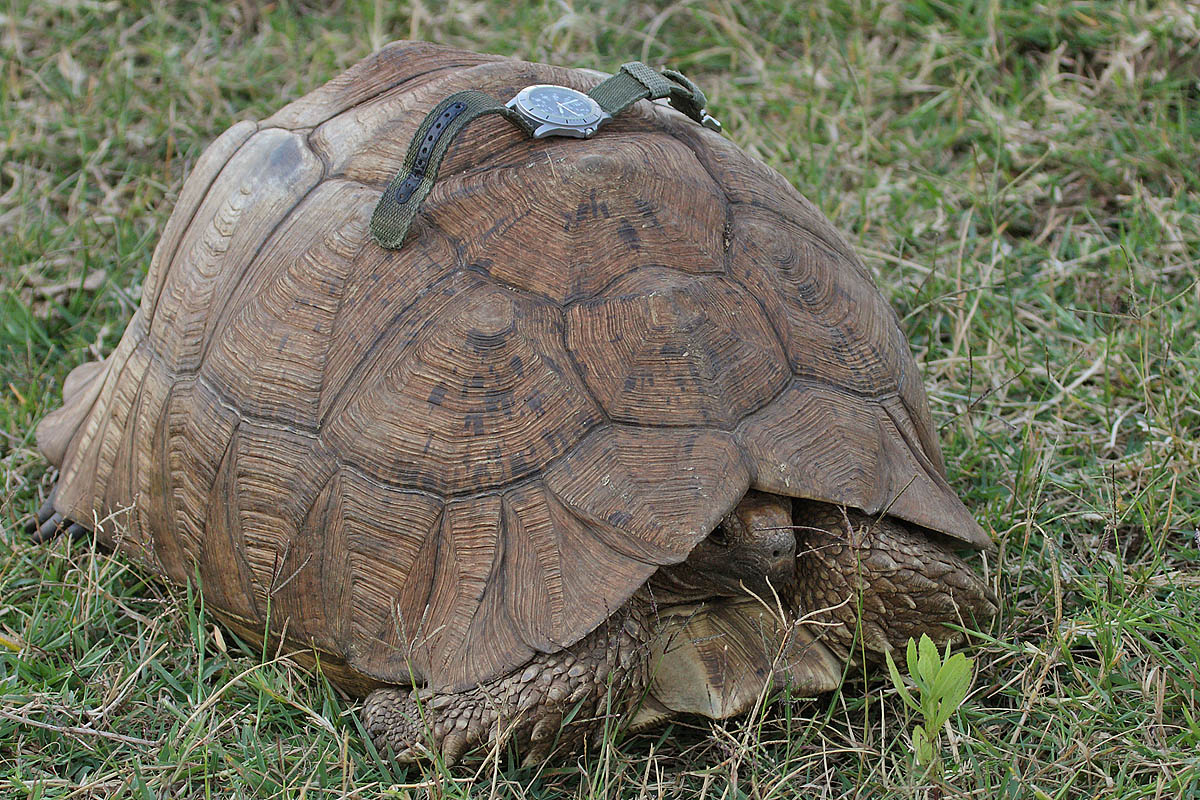
A sulcata tortoise is the third largest tortoise on earth, a grassland grazer from the southern edge of the Sahara that reaches 24 to 30 in (60 to 76 cm) and 70 to 150 lbs (32 to 68 kg) in captivity and outlives most of the people who buy it. Sold as a palm sized hatchling for the price of a dinner out, the sulcata tortoise (Centrochelys sulcata) is the species that fills rescue waiting lists in every warm state in the country.
None of that means it is a bad animal. It means the decision is a 60 year commitment to a yard sized grazing enclosure, not a terrarium pet. Here is what the species actually needs, what it costs over time, and how to tell honestly whether your climate and your property can carry one.
The sulcata tortoise, also called the African spurred tortoise, is a 70 to 150 lb (32 to 68 kg) grassland species that lives 70 years or more. It needs a secure outdoor enclosure of at least 100 sq ft (9 sq m), a dry heated shelter, and a grass and hay diet with almost no fruit.
| Quick Facts | Sulcata Tortoise |
|---|---|
| Scientific name | Centrochelys sulcata, formerly Geochelone sulcata |
| Adult size | 24 to 30 in (60 to 76 cm) shell length |
| Adult weight | 70 to 150 lbs (32 to 68 kg), males larger |
| Lifespan | 70 years or more in good care |
| Native range | Sahel belt from Senegal to Ethiopia |
| Diet | Grasses and hay, roughly 90 percent of intake |
| IUCN status | Endangered in the wild |
Is the Sulcata Tortoise a Good Pet?
A sulcata is a good pet for a household with a warm climate, a fenced yard, and a plan that outlives the current owner, and a poor one for everyone else. The animal itself is calm, curious, long lived, and undemanding day to day. The difficulty is scale: a full grown male pushes over fence panels, excavates burrows 10 ft (3 m) long, and eats a flake of hay a week.
Rescues across the southwest take in sulcatas constantly, almost always from owners who bought a 2 in (5 cm) hatchling and hit the wall at year five, when the tortoise no longer fits any indoor space. Growth is fast for the first decade, and a well fed juvenile can add 3 to 4 in (8 to 10 cm) of shell a year.
If you want a tortoise that stays manageable, the Indian star tortoise tops out near 10 in (25 cm) and suits a large indoor enclosure. Choosing that instead of a sulcata is not a compromise; it is matching the animal to the space you actually have.
How Big Does a Sulcata Tortoise Get?

Adult sulcatas reach 24 to 30 in (60 to 76 cm) in shell length, with exceptional males passing 200 lbs (90 kg). Hatchlings emerge at about 2 in (5 cm), hit 10 in (25 cm) in roughly 3 to 4 years, and continue growing slowly for decades, so there is no point at which the enclosure is finished.
Growth rate depends heavily on diet. Overfed tortoises on pellets and greens grow too fast and develop pyramiding, the raised lumpy scutes that signal a shell built faster than the bone underneath. Steady growth on grass and hay with humid hide boxes produces a smooth shell and a healthier animal, even though it looks slower for the first two years.
Males are larger, with a concave plastron, a longer tail, and prominent thigh spurs that give the species its other name, the African spurred tortoise. Sex is not visible until about 12 in (30 cm), so a hatchling purchase is a coin flip.
What Is the Lifespan of a Sulcata Tortoise?
Sulcata tortoises commonly live 70 years or more, and captive records approaching a century exist. In practical terms, a tortoise bought for a ten year old child will likely outlive that child’s own children, which is why written succession plans and provisions in a will are standard advice from tortoise rescues rather than an eccentric extra.
Most captive sulcatas never reach that age, and the causes are consistent: respiratory infection from cold damp housing, bladder stones from chronic dehydration, and shell rot from wet substrate. None of those are mysterious diseases. They are housing failures that show up years after the mistake started. We break down the numbers by age band in our detailed look at how long sulcata tortoises live.
How Much Does a Sulcata Tortoise Cost?

A hatchling sulcata costs 50 to 150 dollars, and that is the least important number involved. Enclosure, heated shelter, and fencing run 500 to 2,000 dollars before the tortoise outgrows the first version, and an adult sized heated house with reliable power is a permanent line item in the winter budget.
Ongoing costs are modest per month and relentless over decades: grass hay, occasional greens, calcium supplementation, and a veterinarian who actually treats large chelonians. Exotic vet visits start around 75 to 150 dollars, and transporting a 100 lb (45 kg) patient is a two person job that shapes how willing owners are to go.
Adoption is usually the better route. Rescues place adult sulcatas for a small fee and can tell you the animal’s history, sex, and temperament, none of which you get from a hatchling.
Can I Keep a Sulcata Tortoise in My Backyard?
Yes, and outdoors is where a sulcata should live in any climate that stays above about 50 F (10 C) at night for most of the year. Arizona, Florida, southern California, and Texas suit the species well. Anywhere with hard winters requires a heated indoor barn or shed for several months, which is the point where many owners give up.
The enclosure needs at least 100 sq ft (9 sq m) for one adult, more if you can give it. Fencing must be solid and sunk 12 in (30 cm) into the ground, because sulcatas dig determinedly and push at anything that flexes. Wire fencing fails twice over: they dig under it and they walk into it repeatedly because they can see through.
Provide a dry shelter that holds heat, a shallow water dish large enough to soak in, and shade. Sulcatas dig burrows in the wild to escape both midday heat and cold nights, so a substitute that stays between 60 and 90 F (16 to 32 C) removes most of the incentive to excavate under your foundation. Even hardy reptiles have a temperature floor; the African bullfrog from the same broad region survives dry seasons by burying itself, and a sulcata without shelter tries the same solution in your lawn.
What Do Sulcata Tortoises Eat?
Grass and grass hay should make up about 90 percent of the diet, fed free choice. Bermuda grass, orchard grass, and timothy hay all work, and a planted grazing area is the ideal setup because it matches how the species feeds in the Sahel: constant low value browsing rather than meals.
Add dark leafy greens, prickly pear pads, hibiscus, mulberry leaves, and dandelion in moderation. Avoid spinach and kale in quantity because of oxalates, and keep fruit close to zero. Sulcatas have no dietary need for sugar, and fruit disrupts the hindgut fermentation their digestion depends on.
Never feed dog food, cat food, or high protein pellets. Excess protein is the direct cause of the pyramided shells and kidney damage seen in so many captive adults. Calcium supplementation two or three times a week for growing animals, plus real sunlight or high output UVB indoors, covers the rest.
Do Sulcata Tortoises Recognize Their Owners?
Sulcata tortoises do learn to recognize the people who feed them, approaching a familiar person and ignoring a stranger in the same yard. That recognition is built on food and routine rather than affection, and keepers who describe their tortoise as following them around are describing an animal that has learned where the greens come from.
They do not generally like being touched in the way a dog does, but many adults tolerate and even lean into scratching along the shell margins and neck, a response tied to the way wild tortoises rub against rough surfaces. Picking up an adult is stressful and physically risky for both parties, so keep handling to health checks and transport.
Personality varies enough to be worth noting. Some sulcatas are placid, others ram obstacles and fence lines persistently, and males become pushy during breeding season. Reptile temperament is individual more often than people expect, something also visible in commonly kept snakes such as the albino ball python and the albino corn snake.
Health, Legality, and Keeping Two Together
The three health problems to watch are respiratory infection, shell rot, and bladder stones, and all three trace back to housing. A tortoise that is wheezing, has bubbles at the nostrils, refuses food, or has soft patches on the shell needs a reptile veterinarian rather than a change of substrate. Annual weight records catch problems earlier than any visual check.
Legally, sulcatas are listed as Endangered by the IUCN and the species is protected under CITES Appendix II, so international movement is regulated, while domestic ownership rules vary by state and city. Captive bred animals dominate the United States trade, and zoos including those profiled in the Smithsonian National Zoo animal pages maintain breeding groups that document care standards worth copying.
Frequently Asked Questions
Does a sulcata tortoise bite hurt?
Yes, a bite from an adult sulcata hurts and can break skin. They have no teeth but a sharp keratin beak backed by strong jaw muscles built for tearing tough grass. Bites are almost always feeding mistakes, so offer food in a dish rather than from your fingers.
Can I leave my tortoise alone for a week?
An adult sulcata in a secure outdoor enclosure with grazing grass and a large water dish can manage several days, but a full week without checks is risky. Water dishes tip, gates fail, and heat sources quit. Arrange for someone to check the enclosure and refill water every 2 to 3 days.
Can two sulcata tortoises live together?
Two females usually coexist in a large enclosure. Two males rarely do, since they ram, flip, and injure each other once mature, and a male housed with a single female will harass her constantly. Plan on one tortoise, or on a group with enough space and visual barriers to separate.
How fast do sulcata tortoises grow?
A well kept sulcata adds roughly 2 to 4 in (5 to 10 cm) of shell length a year through the first decade, reaching 10 in (25 cm) by age 3 or 4. Faster growth than that usually signals too much protein and produces pyramiding, which is permanent once the scutes harden.
Do sulcata tortoises hibernate?
No. Sulcatas do not hibernate or brumate, which is exactly why cold climates are difficult. In the wild they wait out heat and dry spells in deep burrows, staying active year round. In captivity they need a heated shelter through winter rather than a cooling period.