Quetzal: 6 Species, 3 Foot Tails and Where to See One
A male resplendent quetzal trails tail covert feathers up to 25 in (65 cm) longer than its own body, and when it drops out of a cloud forest tree those streamers ripple behind it like a green ribbon. That display made the bird sacred to the Maya and the Aztec, put it on the flag and the currency of Guatemala, and turned it into the single most sought after sighting in Central American birding.
The name covers more than one bird. Quetzal refers to a small group of tropical trogons, of which the resplendent quetzal (Pharomachrus mocinno) is only the most famous. This guide covers what a quetzal is, how many species exist, what they eat, where they live, why they die in captivity, and where you can realistically see one in the wild.
A quetzal is a brilliantly colored tropical bird in the trogon family, native to forests from southern Mexico to Bolivia. The best known is the resplendent quetzal, a cloud forest species whose males grow tail coverts up to 25 in (65 cm) long. It is Guatemala’s national bird.
What Is a Quetzal?
Quetzals are birds in the family Trogonidae, the trogons, and almost all of them belong to the genus Pharomachrus. They are stocky, short necked, and weak footed, with soft, loosely attached plumage and a heterodactyl toe arrangement found nowhere else in the bird world.
Their color is structural, not pigment based. The metallic green and blue of the back and head comes from microscopic layers in the feather that scatter light, which is why a quetzal can look emerald in one moment and deep blue as it turns. The same optical trick gives hummingbirds their shifting throat color.
The word quetzal comes from the Nahuatl quetzalli, meaning a large brilliant tail feather. It described the feathers first and the bird second, which tells you exactly what the Aztec valued about it.
The Quetzal Species
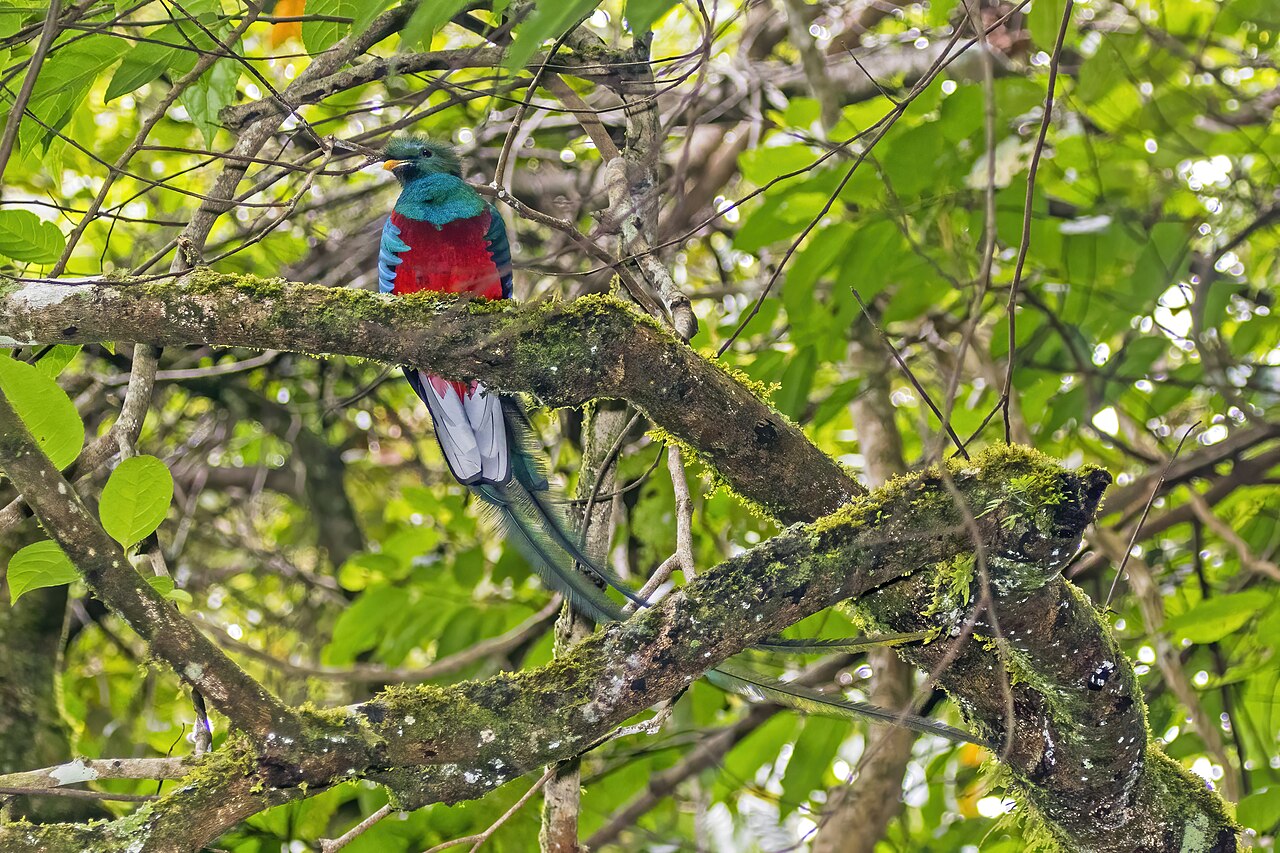
Five species carry the name in Pharomachrus, and a sixth, the eared quetzal, sits in its own genus and is the only one that reaches the United States. The resplendent quetzal is the largest and the only one with the extreme tail streamers most people picture.
| Species | Scientific name | Range |
|---|---|---|
| Resplendent quetzal | Pharomachrus mocinno | S Mexico to W Panama |
| Crested quetzal | Pharomachrus antisianus | Venezuela to Bolivia |
| Golden headed quetzal | Pharomachrus auriceps | Panama to Bolivia |
| White tipped quetzal | Pharomachrus fulgidus | N Colombia, N Venezuela |
| Pavonine quetzal | Pharomachrus pavoninus | Amazon basin |
| Eared quetzal | Euptilotis neoxenus | NW Mexico, rare in Arizona |
How Big Is a Quetzal?
A resplendent quetzal measures 14 to 16 in (36 to 40 cm) in body length and weighs about 7 oz (200 g), which makes it roughly twice the bulk of an American robin. That is the bird itself, before the tail is counted.
Breeding males add upper tail coverts that extend 20 to 25 in (50 to 65 cm) beyond the tail, bringing total length to about 3.3 ft (1 m). These are not true tail feathers. They are elongated covert plumes that grow over the actual tail, and they are shed and regrown each year.
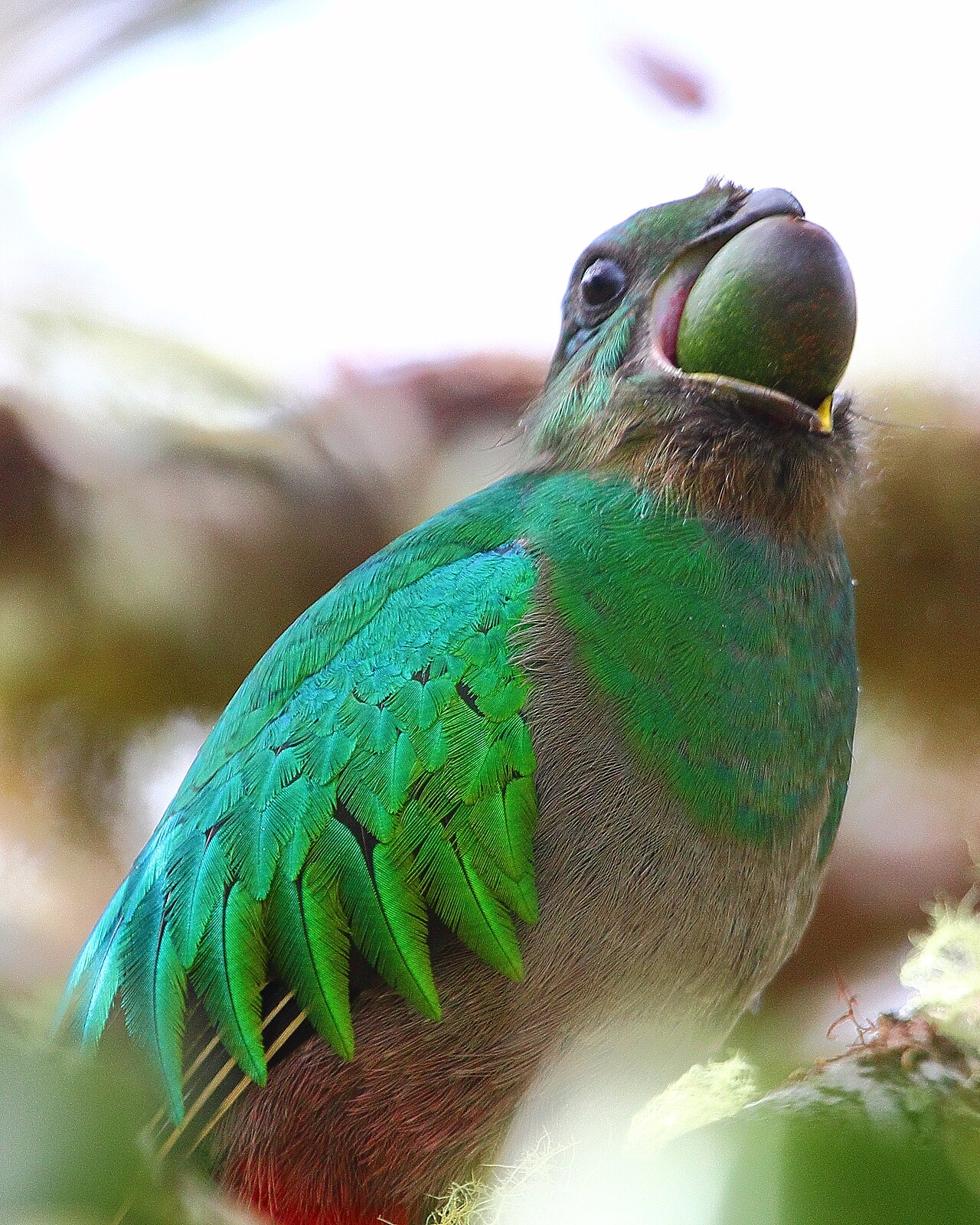
Females are the same body size but lack the streamers, carry a bronze green head rather than a crested emerald one, and show a grey breast with red only on the lower belly. In the field, a female quetzal is far easier to overlook and far more often missed.
Why Is the Male’s Tail So Long?
Sexual selection. Females choose males with the longest, most symmetrical coverts, and since growing and carrying them costs energy and makes flight harder, the streamers work as an honest signal of a male’s condition. The same logic drives the train of a peacock, including the white variants such as the albino peacock.
The cost is real. Males fly with the coverts undulating behind them and have to back out of nest cavities rather than turn around, and even then the plumes often bend and fray across a breeding season. A male with worn streamers in June is a male who has been feeding chicks.
Display flights add to the effect. A courting male launches above the canopy and drops back down in an arcing dive with the streamers snapping behind him, usually paired with a call described as a soft, two note wail.
Where Do Quetzals Live?
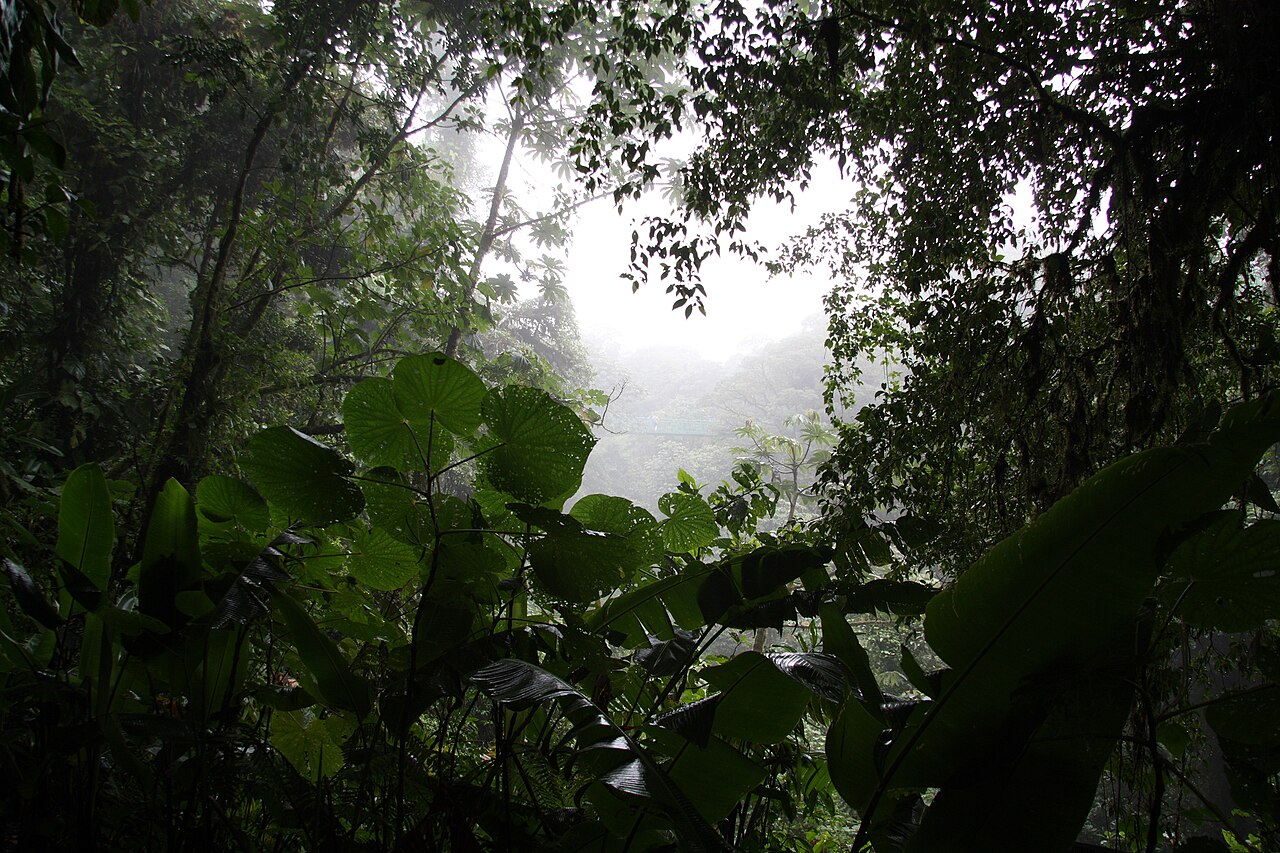
Resplendent quetzals live in montane cloud forest between about 4,000 and 10,000 ft (1,200 to 3,000 m), from Chiapas in southern Mexico through Guatemala, Honduras, Nicaragua, and Costa Rica into western Panama. The other Pharomachrus species occupy similar humid forest across South America at varying elevations.
Cloud forest is the constraint. These birds need persistent mist, epiphyte laden trees, and above all large dead or dying trunks soft enough to excavate. Where the forest is cleared to pasture, quetzals disappear even if fruiting trees remain, because the nest sites go first.
Many populations move seasonally down slope after breeding, following fruit. That altitudinal migration means a protected patch of ridge top forest is not enough on its own; the birds need connected habitat across an elevation band, which is the central problem for conservation in fragmented landscapes.
What Do Quetzals Eat?
Wild avocados in the laurel family, particularly the genus Ocotea, are the core of the resplendent quetzal’s diet. The bird plucks the fruit on the wing, swallows it whole, digests the flesh, and regurgitates the intact seed some distance away.
That makes the quetzal a major seed disperser for the trees it depends on, a loop where the bird plants the forest that feeds it. Researchers tracking seed movement have found quetzals carry laurel seeds well beyond the reach of gravity dispersal, which matters for forest regeneration on cleared slopes.
The diet is not purely fruit. Quetzals also take insects, and they feed nestlings a high protein mix that includes caterpillars, wasps, snails, small lizards, and tree frogs. Adults hunt these by sallying from a perch, a hunting style shared with flycatchers and, in a different key, with hummingbirds catching gnats on the wing.
How Quetzals Nest and Raise Young
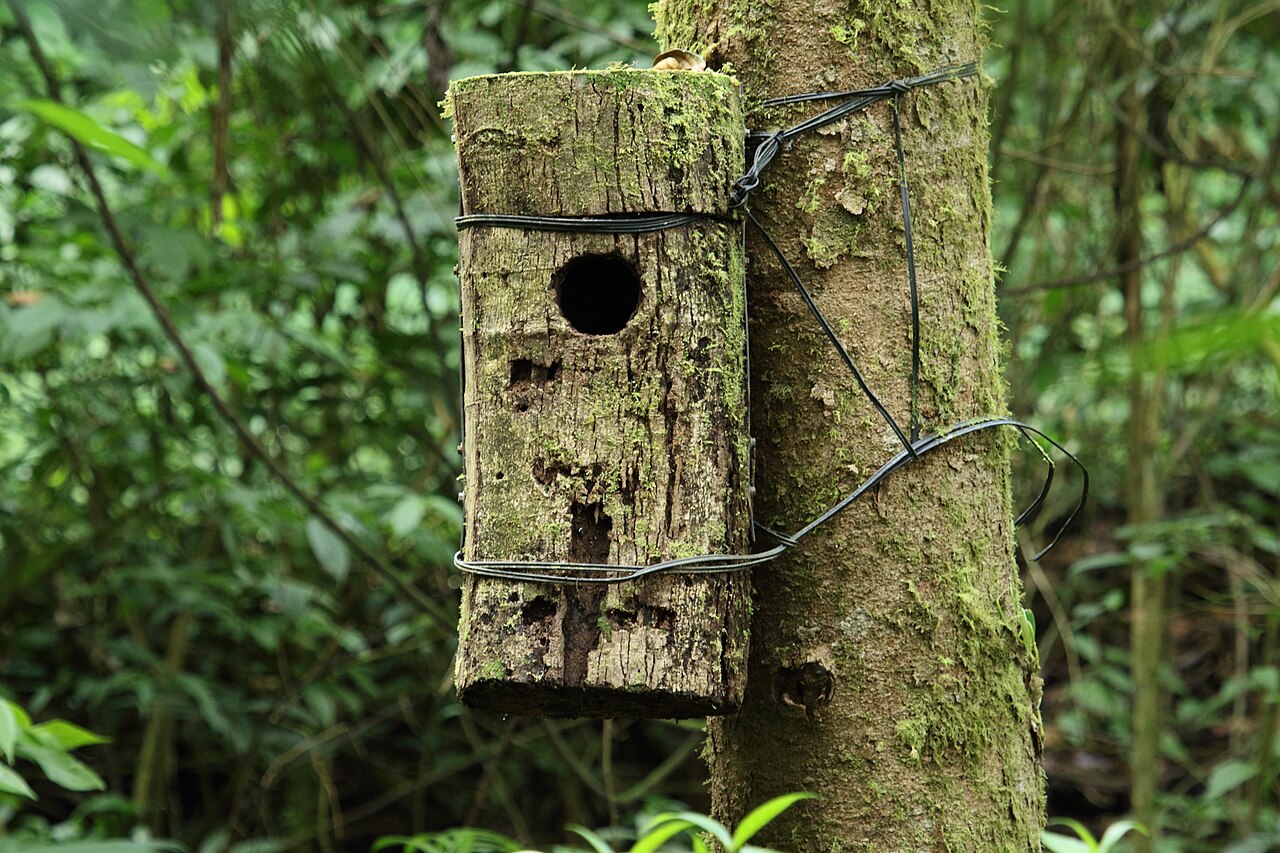
Quetzals nest in cavities they excavate in rotting trunks and snags, often enlarging an abandoned woodpecker hole. Their bills are not strong enough to work sound wood, so the presence of standing deadwood is a hard requirement rather than a preference. Cavity dependence is a vulnerability they share with the American kestrel, another species that cannot make its own hole in healthy timber.
A clutch is two pale blue eggs. Both parents incubate for roughly 17 to 19 days, the female overnight and the male through the middle of the day, with his tail coverts bent up over his back and protruding from the entrance hole while he sits.
Chicks fledge at about 3 to 4 weeks. Females sometimes abandon the brood before fledging, leaving the male to finish feeding, and pairs in Costa Rica frequently raise two broods in a season that runs from March into June.
Why Is the Quetzal Sacred in Maya and Aztec Culture?
Both civilizations linked the quetzal to Quetzalcoatl, the feathered serpent deity whose name joins quetzalli with coatl, serpent. Tail coverts were traded across Mesoamerica and worked into the headdresses of rulers and priests, valued above gold in some accounts.
The birds were reportedly caught, plucked of their long coverts, and released, since killing a quetzal carried a penalty in some Maya polities and the feathers regrow annually anyway. Whether that restraint was universal is unclear, but the harvest was managed rather than indiscriminate.
Guatemala made the resplendent quetzal its national bird, put it on the flag, and named the currency after it. The modern symbolism centers on liberty, built on a belief that a captive quetzal will not survive, which turns out to be closer to fact than folklore.
Can You Keep a Quetzal in Captivity?
No, and attempts have a poor record. Quetzals are specialized frugivores with a delicate digestive system, thin skin, and loosely attached feathers that damage against any enclosure. Historical captive birds typically died within days or weeks, and the species has never been established in aviculture.
A handful of zoos have kept individuals, and a very small number have bred them, but these are research grade operations with wild avocado supply chains and flight space measured in tens of feet. Nothing about the species translates to private keeping, unlike hardier parrots such as the umbrella cockatoo.
The practical consequence is that quetzals have no pet trade pressure on them, which is unusual for a bird this spectacular. The threats are entirely about land: deforestation, fragmentation, and the loss of the old snags they nest in.
Is the Quetzal Endangered?
The resplendent quetzal is listed as Near Threatened by the IUCN, with a declining population trend. It is not endangered across its range as a whole, but several national populations are in poor shape, and the Guatemalan and Mexican subpopulations are the most fragmented.
Cloud forest loss is the driver. Conversion to pasture and coffee, plus the removal of dead trees for firewood, strips both the food supply and the nest sites. Climate shift adds a second squeeze by pushing the cloud layer upslope, compressing the elevation band the species can use.
Protected reserves have worked where they are large enough to cover a full elevation gradient. Costa Rica’s Monteverde and Los Quetzales areas hold stable populations, and reserve based ecotourism now gives the bird direct economic value to surrounding communities. Species accounts from the Cornell Lab of Ornithology are a good starting point for current range and status information.
Where and When to See a Wild Quetzal
Costa Rica is the most reliable country, specifically the Monteverde Cloud Forest, San Gerardo de Dota in the Savegre valley, and Los Quetzales National Park. Guatemala’s Biotopo del Quetzal and Panama’s Chiriquí highlands are also productive.
Time it to the breeding season, March through June, when males are displaying, calling, and running food to a fixed nest hole. Outside that window the birds are quiet, wide ranging, and much harder to find even where they are common.
Go at dawn, hire a local guide who knows the current nest trees, and expect to stand still. Guides in San Gerardo track active cavities year to year, and a morning with one raises the odds from a long shot to better than even.
Frequently Asked Questions
What is a quetzal bird?
A quetzal is a tropical bird in the trogon family, found from southern Mexico to Bolivia. Six species carry the name, and the best known is the resplendent quetzal, a cloud forest bird whose breeding males grow tail coverts up to 25 in (65 cm) long. It is Guatemala’s national bird.
Where does the quetzal live?
Resplendent quetzals live in montane cloud forest between about 4,000 and 10,000 ft (1,200 to 3,000 m), from Chiapas through Central America to western Panama. Other quetzal species occupy humid forests across northern and central South America, and the eared quetzal reaches northwestern Mexico and rarely Arizona.
Is the quetzal endangered?
The resplendent quetzal is listed as Near Threatened rather than endangered, with a declining trend. Cloud forest clearing and the removal of the dead trees it nests in are the main pressures. Some national populations, particularly in Guatemala and Mexico, are far more fragmented than the global listing suggests.
What do quetzals eat?
Wild avocados in the laurel family form the core of the diet. Quetzals swallow the fruit whole and regurgitate the seed, making them important seed dispersers. They also take insects, caterpillars, snails, small lizards, and tree frogs, and feed nestlings mainly on this animal protein.
Can you keep a quetzal as a pet?
No. Quetzals do not survive captivity well. Their specialized fruit diet, fragile plumage, and sensitivity to confinement mean historical captives usually died within days or weeks. Only a few research grade zoo programs have kept them successfully, and private ownership is neither legal nor practical anywhere in their range.
Why is the quetzal important to Guatemala?
The resplendent quetzal is Guatemala’s national bird, appears on the national flag and coat of arms, and gives its name to the currency, the quetzal. The symbolism is liberty, drawn from the widespread belief that the bird will not live in a cage.