Caique Parrot Care: Cost, Lifespan and the Clown Temperament
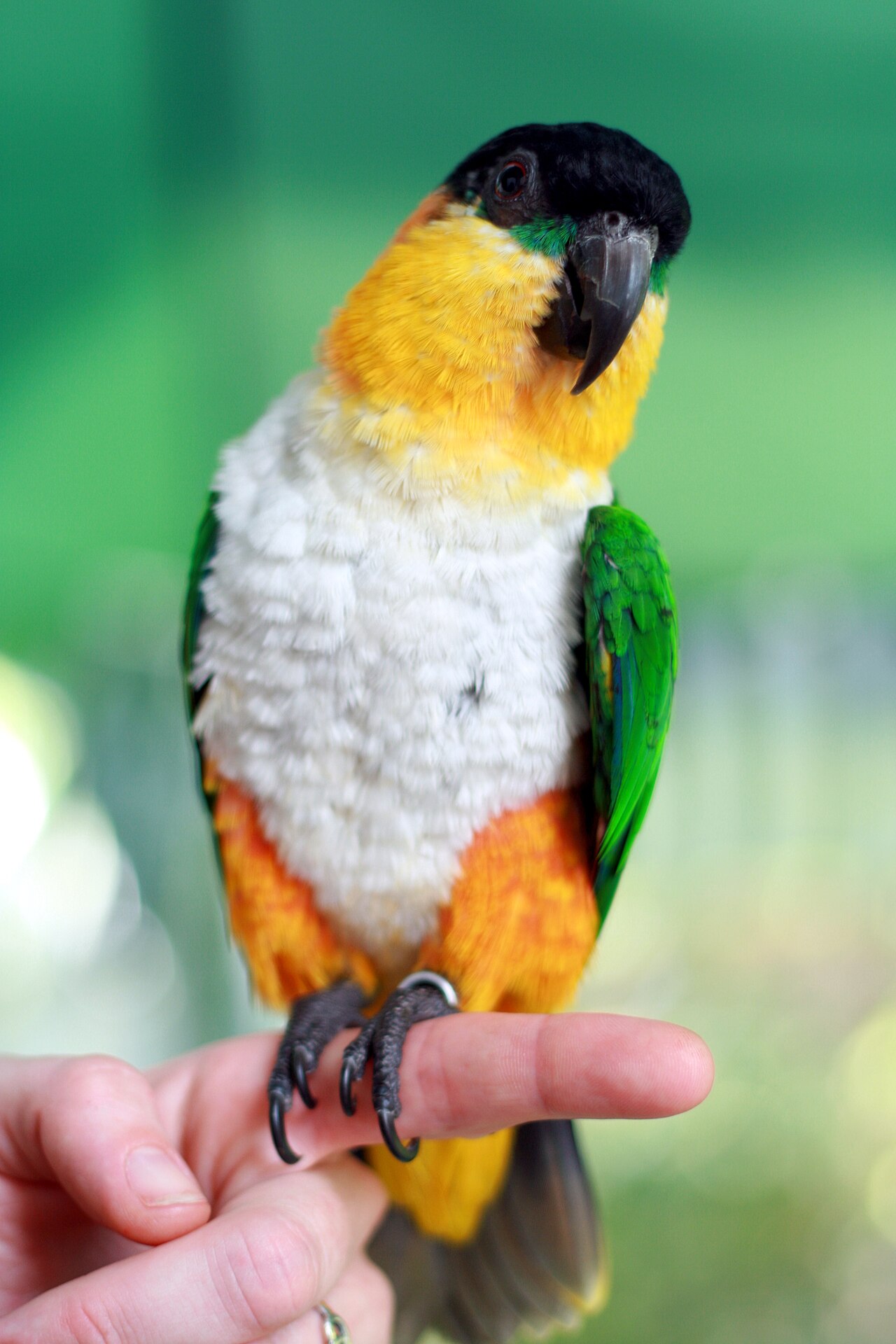
The caique is a stocky, hyperactive parrot from the Amazon basin that behaves less like a bird and more like a puppy with feathers. Two species are kept as pets, the black-headed caique (Pionites melanocephalus) and the white-bellied caique (Pionites leucogaster), and both pack an enormous amount of energy into a body that weighs about as much as a deck and a half of cards.
Owners call them clown parrots for good reason. A caique will hop across the floor on both feet, wrestle with your fingers, surf on a towel, and then fall asleep flat on its back in your palm. That personality is the whole appeal, and it is also the reason caiques are a poor match for a quiet household that wants a calm shoulder bird.
A caique is a small South American parrot in the genus Pionites, roughly 9 to 10 in (23 to 25 cm) long and 145 to 170 g in weight. Caiques live 25 to 40 years, cost 1,200 to 3,000 USD, talk poorly, scream loudly, and need three to four hours outside the cage every day.
| Quick facts | Caique |
|---|---|
| Species kept as pets | Pionites melanocephalus, Pionites leucogaster |
| Length and weight | 9 to 10 in (23 to 25 cm), 145 to 170 g |
| Lifespan in captivity | 25 to 40 years |
| Native range | Amazon basin of Brazil, Peru, Colombia, Venezuela, the Guianas |
| Talking ability | Poor, a handful of words at best |
| Noise level | High and piercing, not deep like a macaw |
| Typical price | 1,200 to 3,000 USD from a breeder |
What Is a Caique?
A caique is a short-tailed parrot in the genus Pionites, a group of only two widely recognized species that live in the lowland forests of northern South America. The name is usually pronounced “kai-eek” in the United States, and it comes from a Tupi word for a forest bird.
Structurally, a caique looks like someone compressed a larger parrot. The tail is short and square, the head is broad, the beak is heavy for the body size, and the legs are thick and muscular. That build is what allows the hopping gait that no other commonly kept parrot uses.
Caiques sold in the United States are captive bred. Wild birds have not been legally imported since the Wild Bird Conservation Act of 1992, which the U.S. Fish and Wildlife Service administers, so every pet caique in the country traces back to domestic breeding stock.
Black-Headed vs White-Bellied Caique: How to Tell Them Apart
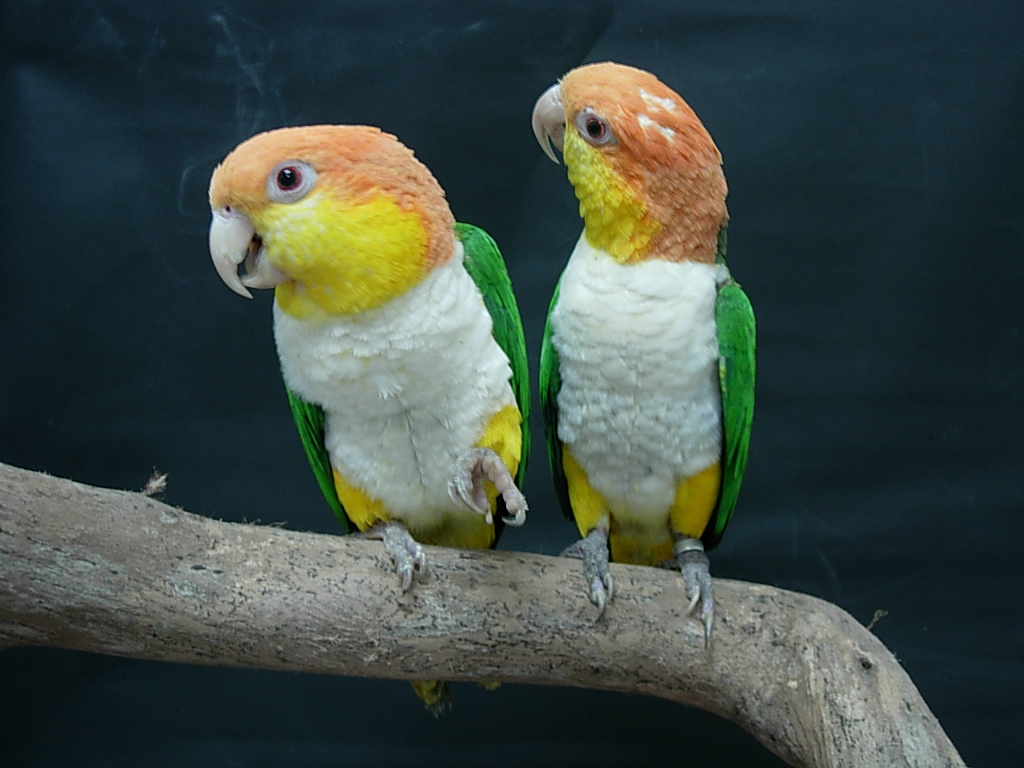
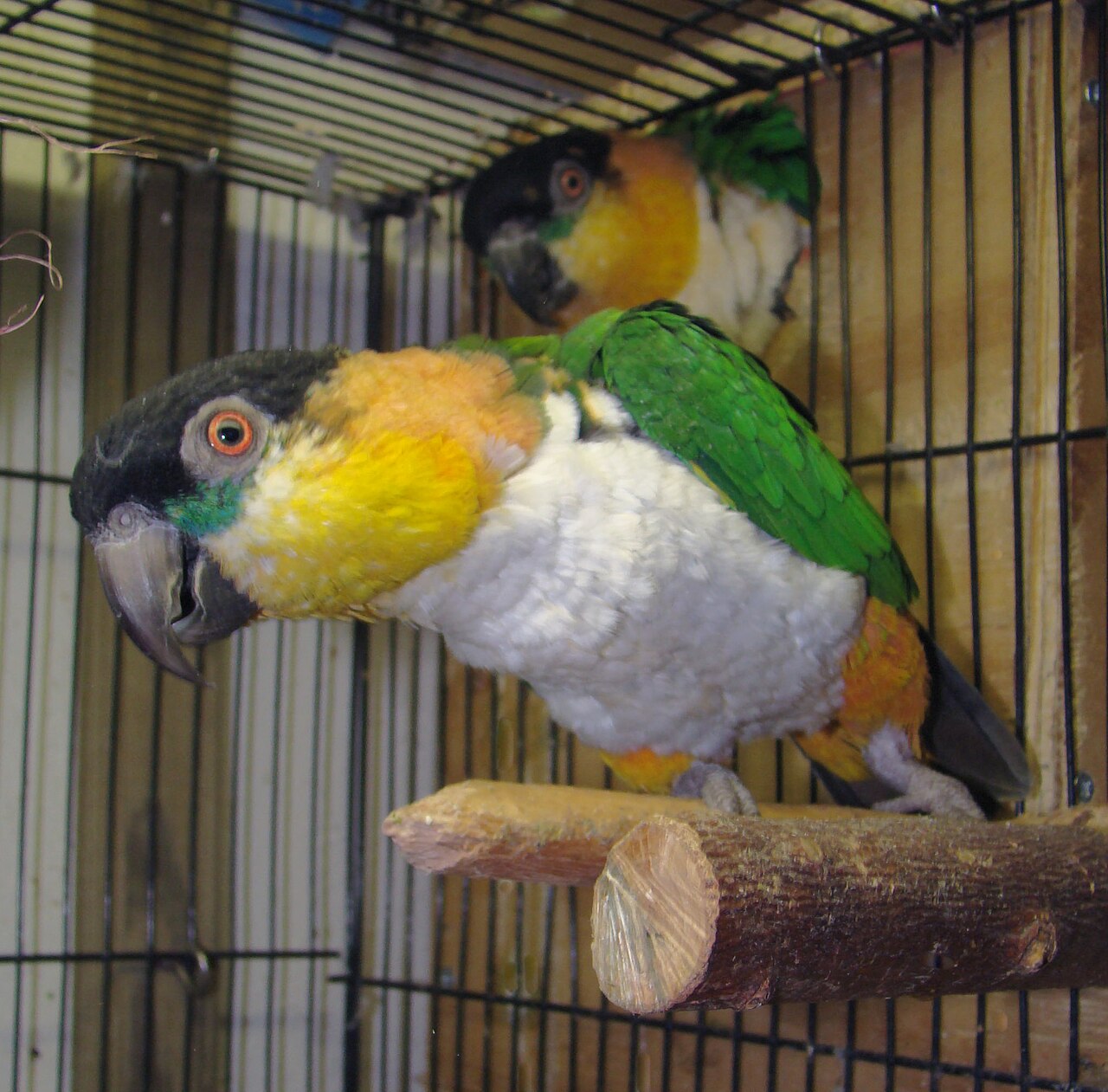
The crown settles it in one glance. A black-headed caique has a solid black cap running from the forehead to the back of the skull, with a burnt orange band across the nape. A white-bellied caique has an apricot to orange crown with no black anywhere on the head.
Both species share the same body pattern below the neck: a clean white chest and belly, green wings and back, and yellow to orange feathering on the thighs and under the tail. From behind, at a distance, the two are genuinely hard to separate, which is why breeders photograph the head.
Temperament differs slightly. White-bellied caiques have a reputation for being a little more laid back and a little more willing to accept several people in the household, while black-headed birds tend to bond harder to one person. The overlap is large enough that individual personality matters more than species.
Where Caiques Live in the Wild
Caiques occupy the Amazon basin, and the Amazon River itself splits the two species. Black-headed caiques live north of the river across Colombia, Venezuela, the Guianas, northern Brazil and eastern Ecuador and Peru. White-bellied caiques live south of it, through central Brazil, eastern Peru and northern Bolivia.
Both species stay in the canopy of humid lowland forest, usually below 3,300 ft (1,000 m). They move in noisy groups of about 10 birds, feeding on fruit, seeds, flowers and the occasional insect, and they roost in tree cavities rather than building open nests.
Neither species is currently considered threatened, though habitat loss and local trapping pressure both populations. Their fondness for the canopy edge means they adapt reasonably well to selectively logged forest, which is not true of every Amazonian parrot.
How Big Do Caiques Get?
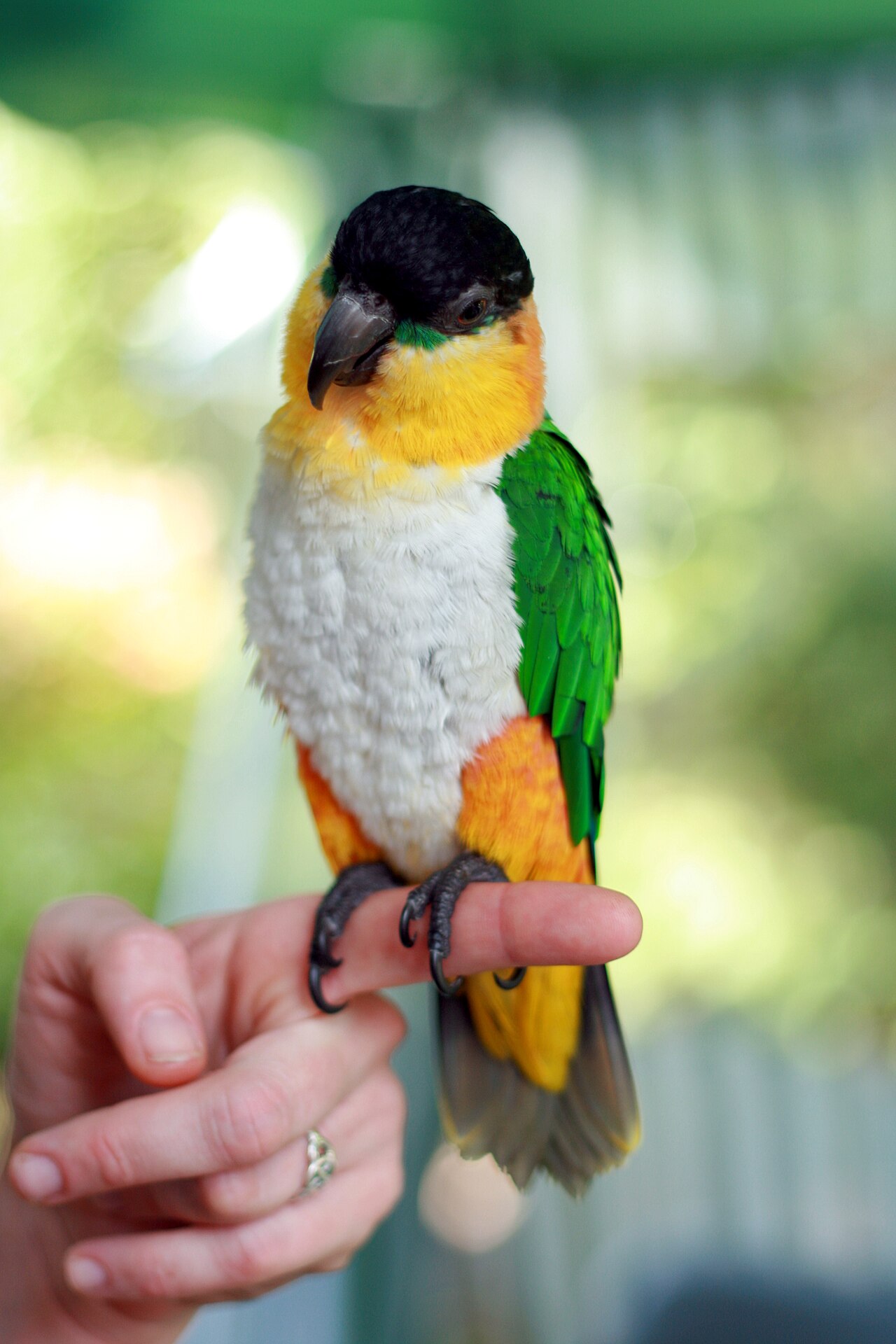
A full grown caique measures 9 to 10 in (23 to 25 cm) from beak to tail tip and weighs 145 to 170 g. That places it between a cockatiel and a small conure in length, but well above either in bulk, because the caique is built like a brick.
Males and females are the same size and the same color, so you cannot sex a caique by looking at it. Breeders use DNA sexing from a blood or feather sample, and buyers who want a specific sex should expect the paperwork to come with the bird.
Chicks reach adult weight by about 12 weeks but keep filling out through the first year. A hand fed baby parrot that still begs for food is not ready to leave the breeder, and a caique that weans early tends to stay food obsessed for life.
Caique Temperament: Why They Are Called Clown Parrots
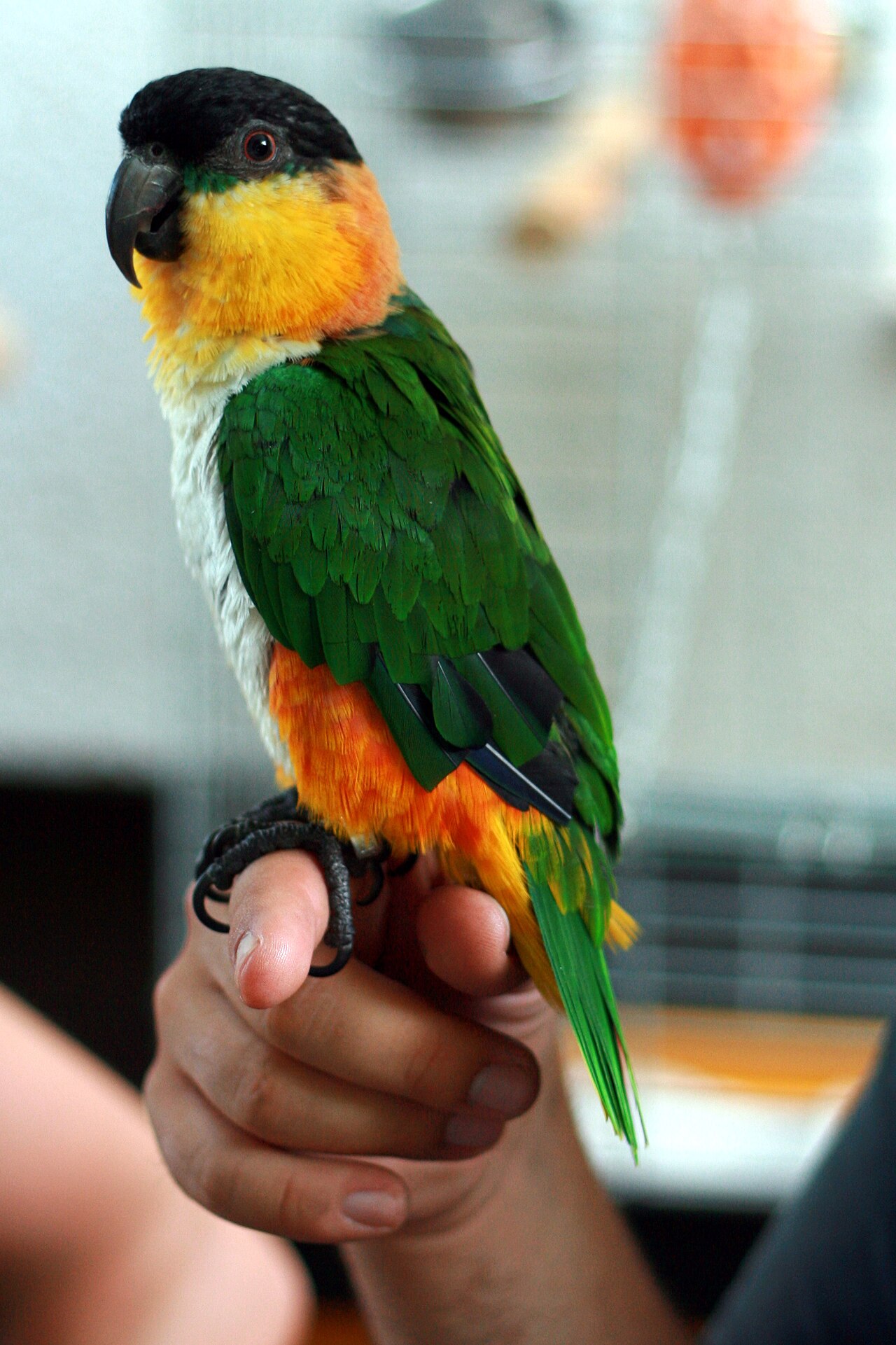
Caiques are the most physically playful parrots commonly kept in homes. A healthy bird spends its waking hours hopping, hanging upside down, rolling onto its back, burrowing under blankets and wrestling with toys, hands and anything else that will push back.
The flip side of that energy is intensity. Caiques bite harder than their size suggests, and they do it during play as readily as during a mood. A bird that was never taught where the limit is turns into an adult that draws blood on a bad day, and no amount of charm makes that pleasant.
They are also territorial about their cage and about their chosen person. Caiques have a documented habit of going after the feet of other birds, so housing one with a parakeet or any smaller species is a genuine safety problem rather than a personality quirk.
Do Caiques Talk?
Caiques talk poorly. Most birds learn somewhere between zero and ten words, the delivery is raspy and clipped, and clarity never approaches what an African grey or an amazon produces. Buying a caique for conversation is the single most common mismatch of expectations.
What they do instead is mimic sounds. Microwave beeps, phone alerts, kissing noises, coughs, and the family dog all show up in a caique’s repertoire, often at high volume and always at the wrong moment. Many birds also whistle short tunes accurately.
If speech is the priority, a young macaw or a grey is the better direction. If a bird that hops around singing the two notes it stole from your smoke alarm sounds entertaining rather than maddening, a caique fits.
How Loud Is a Caique?
A caique is loud in the piercing register rather than the booming one. The contact call is a sharp, repeated shriek in the 3 to 4 kHz range, which travels straight through drywall and is far harder to ignore than a macaw’s deeper scream at the same volume.
Noise comes in bursts. Dawn, dusk, and any moment the bird loses sight of its person trigger calling, and a caique that is bored or under exercised will call for long stretches. Apartment owners with shared walls should assume neighbors will hear the bird every single day.
Screaming responds to routine more than to correction. Consistent out of cage time, a covered cage at a fixed bedtime, and ignoring demand calls while rewarding quiet whistles all reduce it. Yelling back reliably makes it worse, because to a flock bird a shout is an answer.
Cage Size and Setup for a Caique
The working minimum is 24 by 24 by 36 in (61 by 61 by 91 cm) with bar spacing of 5/8 to 3/4 in (16 to 19 mm). Bigger is better, and because caiques climb and hop rather than fly long distances indoors, floor area and horizontal bars matter more than height.
Fill the cage with destructible material. Softwood blocks, palm leaf, vine balls, paper rolls and foraging boxes all get demolished, which is exactly the point. A caique with nothing to shred starts shredding its own feathers, and feather damaging behavior is far easier to prevent than to reverse.
Add a flat platform or a folded towel somewhere in the cage. Caiques sleep and roll on their backs, a habit that alarms first time owners who think the bird has died, and a solid surface gives them a safe place to do it.
What to Feed a Caique
A formulated pellet should make up roughly 60 to 70 percent of the diet, with fresh vegetables, a smaller share of fruit, and a limited amount of nuts and seed filling the rest. Caiques gain weight easily, so seed heavy mixes are a fast route to an obese bird with liver disease.
Good daily produce includes dark leafy greens, bell pepper, broccoli, carrot, sweet potato, papaya, berries and melon. Avocado, chocolate, caffeine, alcohol, onion, and anything salted are off limits, and fruit pits from cherries and apricots should be removed.
Caiques are enthusiastic bathers, so water needs changing more than once a day in most cages. Many birds will dunk food, soak in the bowl, and then flip it, which argues for a heavy crock or a separate bathing dish.
Caique Lifespan and Common Health Problems
Caiques live 25 to 40 years in captivity with good care, and 30 is a reasonable planning number. That is a commitment measured in decades, and rehoming is common precisely because buyers underestimate it.
The frequent medical issues are obesity and fatty liver disease from seed heavy diets, feather damaging behavior driven by boredom, and foot or beak injuries from fights with other birds. Caiques are also susceptible to the usual psittacine diseases, including psittacine beak and feather disease and proventricular dilatation disease.
An annual exam with an avian veterinarian, not a general small animal practice, catches most of this early. Find that vet before the bird arrives, because avian specialists are thin on the ground in much of the United States and an emergency is a bad time to start searching.
How Much Does a Caique Cost?
Expect 1,200 to 3,000 USD for a hand raised caique from a breeder in the United States, with white-bellied birds usually sitting at the upper end because fewer are produced. Rescues occasionally have adults for an adoption fee in the low hundreds.
The bird is the smaller number. A suitable cage runs 300 to 600 USD, an initial vet workup with DNA sexing and bloodwork runs 150 to 400 USD, and toys, food and replacement perches cost 400 to 800 USD a year because a caique destroys everything it is given.
Buy from a breeder who lets you visit, weans the chick on solid food before sale, and provides a health guarantee with a written vet check. Unweaned chicks sold cheaply to be hand fed by the buyer are the leading cause of aspiration deaths in young parrots.
Is a Caique the Right Parrot for You?
A caique suits someone at home much of the day, in a house rather than a thin walled apartment, who wants an interactive bird and finds a nippy, opinionated animal funny rather than frustrating. Three to four hours of supervised out of cage time is the realistic daily requirement.
It is a poor choice for a first bird in a household with small children, for a multi bird home with smaller species, or for anyone hoping for a quiet talker that sits on a shoulder. A cockatiel hen fills that role far better and costs a fraction as much.
Caiques are usually kept singly or in pairs, and a bonded pair will often prefer each other to you. If you want the famous clownish attachment to a person, one bird with plenty of human time is the standard recommendation, though it means you are the flock. The collective noun question comes up constantly with these birds, and the answer is covered in what a group of parrots is called.
Frequently Asked Questions
Are caiques good pets for beginners?
Caiques are a demanding first parrot. They bite hard, scream at a piercing pitch, and need hours of daily interaction, so a beginner needs to be ready for that before buying. Someone who has kept a cockatiel or conure successfully usually adapts to a caique without much trouble.
How long do caiques live?
Caiques live 25 to 40 years in captivity with proper diet and veterinary care, and reports of birds passing 40 exist. Wild lifespan is shorter and poorly documented. Plan for at least three decades of ownership and name a caretaker in your will, since the bird may outlive the arrangement.
Can caiques talk?
Some caiques learn a few words, but speech is raspy and limited, and many birds never talk at all. They excel at mimicking mechanical sounds such as microwave beeps, alarms and whistled tunes. If clear speech is the goal, an African grey or an amazon parrot is a much better match.
Why does my caique sleep on its back?
Back sleeping is normal caique behavior, not a sign of illness. Caiques roll onto their backs to rest, play and wrestle with toys, often with their feet in the air. Provide a flat platform or a folded towel in the cage so the bird has a safe surface for the habit.
Do caiques bite?
Yes, and caiques bite harder than their size suggests. Most biting starts in play and escalates when the bird is overstimulated, hormonal or defending its cage. Consistent bite pressure training from a young age, plus reading the body language that precedes a lunge, keeps it manageable in adults.
How much does a caique cost in the United States?
A hand raised caique costs 1,200 to 3,000 USD from a breeder, with white-bellied birds usually priced higher than black-headed ones. Add roughly 300 to 600 USD for a proper cage, 150 to 400 USD for the first veterinary workup including DNA sexing, and 400 to 800 USD per year for food and toys.