Leopard Gecko Substrate: 9 Options Ranked Safe to Risky
The best leopard gecko substrate is a solid, non particulate surface: paper towel for quarantine and hatchlings, slate tile or sealed stone for adults. Both give a gecko secure footing, hold belly heat, and cannot be swallowed. Loose sand, calcium sand, and walnut shell remain the substrates most often linked to impaction in captive Eublepharis macularius, and no amount of careful feeding makes them the safer choice.
That answer is simple, but the follow up questions are not. Keepers argue about coconut fiber, about soil mixes, about the right substrate ratio and depth for a bioactive build, and about whether a gecko needs dirt to dig at all. This guide ranks nine common options from safe to risky, explains what each one does to floor temperature and humidity, and gives the depth numbers that actually matter.
Use paper towel for hatchlings, sick animals, and any new gecko in quarantine. Move adults to slate tile, sealed ceramic tile, or a packed bioactive soil mix of roughly 60 percent topsoil to 40 percent play sand. Avoid calcium sand, walnut shell, and loose sand in any tank.
| Substrate | Impaction risk | Heat transfer | Best for | Cost |
|---|---|---|---|---|
| Paper towel | None | Excellent | Hatchlings, quarantine, sick geckos | Very low |
| Slate tile | None | Excellent | Adults, long term setups | Low, one time |
| Sealed ceramic tile | None | Very good | Adults, easy cleaning | Low, one time |
| Bioactive soil mix | Low if packed | Good | Experienced keepers, display tanks | Moderate |
| Coconut fiber, loose | Moderate | Poor when damp | Humid hide only | Low |
| Reptile carpet | None | Fair | Rarely, claws catch in loops | Low |
| Calcium sand | High | Fair | Nothing | Low |
What Substrate Is Best for a Leopard Gecko?
Slate tile is the best all around substrate for a healthy adult leopard gecko. It sits flat on the glass, conducts heat from an under tank heater evenly into the gecko’s belly, and wipes clean in seconds. A gecko cannot ingest it, which removes the single most common husbandry mistake from the equation entirely.
Paper towel wins for every other situation. New arrivals, animals recovering from illness, and hatchlings under four months all belong on plain white paper towel, because it lets you see every dropping and every shed without disturbing the animal. Checking what a gecko’s droppings look like is one of the fastest health indicators you have, and a white floor makes that check trivial.
The third tier is bioactive soil, which is genuinely good when built correctly and genuinely risky when it is not. It demands a packed, slightly moist substrate that holds a burrow shape rather than a dry, loose mix that shifts under a gecko’s feet. That distinction is the whole argument, and most keepers who report impaction were running a dry mix.
What Do You Put at the Bottom of a Leopard Gecko Tank?
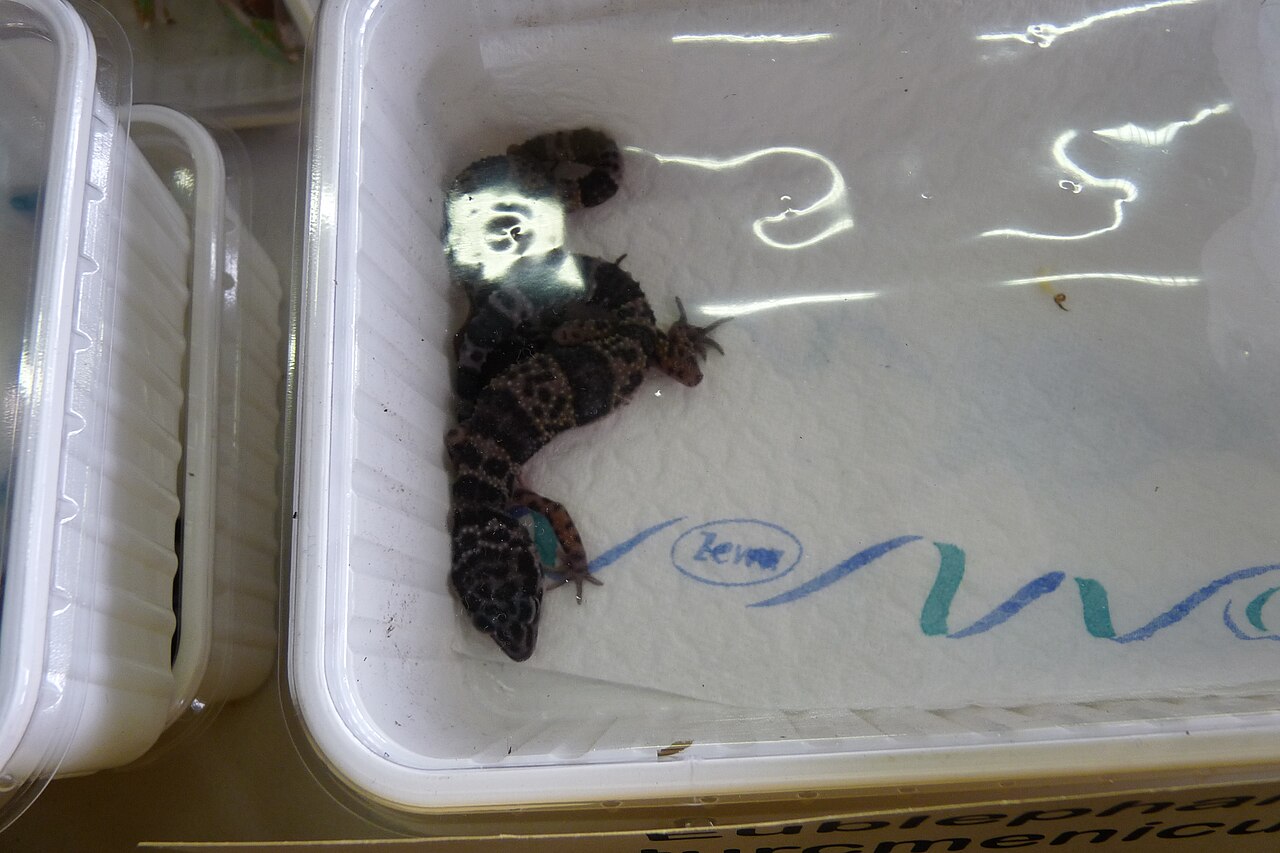
The bottom layer should be whatever the gecko walks on directly, with no drainage layer underneath unless the tank is bioactive. A standard 20 gallon long tank for one adult needs a single surface across the whole floor, not a patchwork of tile on the warm side and sand on the cool side. Mixed floors create edges where food insects hide and where loose material gets tracked onto damp skin.
For a tile build, measure the tank interior and have a hardware store cut the slate to fit. Two or three pieces are easier to lift and clean than one slab. Leave no gap wider than a few millimeters at the walls, because crickets colonize those gaps and a hunting gecko will press its snout into them.
For a paper towel build, use two layers and replace them entirely twice a week. There is no middle ground where paper towel gets spot cleaned for a month; it absorbs urates and holds bacteria far faster than any hard surface does.
Do Leopard Geckos Need Sand or Dirt?
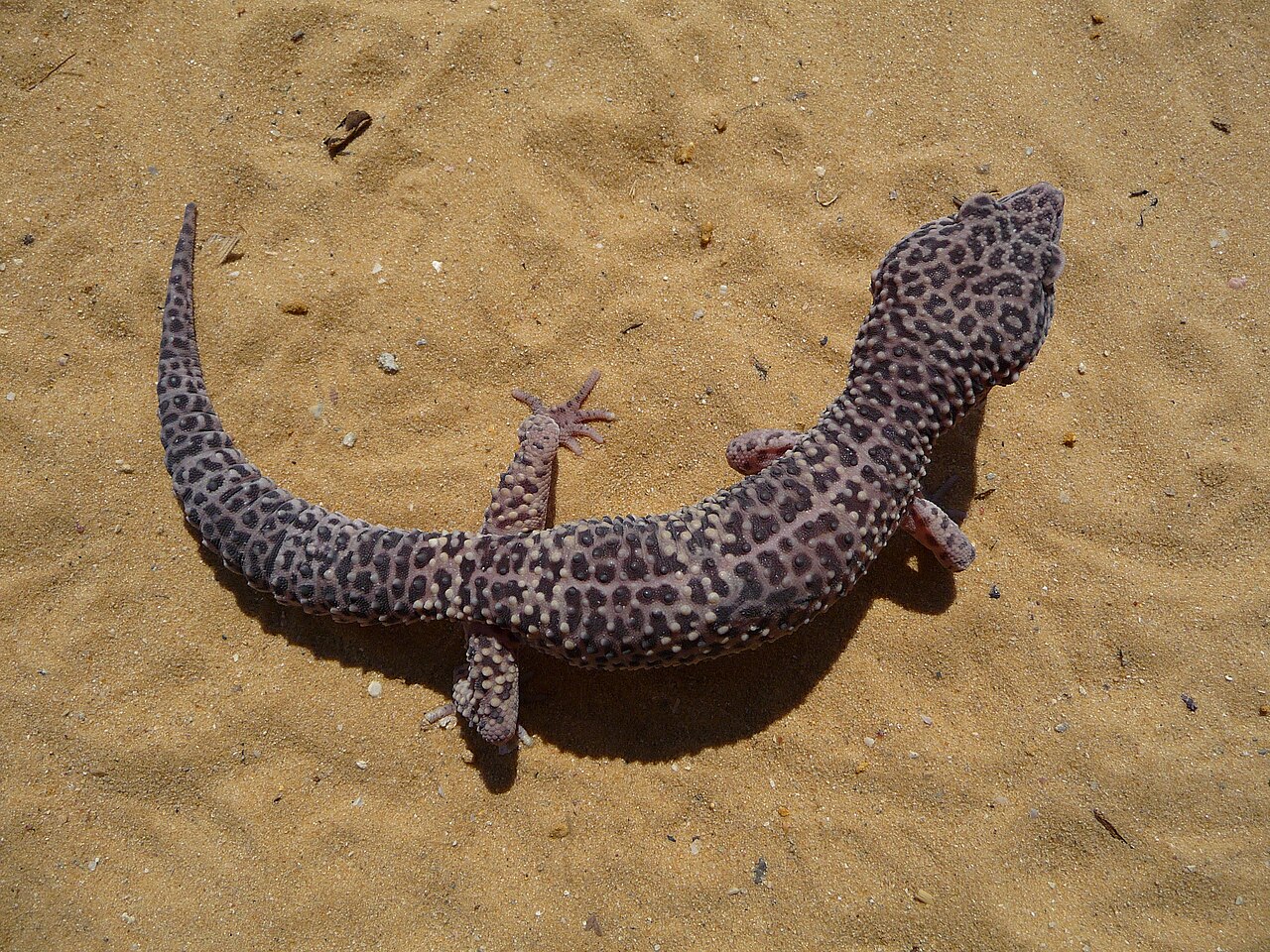
No. Leopard geckos do not need sand or dirt to be healthy, and the common claim that wild geckos live on sand misreads their habitat. The species comes from rocky, arid grassland and scrubby hill country across Afghanistan, Pakistan, and northwest India, where the ground is hard packed clay, gravel, and stone rather than open dune sand.
What they do benefit from is the chance to dig, which matters most for gravid females looking for a lay site and for any gecko seeking a humid pocket during a shed. That need is met completely by a humid hide packed with damp sphagnum moss or coconut fiber, contained inside a plastic box with an entry hole. The digging behavior happens there, safely, without a tank floor full of loose grit.
The Smithsonian’s National Zoo and Conservation Biology Institute keeps arid ground dwelling reptiles on hard substrates with contained humid retreats for the same reason: it separates the behavior from the hazard.
Paper Towel: The Safest Starter Bedding
Paper towel is the default for any gecko whose health you are still assessing. It costs almost nothing, transfers belly heat well because it is thin, and makes weight loss, runny droppings, retained shed, and mite activity visible immediately. Every experienced keeper has a stack of it for exactly these moments.
Its weakness is enrichment. A bare white floor gives a gecko no texture to grip and nothing to explore, which is why it should be paired with more cover than usual: three hides minimum, cork bark, and a low branch. A gecko on paper towel with sparse decor will spend most of its time hidden, and you lose the observation advantage you switched substrates to get.
Hatchlings and juveniles under about 40 grams should stay on paper towel until they are feeding reliably and passing normal stools. Young geckos have a much narrower margin for a gut blockage than adults do, simply because their digestive tract is smaller.
Slate Tile and Stone: The Long Term Favorite
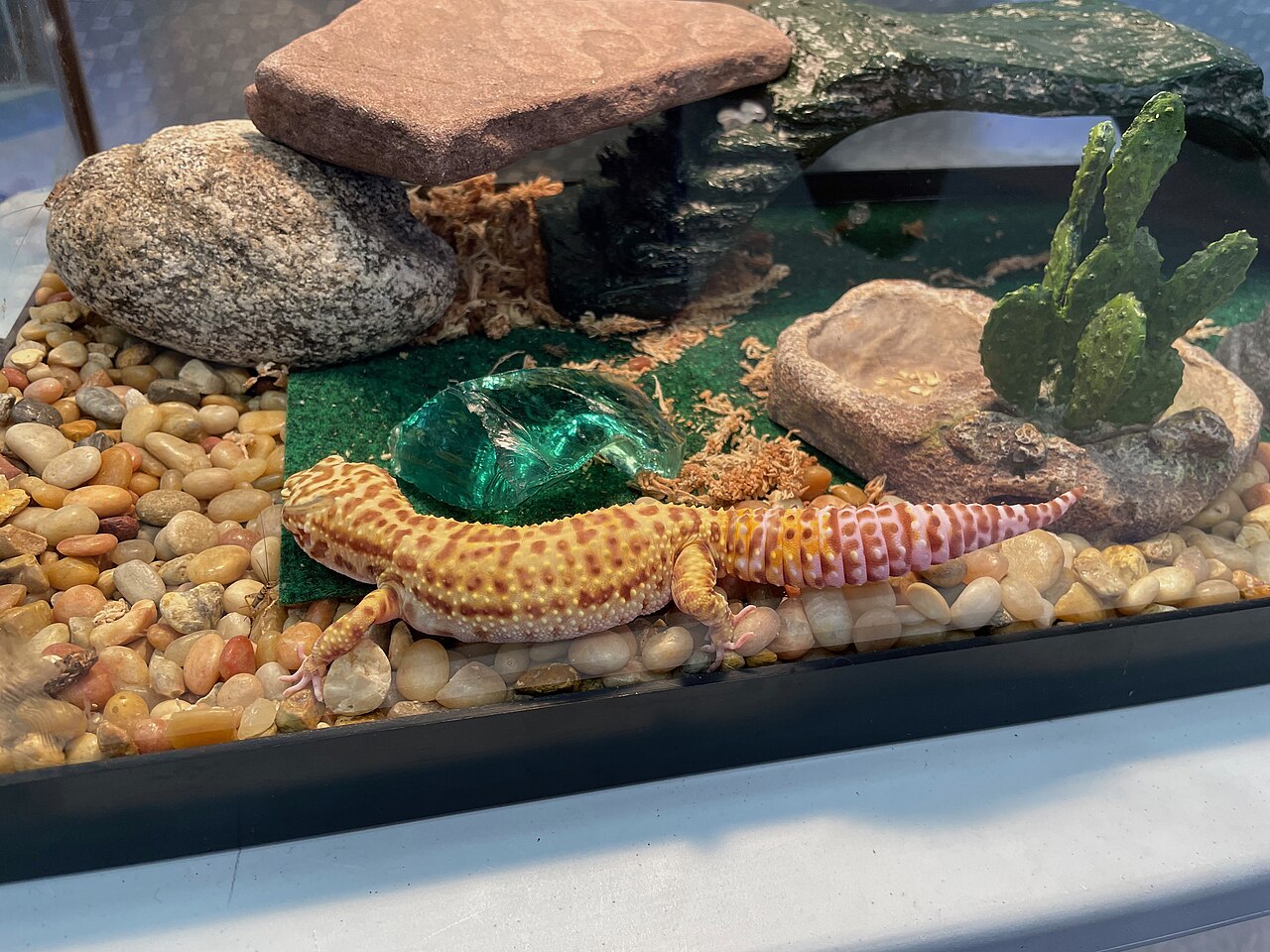
Slate tile is the substrate most keepers settle on after a few years. Natural slate has a slightly rough face that helps a gecko shed the skin on its toes, it stores heat from below and releases it slowly, and it lasts the animal’s entire life. A leopard gecko can live 15 to 20 years in captivity, so a one time tile purchase is the cheapest option over that span by a wide margin.
Choose unglazed slate or unglazed ceramic. Glazed tile is slick, and a gecko that cannot get traction while striking at prey will miss repeatedly and eventually stop trying from certain angles. Test a piece by tipping it at 20 degrees with a damp finger on it; if your finger slides, so will the gecko.
Clean tile with a reptile safe disinfectant or a diluted vinegar solution, never a household bleach spray left to dry in place. Rinse, dry fully, and return the tile before the tank cools below the mid 70s Fahrenheit (24 C).
Reptile Carpet: Why Keepers Moved On
Reptile carpet dominated pet store shelves for a decade and has quietly fallen out of favor. The problem is mechanical: the fabric is a loop pile, and gecko claws catch in those loops. Keepers have reported torn toes, lost claws, and in bad cases a constricted digit that needed veterinary attention.
The second problem is hygiene. Carpet holds urates and insect debris deep in the weave, so it needs a full wash cycle rather than a wipe, which means owning at least two pieces and rotating them. At that point the labor exceeds tile with none of the safety advantage.
If carpet is already in the tank, inspect it weekly for pulled loops and cut any that appear flush with the backing. Replacing it with tile costs less than one vet visit for a damaged toe.
Bioactive Soil Mix: The Naturalistic Option
A bioactive enclosure uses living soil, a clean up crew of springtails and isopods, and drought tolerant plants to process waste in place. Done properly it is excellent for leopard geckos: it holds burrows, creates natural humidity gradients, and gives the animal genuine digging behavior without loose grit.
The standard mix is roughly 60 percent organic topsoil with no fertilizer or perlite, 40 percent washed play sand, and a handful of clay powder to help it pack. Excavator clay blends work as well. The test is simple: squeeze a handful, and if it holds its shape and a tunnel dug into it stays open, it is packed enough to be safe.
The setup is not for a first gecko. It needs a larger tank, overhead heating rather than a substrate heater buried under 4 in (10 cm) of soil, and a keeper who will notice when the top layer dries into dust. Anyone maintaining a planted crested gecko enclosure will already have most of the skills.
Substrate Ratio and Depth: What the Numbers Mean
For a bioactive or clay build, 3 to 4 in (8 to 10 cm) of packed substrate is the working depth. That is enough for an adult to excavate a tunnel that does not collapse, and shallow enough that a heat source above still reaches the floor. Anything under 2 in (5 cm) will not hold a burrow, and the gecko simply scrapes it into corners.
The 60 to 40 soil to sand ratio is a starting point rather than a rule. Humid climates need more sand for drainage, dry climates need more soil and a light misting of one corner every few days. Judge by behavior: a gecko that digs and the tunnel holds means the ratio is right.
On tile or paper towel, depth is irrelevant. What matters instead is thermal contact, so nothing should be layered between the tile and the glass.
Loose Substrates That Cause Impaction
Calcium sand is the worst offender. It is marketed as digestible, geckos actively lick it because it tastes of calcium carbonate, and it clumps hard when wet inside the gut. Walnut shell is second: the particles are sharp edged and can perforate as well as block. Wood chips, bark mulch, and gravel round out the list.
Impaction shows up as a gecko that stops defecating, loses appetite, and becomes lethargic, sometimes with a visibly firm lower abdomen. It is a veterinary emergency, not something to treat with warm baths and hope. Mineral oil dosing without a diagnosis has killed animals that actually had a different obstruction.
Plain washed play sand sits in a grey zone. Healthy adults kept on packed, shallow play sand often do fine for years, but the failure mode when it goes wrong is severe, and nothing about sand outperforms tile. Reptiles that genuinely require loose substrate, like some burrowing amphibians, are a different case entirely.
What Bedding Do You Use for Leopard Geckos at Each Age?
Hatchling to 4 months: paper towel only, replaced twice weekly. At this size a single swallowed particle can block the gut, and feeding response is still being established. Juvenile from 4 to 12 months: paper towel or tile, with tile preferred once the animal is feeding confidently and holding weight.
Adult over 12 months: tile, sealed stone, or a properly packed bioactive mix. Gravid females should have a lay box with damp vermiculite or coconut fiber regardless of the main floor, because a female with nowhere to deposit eggs will become egg bound.
Senior or sick geckos of any age: back to paper towel. When an animal is being monitored or medicated, visibility of output matters more than aesthetics, and the same logic applies whether you keep geckos, snakes, or lizards generally.
Substrate and Heat: Why the Floor Temperature Matters
Leopard geckos digest through belly heat, which means the substrate is part of the thermal system rather than just decoration. The warm side floor should read 88 to 92 F (31 to 33 C) measured on the surface with a digital probe or infrared thermometer, never by the dial on a heat mat. The cool side should sit around 75 F (24 C).
Thin, dense substrates conduct that heat efficiently. Thick, loose, or damp substrates insulate against it, which is why a gecko on 4 in (10 cm) of moist coconut fiber over an under tank heater can be cold on top while the glass below scorches. If the floor is deep, heat from above with a halogen or a deep heat projector on a thermostat.
Every heat source needs a thermostat without exception. Unregulated heat mats are a leading cause of ventral burns in this species, and the burn happens through the substrate, not around it.
What Stresses Out a Leopard Gecko in the Wrong Setup?
A slippery floor stresses geckos more than most keepers expect. When a gecko cannot grip, it struggles to strike at prey and to climb into hides, and the constant failed attempts show as pacing, glass surfing, and reduced feeding. Texture is a welfare feature, not a cosmetic one.
The second stressor is a substrate that blocks burrowing without offering a replacement. A gecko on bare tile with only one hide has nowhere to feel enclosed, so it will press into corners and lose weight. Three hides, one warm, one cool, and one humid, solve this regardless of what the floor is made of.
Substrate also drives humidity, and chronically dry conditions cause retained shed around the toes and eyes. A humid hide with damp moss fixes shedding problems in most cases, which is a far more reliable approach than misting the whole tank and risking respiratory infection. For comparison, a house gecko tolerates far more ambient humidity than a leopard gecko does.
Related reading: Albino Leopard Gecko.
Related reading: Leopard Gecko Enclosure.
Related reading: Crested Gecko Enclosure.
Frequently Asked Questions
What type of flooring is best for leopard geckos?
Unglazed slate tile is the best flooring for an adult leopard gecko. It gives grip for hunting, conducts belly heat evenly from an under tank heater, cannot be ingested, and lasts the animal’s whole life. Paper towel is better for hatchlings, quarantine, and any gecko under veterinary monitoring.
Is coconut fiber safe for leopard geckos?
Coconut fiber is safe inside a contained humid hide and risky as a whole tank substrate. Loose, dry coir clings to damp skin around the mouth and is easily swallowed during a feeding strike. Damp coir inside a plastic hide box gives shedding humidity without the gecko walking across it while hunting.
How deep should leopard gecko substrate be?
On a bioactive or clay build, 3 to 4 in (8 to 10 cm) of packed soil lets an adult dig a tunnel that holds its shape. On tile or paper towel there is no depth requirement, and nothing should sit between the surface and the glass so that belly heat reaches the animal.
What should you not do with a leopard gecko?
Never grab or restrain the tail, never house two males together, and never keep one on calcium sand or walnut shell. Avoid handling during a shed, avoid unregulated heat sources, and avoid overhead grabbing motions, which read as a predator strike to an animal that hunts near ground level.
Do leopard geckos get attached to owners?
Leopard geckos recognize a regular keeper by scent and movement and become noticeably calmer with consistent, gentle handling. That is habituation rather than affection in the mammalian sense. A settled gecko will walk onto an open hand and tolerate short sessions, which is the realistic ceiling for the species.
How many days can a leopard gecko be left alone?
A healthy adult with fresh water, stable temperatures on a thermostat, and a recent meal can be left for 2 to 3 days safely. Beyond that someone should check water, temperatures, and feed. Hatchlings and juveniles eat far more often and should not be left more than a single day without care.