Lynx Tracks: 7 Signs to Identify Them in Snow, Mud and Sand
Lynx tracks in snow are big, round, and strangely soft looking: a track 3 to 4 inches (7.6 to 10 cm) across with four toes, no claw marks, and edges blurred by the fur that covers the whole foot. The size says large cat, but the depth says light animal, and that combination belongs to only one species in the United States.
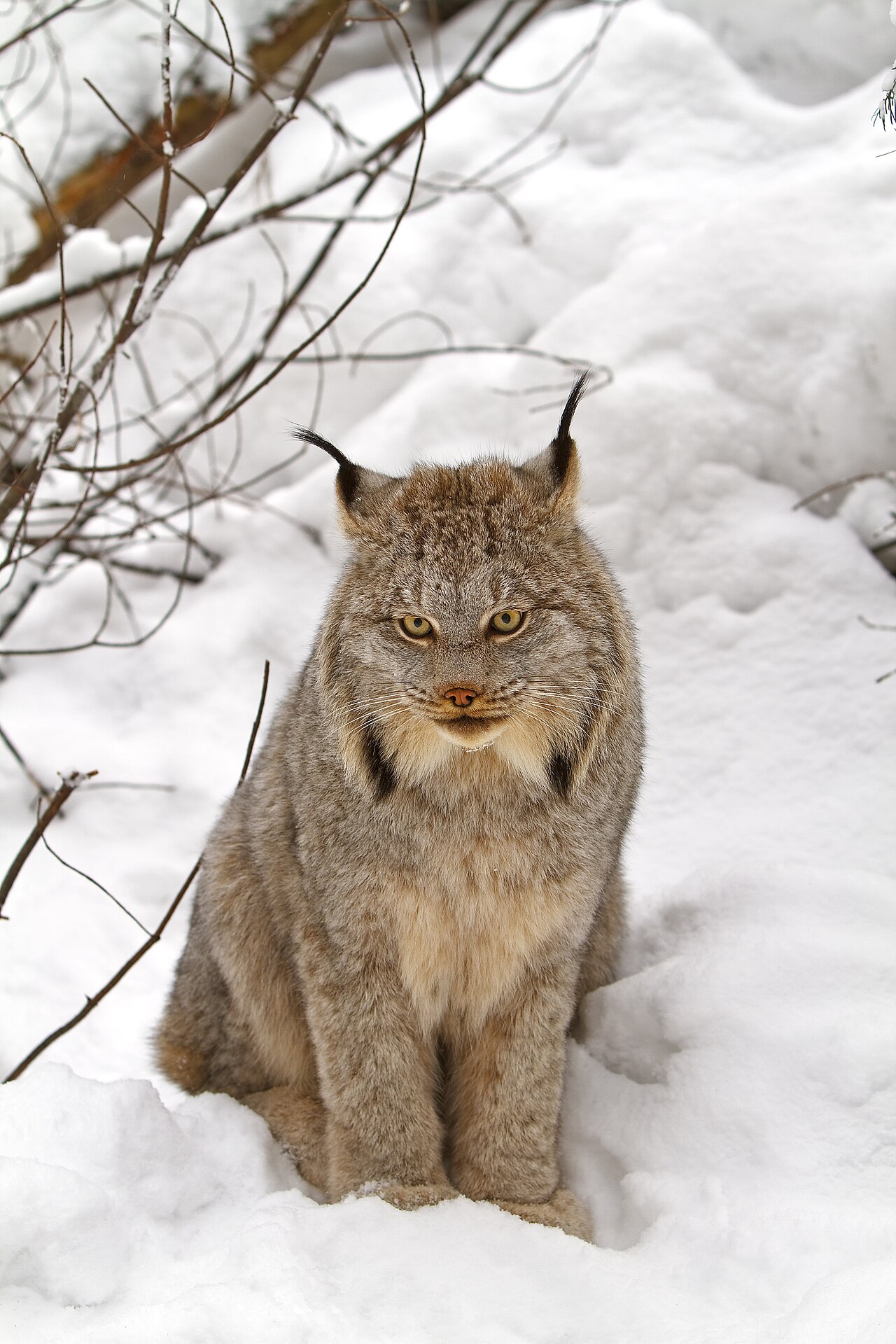
A Canada lynx (Lynx canadensis) weighs 18 to 24 lbs (8 to 11 kg) yet walks on paws as wide as a mountain lion’s. Those paws work like snowshoes, so the animal floats where a coyote of the same weight would sink to its chest. Learning to read that mismatch is the fastest way to separate a lynx trail from a bobcat, a dog, or a cougar.
Lynx tracks measure 3 to 4 inches (7.6 to 10 cm) wide, show four round toes with no claw marks, and sit shallow in snow because the cat is light for its paw size. The trail runs in a straight line with a stride of 12 to 18 inches (30 to 46 cm), and fur between the toes softens every edge.
What Lynx Tracks Look Like
A lynx track is a wide, nearly circular print with four toes arranged asymmetrically around a heel pad that shows three lobes along its rear edge. Claws stay retracted while the animal walks, so clean prints carry no nail points at the front of the toes.
The front paw is slightly larger than the hind paw, which is normal for cats. In firm substrate the whole print often measures 2.5 to 3 inches (6.4 to 7.6 cm), while the same animal in loose snow spreads its toes and leaves something closer to 4.5 inches (11 cm).
Fur is the signature. Dense winter hair grows between and over the pads, so the outlines look padded and the gaps between toes fill in. Trackers often describe lynx prints as a large, fuzzy pawprint with the details smudged out.
How to Identify Lynx Tracks in Snow

In snow, start with depth rather than width. A lynx sinks only 1 to 3 inches (2.5 to 7.6 cm) in powder that swallows a coyote, because its foot loading is roughly a third of a bobcat’s per square inch of paw.
Next, look at the line of travel. A walking lynx places each hind foot into the print left by the front foot on the same side, a pattern called direct register, which produces a single tidy row of tracks instead of two parallel rows.
Finally, check the margins of the print. Wind crust and cold powder both collapse edges, but a lynx print collapses into a rounded bowl with no claw slots, while a canid print keeps its two front nail marks even when the rest fails.
Lynx Tracks in Mud: What Changes

Mud gives the honest measurement. Without snow to spread the toes, a lynx print shrinks to 2.5 to 3.25 inches (6.4 to 8.3 cm) and finally shows the shape of the pads instead of a fur blur.
Look for the three lobes at the back of the heel pad and the two leading toes set slightly offset, so the print has a left or right handedness. That asymmetry rules out dogs, whose prints are close to symmetrical front to back.
Soft mud also records drag marks between prints when snow has just melted. A lynx rarely drags its feet on level ground, so heavy drag lines usually mean a canid or a deer instead. Compare with the smaller bobcat prints found in the same creek bottoms.
Lynx Tracks in Sand and Dust

Dry sand is the worst surface for identification because the walls of every print slump inward within minutes. Expect a shallow crater that reads 15 to 20 percent larger than the real paw, with no pad detail at all.
Work the trail rather than a single print. Measure five consecutive strides, note whether the row stays straight, and look for a sheltered patch of damp sand or a dust pocket beside a log where one clean print may have survived.
Sand along lake margins and sandy forest roads in Minnesota and Maine does hold lynx prints in spring. On those surfaces the straight line of travel and the absence of claws carry the identification, not the outline.
Lynx Track Size, Stride and Gait
Gait tells you what the animal was doing. A hunting lynx walks, a disturbed lynx trots with a longer and still straight line, and a lynx in deep powder switches to bounding leaps with sets of four prints together.
| Feature | Lynx | Bobcat | Coyote |
|---|---|---|---|
| Track width | 3 to 4 in (7.6 to 10 cm) | 1.75 to 2.5 in (4.4 to 6.4 cm) | 2 to 2.5 in (5 to 6.4 cm) |
| Claw marks | Absent | Absent | Usually visible |
| Print shape | Round, fur blurred | Round, crisp | Oval, longer than wide |
| Heel pad rear edge | Three lobes | Three lobes | Two lobes |
| Stride, walking | 12 to 18 in (30 to 46 cm) | 9 to 13 in (23 to 33 cm) | 13 to 16 in (33 to 41 cm) |
| Depth in powder | Shallow for its size | Moderate | Deep, often plowed |
Lynx vs Bobcat Tracks
Size settles most lynx and bobcat comparisons, because a lynx print is roughly twice as wide as a bobcat print while both animals weigh in the same range. A print over 3 inches (7.6 cm) with no claws is lynx country evidence; a print near 2 inches (5 cm) is a bobcat.
Clarity helps too. Bobcats have far less fur on the pads, so their prints stay crisp and show clean toe outlines even in shallow snow. Side by side, the bobcat looks drawn with a pencil and the lynx looks drawn with chalk.
Stride is the third check: bobcats step 9 to 13 inches (23 to 33 cm) and lynx step 12 to 18 inches (30 to 46 cm). For a full breakdown of the smaller cat, see how bobcat prints compare with coyote prints.
Lynx vs Dog and Coyote Tracks
Canid prints give themselves away with nails. Dogs and coyotes cannot retract their claws, so two sharp points sit ahead of the middle toes in almost every usable print, and the overall outline is an oval that runs longer than it is wide.
The heel pad is the second tell. Cats, including lynx, carry three lobes on the rear edge of the pad; dogs and coyotes carry two. That detail survives in mud and wet snow long after the toes have blurred.
Trail shape finishes the job. Dogs wander, sniff, and double back, while a lynx walks a purposeful line through the same woods. Compare with a documented coyote trail before you commit to a call.
Lynx vs Mountain Lion Tracks
Lynx and mountain lion prints overlap in width, which surprises people, so depth and weight do the separating. A cougar weighs 100 to 160 lbs (45 to 73 kg) and punches deep into snow or mud, while a 20 lb (9 kg) lynx barely dents the surface.
Pad proportion differs as well. A mountain lion print is dominated by a large heel pad with a deeply notched rear edge, and the toes look small against it. In a lynx print the furry toes dominate and the pad reads as a soft triangle.
Stride confirms it. Cougar walking strides run 20 to 30 inches (51 to 76 cm), well beyond the lynx range, and the straddle, the width of the whole trail, is noticeably broader.
How Large Are Lynx Cats on Average?
An average Canada lynx stands 20 to 24 inches (51 to 61 cm) at the shoulder, measures 31 to 40 inches (79 to 102 cm) head to tail, and weighs 18 to 24 lbs (8 to 11 kg), with males heavier than females.
Those long legs explain the stride, and the paws explain the tracks: spread out, a lynx foot can exceed 4 inches (10 cm) of contact width, giving a weight load low enough to walk on crust that will not hold a bobcat.
The Eurasian lynx (Lynx lynx) is much larger at 40 to 66 lbs (18 to 30 kg), so track dimensions published in European field guides run bigger than anything you will measure in North America.
What Do Lynx Eat, and How the Trail Shows It
Snowshoe hare (Lepus americanus) makes up 60 to 90 percent of a lynx diet across most of its range, and lynx populations rise and fall on an 8 to 11 year cycle that follows the hare.
That dependence shapes the tracks you find. Lynx trails thread through dense young conifer stands where hares shelter, cross hare runways at right angles, and often end in a short burst of bounding prints beside a patch of scattered fur.
Grouse, red squirrel, voles, and occasionally young deer round out the diet in lean hare years. Trails near deer trails in deep snow are worth following in late winter for exactly that reason.
Where to Find Lynx Tracks in the United States
Lynx occur in Alaska and, in the lower 48 states, in Maine, Minnesota, Montana, Idaho, Washington, Wyoming, and Colorado, where the population was reintroduced. The lower 48 population is listed as threatened under the Endangered Species Act by the U.S. Fish and Wildlife Service.
Look in spruce and fir forest with deep, fluffy snow that lasts into March, especially in young regenerating stands 10 to 30 years after logging or fire. Lynx avoid hard packed trails less than bobcats do, so unplowed logging roads are good survey lines.
If you find a convincing trail, report it to the state wildlife agency with photographs and GPS coordinates. Detections in Minnesota and Colorado have come from exactly this kind of record, and snow tracking remains a primary survey method.
Frequently Asked Questions
Do any big cats live in the snow?
Yes. Canada lynx, bobcats, mountain lions, and the Eurasian lynx all live in snowy regions, and snow leopards and Amur tigers are true cold climate specialists. Lynx are the most snow adapted cat in North America thanks to paws that spread into natural snowshoes.
What is bigger, a Maine Coon or a lynx?
A lynx is bigger. Maine Coons reach 10 to 25 lbs (4.5 to 11 kg) with long tails and dense coats, while a Canada lynx weighs 18 to 24 lbs and stands far taller on much longer legs. The paws differ most: a lynx paw is roughly three times the width.
Can a house cat breed with a lynx?
No. Despite breed names like Highlander and Desert Lynx, no domestic cat carries lynx ancestry, and the two cannot produce offspring. Domestic cats and lynx sit in different genera with different chromosome arrangements, so any claimed hybrid is a domestic cat with lynx like markings.
How many kittens can a lynx have?
A female lynx typically has 2 to 3 kittens, with litters ranging from 1 to 6. Litter size tracks hare abundance closely: in peak hare years most females breed and raise large litters, and in crash years many produce no surviving kittens at all.
How do you cover up footprints in snow?
Hunters and photographers usually brush prints out with a conifer bough, then dust loose snow over the area, or they walk existing trails so new prints are not obvious. Fresh prints never fully disappear until wind or new snowfall reshapes the surface.
Are lynx tracks ever confused with snowshoe hare tracks?
Occasionally, because a hare’s hind foot in powder also prints wide, furry, and clawless. The difference is the pattern: hares bound, leaving sets of four prints with the large hind feet ahead of the small front feet, while a lynx walks a single straight line.
Once you have a measured track and a stride, the rest of the trail usually confirms itself. Check our guides to bird tracks in snow and beaver prints along water to round out a winter tracking kit.