What Is a Group of Foxes Called? Skulk, Leash, and Earth
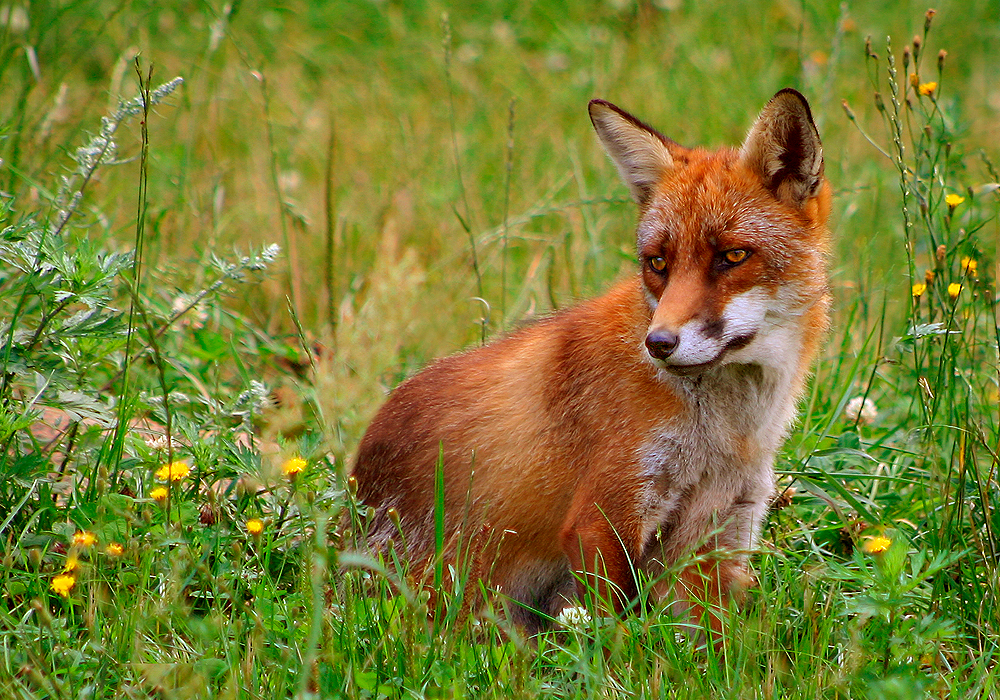
A group of foxes is called a skulk or a leash, the two traditional collective nouns recorded in English since the medieval period. A group of foxes is also called an earth, a lead, and a troop in various lists, and biologists simply say a family group or a group. Skulk is the term most people are looking for, and it comes from the fox’s reputation for moving quietly and unseen, the same root that gives us the verb to skulk, meaning to lurk or sneak about.
The question is more interesting than it looks, because foxes barely form groups at all. Red foxes hunt alone, and outside the breeding season an adult fox is almost always by itself, so the collective nouns describe something that rarely happens. What does exist is the family group: a mated pair and their kits through spring and summer, sometimes with an unmated female helper. This guide covers every term for a group of foxes, explains the skulk and leash origins, and describes how fox social life is actually organized.
A group of foxes is called a skulk or a leash, the two traditional collective nouns. Older lists also give an earth, a lead, and a troop. Foxes are mostly solitary hunters, so real groups are limited to family units of a mated pair and their kits, sometimes with an adult helper. A baby fox is a kit or a cub, and a group of them is a litter.
| Question | Answer |
|---|---|
| Main collective nouns | Skulk or leash of foxes |
| Other listed terms | Earth, lead, troop |
| Scientific term | Family group |
| Typical group size | 2 adults plus 4 to 6 kits |
| Male fox | Dog fox, or reynard |
| Female fox | Vixen |
| Baby fox | Kit or cub; a group is a litter |
Why Is a Group of Foxes Called a Skulk?
A group of foxes is called a skulk because of the fox’s reputation for moving furtively and staying out of sight. The word skulk comes from a Scandinavian root meaning to lurk or lie hidden, and it entered English in the thirteenth century as a verb before being applied to foxes as a collective noun in the medieval terms of venery. The name is a character judgment rather than a description of group behavior, which fits the fox’s place in European folklore as the sly, deceitful animal of fable.
That reputation is partly deserved and partly a projection. Red foxes are genuinely secretive and are far more common than most people realize, living in cities, suburbs, farmland, and forest across the Northern Hemisphere while being seen only occasionally. They are crepuscular and nocturnal in areas with human activity, move along established routes using cover, and freeze rather than flee when they detect a person at distance. Skulking is a fair description of how a fox travels.
Whether it describes a group is another matter entirely. Skulk appears in the same 1486 Book of Saint Albans that gave us a murder of crows and an unkindness of ravens, compiled as much for wordplay as for accuracy. The compilers were not observing fox social structure; they were assigning memorable names to animals a hunting gentleman would need to discuss. The fox sounds guide covers the screams and barks that are usually how people first detect a fox.
What Is a Leash of Foxes?
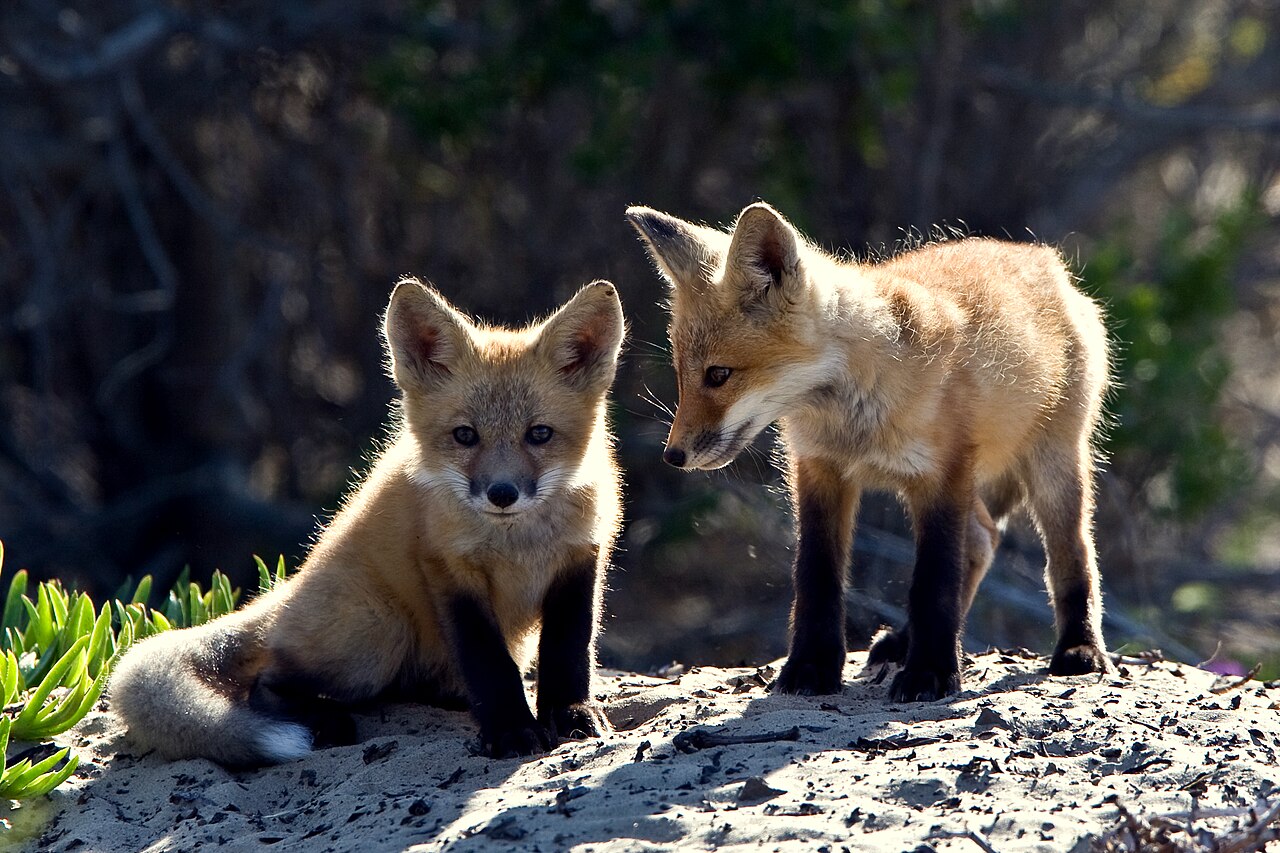
A leash of foxes is the second traditional collective noun, and it originally meant exactly three animals. Leash comes from the hunting term for three hounds coupled together on a single lead, and it was applied to groups of three in several game species: a leash of foxes, a leash of hares, a leash of deer, and a leash of hawks. The specific count is what distinguishes it, though modern usage has lost that precision and leash is now cited as a general term for foxes.
An earth of foxes is a third term and refers to the den rather than to the animals directly. A fox den is called an earth in British usage, and by extension the foxes occupying one became an earth of foxes. This parallels the way a warren means both a rabbit burrow system and the rabbits in it. The verb to go to earth, meaning to hide or take refuge, comes from the same source and is still in ordinary English.
Lead and troop appear in some collective noun lists as well, with troop being a later and looser addition. None of these terms is used in ordinary speech or in scientific writing. If a quiz asks what a group of foxes is called, skulk is the expected answer, with leash as the accepted alternative. Biologists say family group, and that is the only phrase you will find in a research paper.
Do Foxes Live in Groups?
Foxes are mostly solitary, and this is the key fact that makes their collective nouns almost theoretical. Red foxes hunt alone, forage alone, and travel alone, because their prey is small and scattered: voles, mice, rabbits, birds, insects, earthworms, and fruit. A vole caught by one fox feeds one fox. There is nothing to be gained by hunting cooperatively at that scale, which is the opposite of the situation for wolves, whose large prey demands a pack.
What foxes do have is a family group and a shared territory. A mated pair holds a territory year-round in many populations, and although the two animals hunt separately they use the same den, defend the same boundaries, and raise kits together. Territory size varies enormously with food availability, from around 25 acres in a rich urban environment to several thousand acres in poor habitat, which is one of the widest ranges recorded in any carnivore.
In high-density populations, particularly urban ones and some in Britain, family groups can be larger. A dominant pair may be joined by one to several subordinate adult females, usually their own daughters from previous years, which do not breed themselves but help feed and guard the kits. These groups of four to six adults are the closest thing to a real skulk of foxes, and they occur where food is abundant enough to support several animals in one territory.
What Is a Group of Baby Foxes Called?
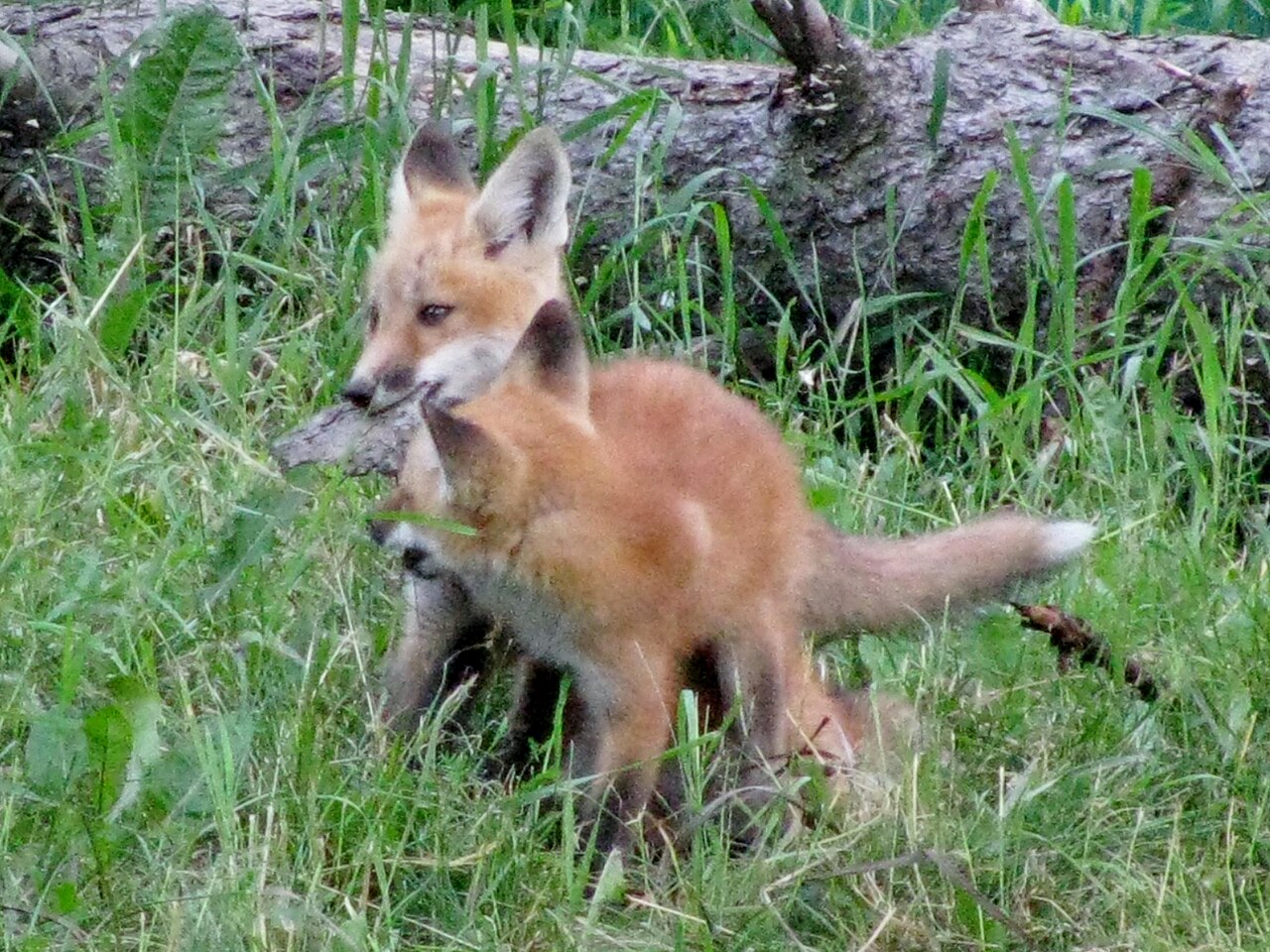
A group of baby foxes is called a litter, and individual young are called kits, cubs, or pups depending on region, with kit being the most common term in North America and cub in Britain. A red fox litter typically holds four to six kits, though litters of up to twelve have been recorded when food is plentiful, and the vixen gives birth in spring after a gestation of about 52 days.
Kits are born blind, deaf, and covered in short dark gray fur that looks nothing like the adult coat. They stay underground in the den for the first four to five weeks, during which the vixen rarely leaves them and the dog fox brings food to the entrance. Eyes open at around two weeks, and the first appearances at the den mouth, when kits tumble and play in the open, are what most people picture when they think of young foxes.
By late summer the kits are hunting for themselves, and in autumn the family breaks up. Young males disperse first and can travel remarkable distances, with movements of 20 to 30 miles common and documented dispersals exceeding 100 miles. Young females often stay closer and may remain in the natal territory as non-breeding helpers. The baby fox guide covers the first months in detail, and the baby arctic fox guide covers the northern species, which has larger litters averaging six to twelve kits.
What Are Male and Female Foxes Called?
A male fox is called a dog fox, or sometimes a reynard, and a female fox is called a vixen. Vixen is the more familiar of the two and is one of the few animal terms that has passed into general English as a description of a person, meaning a sharp-tempered woman, which reflects the same folklore that produced skulk. Reynard comes from the medieval European beast fables about Reynard the Fox, a trickster figure whose stories were popular across France, Germany, and England from the twelfth century.
Telling the sexes apart in the field is difficult because red foxes show almost no sexual dimorphism. Dog foxes are marginally larger and heavier, typically 10 to 15 pounds against a vixen’s 8 to 12, with a slightly broader head, but the overlap is substantial and a single animal cannot be reliably sexed by sight. In spring, a nursing vixen may show visible teats, which is the one practical field clue.
The pair bond is real but not necessarily lifelong. Red foxes are generally monogamous within a season, and pairs often stay together across multiple years, but polygyny occurs in dense populations where a dominant male may breed with several females in overlapping territories. Mating happens in winter, from December to February in most of North America, and this is when fox activity and vocalization peak, which is why the eerie screaming that alarms people is heard mostly on cold winter nights.
How Big Is a Fox Territory and Group?
Fox territories vary from about 25 acres to several thousand, and group size scales inversely with territory size. Where food is dense and reliable, particularly in cities where discarded food, rodents, and deliberate feeding by residents supply abundant calories, territories shrink and can support more animals. Urban red fox densities in some British cities reach several foxes per square kilometer, among the highest recorded anywhere.
Where food is scarce, in northern boreal forest, desert, or tundra, territories expand enormously and support a single pair at most. Arctic foxes on the tundra may range over dozens of square miles in a poor lemming year, and their reproduction tracks the lemming cycle so closely that they may produce no litter at all in a low year and a litter of a dozen in a peak year. This is one of the tightest predator-prey couplings known.
Territories are advertised rather than patrolled. Foxes mark boundaries with urine, scat placed on prominent objects, and scent from glands on the tail and paws, and the pungent, skunky smell of fox urine is often the first sign of a fox using a garden. Neighboring foxes largely respect established boundaries, and serious fights are uncommon, though disputes increase during the winter breeding season. The fox poop guide covers the tapered, twisted scat that foxes leave on paths, molehills, and garden ornaments as markers.
Are Fox Groups Different in Other Species?
Fox social structure varies across the roughly twelve true fox species, and a few break the solitary pattern. Bat-eared foxes of Africa are the clear exception, living in stable groups of a mated pair and their offspring that forage together, often side by side, because their diet of harvester termites is concentrated in patches where many animals can feed at once without competing. Group foraging also gives protection against jackals and raptors.
Arctic foxes form pairs that may be joined by helper females in productive years, similar to red foxes but more dependent on the food cycle. Gray foxes, the North American species that can climb trees, are solitary like red foxes and form pairs only during the breeding season. Fennec foxes, the tiny desert species with enormous ears, are reported to live in small family groups of up to ten in the wild, though field data on them is limited.
The general rule holds across the genus: fox sociality tracks food distribution. Species and populations with concentrated, predictable food form groups; those with scattered prey do not. This is the same principle that keeps wolves in packs, lions in prides, and most cats alone, and it explains why the same species, the red fox, can be solitary in the countryside and semi-social in a city. The fox vs coyote comparison covers the species differences in more detail.
Collective Nouns for Foxes and Other Carnivores
Foxes sit among the carnivores with medieval collective nouns, most of which describe reputation rather than behavior. Wolves get a pack, which is accurate. Bears get a sloth or a sleuth, neither of which describes anything real, since bears are solitary except for mothers with cubs. Otters get a romp or a raft, both apt. Weasels get a boogle, badgers a cete, and ferrets a business, which is one of the better ones.
The pattern of naming solitary animals as though they formed groups is common throughout the tradition. A sloth of bears, a skulk of foxes, and a parliament of owls all attach group names to animals that live alone, because the compilers were producing a complete vocabulary rather than a field guide. The terms that survived in real use, such as pack for wolves and pod for whales, are the ones that describe genuine social structures.
For foxes, the practical vocabulary is family group, pair, vixen, dog fox, kit, and earth or den. Those words are used by everyone who studies or watches foxes. Skulk is worth knowing because it will be the answer to the question, and because it captures something true about how a fox moves even if it says nothing about how foxes live. The group of deer guide and the group of crows guide cover species where the collective noun and the behavior line up more closely.
Related reading: what is a group of butterflies called.
Frequently Asked Questions
What is a group of foxes called?
A group of foxes is called a skulk or a leash. Older lists also include an earth, a lead, and a troop. Biologists use family group, since foxes rarely gather in numbers beyond a pair and their kits.
Why is a group of foxes called a skulk?
Because of the fox’s reputation for moving furtively and staying hidden. Skulk comes from a Scandinavian root meaning to lurk, and the term was assigned in the medieval lists of hunting vocabulary that also produced a murder of crows.
Do foxes live in groups?
Mostly no. Red foxes hunt alone because their prey is small and scattered. They do form family groups of a mated pair and their kits, and in food-rich urban areas a pair may be joined by non-breeding adult daughters that help raise the young.
What is a group of baby foxes called?
A litter. Individual young are kits, cubs, or pups, with kit most common in North America. Red fox litters usually hold four to six kits, born in spring after about 52 days of gestation.
What is a female fox called?
A vixen. Males are called dog foxes or reynards. The sexes look nearly identical, with males only slightly larger, so a single fox cannot reliably be sexed by sight in the field.
What is a fox den called?
An earth, in British usage, which also gives the collective noun an earth of foxes. The phrase to go to earth, meaning to hide, comes from the same source. In North America, den is the more common word.
How many foxes are in a skulk?
Any number, though a leash of foxes traditionally meant exactly three. Real fox groups are usually a pair plus four to six kits in summer, and in dense urban populations a family group may include several adults.