What Is a Group of Crows Called? Murder, Flock, and More
A group of crows is called a murder, the best known collective noun in the English language and the answer expected in every quiz and crossword. A group of crows is also called a flock, which is what ornithologists and birders actually say, and older sources list a horde, a muster, a parcel, and a storytelling of crows. The name murder has nothing to do with the birds killing anything. It comes from medieval superstition that linked crows to death, battlefields, and executions, and from a folk belief that crows gathered to hold trials over one of their own.
What makes the term interesting is that crows really do gather in enormous numbers, unlike most birds given dramatic collective nouns. A winter roost of American crows can hold tens of thousands of birds, and roosts of two million have been recorded historically. Crows also assemble around a dead crow in a way that looks unsettlingly like a funeral, a behavior that modern research has explained as danger learning rather than mourning. This guide covers every collective noun for crows, where murder came from, how it differs from the terms for ravens, and what crow flocks actually do.
A group of crows is called a murder, the traditional collective noun dating back to 15th century English word lists. It is also correctly called a flock, which is what birders and ornithologists use. A group of ravens, by contrast, is an unkindness or a conspiracy. Crow roosts in winter can hold tens of thousands of birds.
| Question | Answer |
|---|---|
| Traditional collective noun | Murder of crows |
| Everyday and scientific term | Flock (roost for nighttime gatherings) |
| Older alternatives | Horde, muster, parcel, storytelling |
| Group of ravens | Unkindness or conspiracy |
| Typical flock size | Family of 3 to 15; roosts of 2,000 to 50,000+ |
| Origin of the name | Medieval folklore tying crows to death |
| Species | American crow, Corvus brachyrhynchos |
Why Is a Group of Crows Called a Murder?
A group of crows is called a murder because of centuries of European folklore that connected crows with death rather than because of anything violent the birds do to each other. Crows are scavengers, and in medieval Europe that meant they were seen picking over battlefields, gallows sites, and plague pits. A bird that appears wherever corpses are found acquires a reputation quickly, and the word murder attached itself to their gatherings as a reflection of that grim association. The term appears in the same 15th century lists of collective nouns that gave us an unkindness of ravens and a parliament of owls.
A second strand of folklore claims that crows convene to judge a member of their own kind, and that the accused bird is killed by the flock if found guilty, hence a murder. There is no evidence that crows hold anything resembling a trial. What people were observing is real, though. Crows do assemble noisily around a dead crow, and the behavior looks organized and deliberate enough that an observer without modern research would reasonably reach for a supernatural explanation.
The earliest recorded forms include “a murther of crowes,” using the older spelling, in the Book of Saint Albans printed in 1486. Like most terms of venery from that period, it was created as a display of vocabulary for the educated rather than as working language for anyone who dealt with birds. Nearly all such names faded, but murder survived because it is short, vivid, and easy to remember, and because it fits the crow’s popular image so neatly that it never needed defending.
Do Crows Really Hold Funerals?
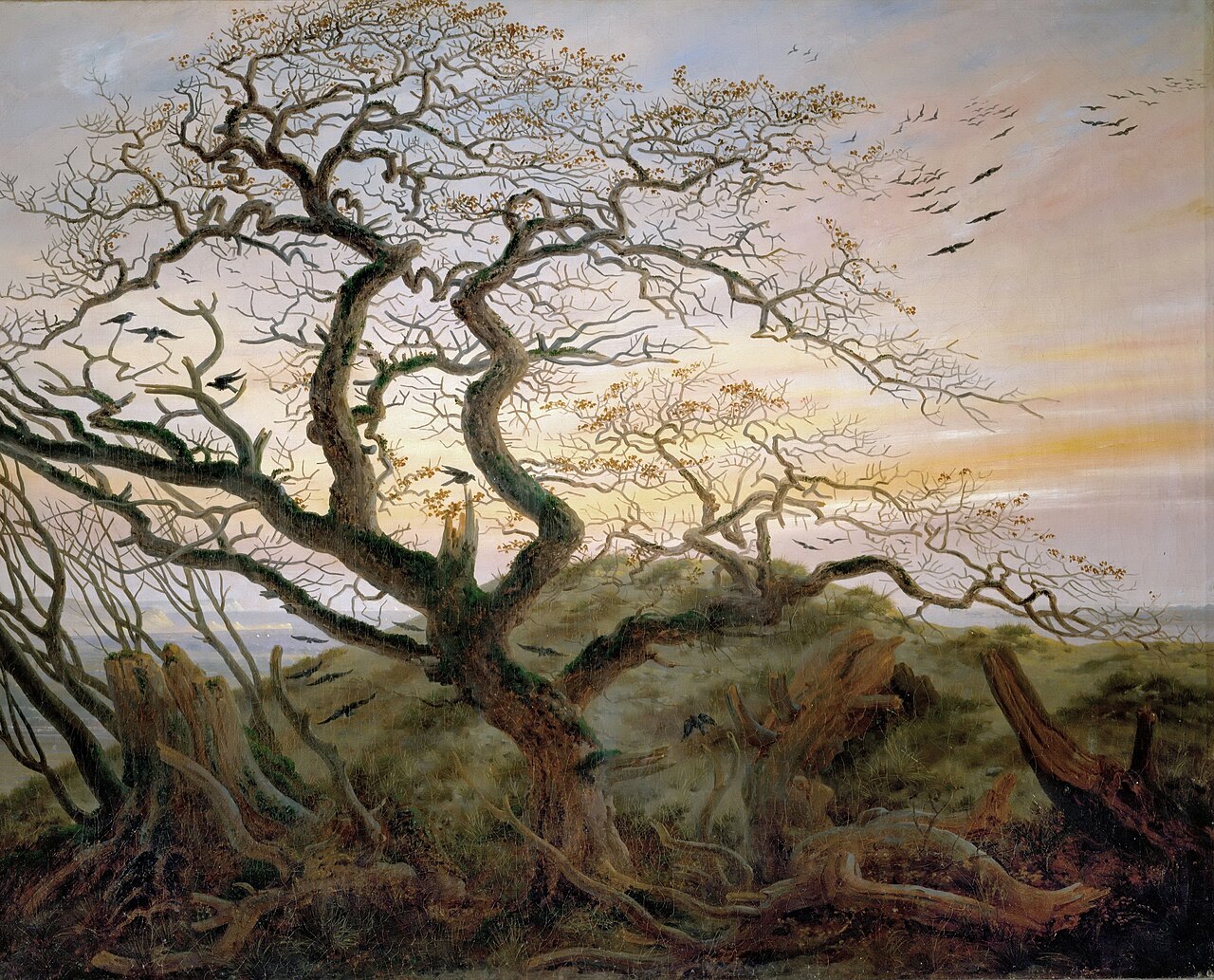
Crows do gather around their dead, but research shows it is a danger-learning behavior rather than a funeral. Kaeli Swift and John Marzluff at the University of Washington ran a series of experiments in which volunteers wearing distinctive masks held a dead crow in view of local birds. The crows responded with loud scolding calls, mobbed the person, and then avoided that mask for weeks afterward, even when it was worn by someone else. Crows exposed to the same person without a dead crow showed no such reaction.
The conclusion is that a dead crow functions as a warning sign about a dangerous place, predator, or person, and the noisy assembly is how the information spreads through the flock. Crows recruit each other with alarm calls, inspect the scene, and encode the association in long-term memory. Marzluff’s earlier work established that crows recognize individual human faces and hold grudges for years, passing the information to their offspring and flock mates. A dead crow is simply the strongest possible cue to file away.
This explanation makes the behavior more impressive rather than less. A bird that can identify a specific human face, associate it with a threat, teach that association to other birds, and remember it for five years or more is performing cognitive work that few animals manage. It also explains why crow gatherings around a body are noisy, brief, and end abruptly once the threat is assessed, which is not how mourning tends to look. The crow symbolism guide covers how these behaviors fed the folklore.
Is a Group of Crows Called a Flock?
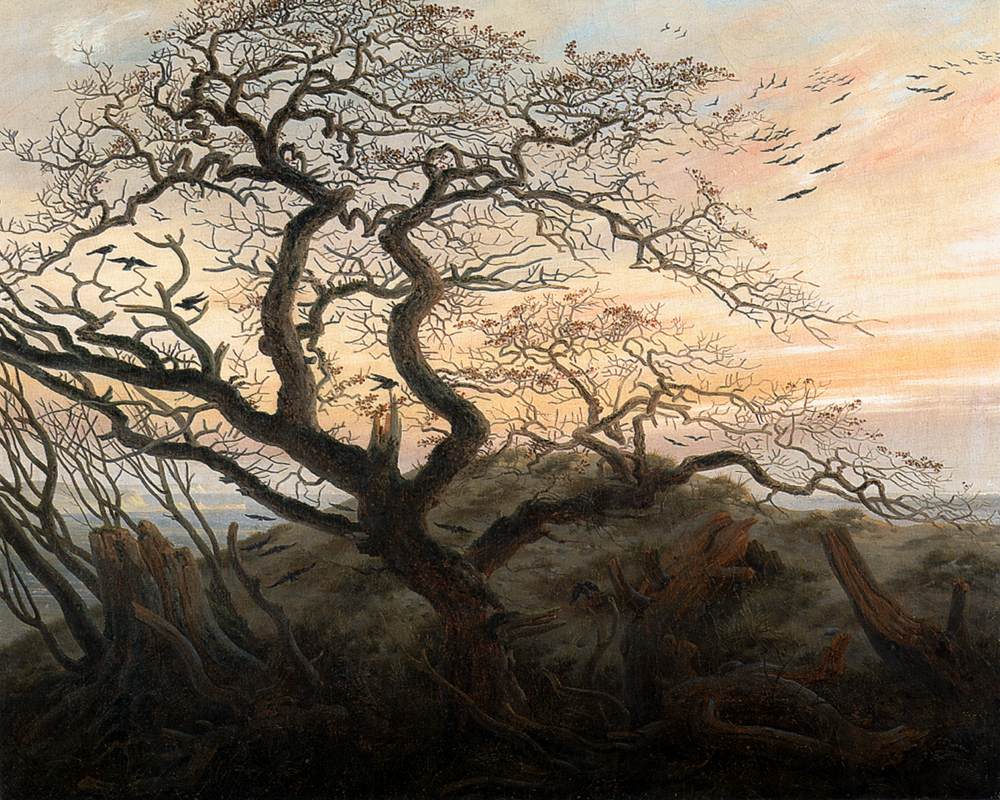
Yes, a group of crows is correctly called a flock, and this is the word used in every field guide, research paper, and Christmas Bird Count tally. Flock is the general term for a group of birds, so it applies to crows automatically, and no birder would consider it wrong. Murder is the ceremonial term; flock is the working one. Anyone counting crows leaving a roost at dawn is counting a flock, not a murder.
Ornithologists also use more specific terms for different crow groups. A family group is a breeding pair plus their current young and, unusually among birds, often their offspring from previous years, since American crows are cooperative breeders in which grown children stay home to help raise the next brood. A roost is the nighttime aggregation, sometimes enormous. A staging flock is the intermediate gathering birds form in late afternoon before moving to the roost proper. Each term describes something observable.
The alternative traditional names are worth knowing but rarely used. A horde of crows, a muster of crows, a parcel of crows, and a storytelling of crows all appear in collective noun lists of varying reliability. Storytelling is a modern coinage that plays on the crow’s communicative reputation and has no historical basis. If someone asks what a group of crows is called and expects one answer, it is murder, with flock as the honest practical alternative.
What Is the Difference Between a Murder of Crows and an Unkindness of Ravens?
A murder belongs to crows and an unkindness or conspiracy belongs to ravens, and mixing them up is the most common error in discussions of corvid collective nouns. Both terms came from the same medieval tradition and both reflect dark folklore, but they were assigned to different species and the lists have kept them separate for five centuries. Calling a group of ravens a murder is wrong in the same way that calling a group of geese a rafter is wrong.
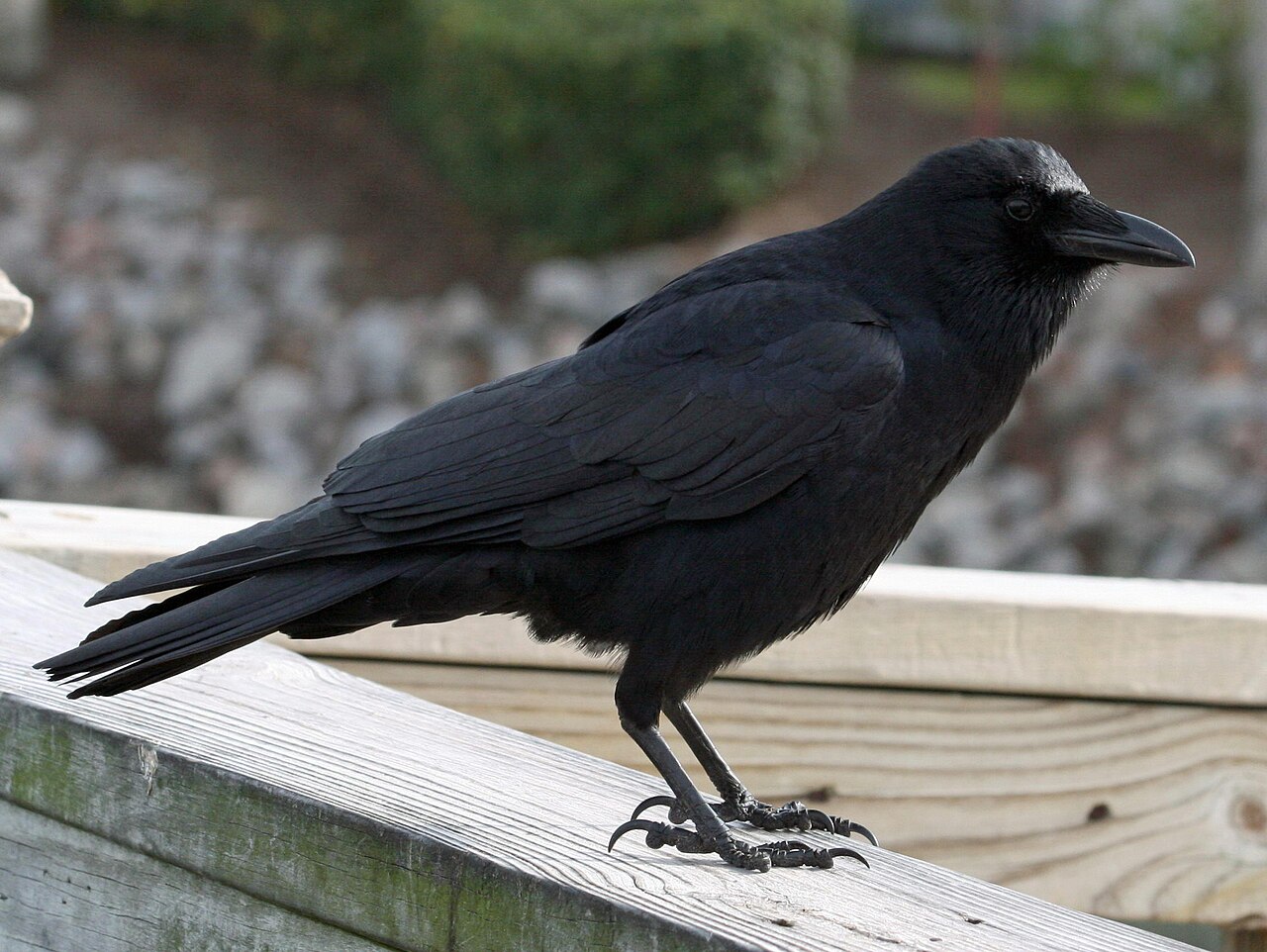
Telling the birds apart in the field decides which word applies. American crows are about 17 inches long with a fan-shaped tail, a straight bill, and a flat, repeated caw. Common ravens are around 24 inches with a 4-foot wingspan, a wedge-shaped or diamond-shaped tail, a much heavier bill, shaggy throat feathers, and a deep croaking call. Ravens soar and tumble in flight; crows flap steadily. The raven vs crow comparison sets out every field mark, and the guide to what a group of ravens is called explains where unkindness and conspiracy came from.
Behavior helps too. A flock of a hundred black birds in a suburban parking lot in January is almost certainly crows, because crows form large daytime flocks routinely while ravens usually appear as pairs or family groups. A pair of huge black birds soaring over a canyon or a cliff face is almost certainly ravens. Where the ranges overlap, crows frequently mob ravens and chase them out of their territory, so seeing several smaller birds harassing one larger one is itself a clue to which species you are watching.
How Many Crows Are in a Murder?
There is no fixed number in a murder of crows, and the size varies enormously by season. In spring and summer, American crows live in family groups of 3 to 15 birds consisting of a breeding pair and their current and previous offspring, and these are the birds most people see year-round in a neighborhood. In late fall and winter the family groups merge into communal roosts that regularly hold 2,000 to 50,000 crows, and roosts of several hundred thousand are documented in cities such as Auburn, New York, and Danville, Illinois.
The largest roosts on record are extraordinary. A roost near Fort Cobb, Oklahoma, was estimated at two million birds in the 1930s, and modern roosts in the tens of thousands are common wherever cities offer warmth, light, and safety from great horned owls. Crows commute up to 30 miles between daytime feeding areas and the night roost, streaming past in long lines at dusk in a movement that residents of roost cities know well.
Roosting behavior is driven by predator avoidance and information sharing. A crow in a roost of 20,000 is statistically safe from the owls that hunt lone crows at night, and lit urban areas make owl ambushes harder. Birds also appear to follow successful foragers out of the roost in the morning, effectively using the gathering as a food information exchange. The guide to what crows eat explains the omnivorous diet, from grain and carrion to garbage and nestlings, that supports such dense populations.
What Is a Pair of Crows Called?
A pair of crows is simply called a pair, and it usually means a mated couple. American crows form long-term pair bonds and often stay together for many years, defending a territory of roughly 10 to 100 acres depending on habitat quality. The pair builds a bulky stick nest 15 to 60 feet up in a conifer or hardwood, and the female incubates 3 to 6 eggs for about 18 days while the male brings food. Two crows working a lawn together in April are almost always a mated pair.
What makes crow pairs unusual is the help they get. American crows are cooperative breeders, and grown offspring from previous years frequently stay in the territory for up to five years, helping to feed nestlings, defend the nest, and mob predators. A nest may have as many as ten helpers. This is rare among North American birds and is one reason crow family groups are larger and more stable than most. In folklore, seeing two crows together is often read as a good omen, in contrast to a single crow, a superstition the crow visits meaning guide traces in detail.
The nesting season also explains why crows seem to disappear from big flocks in spring. The huge winter roosts break apart in late February and March as pairs disperse to their territories, so a neighborhood that hosted a thousand crows in January may hold one family of six in May. The same birds return to communal roosting once the young are independent and the weather turns, which is why crow numbers appear to surge every autumn without any actual population change.
Collective Nouns for Crows and Other Birds Compared
Crows sit alongside a long list of birds with memorable collective nouns, nearly all of them from the same era of English wordplay. Ravens are an unkindness or a conspiracy. Owls form a parliament, larks an exaltation, geese a gaggle on the ground and a skein in flight, turkeys a rafter, and hummingbirds a charm. Vultures gather in a committee when perched and a kettle when circling, which is one of the few terms genuinely used by birders today because it describes something distinctive.
Most of these names originated in the terms of venery, lists compiled for the English gentry between the 14th and 16th centuries as a mark of education. They were partly practical, covering game animals a hunter needed to discuss, and partly a game, extending to trades and social types with jokes like a superfluity of nuns. The bird names have survived best because Victorian and modern writers kept reprinting them, and because they are genuinely fun.
The Cornell Lab of Ornithology (allaboutbirds.org) notes that these collective nouns are folklore rather than terminology, and that flock is always acceptable. Murder is the exception that everyone knows, which is why it has escaped the trivia lists and entered ordinary speech, appearing in book titles, band names, and headlines. It is a striking piece of evidence for how thoroughly a medieval superstition about a scavenging bird can outlive the world that produced it. The guide to birds that look like crows helps confirm you are actually watching crows before reaching for the word.
Related reading: what is a group of deer called.
Related reading: what is a group of rabbits called.
Related reading: what is a group of ducks called.
Related reading: what is a group of chickens called.
Related reading: what is a group of hawks called.
Frequently Asked Questions
What is a group of crows called?
A group of crows is called a murder, the traditional collective noun recorded since the 15th century. It is also correctly called a flock, which is the term birders and ornithologists use. Older lists add horde, muster, and parcel as alternatives.
Why is a group of crows called a murder?
The name comes from medieval folklore linking crows to death, battlefields, and gallows, where the scavenging birds were commonly seen. A companion superstition held that crows gathered to try and execute one of their own, which is not something crows actually do.
Is a group of crows called a flock?
Yes. Flock is the general term for any group of birds and is always correct for crows. Ornithologists use flock, roost for nighttime gatherings, and family group for a breeding pair with their offspring and helpers.
What is a group of 12 crows called?
The same as any other number: a murder or a flock. There is no separate term based on count. A group of about 12 crows in spring or summer is most likely a single family group of a pair plus their young and older helpers.
Do crows really hold funerals for their dead?
Crows gather noisily around dead crows, but research by Kaeli Swift and John Marzluff shows this is danger learning, not mourning. The birds associate the location, predator, or person with risk and avoid them for weeks or years afterward.
What is a pair of crows called?
Just a pair, meaning a mated couple. American crows form long-term pair bonds and defend a territory together, often assisted by grown offspring from previous years that stay to help raise the next brood.
How many crows are in a murder?
Any number. Family groups run 3 to 15 birds, while winter communal roosts commonly hold 2,000 to 50,000 crows. Historic roosts of several hundred thousand and even two million birds have been recorded.